Every morning the gates of a celestial palace swung open and a chariot of gold and diamond pulled by fire-white horses thundered into the sky. It carried the sun. And the sun had a name.
Not Helios, not Sol, not Ra — those belong to other mythologies, other skies. In the Slavic world, the sun was called Dazhbog. The giving god. The one who rides the heavens from dawn to dusk and then descends into the underworld to die, only to be reborn when the morning star cracks open the darkness again. His name is a command and a promise fused into a single word: give, god. And for centuries, every beam of light that fell on plowed fields and river water and the faces of children was understood to be exactly that — a gift.
He was the son of the celestial smith Svarog, the ancestor of princes, a member of Vladimir's official pantheon, and one of the very few Slavic gods whose worship left traces across every branch of the Slavic family tree. And yet — like so many figures in Slavic mythology — almost everything we know about him fits on a few pages of medieval manuscripts. What follows is an attempt to read those pages carefully, to hold them up against folk memory and comparative mythology, and to see what kind of god the light reveals.
A Name That Is a Prayer
Start with the name. It is the one thing scholars agree on, and it tells you more than any chronicle entry.
Proto-Slavic *dadjьbogъ is composed of two elements. The first is *dadjь, the imperative form of the verb *dati — "to give." The second is *bogъ — "god." Dazhbog is, at its grammatical root, a command directed at the divine: give, god. Or, read the other way, it is a title: the god who gives. The giving god. The god-giver.
This is not a name you assign to a war deity or a trickster. It is not the name of a god who takes. Dazhbog's very identity is structured around generosity — around the expectation that light and warmth and the prosperity that follows from them are not accidents but deliberate acts of divine provision. When the sun rose, it was because Dazhbog chose to give. When the harvest ripened, it was because Dazhbog's light chose to linger on the grain.
The word bogъ itself carries a second layer. Linguists have long debated whether Proto-Slavic *bogъ is a native formation or an Iranian borrowing, related to Avestan baga and Old Persian baga — both meaning "god" but also "share, portion, wealth." The Indo-Iranian cognate Bhaga was himself a god of wealth distribution in the Vedic tradition. If the connection holds — and many scholars believe it does — then bogъ originally carried the meaning of "the one who allots fortune." Dazhbog would then be something like "the giver of divine fortune" — a name that makes the sun not merely a celestial body but the source of all material blessing.
No other Slavic god's name functions this way. Perun means "the striker." Svarog means "the one who forges with fire." Veles is the woolly one, the cattle god. These are descriptive names. Dazhbog alone is a prayer embedded in a word.
Son of the Smith
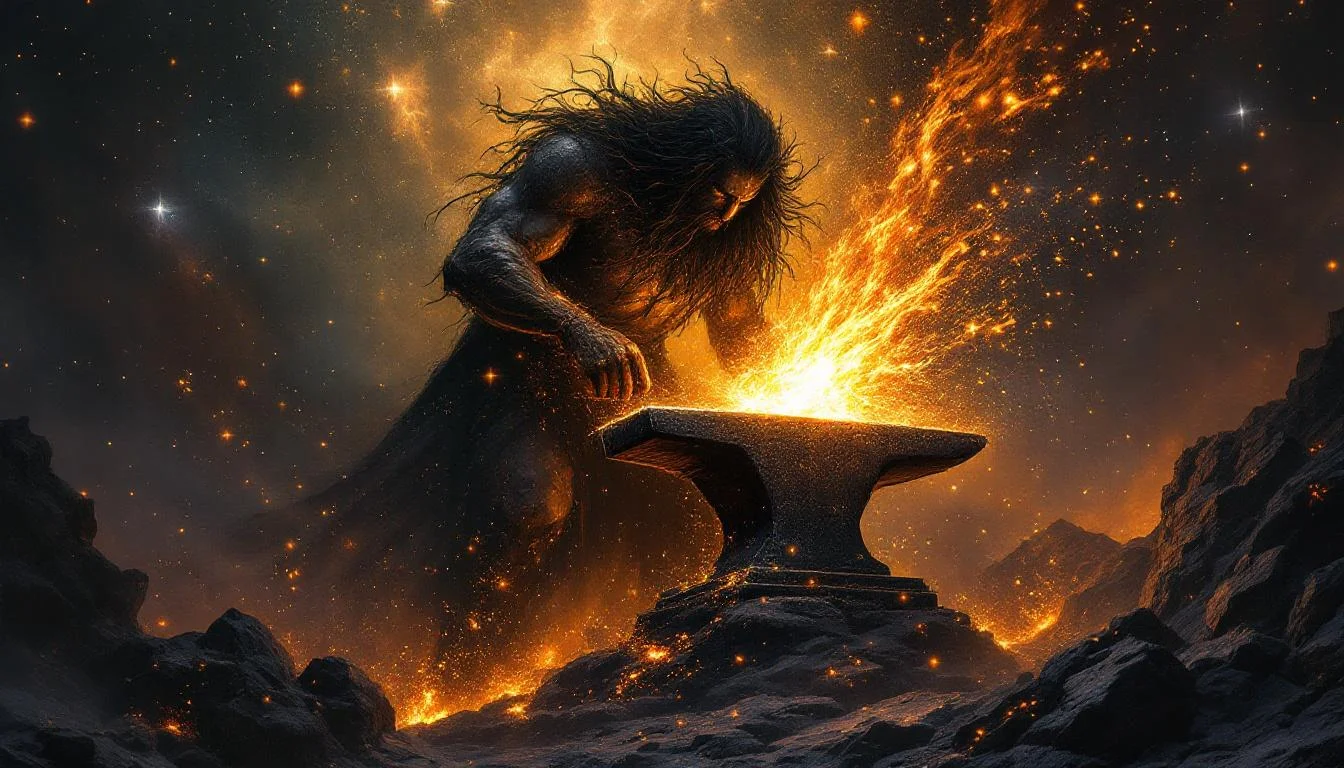
Dazhbog did not forge himself. He was made — hammered into being on his father's celestial anvil, or so the only surviving source implies.
The key document is the Slavic translation of the Chronographia of John Malalas, a sixth-century Byzantine chronicle. When medieval Slavic scribes translated it — the version preserved in the Hypatian Codex dates to around 1114 — they did what translators of their era always did with foreign gods: they substituted local equivalents. Where Malalas wrote Hephaestus, the Slavic translator wrote Svarog. Where Malalas wrote Helios, the translator wrote Dazhbog. And then he added a gloss that became the single most important sentence in the study of Slavic solar mythology.
And after him Svarog reigned his son, named the Sun, whom they call Dazhbog... Sun tsar, son of Svarog, this is Dazhbog.
Nine words that anchor an entire theology. Dazhbog is the sun. The sun is Svarog's son. And this son is a tsar — a ruler, not merely a luminary. The passage establishes a divine succession: the celestial smith created the tools and laws of civilization, then handed sovereignty to his son, the light itself. Svarog forged the sun and then stepped back. Dazhbog carried it forward.
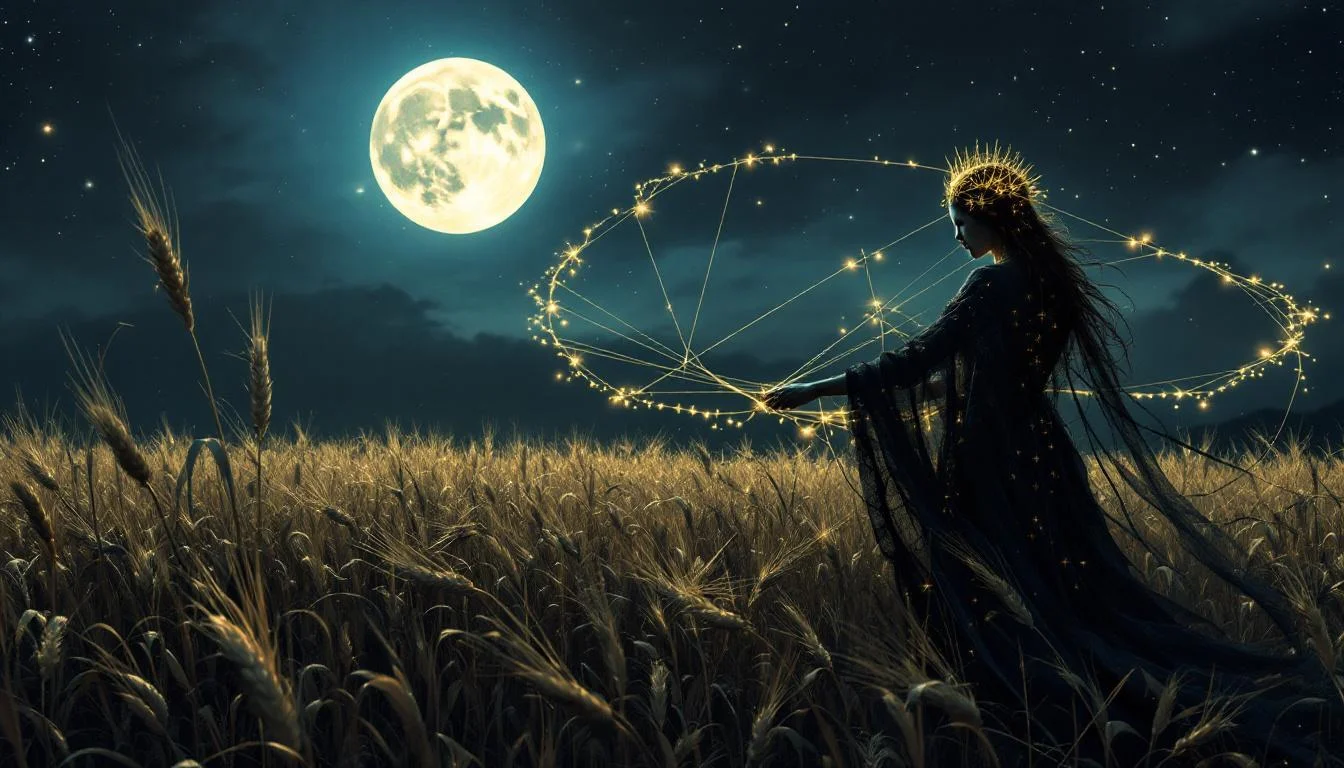
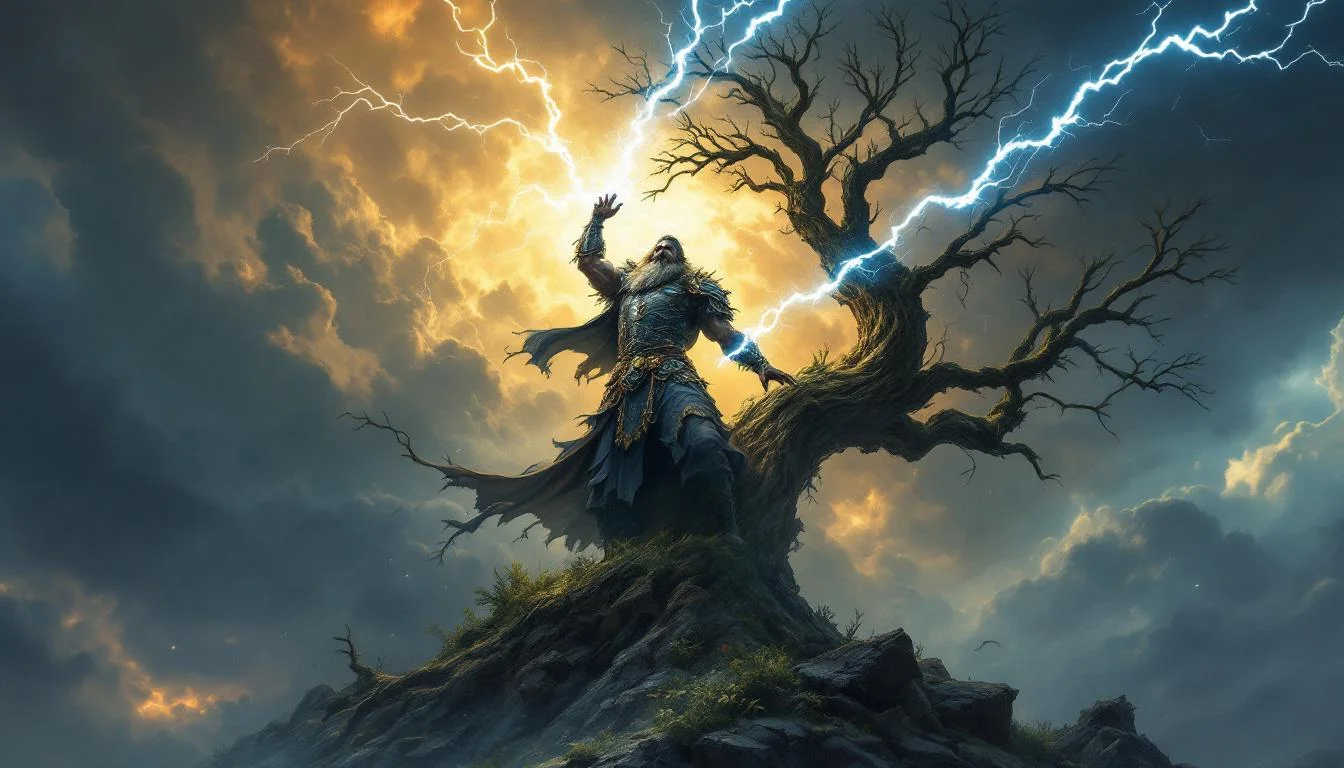
The scholar Aleksander Gieysztor proposed an elegant taxonomy of Slavic fire deities based on this passage: Svarog was celestial fire — the original divine spark. Perun was atmospheric fire — lightning. Dazhbog was solar fire — the sun, steady and life-giving. And Svarozhich was terrestrial fire — the hearth and forge flame that humans could tend. Four fires in four layers of the cosmos, all descending from the same source.
This means Dazhbog was not simply "a" sun god in the way that minor regional deities are sometimes associated with solar imagery. He was the sun personified, the fire in the sky that sustained all life, the second in a dynasty of fire that began at his father's anvil.
The Chariot and the Daughters of Dawn
The chronicles give us Dazhbog's identity. Folk tradition gives us his daily life.
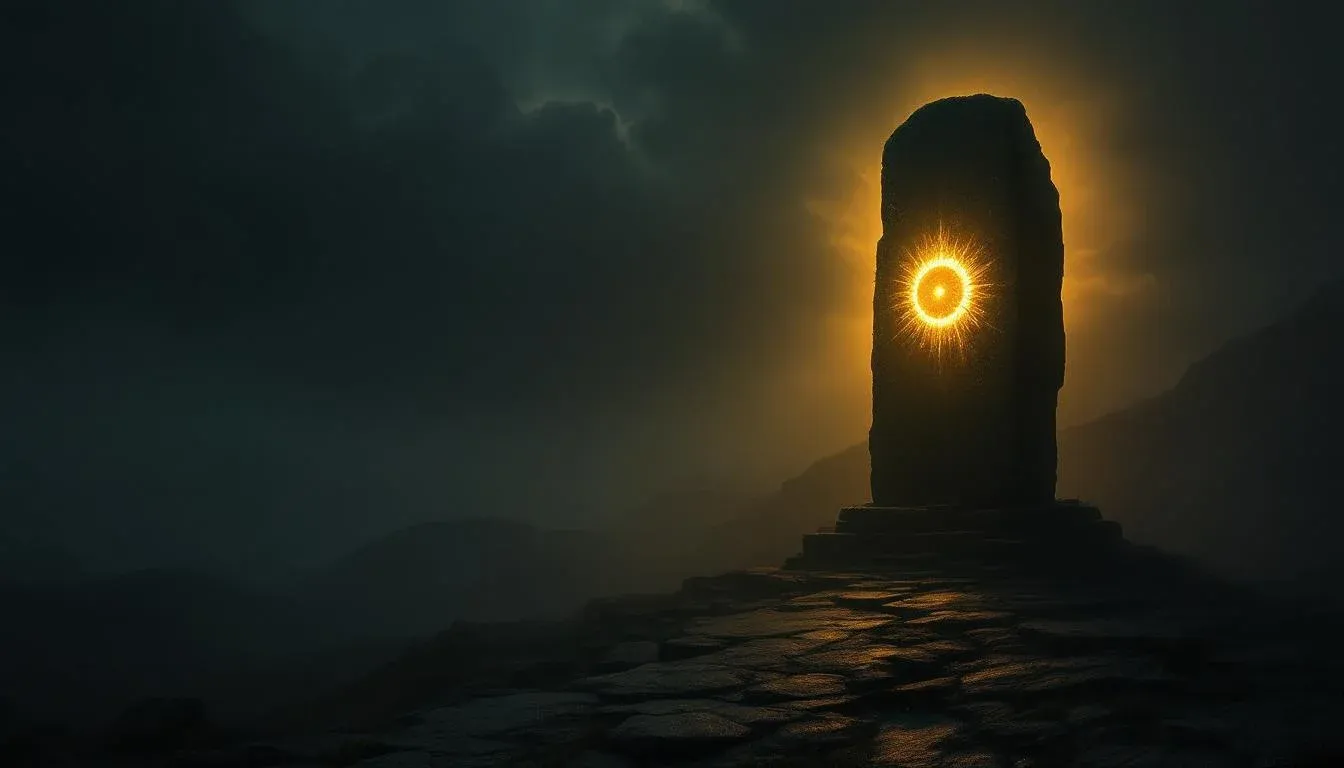
Across East Slavic folk belief, Dazhbog was imagined riding a golden chariot across the vault of the sky, pulled by three horses — one of gold, one of silver, one of diamond. Some versions say four horses with golden manes and wings of white fire. The details shift from village to village, but the image remains constant: the sun was not a passive disc hung in the sky but a god in motion, driving his team from horizon to horizon, and the length of the day was the measure of his journey.
He did not travel alone. Two daughters attended him — the Zorya, the goddesses of dawn and dusk. Zorya Utrennyaya, the Morning Star, opened the gates of her father's palace each dawn and let the chariot through. Zorya Vechernyaya, the Evening Star, closed the gates at nightfall when Dazhbog returned. In some traditions, a third sister — nameless, associated with midnight — watched the deepest hours of darkness when the sun god passed through the underworld.
This daily death and rebirth of the sun god mirrors patterns found across Indo-European mythology — the Egyptian Ra traveling through the Duat, the Norse Sol chased by wolves — but carries a distinctly Slavic inflection. Dazhbog's nightly passage through Nav, the underworld, was not merely an astronomical metaphor. It was a theological statement: the god who gives must also descend into darkness. Abundance has a cost. Light is something that must be fought for, every single morning.
Vladimir's Hilltop and the Pantheon of Six
In 980 AD, Prince Vladimir of Kiev — not yet baptized, still hedging his bets between paganism and the religions pressing in from every border — erected a hilltop shrine on a bluff above the Dnieper River. He set up six wooden idols and commanded his people to worship them. The Primary Chronicle preserves the list.
Perun stood first, with a head of silver and a mustache of gold. Then Khors. Then Dazhbog. Then Stribog, Simargl, and Mokosh.
Six gods. Not ten, not twenty — six. Vladimir was not attempting an encyclopedia of Slavic religion. He was building a state cult, selecting the gods that would unify his fractious realm under a single ritual framework. That Dazhbog made the cut — listed third, after the supreme thunder god and the enigmatic Khors — tells us he was not a minor figure. He was essential.
The relationship between Dazhbog and Khors has puzzled scholars for generations. Both appear to be solar deities. Why would Vladimir need two sun gods on the same hilltop? The most convincing theory, advanced by Boris Rybakov and refined by later scholars, distinguishes them by function: Khors was the physical sun disc — the visible orb, the astronomical object. Dazhbog was the sun's divinity — its will, its generosity, the conscious power behind the light. One was the lamp. The other was the hand that lit it.
This distinction matters because it reveals something about how pre-Christian Slavs understood the cosmos. The sun was not a single thing. It had a body and a soul, and each had its own name and its own worship. Dazhbog was not the heat on your skin. He was the reason there was heat at all.
Dazhbog's Grandchildren: The Claim of Divine Ancestry
No discussion of Dazhbog is complete without the most famous phrase ever written about him — a phrase that transformed a sun god into a national ancestor.
The Slovo o polku Igoreve — the Tale of Igor's Campaign — is a twelfth-century Old East Slavic epic describing the failed 1185 campaign of Prince Igor Svyatoslavich against the Cumans. It is arguably the single most important literary work of medieval Rus'. And in its most celebrated passages, the anonymous author reaches for Dazhbog.
When Igor's forces scatter and the land is ravaged, the poet writes of the destruction in cosmic terms: the livelihood of Dazhbog's grandchildren perishes amid the feuding of princes. The Russian people — or at least the princely class — are not merely worshippers of the sun god. They are his descendants. His blood runs in their veins. Their defeats are his grief.
This is extraordinary. No other Slavic god is credited with mortal descendants in surviving literature. Perun was feared and obeyed, but no one called the Russians "Perun's grandchildren." Mokosh was honored, but no prince claimed her bloodline. Dazhbog alone was understood as the divine progenitor — the god from whom the right to rule descended alongside the light. Solar kingship. The prince as heir of the sun.
Comparative mythology offers parallels. The Japanese imperial family claimed descent from Amaterasu, the sun goddess. Egyptian pharaohs were sons of Ra. Roman emperors called themselves Sol Invictus. But in the Slavic case, the claim persisted without institutional support — no priests maintained it, no temple enshrined it. It survived as poetry and as common knowledge, whispered in the same breath as Christian prayer.
The Silver Tsar: Dabog in Serbian Folklore
The East Slavic Dazhbog — luminous, generous, the sun in motion — is only half the story. Among the South Slavs, particularly in Serbian folk tradition, the same god appears under the name Dabog, and here his character darkens considerably.
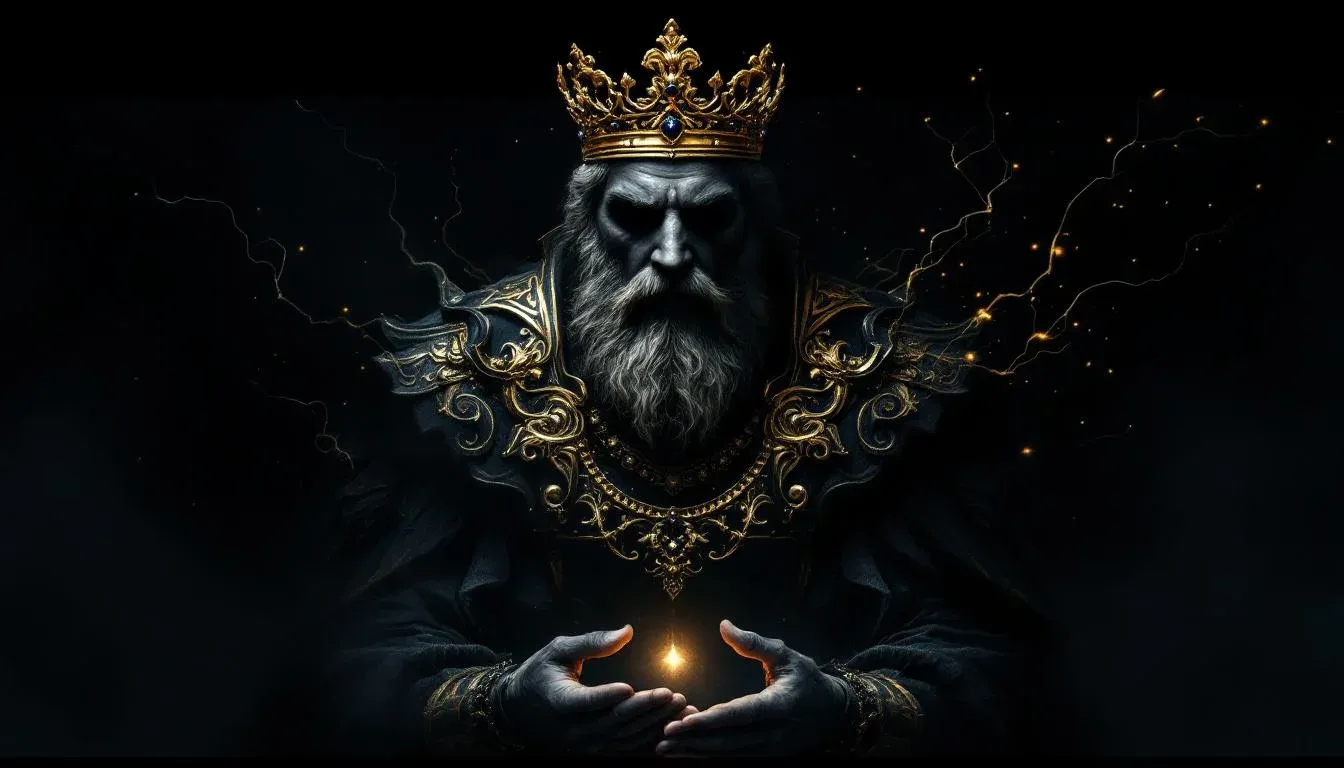
Serbian folklore remembers Dabog as a figure of opposition: "Dabog is tsar on earth, and the Lord God is in heaven." He is called the Silver Tsar — an underground ruler with a silver beard, lame, wrapped in animal skins, sometimes in the hide of a bear. He is a shepherd of wolves. He walks through the world of men with a limp and a predator's patience. And he can transform himself into a white wolf — an animal that became, in some traditions, the sacred beast of the Serbian people who considered themselves his descendants.
The scholar Veselin Čajkanović spent decades analyzing this figure and concluded that the chthonic Dabog of Serbian folklore and the solar Dazhbog of Russian sources are not contradictory — they are complementary. In numerous mythologies, solar deities possess a double nature. By day, the sun god is radiant and benevolent, riding his chariot across the sky, dispensing warmth and plenty. By night, he descends into the underworld and becomes something else — a ruler of the dead, a lord of darkness, a figure of dread. The light that gives also takes. The chariot descends.
This dual aspect resolves the apparent contradiction. Dazhbog was not two gods awkwardly merged. He was one god whose nature changed with the horizon. Above the earth, he was the giving god — generous, golden, the ancestor of kings. Below the earth, in Nav, he was the silver tsar — lame, wolfish, sovereign over everything the living cannot see. The sun at noon and the sun at midnight. The same fire, viewed from different worlds.
What the Sun Left Behind
In 988 AD, eight years after erecting his pantheon, Vladimir accepted Byzantine Christianity and ordered the idols torn down. Perun's statue was tied to a horse's tail and dragged through the streets of Kiev to the Dnieper. The fates of the other five idols are not recorded, but Dazhbog's wooden image presumably met the same water or the same flames.
The idol perished. The idea did not.
Two centuries later, the author of the Tale of Igor's Campaign still called his people Dazhbog's grandchildren, and no one blinked. Serbian villagers continued speaking of Dabog the Silver Tsar into the nineteenth century. Slavic folk calendars preserved solstice and equinox rituals — bonfires at midsummer, the turning of the sun at Yule — that carried echoes of solar worship stripped of the god's name but not his rhythm.
Modern Rodnovery practitioners have restored Dazhbog to his former position. They honor him at solstices, offer bread and honey to the sun, and invoke his name in rituals that attempt — with varying degrees of historical accuracy — to reconstruct what the chronicles and folk memory preserved. Whether these reconstructions are faithful to what tenth-century Slavs actually practiced is debatable. That the impulse to reconstruct them exists at all is not.
Dazhbog endures because his proposition was simple and irresistible: the sun is not indifferent. It gives on purpose. Light is not physics — it is generosity. Warmth is not radiation — it is a god keeping his promise. Every morning, the gates open, the horses surge forward, the chariot rises, and the giving god does what his name commands.
He gives.