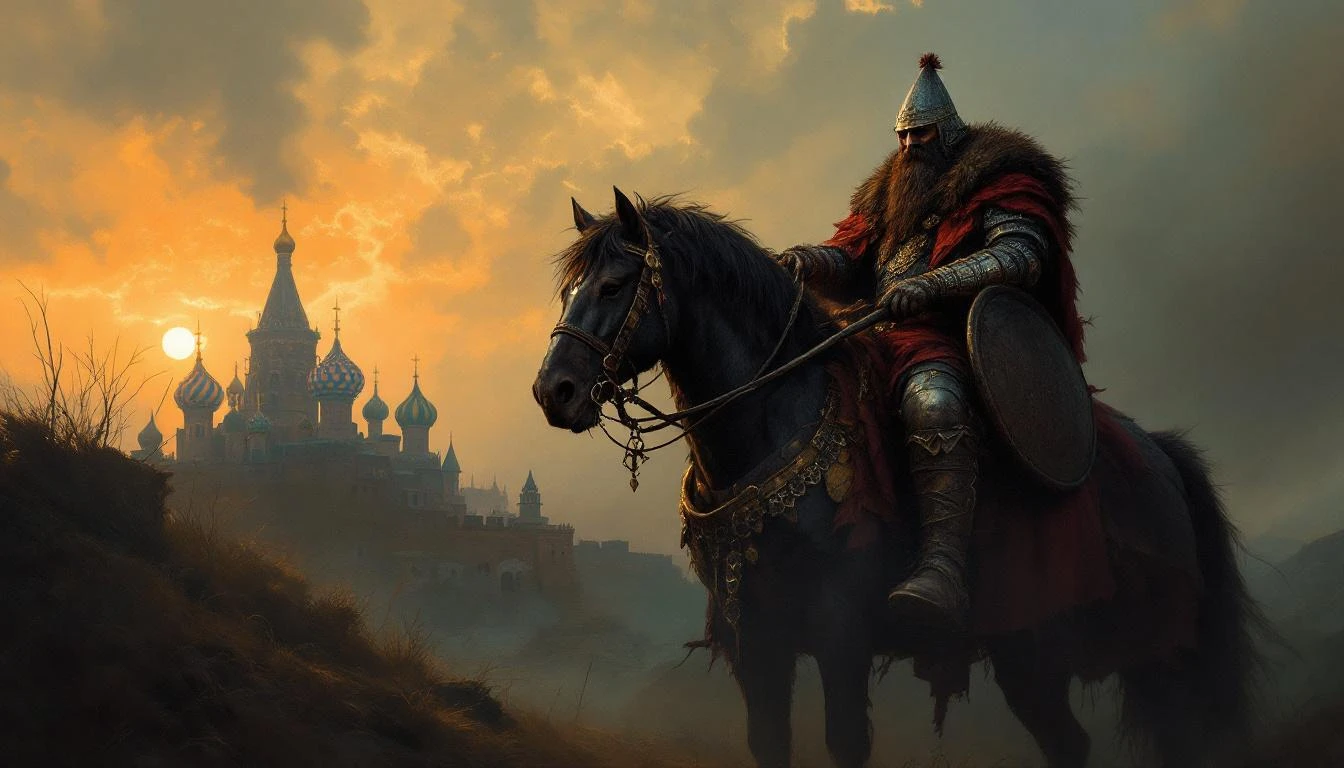
His mother told him not to go. Do not ride to the Saracen Mountains. Do not trample on baby dragons. Do not rescue Russian captives. And whatever you do, do not bathe in the Puchai River.
He did all four.
This is Dobrynya Nikitich in a single scene — the bogatyr who hears the warning, understands the danger, and rides straight into it anyway. Not because he is reckless. Because he believes the danger is his responsibility and nobody else's. Where Ilya Muromets is raw peasant strength and Alyosha Popovich is low cunning, Dobrynya is something different: the educated warrior, the nobleman who fights not only with his sword but with his words, his music, and his sense of duty.
He is the second of the three great bogatyrs of the Kievan byliny cycle, and in many ways the most interesting. Because Dobrynya is the one who can do everything — fight a dragon, negotiate a treaty, play the gusli at a feast, win a game of chess against a foreign king — and the byliny never let him rest on any single talent. They keep pushing him into situations where strength alone is not enough, where brains alone are not enough, where only the full range of a cultivated man can see him through.
And behind the legend, there may have been a real man. A man who baptized a city with fire.
The Noble Birth
The first thing the byliny tell you about Dobrynya is his blood. He is not a peasant like Ilya. He is not a priest's son like Alyosha. He is a nobleman — some versions say a boyar's son, others say he is the nephew of Prince Vladimir himself. His father is Nikita Romanovich, a man of wealth and standing in Ryazan. His mother, Amelfa Timofeevna, is a woman of fierce intelligence who gives advice that Dobrynya would be wise to follow and almost never does.
In the strict social hierarchy of the byliny, each of the three great bogatyrs occupies a different rung. Ilya comes from the bottom — the peasant farmer's son from Karacharovo. Alyosha comes from the clergy — educated but not noble. Dobrynya comes from the top — the aristocratic warrior class, the men who governed cities and commanded armies.
Dobrynya's stories are about the obligations of privilege. He does not fight because he has nothing to lose. He fights because he has everything to lose and considers the fight more important than the comfort. His education is not decoration. It is a tool, as practical as his sword, and the byliny show him using it constantly — reading situations, speaking foreign languages, playing music to gain entrance to hostile courts, negotiating when negotiation can prevent bloodshed.
The nobleman among the bogatyrs is not softer than the peasant. He is more versatile.
The Dragon at the Puchai River
The central bylina of Dobrynya's cycle — recorded in dozens of variants across the Russian North — is his battle with Zmey Gorynych, the three-headed dragon. And it begins with a mother's warning ignored.
Amelfa Timofeevna tells her son to stay away from three places: the Saracen Mountains, where dragons nest; the Puchai River, whose waters are treacherous; and the captive lands, where Russian prisoners are held. Dobrynya rides directly to all three.
He reaches the Puchai River on a hot day and decides to bathe. He strips off his armor, leaves his weapons on the bank, and wades into the water. And then the sky goes dark.
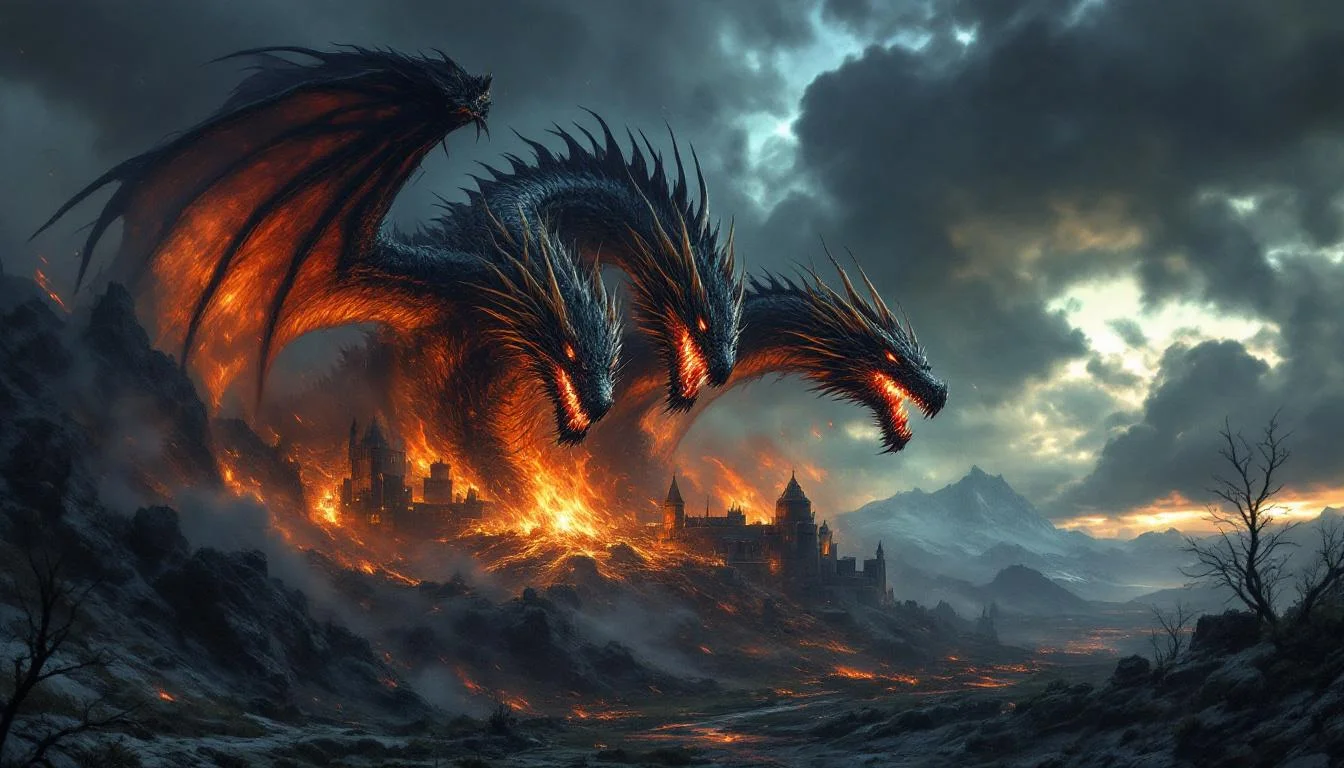
Zmey Gorynych descends — three heads, twelve trunks in some tellings, fire pouring from every mouth. The dragon sees the naked, unarmed bogatyr standing waist-deep in the river and laughs. Now I have you, Dobrynya Nikitich.
What happens next is one of the strangest weapon choices in all of world mythology. Dobrynya, with no sword, no spear, no bow, looks around and finds on the riverbank a shapka zemli grecheskoy — a "hat of the Greek land." This is not a magic artifact in most tellings. It is a pilgrim's hat, a heavy felt cap of the kind travelers brought back from Byzantine Greece. Dobrynya fills it with river sand, swings it, and strikes the dragon across its heads.
The blow staggers Zmey Gorynych. The dragon crashes to the ground. Dobrynya pins it and raises the hat for the killing strike — and the dragon speaks.
Let us make a pact, Dobrynya Nikitich. I will not fly over the Russian land. I will not carry off Christian people. You will not ride to the Saracen Mountains.
Dobrynya, the diplomat, agrees. He releases the dragon. They swear oaths. Dobrynya rides home.
The dragon breaks the pact immediately.
Myth Callout: The shapka zemli grecheskoy — the "Greek hat" — has puzzled scholars for generations. Some interpret it as a memory of Byzantine helmets brought to Rus through trade. Others see it as a symbolic object: Greece represented Christianity and civilization in the medieval Slavic mind, so a "Greek hat" filled with native Russian earth becomes an image of faith and homeland combined into a weapon. The byliny never explain the hat. They simply present it as the tool that brought down a dragon.
The Second Battle
Zmey Gorynych flies to Kyiv, descends on the court of Prince Vladimir, and snatches Zabava Putyatishna — the prince's niece — carrying her back to his mountain lair.
Vladimir summons his court and turns to Dobrynya: You made the pact with the dragon. You trusted the serpent. This is your fault. Go and fix it.
The accusation is unfair but not entirely wrong. Dobrynya did trust the dragon's word. He chose negotiation over killing when he had the creature pinned, and the dragon repaid his mercy with treachery.
Dobrynya rides out alone. His mother gives him a silk whip and tells him it will save his life when the moment comes. He reaches the Saracen Mountains and finds the dragon's lair.
The battle lasts three days. On the third day, Dobrynya's arms fail. He is ready to retreat. And then a voice comes from the sky — in some versions the voice of God, in others an unnamed heavenly power — and tells him: Do not give up, Dobrynya. Fight three more hours, and the victory will be yours.
He fights three more hours. Zmey Gorynych falls. The blood pours from the dragon's body in such quantities that the earth cannot absorb it. Dobrynya stands knee-deep in dragon blood for three days, sinking into the gore. The heavenly voice speaks again, telling him to strike his spear into the earth and say: Mother Earth, open and swallow this dragon blood. The earth opens. The blood drains away. Dobrynya enters the cave and frees Zabava Putyatishna, along with every other Russian captive the dragon had taken.
He brings them all home. He does not ask for a reward.
Source Note: The folklorist A.F. Gilferding, recording byliny in the Onega region in 1871, noted that singers regarded Dobrynya's dragon-slaying as fundamentally different from Ilya Muromets's battles. Ilya overcomes enemies through overwhelming strength. Dobrynya overcomes them through endurance — the willingness to keep fighting past the point where any reasonable man would stop.
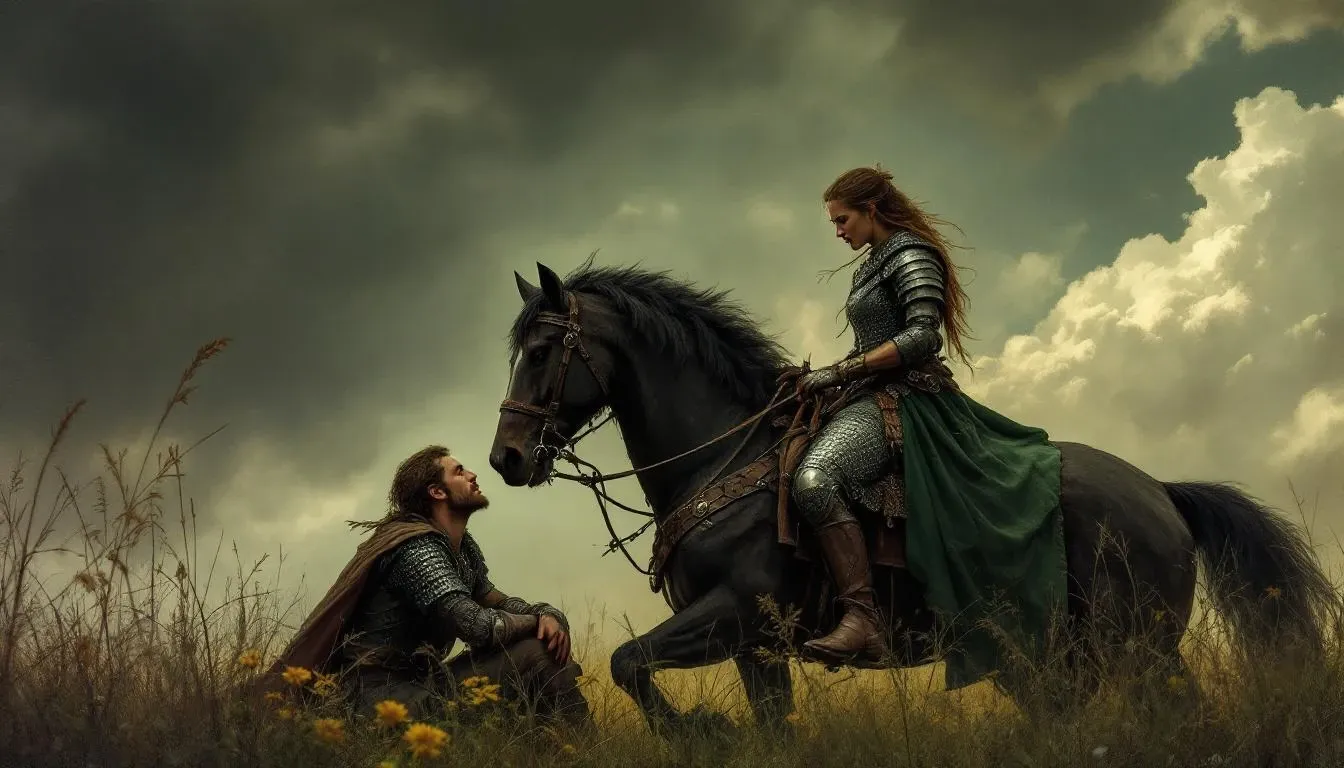
The Gusli Player and the Warrior Woman
No other bogatyr plays music. This is Dobrynya's alone.
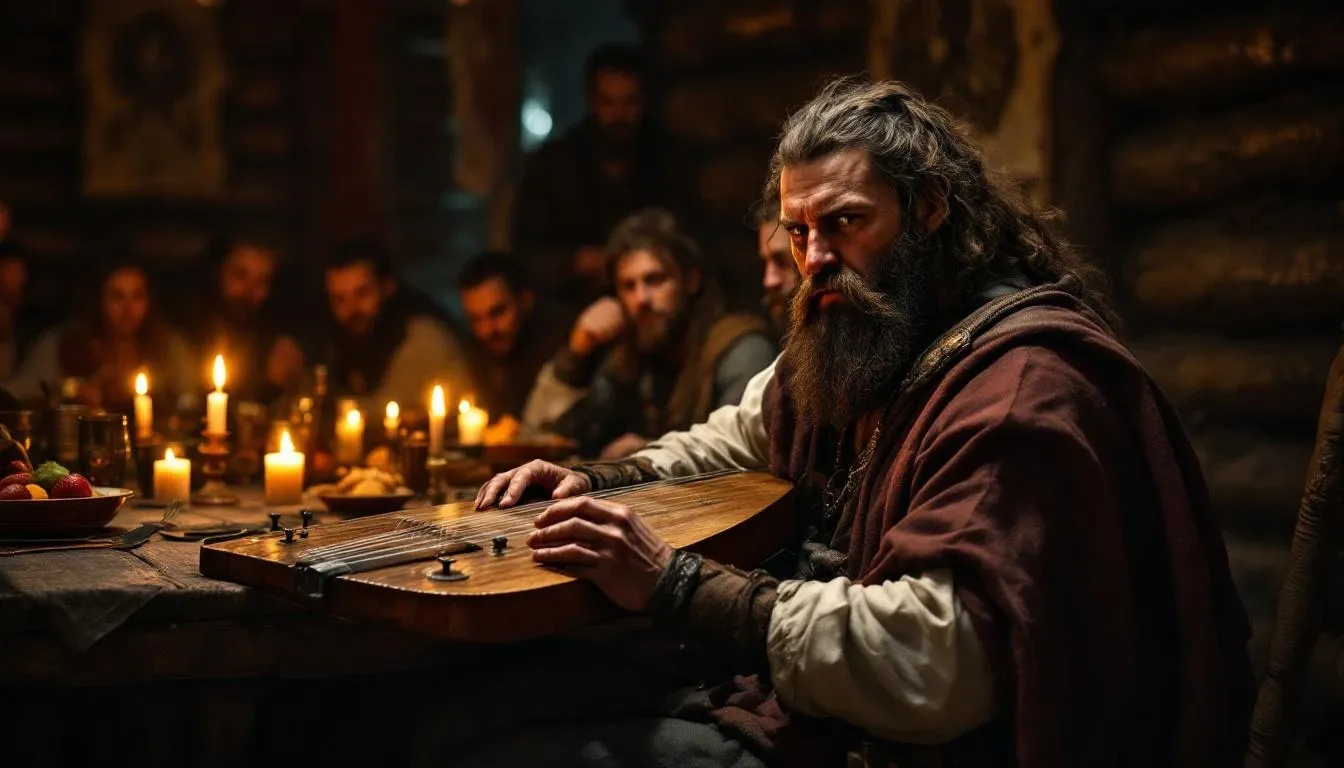
The gusli — a psaltery-like stringed instrument, the oldest known instrument in the Slavic tradition — appears in Dobrynya's byliny as naturally as a sword appears in Ilya's. He plays at feasts. He plays to gain entrance to places where weapons would be confiscated. He plays, in one remarkable bylina, disguised as a wandering musician at his own wife's wedding to another man.
Dobrynya rides out on a long mission and does not return for years. Alyosha Popovich arrives at Nastasya Mikulishna's door with false news: Dobrynya is dead. Under pressure from Prince Vladimir, Nastasya agrees to marry Alyosha. Dobrynya returns on the wedding day disguised as a gusli player. He plays so beautifully that Nastasya weeps without knowing why. Then he drops their wedding ring into her cup of wine, and she knows.
Nastasya Mikulishna is no ordinary wife, either. She is a polyanitsa — a woman warrior, daughter of Mikula Selyaninovich. Before she married Dobrynya, she defeated him in single combat and stuffed him in her saddlebag. She pulled him out later, decided he was handsome enough, and proposed. The byliny do not present the defeat as shameful. Dobrynya's nobility is not in winning every fight. It is in how he handles losing, and what kind of partnership he builds with the woman who bested him.
The Real Dobrynya
Unlike most bylina heroes, Dobrynya Nikitich has a historical prototype so specific that scholars can name him and date him.
His name was Dobrynya — simply that, as was common in tenth-century Rus. He was the maternal uncle of Prince Vladimir Svyatoslavich, Vladimir the Great, the ruler who converted Kievan Rus to Christianity in 988. Dobrynya's sister, Malusha, was Vladimir's mother. This made Dobrynya a member of the extended ruling dynasty — the man who raised, tutored, and guided the prince who would reshape the entire Slavic world.
The historical Dobrynya was a voivode — a military commander — and a political operator of considerable skill. When Vladimir's brother Yaropolk seized power in Kyiv, it was Dobrynya who organized Vladimir's flight to Scandinavia, recruited a Varangian army, and planned the campaign that brought Vladimir back to claim the throne.
And when Vladimir decided that Rus would become Christian, it was Dobrynya he sent to handle the hardest conversion of all.
Novgorod did not want to be baptized. The year was 990 — the chronicles disagree on the precise date but agree on the event. The Novgorodians destroyed the bridge across the Volkhov River, assembled on the trade side of the city, and declared they would rather die than abandon their gods. The idol of Perun stood in the city, and the people gathered around it.
Dobrynya attacked. His commander Putyata crossed the river at night. The Novgorodians fought back and burned the Christian quarter. In response, Dobrynya ordered fires set on the trade side — threatening to burn the merchants' warehouses, their goods, their livelihoods. The resistance collapsed. The Novgorodians agreed to baptism. Dobrynya had the idol of Perun dragged through the streets, beaten with sticks, and thrown into the Volkhov River. The people watched their god float downstream, and many wept.
A saying survived for centuries: Putyata krestil mechom, a Dobrynya ognyom. "Putyata baptized with the sword, and Dobrynya with fire."
The historical Dobrynya — diplomat, warrior, political strategist, the man who used fire when words failed — maps onto the bylina Dobrynya with uncomfortable precision.
The Storm Myth Beneath the Story
There is a deeper layer beneath the dragon-slaying, one that reaches back before Christianity, before the byliny, before the Kievan state itself.
Zmey Gorynych is a serpent — a creature of water and caves, of the lower world, of chaos. Dobrynya encounters the dragon at a river. He fights it with an object associated with the Greek — that is, Christian — world. He calls upon a heavenly voice for aid. And in the aftermath, the earth itself opens to swallow the dragon's blood.
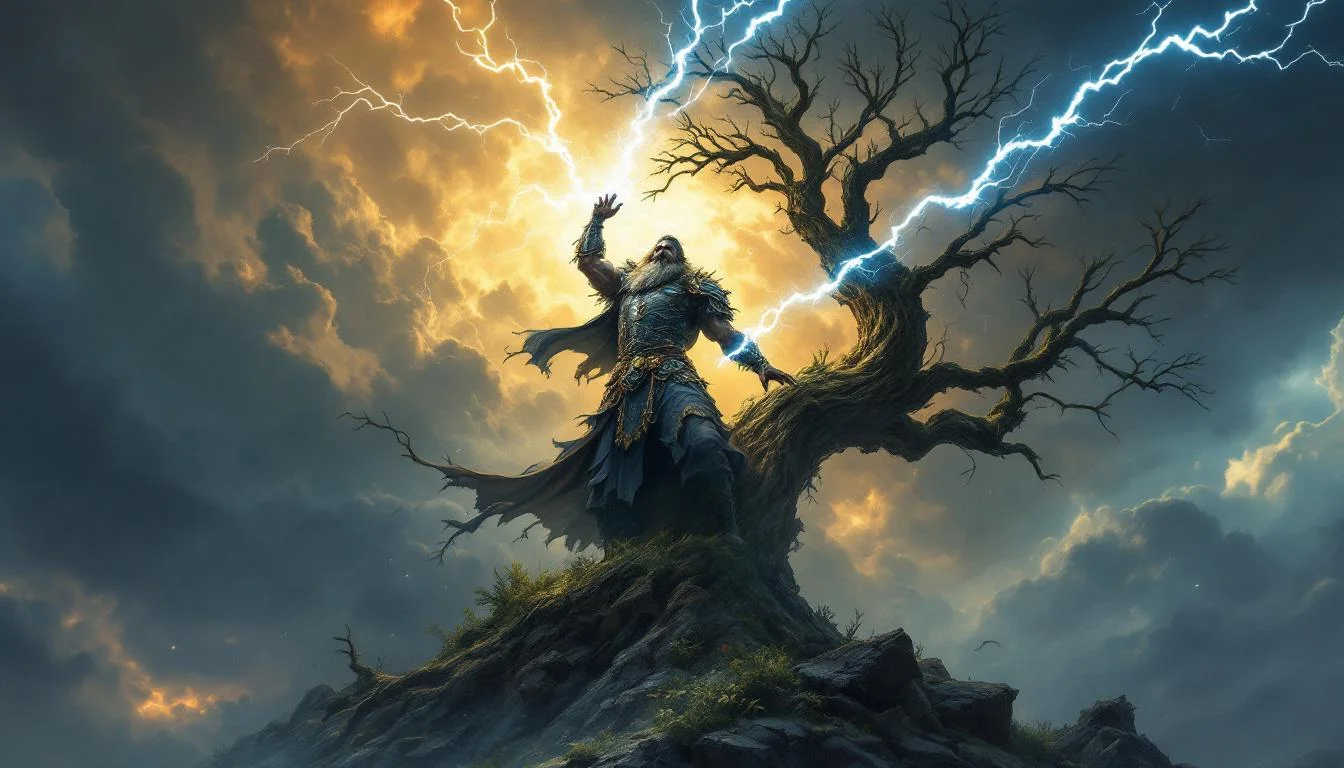
Scholars of comparative Slavic religion — Ivanov and Toporov foremost among them — reconstructed a fundamental mythological pattern: the thunder god Perun battles the serpent-god Veles, who has stolen cattle, water, or people from the upper world. Perun strikes Veles with lightning. The serpent flees into water, into caves. Perun pursues and defeats him, releasing the stolen goods and restoring order.
Dobrynya's dragon-slaying follows this structure with remarkable fidelity. The serpent steals a woman from the prince's court. The hero pursues the serpent to its mountain lair. A heavenly voice aids him. The earth opens to consume the serpent's remains.
The historical Dobrynya destroyed Perun's idol in Novgorod. The legendary Dobrynya reenacts Perun's greatest myth. The man who killed the god's image in history became the god's avatar in story. This is how cultures process traumatic change — by folding the old into the new, by letting the thunder god live on inside the Christian knight, by telling the same story in different clothes.
Why Dobrynya Endures
He endures because he is the hero who does not simplify.
Ilya Muromets is the stronger man. Every bylina says so. But if you need someone who can fight a dragon for three days, negotiate a treaty, play the gusli at a foreign court, wrestle a warrior-woman and marry her with grace, retrieve a kidnapped princess and free every captive in the cave — if you need a man for whom every situation demands a different tool and who carries all of them — you send Dobrynya.
He played the gusli. He slew the dragon. He baptized Novgorod with fire. He married a woman who beat him in fair combat and never pretended otherwise. He served a prince who did not always deserve his loyalty, and he served the land that always did.
The noble bogatyr. The second of three. And perhaps — in the ways that matter most to a world more complicated than any single strength can handle — the most complete hero the byliny ever made.