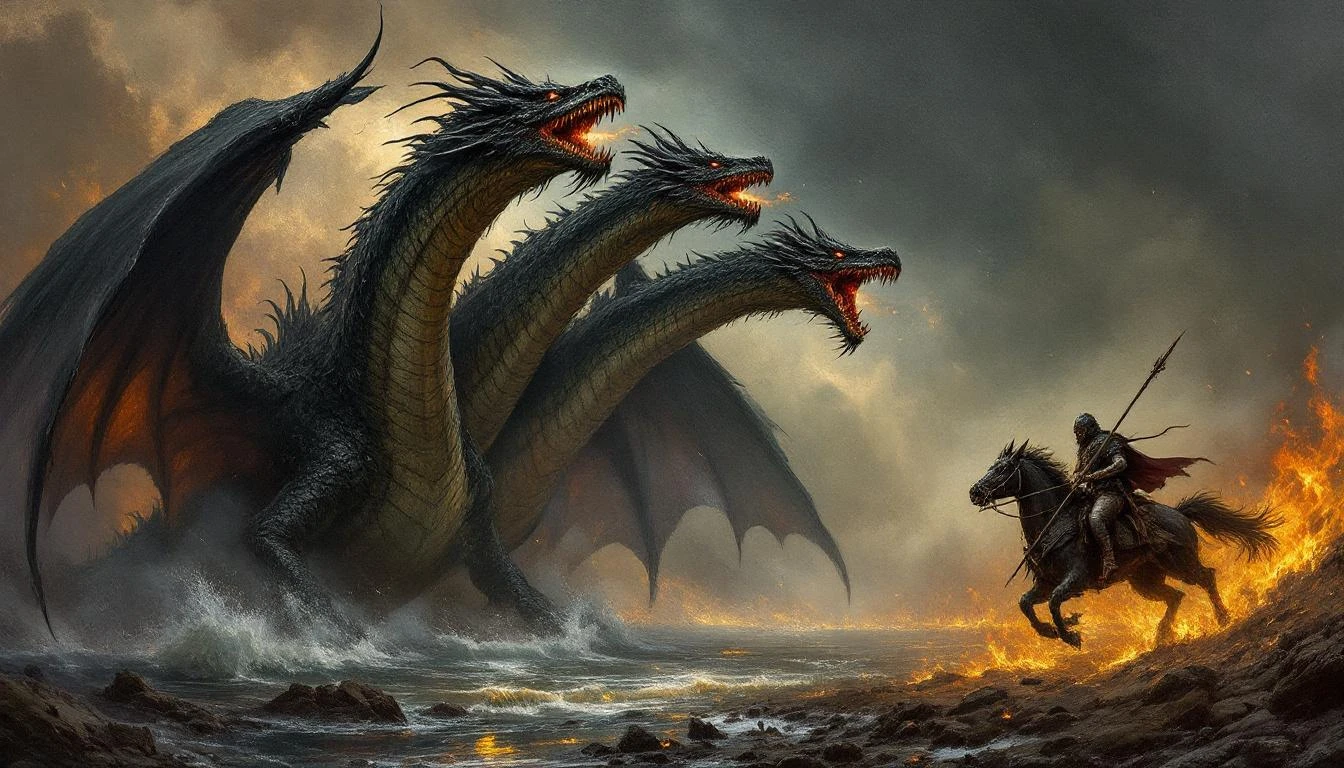
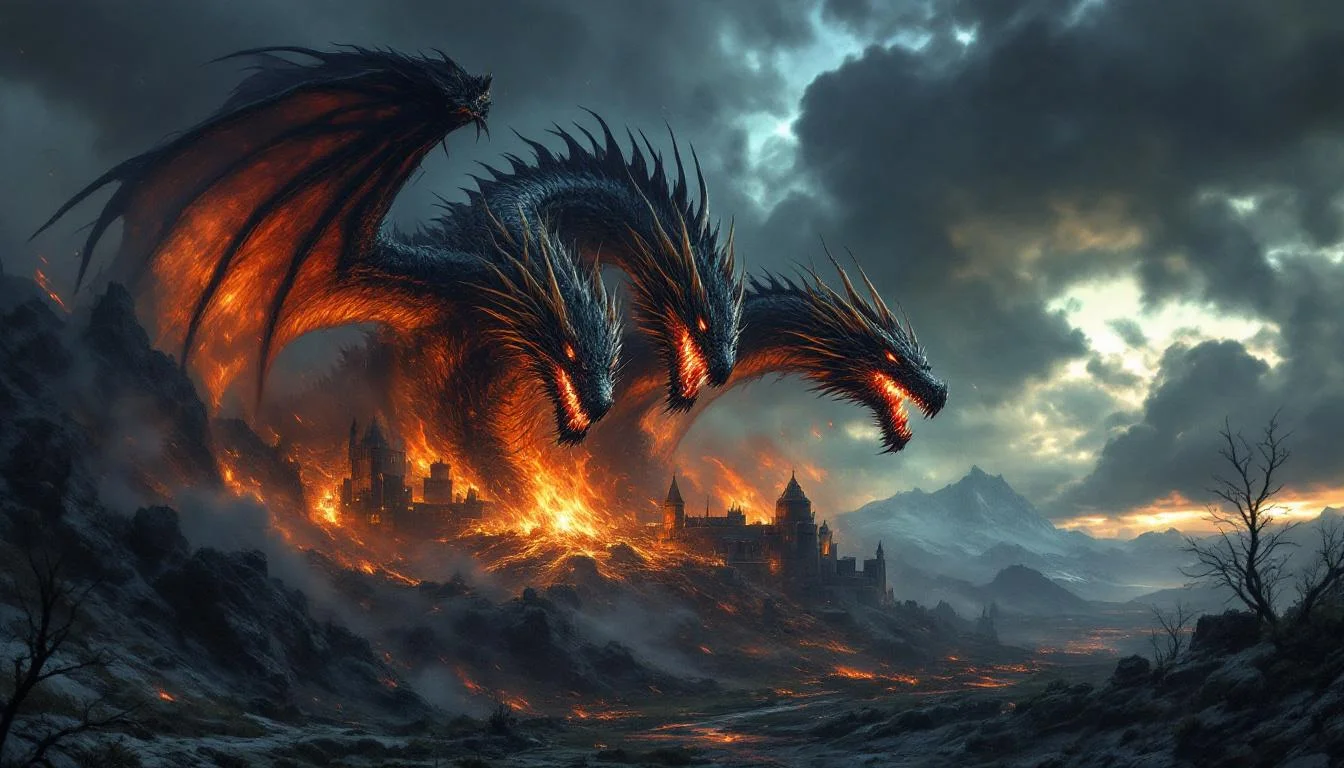
He sat on the stove for thirty-three years. Not out of laziness — his legs did not work. His arms hung limp. The son of a peasant farmer in the village of Karacharovo, near the town of Murom, Ilya could not walk, could not stand, could not lift a cup to his own mouth without help. He watched through the window as his father worked the fields. He listened to the stories travelers told when they stopped for bread and water. He grew old before he ever grew up.
Then the pilgrims came, and everything changed.
This is the central fact of the Ilya Muromets legend, the detail that separates him from every other warrior in Slavic folklore: he was broken first. He did not begin as a prince with a magic sword or a nobleman's son trained in combat from childhood. He began as a cripple on a stove, a burden to his parents, a man the village had written off. The byliny — the oral heroic poems of medieval Russia — insist on this point. They do not rush past his paralysis to get to the battles. They dwell on it. Thirty-three years is not a round number chosen for convenience. It is a specific, deliberate span, echoing the age of Christ at crucifixion, and the singers who performed these poems knew exactly what they were doing with that parallel.
The hero of the East Slavic world is not born strong. He is made strong, and only after he has learned what it means to be weak.
The Healing
The pilgrims who healed Ilya are called kaliki perekhoziye — wandering holy men, pilgrims who traveled on foot between sacred sites, carrying staffs and singing spiritual songs. In the byliny, they are sometimes described as two old men, sometimes three. Their appearance varies between tellings. What does not vary is the sequence of events.
They arrive at the house of Ivan Timofeevich, Ilya's father, while the family is away working in the fields. Only Ilya is home, because Ilya is always home. The pilgrims call out to him, asking for water. Ilya tells them he cannot move. They tell him to get up and walk. And he does.
This is not presented as a gradual recovery. There is no physical therapy, no slow rehabilitation. Ilya stands, walks to the well, draws water, and brings it to the pilgrims. They tell him to drink from the cup himself. He drinks, and feels the strength of the earth flow into his body. They ask him: How strong do you feel? He says: If there were a pillar from the earth to the sky, and a ring on that pillar, I could turn the whole world over.
Too much, the pilgrims say. They take some of the strength back. They tell him to drink again. This time the dose is correct. He is the strongest man alive, but not so strong that he would destroy the world by accident. The pilgrims give him instructions: go to the city of Chernigov, then to Kyiv. Serve Prince Vladimir. Defend the Russian land. Do not fight Svyatogor, the ancient giant — that is a battle you cannot win.
Then they leave. Ilya saddles a horse — in some versions a colt he raises from nothing, in others a mighty steed his father could never afford — and rides out of Karacharovo for the first time in his life.
He is thirty-three years old, and his story is just beginning.
Myth Callout: The kaliki perekhoziye appear throughout Russian byliny as figures of immense hidden power. Despite their humble appearance as beggars and pilgrims, they carry knowledge and strength that surpasses even the bogatyrs. In some versions, the kaliki who heal Ilya are implied to be divine messengers — angels or old gods wearing human rags.
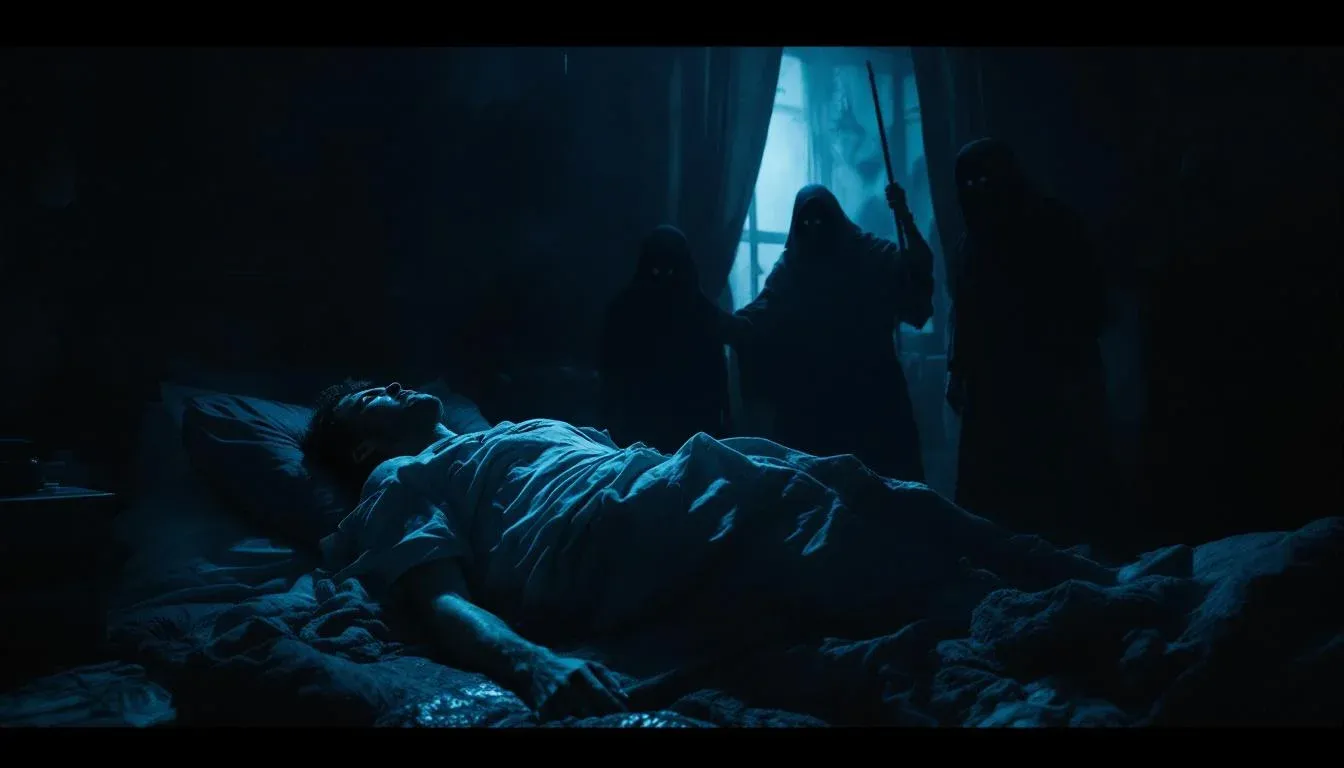
The Peasant Problem
Every culture has warrior heroes. What makes Ilya Muromets unusual — genuinely unusual, not just within Slavic tradition but in world mythology — is his class.
He is a peasant. His father is a peasant. His grandfather was a peasant. The byliny never pretend otherwise. There is no secret royal blood, no hidden lineage that gets revealed in the third act. Ilya is the son of a farmer, and he remains the son of a farmer even when he sits at the right hand of Prince Vladimir in Kyiv.
This matters because the other great bogatyrs of the Kievan cycle come from higher stock. Dobrynya Nikitich is a nobleman, often described as Prince Vladimir's own nephew. Alyosha Popovich is the son of a priest — popovich literally means "priest's son" — which placed him in the educated clerical class. Among the three great bogatyrs of Russian tradition, Ilya alone comes from the bottom of the social order.
The byliny use this distinction constantly. When Ilya arrives at Vladimir's court, he is not welcomed with open arms. The prince is suspicious. The boyars sneer. In several versions, Vladimir throws Ilya into a dungeon for three years — a second imprisonment that mirrors his thirty-three years on the stove. Ilya endures it without complaint. When the Tatars eventually attack and none of the noble warriors can stop them, it is Ilya who is released, Ilya who rides out, Ilya who saves everyone. The message could not be more plain: birth means nothing. Strength and loyalty mean everything.
This was a radical idea in a feudal society. The audiences who listened to these byliny — peasants themselves, gathered around fires in winter, hearing the poems sung by traveling performers — understood what the story was telling them. The greatest defender of the Russian land was one of them. Not a prince. Not a priest's son. A farmer's boy from a village so small you could miss it from the road.
The Road to Kyiv and Nightingale the Robber
Ilya's first great deed, and the one told most often — recorded 132 times across different collectors and regions — is his journey from Chernigov to Kyiv and his encounter with Solovei-Razboynik, the Nightingale the Robber.
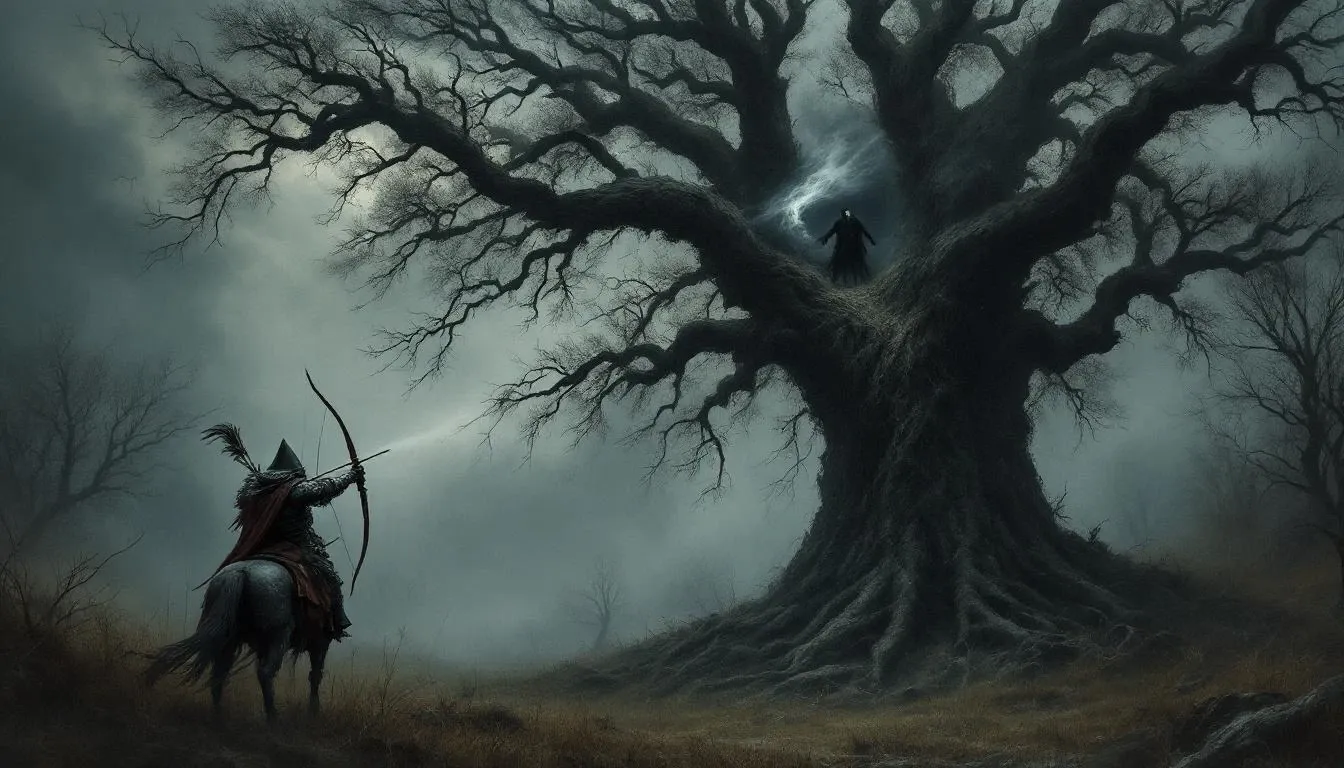
The road between the two cities is blocked. It has been impassable for thirty years. No one — not merchants, not soldiers, not even princes with armed escorts — can travel the direct route. They must go the long way around, adding weeks to the journey. The reason sits in an oak tree by the Smorodina River: Solovei-Razboynik.
The Nightingale is not a bird. Or rather, he is not only a bird. The byliny describe him as a creature with both human and avian features. He has a human family — a wife, daughters, sons-in-law — who live in a compound of wooden buildings. He sits in his oak tree, and when travelers approach, he whistles.
The whistle is his weapon. It is not a pleasant birdsong. It is a blast of sound so powerful it flattens forests, kills horses, and strikes men dead where they stand. The earth shakes. The leaves fall from the trees. Anyone within range is destroyed. For thirty years, this single creature has cut the main road to Kyiv, and the combined might of the Kievan state has been unable to do anything about it.
Ilya rides straight down the blocked road. His horse stumbles when the Nightingale whistles, but Ilya holds firm. He draws his bow — a weapon that appears again and again in Ilya's stories, marking him as a hunter and a commoner rather than a swordsman and a knight — and shoots the Nightingale through the right eye. The creature falls from the oak. Ilya ties him to his stirrup and drags him to Kyiv.
At Vladimir's court, the prince does not believe Ilya's story. A single man defeated the creature that has terrorized the road for three decades? Impossible. Vladimir demands a demonstration: make the Nightingale whistle. Solovei-Razboynik, bleeding and bound, asks for wine to wet his throat. Ilya, wiser than the prince, tells the Nightingale to whistle at half-strength only. Even at half-strength, the whistle blows the roofs off the palace buildings and knocks the courtiers flat. Vladimir is terrified.
Ilya takes the Nightingale to an open field and cuts off his head. The road to Kyiv is open again.
Source Note: The folklorist A.F. Gilferding, collecting byliny in the Onega region in 1871, recorded some of the most detailed versions of the Nightingale the Robber cycle. He noted that the singers regarded Ilya's defeat of Solovei-Razboynik as the defining moment of the hero's career — the act that proved a peasant could do what princes could not.
The Three Bogatyrs
In Russian cultural memory, Ilya Muromets does not stand alone. He is the eldest and strongest of three heroes who serve Prince Vladimir and defend the borders of Kievan Rus. The other two are Dobrynya Nikitich, the nobleman and dragon-slayer who defeated Zmey Gorynych, and Alyosha Popovich, the clever priest's son who fights through cunning rather than brute force.
The three represent a deliberate composition. Ilya is strength. Dobrynya is courage and skill. Alyosha is wit and trickery. Together, they form a complete image of the ideal warrior — one who fights with power, honor, and intelligence combined.
But they are not equals. The byliny are clear on the hierarchy: Ilya is the leader. When threats come that the other two cannot handle, Ilya steps in. When Vladimir needs a champion for the most dangerous mission, he sends Ilya. Dobrynya and Alyosha are great warriors, but Ilya is the greatest. The peasant outranks the nobleman and the priest's son on the battlefield, and nobody in the story finds this strange. In the world of the byliny, strength is its own aristocracy.
The famous 1898 painting by Viktor Vasnetsov — Bogatyrs — captures this relationship perfectly. Ilya sits in the center on a massive black horse, holding a spear, staring outward with the calm attention of a man who has seen everything and fears nothing. Dobrynya is at his right, hand on his sword, ready and alert. Alyosha is at his left, lighter and younger, already reaching for his bow. The composition tells you everything: Ilya is the pillar, and the other two are built around him.
Ilya and Prince Vladimir
The relationship between Ilya and Vladimir is one of the most psychologically complex dynamics in the byliny. It is not a simple lord-and-vassal bond. It is fraught with tension, resentment, and mutual dependence.
Vladimir needs Ilya. Without him, Kyiv falls. But Vladimir also resents Ilya — resents his independence, his bluntness, his refusal to behave like a courtier. Ilya speaks plainly. He does not flatter. When Vladimir makes a foolish decision, Ilya tells him so. In one famous bylina, Vladimir throws a feast and seats everyone by rank but gives Ilya no place at all. Ilya, furious, goes out into the streets and shoots arrows at the golden domes of the churches, then sells the gold to buy drinks for the common people. This is not the behavior of an obedient servant. This is a peasant reminding a prince that power comes from the people who fight, not from the people who feast.
Vladimir throws Ilya into a dungeon. Three years pass. The Tatars attack under their terrible leader Kalin-Tsar. No one can stop them. Vladimir begs Ilya's comrades to free him, and they do. Ilya rides out, defeats the Tatar army single-handedly or with a small band of bogatyrs, and saves Kyiv. He does not demand an apology. He does not hold a grudge. He returns to service because the land needs defending, and defending it is what he was made to do.
This pattern — insult, imprisonment, crisis, salvation — repeats across multiple byliny. It tells us something the medieval audiences understood viscerally: the powerful need the strong more than the strong need the powerful. Vladimir sits on a throne, but Ilya holds the border. Without the peasant's arm, the prince's crown means nothing.
The Deeper Mythology
Behind the human drama of the byliny, older mythological layers are visible.
Ilya's paralysis and miraculous healing follow a pattern scholars call the "wounded healer" or the "sleeping hero" archetype — a figure who lies dormant until the moment of greatest need. The thirty-three years on the stove parallel other Indo-European myths of gods and heroes who withdraw from the world before returning with transformative power.
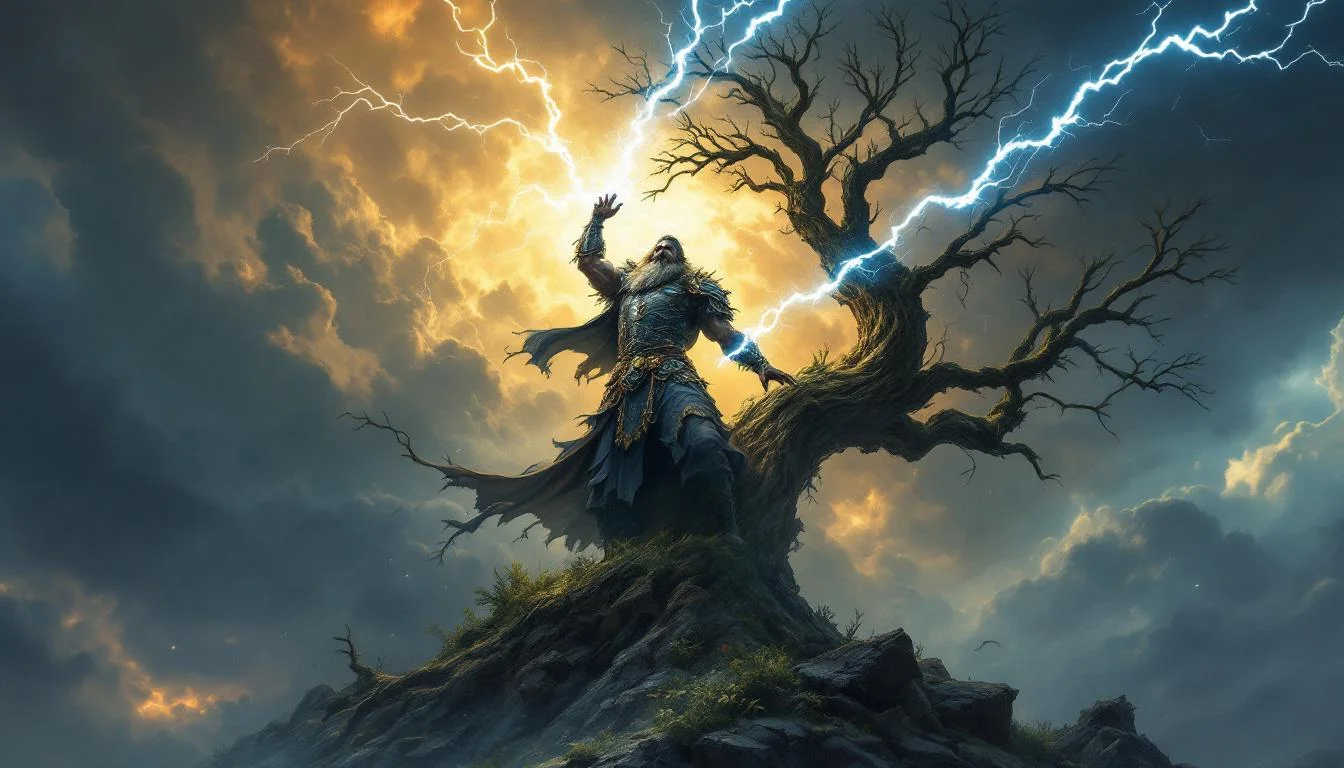
Some scholars have connected Ilya to Perun, the Slavic thunder god, noting that Ilya's weapon of choice is the bow (a distant striker, like lightning), his adversaries are often serpentine or chaotic figures associated with the lower world, and his role is to restore cosmic order against the forces of chaos — the same function Perun served in the pre-Christian Slavic pantheon. The Nightingale the Robber, who sits in a tree and controls the wind with his whistle, has been compared to Veles, the god of the underworld and wild places, who in the reconstructed Slavic storm myth steals from the upper world and must be struck down by the thunder god.
These connections are debated. Not every folklorist accepts them. But the structural parallels are persistent: a hero of the sky and order defeats a creature of the earth and chaos, clearing the road — literally and symbolically — between the human world and the divine center of power at Kyiv.
The Real Ilya?
Here the story takes a turn that no other bylina hero can match. Because Ilya Muromets may have been a real person, and the evidence is lying in a cave in Kyiv.
In the Near Caves of the Kyiv Pechersk Lavra — the great monastery complex on the hills above the Dnipro River — there is a mummified body labeled as the relics of Saint Ilya of Murom. The Orthodox Church canonized him in 1643, recognizing him as Ilya Pechersky, a warrior who became a monk late in life.
In 1988, Soviet researchers conducted a forensic examination of the remains. What they found was striking. The body belonged to a man of above-average height for the 12th century — approximately 177 centimeters, or five feet ten inches. He was powerfully built. His bones showed signs of a spinal condition — abnormalities consistent with a form of paralysis in his younger years. His body also bore the marks of numerous combat wounds, including damage from a spear. The estimated age at death was 40 to 45 years.
A man from the Murom region. Paralyzed in youth. A warrior in his prime. A monk at the end. Buried in Kyiv.
No one can prove that the mummified monk in the Lavra is the "real" Ilya Muromets. The byliny are not history — they compress centuries of events, shuffle characters from different eras, and embellish everything with the supernatural. But the coincidences are difficult to ignore. A man with the right name, from the right town, with a spinal condition that matches the legend, whose body shows the wounds of a life spent fighting — he is lying in a cave in Kyiv, and he has been lying there for roughly nine hundred years.
Whether the byliny grew around this man's memory, or whether an existing legend attached itself to a convenient set of bones, is a question that scholarship cannot definitively answer. What matters for the tradition is simpler: the greatest hero of Russian folklore may not have been entirely fictional. The peasant from Karacharovo, the cripple who became the strongest man alive, the defender of Kyiv who defied princes and slew monsters — he might have walked these roads. He might have been real.
The Saint and the Hero
Ilya Muromets holds a position in East Slavic culture that no other figure quite occupies. He is simultaneously a folk hero, an Orthodox saint, and a national symbol. His feast day is January 1 in the Orthodox calendar. His icon hangs in churches. His statue stands in Murom. His byliny are still taught in schools.
He endures because his story answers a question that every society asks: where does true strength come from? The byliny answer: not from noble birth. Not from wealth or privilege or the right family name. Strength comes from the earth itself, channeled through a man who has suffered, who has waited, who has been broken and remade. Ilya sat on the stove for thirty-three years, and in those years he learned patience, humility, and the particular fierce loyalty of a man who knows what it means to have nothing.
When the pilgrims finally healed him and he rode out of Karacharovo for the first time, he did not ride toward glory. He rode toward service. Every battle he fought, every monster he killed, every insult from Vladimir he swallowed — it was all in service to the land and the people who lived on it. Not the prince. Not the church. The land.
That is why the peasant boy from a village near Murom became the greatest hero in Slavic folklore. Not because he was the strongest, though he was. Because he knew what the strength was for.