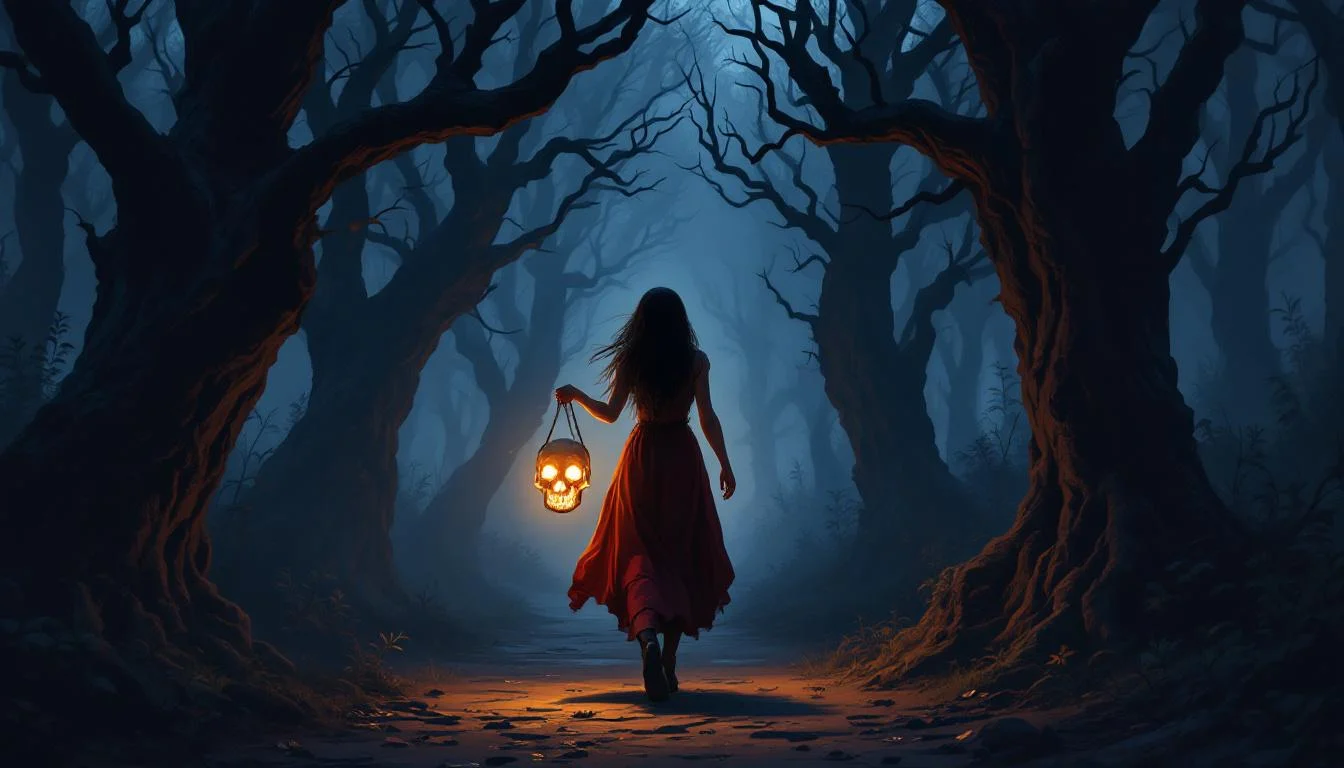
Before Ivan Tsarevich arrives — before any prince enters the story at all — there is a field of dead men. An entire army lies in the grass, cut down, and when the survivors are asked who did this to them, they give a name: Marya Morevna, the Beautiful Queen.
Not a monster. Not a demon. A woman on horseback who commanded troops, conquered armies, and kept the most dangerous sorcerer in all of Slavic mythology chained in her cellar like a dog.
Her tale, collected by Alexander Afanasyev in Narodnye russkie skazki and later retold by Andrew Lang in The Red Fairy Book, is formally titled The Death of Koschei the Deathless. But the title is misleading. This is not a story about how Koschei dies. It is a story about how a man's curiosity undid everything a woman had built — and the brutal cost of setting it right.
A Prince With Three Sisters and No Parents
The tale begins, as so many Russian fairy tales do, with death in the family. The old king and queen are dying. They summon their son, Ivan Tsarevich, and give him a final instruction: marry off your three sisters to the first suitors who ask. Do not refuse anyone. Then they die, and Ivan is left alone in a palace with three sisters and a kingdom to manage.
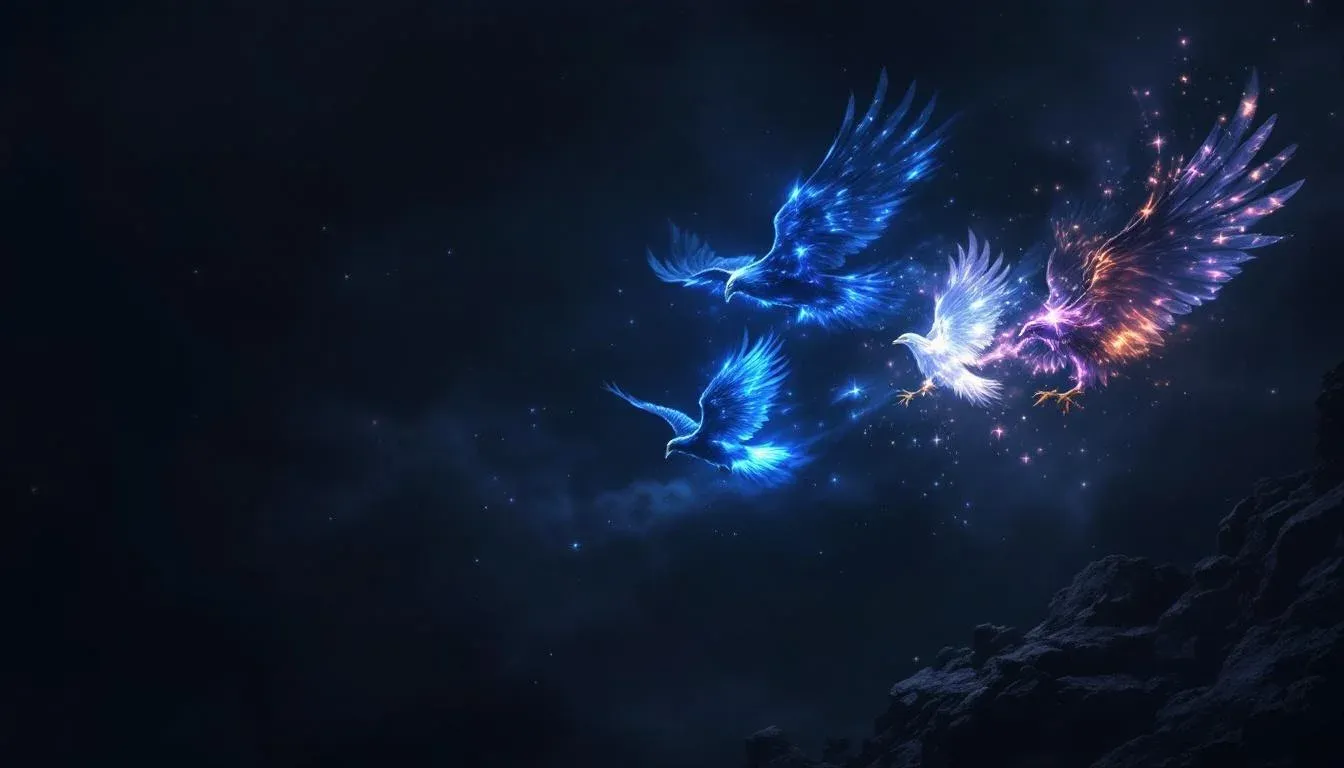
The suitors come quickly, and they are not ordinary men. The first arrives during a thunderstorm — a falcon who transforms into a handsome prince and asks for the eldest sister's hand. The second comes on a gale of wind — an eagle, shapeshifted, demanding the middle sister. The third descends in darkness — a raven, black-feathered and sharp-eyed, who claims the youngest.
Ivan gives each sister away as promised. The palace empties. He is alone, a young prince with no wife, no family, and no purpose — the classic starting condition for a hero who needs to ride out and find something worth doing.
What he finds is a battlefield.
The Queen on the Battlefield
Ivan rides out and encounters a field strewn with the dead. He stops a wounded soldier and asks who destroyed this army. The answer should have served as a warning: Marya Morevna, the Beautiful Queen.
He rides further and finds her — not mourning, not hiding, not resting. She is camped with her army. She is in command. When Ivan approaches, she does not flee or simper or wait for rescue. She invites him in, looks him over, and decides she likes what she sees. They marry. The proposal comes from her.
This detail is easy to slide past, but it matters enormously. In the vast majority of Russian fairy tales, the prince chooses his bride. He wins her through contests, rescues her from towers, outsmarts her father. Here, the dynamic is reversed. Marya Morevna has just annihilated an army. She is the one with power, territory, and a military reputation. Ivan is a wandering younger son with nothing but a horse and good manners. She selects him the way a queen selects an advisor — because he might be useful, and because she wants to.
They return to her kingdom. For a time, they are happy.
The Forbidden Door and the Twelve Buckets
Marya Morevna announces she must ride to war again. Before leaving, she gives Ivan one instruction: you may go anywhere in the palace, open any room, touch anything you wish. But do not open the door to the cellar. Whatever is behind it must stay there.
She rides away. Ivan, alone in a castle full of empty rooms, lasts approximately as long as you would expect.
He opens the door.
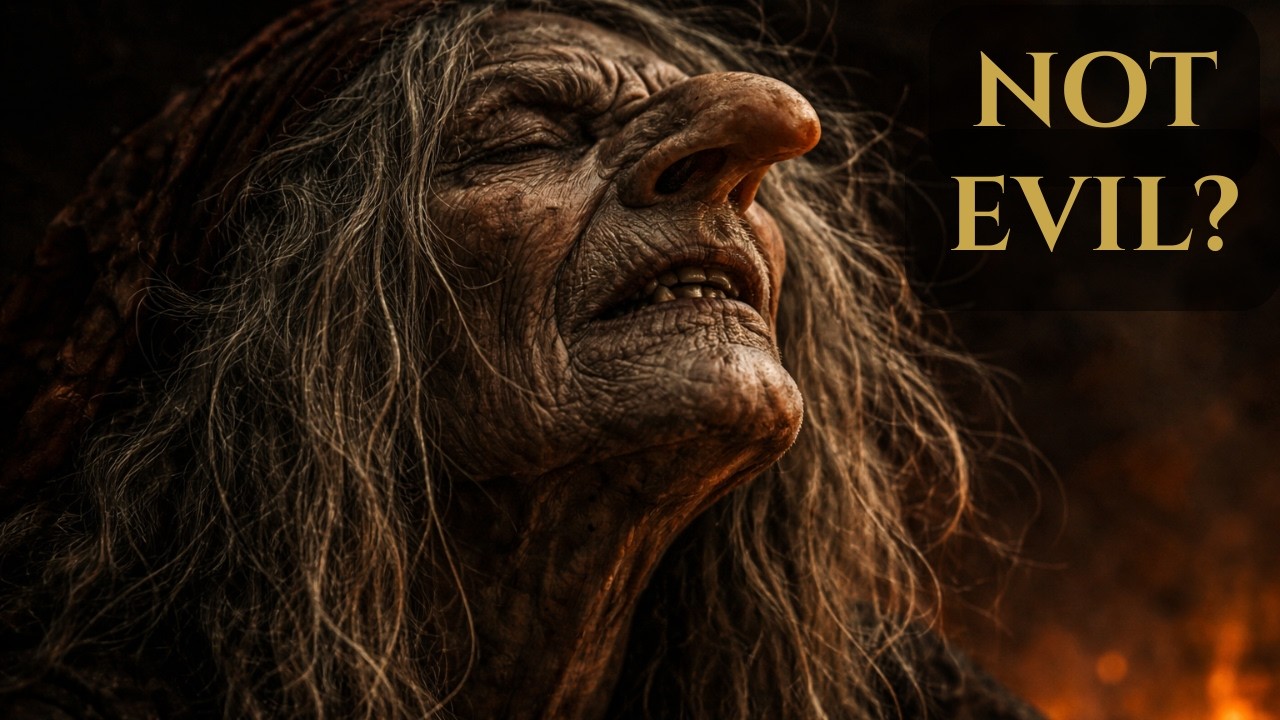
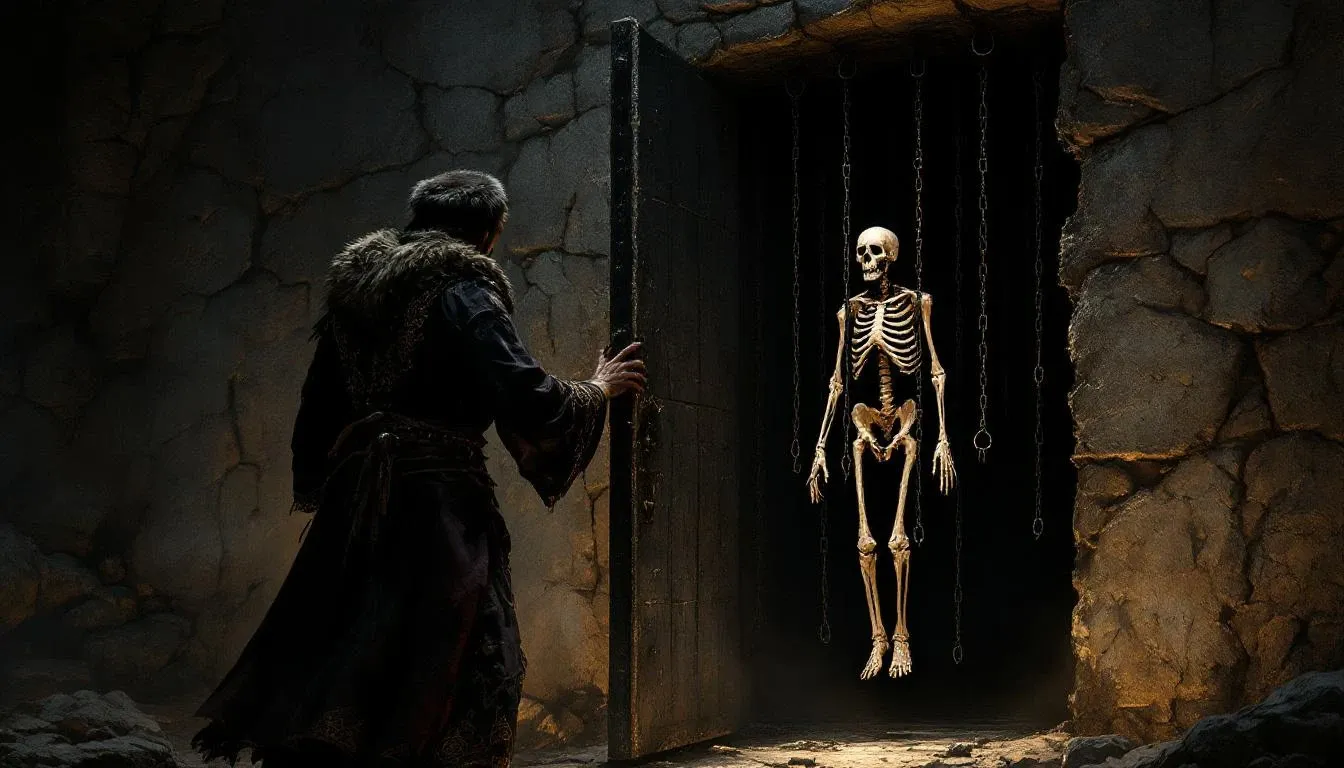
Behind it, chained to the wall with twelve iron chains, hangs a figure so wasted and desiccated that it barely looks human. It is Koschei the Deathless — the immortal sorcerer, the bone king, the most feared villain in all of Slavic folklore. And Marya Morevna had imprisoned him. Not a hero. Not a god. Not an army. A woman, alone, had overpowered the creature that no sword could kill and chained him in her basement.
Koschei, his throat cracked from years without water, begs Ivan for a drink. His voice is a whisper. He looks pathetic — skeletal, helpless, barely alive. Ivan, moved by pity, brings him a bucket of water. Koschei drinks it in one gulp and asks for more. Another bucket. The chains creak. A third bucket. The iron groans. By the time Ivan has brought twelve buckets of water, Koschei's magic has flooded back into his wasted body like a river breaking through a dam.
He shatters all twelve chains at once. He tears through the ceiling. And he is gone — taking Marya Morevna with him.
"Have pity upon me and give me to drink! Ten years I have been tormented here, neither eating nor drinking; my throat is utterly dried up."
This is the moment the tale pivots, and it is worth pausing to understand what has actually happened. Marya Morevna — a woman powerful enough to defeat Koschei and keep him locked away for a decade — left her kingdom in the care of a man who freed the one creature she told him never to touch. The catastrophe is not caused by female weakness. It is caused by male disobedience, by a husband who could not resist a closed door, who mistook pity for wisdom and gave a monster exactly what it needed to destroy everything.
In a tradition where women are so often the ones who need saving, this structure is remarkable. The woman built the prison. The man broke it open.
Three Rides, Three Failures, and a Barrel in the Sea
Ivan, to his credit, does not accept what he has done. He rides after Koschei to take Marya Morevna back. Three times he finds her. Three times Koschei catches him.
The first time, Koschei is almost amused. He tells Ivan that the three buckets of water earned him a debt, and lets him go. The second time, the same — contemptuous mercy, a warning not to return. The third time, Koschei's patience breaks. He kills Ivan, hacks his body into pieces, stuffs the remains into a tarred barrel, binds it with iron hoops, and throws it into the sea.
This should be the end. In most stories, it would be. But Ivan's three brothers-in-law — the Falcon, the Eagle, and the Raven, each married to one of his sisters — sense that something has gone wrong. The Raven finds the barrel. The Eagle carries it to shore. The Falcon fetches the Water of Life and the Water of Death. They sprinkle the dead water on the pieces to knit them back together, then the living water to wake him up.
Ivan opens his eyes. He has been dead. He has been dismembered and sealed in a barrel and sunk. And the first thing he says is that he is going back for Marya Morevna.
The brothers-in-law, who are wiser than Ivan in nearly every respect, do not try to stop him. Instead, they give him advice: Koschei rides a magical horse that no ordinary steed can outrun. To rescue Marya, Ivan needs a horse just as fast. And there is only one place to find such a horse — beyond the edge of the world, in the stables of Baba Yaga.
Baba Yaga's Mares and the Debt of Kindness
The journey to Baba Yaga is a trial in itself. She lives beyond the river of fire, in a hut on chicken legs, surrounded by a fence made from human bones. She agrees to give Ivan a horse — but only if he can herd her mares for three days without losing a single one.
This is a rigged game. Baba Yaga's mares are enchanted. The moment Ivan leads them to pasture, they scatter to the four winds — galloping into forests, diving into rivers, vanishing over mountains. No human being can keep track of them, and Baba Yaga knows it. She expects Ivan to fail, and when he fails, she will eat him.
But on his journey to her domain, Ivan showed kindness to creatures he had no reason to help. He spared a nestful of baby birds when he was starving. He let a lioness and her cubs pass when he could have hunted them. He did not destroy a hive of bees when he needed honey.
Now those creatures repay the debt. The birds drive the mares back from the mountains. The lioness herds them from the forests. The bees — furious, stinging, relentless — chase the mares out of the meadows and marshes where they try to hide. By evening, every mare is accounted for. Baba Yaga is livid, but a deal is a deal.
On the third night, Ivan steals not the horse Baba Yaga offers him — she would have given him the worst of the herd — but a scrawny, mangy foal that she considers worthless. He flees across the river of fire. And that foal, fed on morning dew and raised with care, grows into a steed that matches Koschei's horse stride for stride.
The Death of the Deathless
Ivan rides back to Koschei's fortress. This time, when the sorcerer mounts his horse and gives chase, Ivan's steed keeps pace. For the first time in the story, Koschei cannot simply outrun the problem. The two horses are matched. And Ivan — carrying a weapon given to him by his brothers-in-law, or in some versions simply striking with his mace — knocks Koschei from the saddle.
The details of the killing vary between versions. In the most common telling from Afanasyev's collection, Ivan strikes Koschei down with a blow and then burns his body on a great fire, scattering the ashes to the wind so that nothing remains. In other variants, the nested death — the needle in the egg in the duck in the hare — plays a role, though in this particular tale, the emphasis falls more on the horse and the chase than on the hidden death.
Koschei is dead. Marya Morevna is free. They ride home together, stopping to visit each of Ivan's three sisters and their shapeshifting husbands, and the tale ends with a feast so grand that the narrator claims to have been there and drunk the mead, though it ran down his moustache and never reached his mouth.
What Marya Morevna Actually Means
It is tempting to read this tale through a modern lens and call it proto-feminist, and the reading is not wrong — but it is incomplete. Marya Morevna is not a modern heroine awkwardly inserted into an old story. She is an old heroine who was always there, doing things that later centuries would find uncomfortable.
She leads armies. She chooses her own husband. She imprisons the most powerful villain in the Slavic canon through her own strength. And then the story takes her agency away — not because she fails, but because Ivan fails. The tale is honest about this. It does not pretend that Koschei escaped through Marya's carelessness or weakness. It states, plainly, that Ivan opened a door he was told to keep shut and gave water to a monster he was told to leave alone.
The rescue arc that follows is Ivan's penance, not his glory. He is not saving a helpless maiden. He is fixing a disaster he caused. Every death he suffers, every trial he endures, every mile he rides to Baba Yaga's hut — all of it flows from one moment of disobedience. Marya Morevna had the situation under control. Ivan broke it.
This makes the tale unusual in the European fairy-tale tradition. Compare it to Bluebeard, where the forbidden room reveals a husband's violence. Compare it to Pandora, where a woman's curiosity unleashes evil. In Marya Morevna, the forbidden room reveals a woman's competence — she had imprisoned evil, successfully, for ten years — and it is a man's curiosity that sets it free. The gender inversion is complete and deliberate.
Marya Morevna in the Living Tradition
Vasilisa the Wise survives through inherited magic. The warrior women of the byliny — Nastasya Mikulichna, Marya the White Swan — fight with swords and ride into battle. But Marya Morevna stands apart because she does both. She is a general and a jailer, a wife and a queen, a woman who goes to war and keeps the devil locked in her basement. No other figure in East Slavic folklore combines martial power with supernatural authority in quite the same way.
Her name echoes across centuries of Russian art and literature. Ivan Bilibin painted her in 1903 — armored, mounted, riding through fields of the dead with a banner streaming behind her. Rimsky-Korsakov drew on the Koschei cycle for his opera Kashchey the Immortal. Modern fantasy writers, from Katherine Arden's Winternight Trilogy to Naomi Novik's Spinning Silver, owe debts to the template she established: the woman who does not wait to be rescued because she was the one doing the rescuing all along.
The tale of Marya Morevna is, in the end, a story about what happens when a capable woman trusts the wrong person with her work. It is also a story about what it takes to earn that trust back — the death, the dismemberment, the journey to the witch at the edge of the world, the stolen horse, the scattered ashes. Ivan gets Marya Morevna back, but the story never lets you forget that he should never have lost her.
She had Koschei in chains. That was enough. It should have stayed enough.