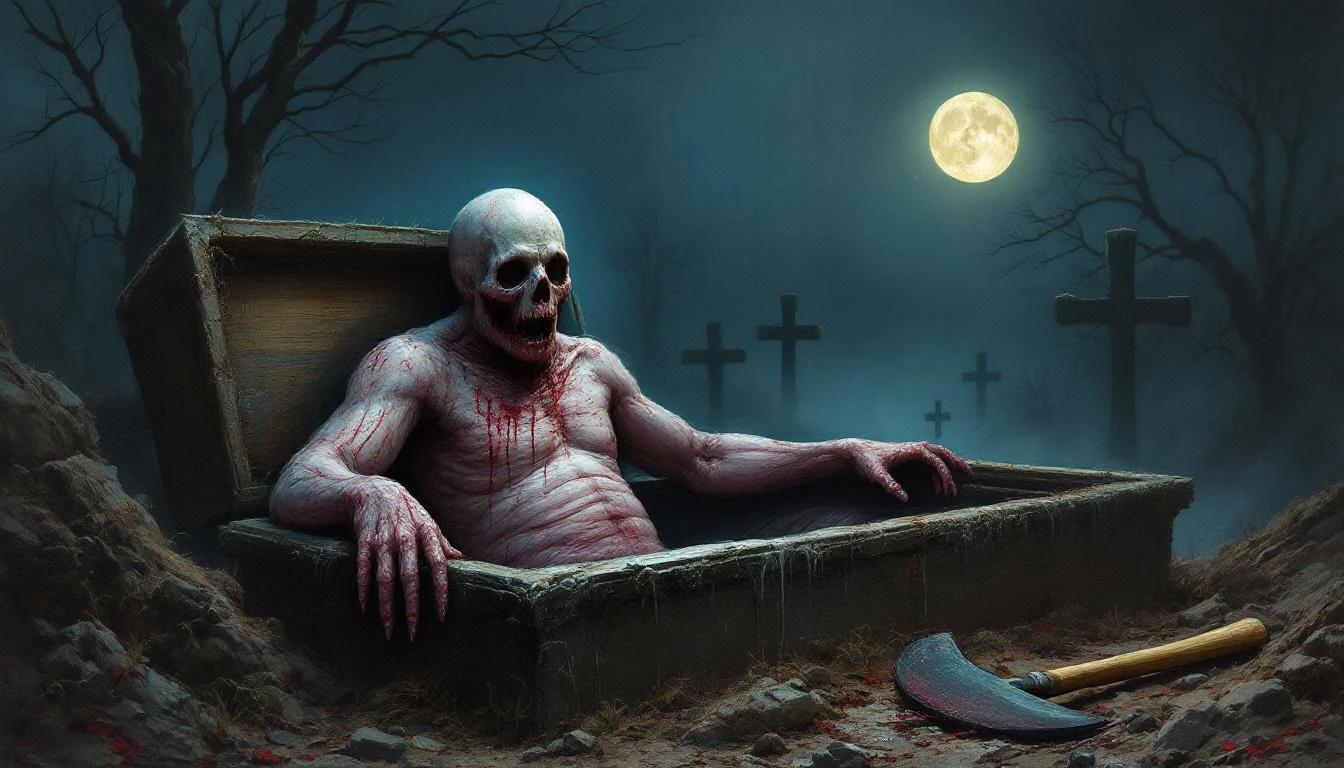
In the year 1092, something moved through the streets of Polotsk. The Ruthenian Primary Chronicle — the oldest East Slavic historical text we have — records what happened with the flat, careful language of a scribe who understood that what he was writing down sounded insane but wrote it down anyway. At night, a great noise filled the streets. Something galloped through the darkness, and those who listened said it sounded like horsemen — many horsemen — riding hard through the city. But when people tried to look, they saw only hooves. The riders were invisible. During the day, marks appeared on the living: wounds inflicted by something that could not be seen, wounds that killed. The people of Polotsk were, in the chronicler's words, "devoured by the dead."
The dead had a name. The chronicle called them navii.
This was not metaphor. The chronicler meant exactly what he said. The dead had risen from their graves and were feeding on the living. In the cosmology of the medieval Slavic world, this was terrible but not impossible. The dead were always close. And certain dead — the ones who had died badly, died wrong, died in ways that left their souls trapped between the world of the living and the world below — those dead were very close indeed.
The Slavs called them navi, navki, navje. They were the ghosts of the unclean dead.
A Word That Means Corpse
The word nav comes from the Proto-Slavic root *navь-, and it means, with no ambiguity, "corpse" or "the dead." Cognates appear across the Indo-European family: Latvian nāve ("death"), Lithuanian nõvis ("torment, death"), Old Prussian nowis ("body, flesh"), Gothic naus ("dead body").
In its singular form, Nav designated the underworld itself — the dark, wet realm below the roots of the World Tree where Veles, the god of cattle and death, sat on a golden throne in the center of a swamp and received the souls of the dead like a shepherd counting his flock at dusk. The three-world cosmology of the Slavs placed Nav at the bottom: the world of what has been, what has ended, what has gone below. Above it lay Yav, the world of the living. Above that, Prav, the cosmic law.
But in its plural form — navi, navki, navje — the word meant something more specific. Not the underworld. Not death in the abstract. The actual, specific, angry dead who could not rest and would not stay where they had been put. Nav the place was part of the natural order. The navi — the spirits — were a disruption of it. They were dead who had not completed the journey, stuck at the threshold, half in Yav and half in Nav, and their presence in the world of the living was a wound that would not close.
Who Becomes a Nav
Not every dead person became a nav. The Slavic folk taxonomy of death was precise and ruthless. On one side stood the roditelji — the ancestors, the righteous dead who had lived full lives, died of natural causes, received proper burial rites, and been mourned according to custom. These dead were honored, fed at the grave on feast days, trusted to watch over the family from the other side.
On the other side stood the zalozhnye pokoyniki — the "unclean dead." This category included everyone whose death fell outside the boundaries of what Slavic culture — and later, Orthodox Christianity — considered a proper ending.
Suicides. Drowning victims. Murder victims. Women who died in childbirth. Stillborn infants. Unbaptized children. Drunkards who died in their cups. Sorcerers and witches. Anyone struck by lightning. Anyone who died by sudden violence with no time for last rites. Anyone whose body was not found and therefore could not be buried. Anyone who was buried wrong — without the proper coins on the eyes, without the binding cloths on the jaw, without the rituals that told the soul it was permitted to leave.
The logic was not complicated. A proper death was a completed transaction: the soul left the body, passed through the appropriate rituals, crossed the boundary into Nav, and stayed there. An improper death was a transaction interrupted. The soul left the body but had nowhere to go. The rituals were not performed — or could not be performed, because the Church refused its rites to suicides and the unbaptized — and so the soul remained. It lingered. It soured. And eventually, like any trapped thing, it became dangerous.
Black Birds with the Faces of Children
The navi had many forms, but the most disturbing and most persistent image — the one that appears in East Slavic, South Slavic, and West Slavic sources alike — is the black bird with an infant's head.
Slovenian traditions describe the navje as huge black birds that fly through the night sky, pleading to be baptized. Bulgarian folklore speaks of the navi as invisible spirits that soar through the firmament in the shape of birds, descending on the houses of women in childbirth. Ruthenian accounts describe the mavki or nyavki — regional variants of the same root word — as small children or pale girls with curly hair who haunt the edges of forests and swamps, crying like infants to lure the living closer.
The bird form is the oldest. It connects the navi to one of the deepest strata of Slavic belief: the conviction that souls travel as birds. The ancient Slavs watched the storks and cranes depart each autumn and concluded that the birds were carrying souls to Iriy, the warm paradise beyond the edge of the world. A dead person's soul could take the shape of a bird — a cuckoo, a swallow, an owl — and this was not frightening in itself. It was part of the natural cycle.
But the navi were unnatural birds. They were black where the soul-birds of the righteous dead were bright. They did not fly to Iriy. They circled the rooftops of the living, screaming, unable to complete the journey that proper death would have granted them. The infant head on the bird's body was the mark of their incompleteness — half formed, half alive, stuck between the shape they had been and the shape they should have become.
What the Navi Did to the Living
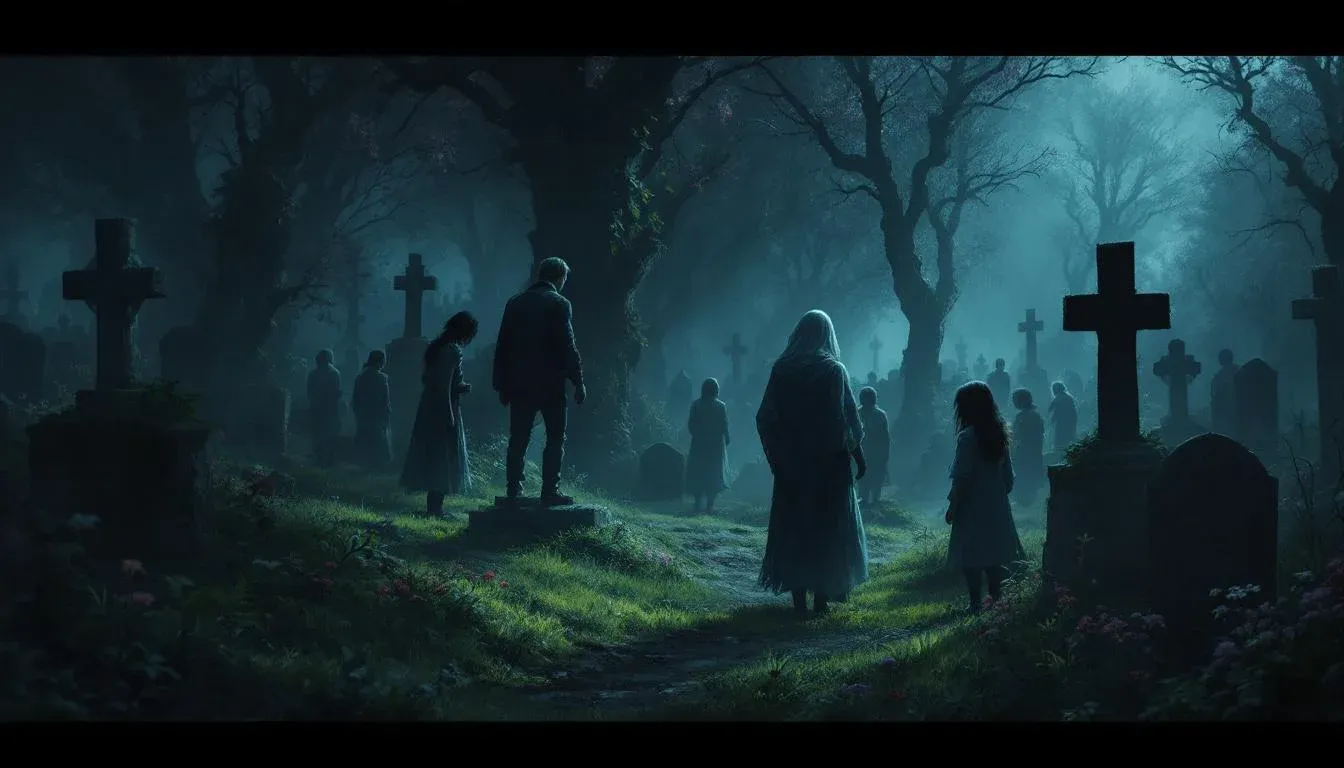
The navi were not passive haunts. They attacked. Their primary targets were pregnant women, women in labor, newborn infants, and small children. The pattern was consistent across the entire Slavic world and points to the navi's nature as spirits of interrupted maternity and failed birth. They attacked what they had been denied. They destroyed what they could not become.
In Bulgarian tradition, twelve navias were believed to descend upon women giving birth and suck their blood — a detail that places the navi squarely alongside the Slavic vampire. Bulgarian folk healers performed specific rituals to drive the navi away from birthing rooms: burning herbs, placing iron objects near the mother's bed, reciting prayers that mixed Christian invocations with language far older than any church.
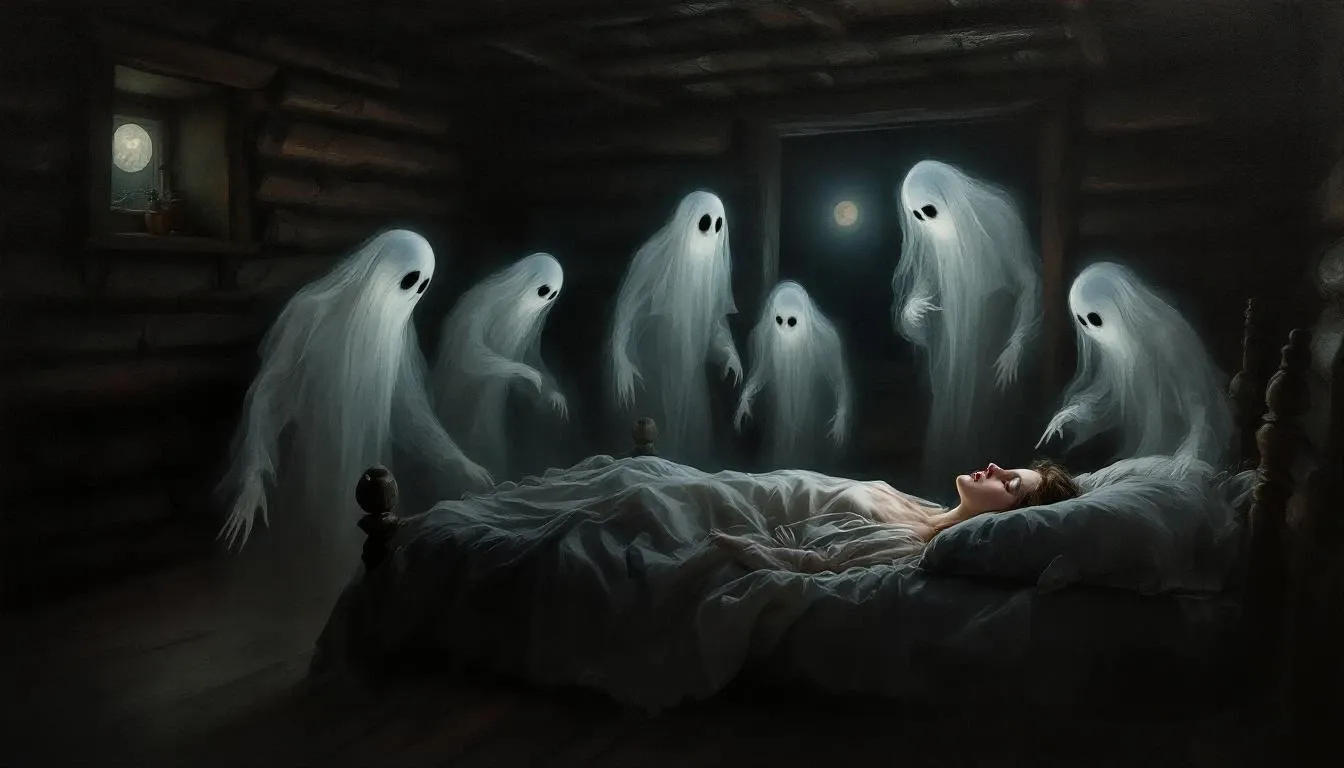
East Slavic navi could steal milk from nursing mothers, cause newborns to sicken and die, and induce miscarriages. In some accounts, they entered houses through keyholes and chimneys in the form of smoke or mist, settling on the chests of sleeping pregnant women and pressing down until the woman could not breathe. They also attacked cattle — a household that lost calves or found its cows suddenly dry might blame the navi, particularly if an unbaptized child had recently died in the area.
Beyond targeted attacks, the 1092 Polotsk episode represents the navi at their most apocalyptic: not individual hauntings but a mass incursion of the dead into the world of the living, bringing plague and death on a civic scale. The chronicler's description of invisible horsemen — visible only by the marks of their horses' hooves — suggests a society grappling with an epidemic it could not explain except through the vocabulary of the restless dead.
The unclean dead do not rest in the earth. They cannot. The earth itself rejects them. They are cast out of the community of the proper dead as they were cast out of the community of the living, and they exist in a state of perpetual exile — neither here nor there, neither alive nor at rest, consumed by a hunger that has no remedy because what they hunger for is the life that was taken from them before its time.
The Navi and Their Kin: Rusalki, Vampires, and the Unclean Spectrum
The navi did not exist in isolation. They were one expression of the zalozhnye pokoyniki, and the other expressions are some of the most famous figures in Slavic folklore.
The rusalka was, in her earliest form, the female variant of the nav — the spirit of a woman who had died by drowning, by suicide, or in childbirth without baptism. Zelenin argued persuasively that the rusalka and the navka were essentially the same being, differentiated primarily by regional naming conventions. In Ukraine, the navka who haunted forests was called a mavka. In northern Russia, the navka who haunted rivers was the loskotukha — the tickler, the one who laughed you to death. They were all the unclean female dead.
The Slavic vampire occupied the other end of the same spectrum. Where the female unclean dead became water spirits and forest specters, the male unclean dead became bloated corpses that rose from improperly sealed graves to drink blood. The Bulgarian navi who sucked the blood of women in childbirth blurred this line entirely — simultaneously navki and vampires, proving that the folk mind did not draw hard boundaries between its categories of undead. What mattered was the mechanism of origin: wrong death, improper burial, a soul with no place to go.
Navii Day: Feeding the Difficult Dead
The living were not helpless against the navi. Slavic culture developed an elaborate calendar of commemorative feasts designed to manage the dead — to honor the righteous and placate the dangerous. The most important were the Dziady ("grandfathers") — communal meals for the dead held twice a year, in spring and autumn, with food and drink laid out at gravesites for returning souls.
The spring commemoration — known as Radonitsa in the Orthodox tradition, held on the Tuesday after Easter Week — was particularly significant for the navi. This was the season when the boundary between Nav and Yav thinned. The earth was thawing, the rivers rising, the dead stirring. Families visited graves, poured water on the earth, left eggs and honey and pancakes, and spoke to the dead. They told them the family news. They asked for their blessing on the planting season.
For the righteous dead, this was sufficient. But for the navi — the unbaptized, the suicides, the drowned — the transaction was more complicated. These dead had no proper graves. Many had been buried outside the churchyard fence, in unconsecrated ground, at crossroads, in marshes. Some had no graves at all. The answer, in many communities, was to leave offerings at the places where the navi gathered: riverbanks, crossroads, forest edges, the thresholds of houses where unclean deaths had occurred. In Belarus, women left bread and milk at swamp edges — not for the ancestors, but for the other ones. The ones who had no names on anyone's prayer list.
These offerings were not worship. They were management. The navi were dangerous precisely because they were forgotten. Feeding them was a way of saying: we know you are there. We know you died badly. We have not erased you. Now stay on your side.
How Christianity Rewrote the Rules of Death
Before the Christianization of the Slavic world — beginning with the baptism of Bulgaria in 864 and Kievan Rus in 988 — the category of "unclean death" did not exist in the form it later took. Pre-Christian Slavs believed in restless dead and had rituals for managing difficult spirits. But the rigid framework that classified certain deaths as spiritually polluting was a Christian innovation.
The Church introduced a binary that had not previously existed. The baptized dead were clean — they could be prayed for, mourned in church, buried in consecrated ground. The unbaptized dead were unclean — denied church burial, denied prayers, cast out. And in the folk imagination, casting out a dead person's body was the same as casting out their soul.
A stillborn infant had committed no sin. A woman who died in childbirth had done nothing wrong. A man who drowned in a river accident had not chosen his death. But under the new rules, none of them could receive full Christian burial without baptism or last rites. Their souls were theological refuse — not damned in the way sinners were damned, but simply unaccounted for. The Church had no mechanism for them. The folk imagination, faced with a void that doctrine could not fill, populated that void with the navi.
The irony is bitter. Christianity did not create the belief in restless dead — that predated it by millennia. But Christianity created the conditions that massively expanded the category of who could become one. Before the Church, a drowned infant was a tragedy. After the Church, a drowned unbaptized infant was a nav — a screaming black bird circling the village at night, begging for the baptismal formula that no one had spoken over its body in time. The doctrine that was supposed to save souls instead manufactured ghosts.
The folk response was pragmatic. Slavic villagers continued to perform pre-Christian rites for the unclean dead alongside their Christian observances. They left food at crossroads. They spoke the baptismal formula over wailing sounds in the night. They treated the navi not as theological abstractions but as practical problems — and their solutions owed far more to the old ways than to any sermon.
What Remains
The navi are the Slavic world's most uncomfortable dead. They are not monsters like the zmey. They are not villains like Koschei. They are victims. Infants who never drew breath. Women who died bringing life into the world. Drowning men who reached for a hand that was not there. Their transformation into shrieking birds, into blood drinkers, into invisible horsemen galloping through plague-stricken cities — that is not their fault. It is the consequence of a cosmology that had no room for them and a theology that sealed the exits.
In the villages of Polesie, old women still avoid certain stretches of river after dark — not because they believe in navki, they will tell you, but because their grandmothers told them to, and some knowledge does not require belief to command respect. In Bulgaria, midwives still perform protective rituals for newborns that echo the old defenses against the twelve blood-drinking navias. In Serbia, the custom of speaking the baptismal formula over the grave of an unbaptized child persists in some rural communities — a quiet acknowledgment that the Church's refusal to perform this service created a problem the people themselves had to solve.
Every culture has its unquiet dead. But the navi carry a particular weight because the system that made them was so explicit. You died wrong. You were buried wrong. You are wrong. And now you will spend eternity circling the rooftops in the shape of everything that was denied to you, crying in a voice that sounds exactly like a newborn, because that is what you were when the world decided you did not count.
The living have always known what the navi want. It is the same thing the living want: to be acknowledged, to be named, to be told that their existence mattered. The remedy was always the same. Say the words. Leave the bread at the water's edge. Speak the name.
It was never complicated. It was just rarely done.