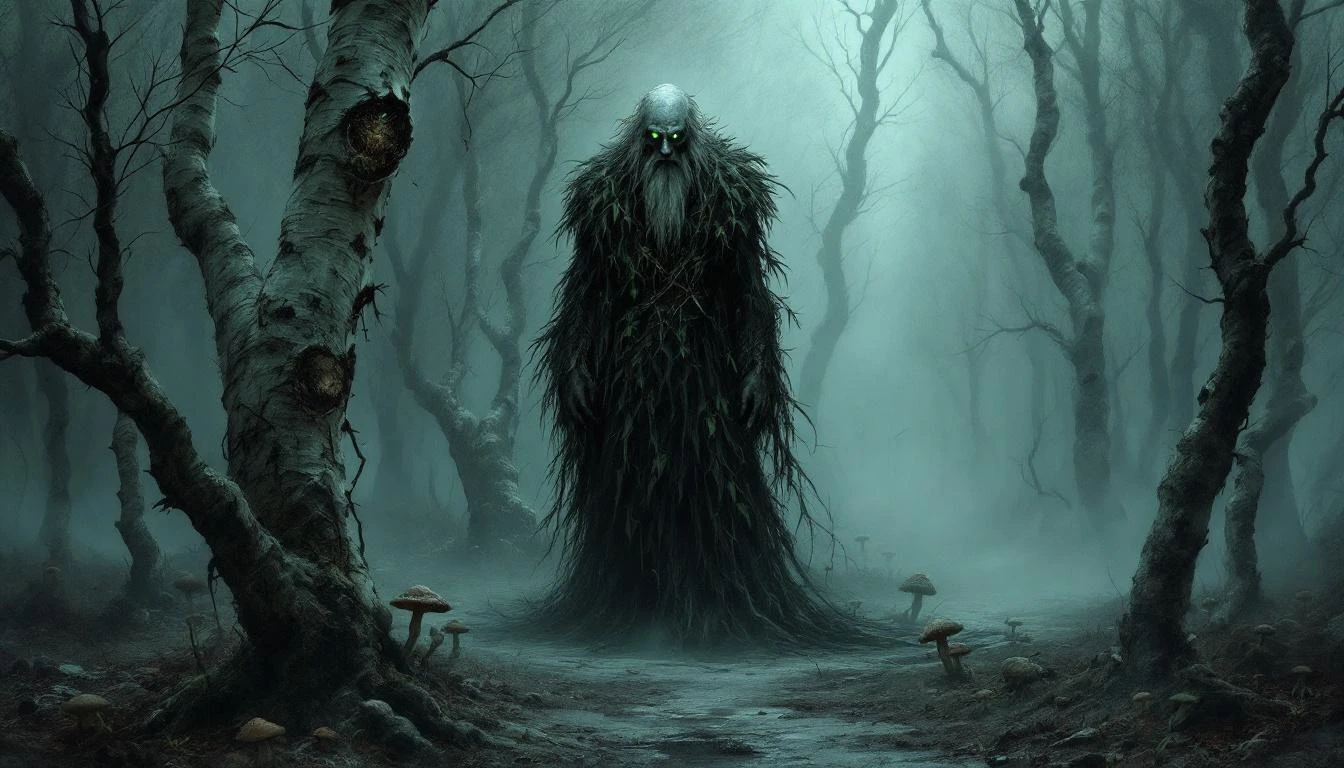
Western horror lives in the dark. It hides in basements and attics, in forests after sundown, in the hours between midnight and dawn when the rational mind sleeps. But Slavic mythology has always understood something that most ghost stories forget: the most dangerous things do not wait for darkness. They come when the sun is highest, the sky is white with heat, and the fields stretch to the horizon without a single shadow to hide in.
Her name is Poludnitsa — Полудница, from poluden, the Slavic word for noon. In English she is called Lady Midday, the Noon Witch, the Noonday Spirit. Across Poland, the Czech lands, Slovakia, Serbia, and Russia, she has been feared under different names but always in the same way: as a figure that appears in the grain fields at the hottest moment of the day, when the air shimmers above the wheat and the workers' heads are heavy with exhaustion. She asks questions. She demands conversation. And if you cannot keep up — if your answers falter, if your mind slips, if you try to flee — she kills you.
Not at midnight. Not under a full moon. At noon, under a sun so bright you cannot even see her until she is already standing in front of you.
A Spirit Born from Sunstroke
The grain fields of Eastern Europe in summer are a specific kind of hell. Rye and wheat grow tall enough to block any breeze, trapping heat between the stalks. The soil radiates warmth back upward. By noon, the temperature in a field can be ten degrees higher than it is in the shade of a nearby tree, and the air becomes thick and still and merciless. For the Slavic peasant who worked these fields from dawn until dark — bent double, swinging a scythe, with no shade and no relief except what he carried in a clay jug — the hours around midday were the most dangerous of the entire working year.
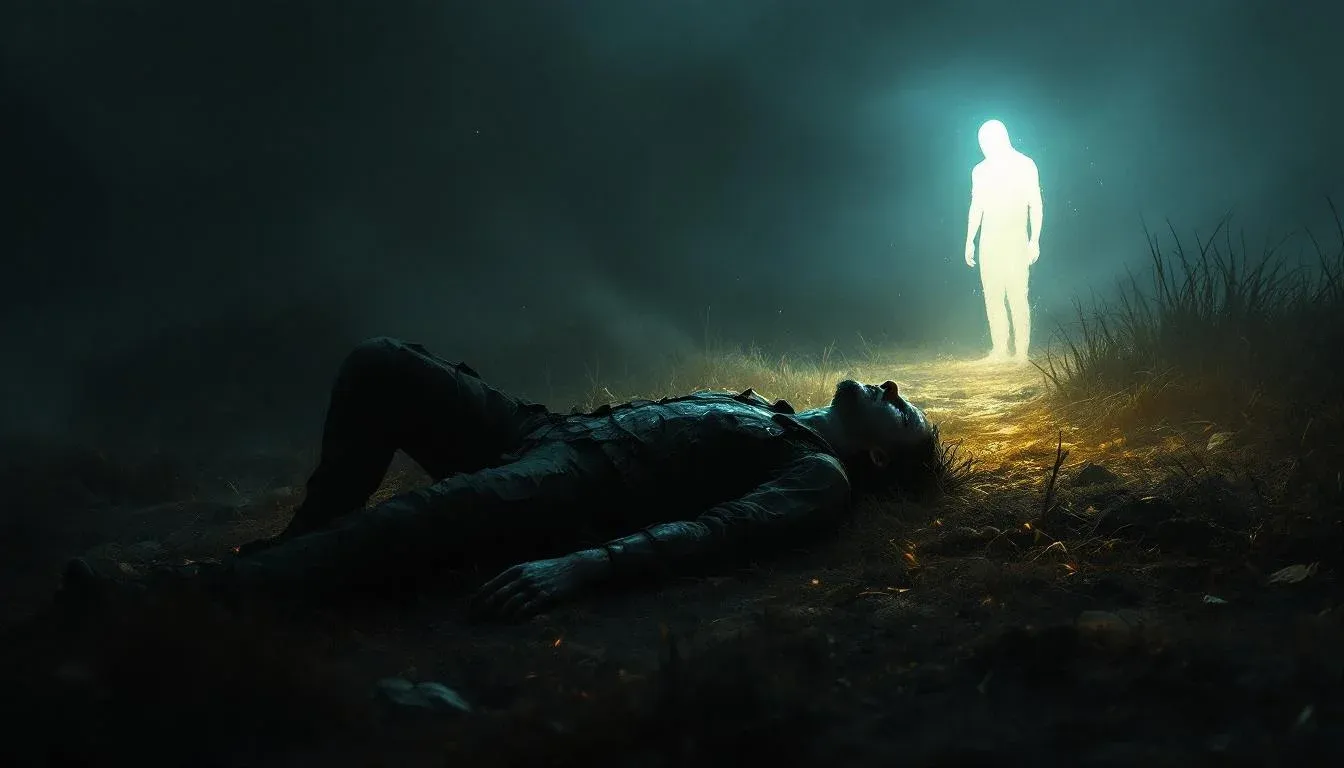
Sunstroke kills fast when it kills. The first symptoms are confusion and dizziness. Then comes the headache, a crushing pressure behind the eyes. The vision narrows. The sufferer begins to see things that are not there — shapes in the heat shimmer, figures at the edge of the field. Their speech becomes incoherent. If no one pulls them into the shade, their body temperature rises past the point where the brain can function, and they collapse.
The Poludnitsa is this process given a face and a name. She is the personification of death by heat, the folklore explanation for why a strong man walked into the field at dawn and was carried out at one o'clock, raving and burning, unable to recognize his own wife. But to call her "just a personification" misses the point entirely. To the people who told her stories, she was not a metaphor. She was a fact — as real as the sun, as the grain, as the scythe in their hands.
What She Looks Like
This is where the Poludnitsa becomes genuinely strange, because the Slavic traditions cannot agree on what she is.
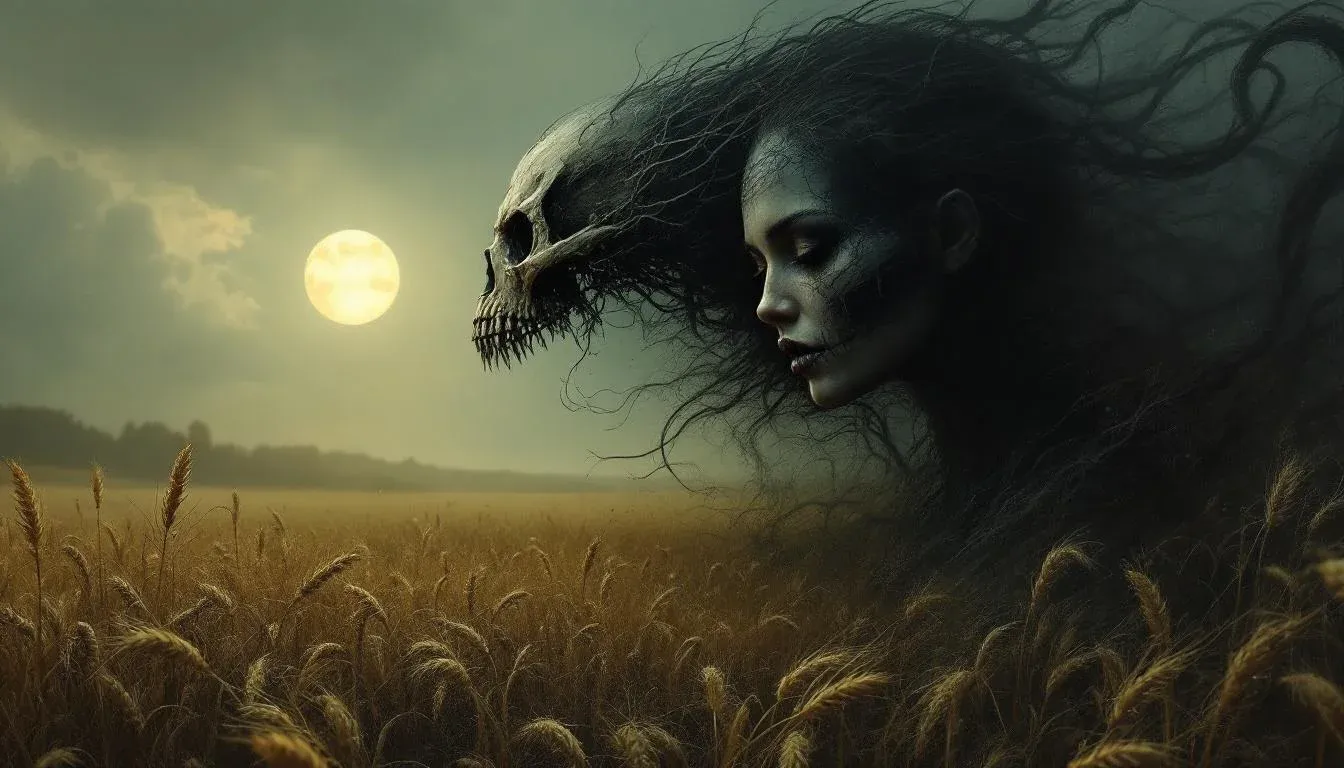
In Polish and Serbian accounts, she is young and beautiful — a tall woman in a white dress, with long pale hair, walking slowly between the rows of grain. She carries no weapon. She does not need one. Her beauty is itself a kind of trap, because anyone who sees her is compelled to look, and anyone who looks finds it impossible to look away.
In Czech and Slovak tradition, the picture inverts completely. There she is old — a hunched, dark-clothed crone with a weathered face and hollow eyes, carrying a scythe or a pair of shears. This Poludnitsa is not beautiful. She is terrifying in the way that drought is terrifying, in the way a collapsing harvest is terrifying. She is the field turned hostile.
Some Russian accounts split the difference. The Poludnitsa begins as a beautiful young woman and ages as the conversation continues — growing older and more terrible with each question she asks, until the face staring at you is no longer human at all.
And then there is the third form, reported across all regions: the whirlwind. A column of dust spinning across the field on a windless day, moving against the breeze, heading straight for the workers. In southern Slavic areas, these dust devils were considered the Poludnitsa traveling between fields. If one passed over you, you might lose your mind. If you tried to stop one — by thrusting a knife into its center, as some folk remedies suggested — you might find blood on the blade afterward.
The Questions That Kill
The Poludnitsa's most distinctive behavior is the interrogation.
She does not simply appear and attack. Instead, she approaches the worker in the field and begins to talk. She asks about farming: when to sow, when to harvest, how to treat the soil, how to read the signs of a good or bad year. Or she asks riddles — questions with no clear answers, questions that twist back on themselves. Or she simply talks about whatever she wishes, and the worker is required to respond, to keep the conversation going, to match her word for word without pause.
The conversation must last one hour — from noon until one o'clock, when the danger passes. If the worker can sustain it, can keep answering without repeating himself, without falling silent, without contradicting his own words, the Poludnitsa departs. He survives. But if he stumbles — if he gives a wrong answer, if he repeats something already said, if he falls silent for even a moment — she takes his head. Or she strikes him with madness. Or she seizes him by the neck and twists. The method varies by region, but the result is always the same.
This detail separates the Poludnitsa from nearly every other spirit in Slavic mythology. She does not test physical strength or courage. She tests knowledge and mental endurance — the ability to think clearly under extreme heat, exhaustion, and fear. She is testing whether your brain is still functioning. And the test comes at precisely the moment when the sun is most likely to have compromised your ability to think at all.
The Protector Nobody Wanted
Here is the part that most modern retellings leave out: the Poludnitsa was not only a killer. She was an enforcer.
The noon rest — the custom of stopping all fieldwork between approximately eleven in the morning and one in the afternoon — was not optional in traditional Slavic farming communities. It was a survival rule. The hours around noon were when the sun was most lethal, when the risk of heatstroke was highest. Working through the noon rest was not admirable dedication. It was stupidity.
The Poludnitsa existed to give that prohibition teeth. She appeared only at noon, only in the fields, and only to those who were working when they should have been resting. The man who obeyed the custom and sat in the shade eating his bread had nothing to fear. She came only for those who broke the rule — the ambitious, the desperate, the greedy, the master who drove his laborers past the safe hour.
She also protected the grain itself. Some accounts describe her punishing those who trampled the crops, who cut carelessly, who wasted the harvest. She was the spirit of the cultivated land, and she did not tolerate disrespect.
Erben's Poem and Dvořák's Symphonic Terror
The Poludnitsa might have remained a purely rural superstition if not for two Czech artists who recognized the horror in the old stories.
Karel Jaromír Erben was a folklorist, a poet, and a man obsessed with the dark heart of Czech folk tradition. In 1853 he published Kytice z pověstí národních — A Bouquet of Folk Legends — a collection of ballad poems based on Slavic folk beliefs. Among them was Polednice, "The Noon Witch," which took the field spirit and relocated her from the grain rows to a kitchen.
Erben's version is not about a farmer. It is about a mother. A woman is trying to cook the midday meal while her small child screams and fusses. She loses patience and threatens: be quiet, or I will call the Noon Witch. The child does not stop. And at the stroke of twelve, something appears at the door. A shadow. A shape. The mother snatches up the child and presses him to her body. She faints. When the father comes home, he finds his wife unconscious on the floor. The child in her arms is dead.
Erben never explains how the child died. He does not say whether the Poludnitsa killed it or whether the mother, in her panic, smothered it against her own chest. The ambiguity is the entire point.
And across the threshold, like a wisp of smoke, the Noon Witch comes. The mother clasps the boy, holds him to her breast — and when the father comes home from the field he finds her on the floor, the child beneath her arm, cold.
Forty-three years later, Antonín Dvořák read Erben's poem and heard music in it. In January 1896, freshly returned to Bohemia after three years in America, Dvořák composed Polednice — The Noon Witch, Op. 108 — a symphonic poem that follows the narrative almost scene by scene. The domestic chaos of the opening is rendered in agitated strings and a plaintive oboe representing the crying child. The arrival of the witch is announced by twelve strokes of a bell — noon — and then a bass clarinet line so low and so wrong that it sounds like something crawling up from underground. The final section is some of the most harrowing orchestral writing of the 19th century: a crescendo of brass and percussion that cuts off without resolution, leaving silence where there should be a human voice.
The Noonwraith in the Witcher
If you have encountered the Poludnitsa in the 21st century, it was almost certainly through Andrzej Sapkowski's Witcher novels or CD Projekt Red's video game adaptations.
In the Witcher universe, the Poludnitsa appears as the "Noonwraith" — a spectral creature that haunts fields during daylight hours. The games depict her as a translucent, ghostly woman in a tattered white dress who spins and dances in circles, drawing victims into her whirlwind. Those who join the dance cannot stop until they die of exhaustion — a detail that draws on the folk tradition linking the Poludnitsa to dust devils.
Sapkowski, who is Polish and deeply literate in Slavic folklore, understood what the Poludnitsa represented. In his world, noonwraiths are created from the spirits of women who died in the fields — brides who collapsed on their wedding day, girls killed during harvest. This is creative invention, not folk tradition, but it follows the same logic. The Rusalka is the spirit of a drowned woman. The Vila is the spirit of a woman who died before her wedding. The noonwraith continues the pattern: a female death, a binding to a specific place, an eternity of repetition.
The Witcher also captures something most adaptations miss — the noonwraith is a daytime horror. She stands in an open field under a clear sky, and that is what makes her terrible. There is nowhere to hide. The light itself is her domain.
How to Survive Her
The folk remedies for the Poludnitsa were simple, and they all amounted to the same thing: stop working.
The primary defense was obedience to the noon rest. If you were not in the field between eleven and one, she could not find you. Workers would retreat to the shade of a tree at the field's edge and eat their midday meal in silence. Some traditions held that you should not even speak during the noon rest, because the sound of a human voice in the empty field could draw her attention.
For those who had no choice but to be in the field, there were specific protections. Iron was effective, as it is against most Slavic spirits — a knife in the pocket, a sickle carried blade-up against the body. In Polish tradition, falling face-down on the ground was considered a defense, making yourself as small as possible so she might pass over you. And if she engaged you in conversation, you had to keep talking for one full hour without stopping, without repeating yourself, without error. The conversation was both the weapon and the test.
Why She Matters
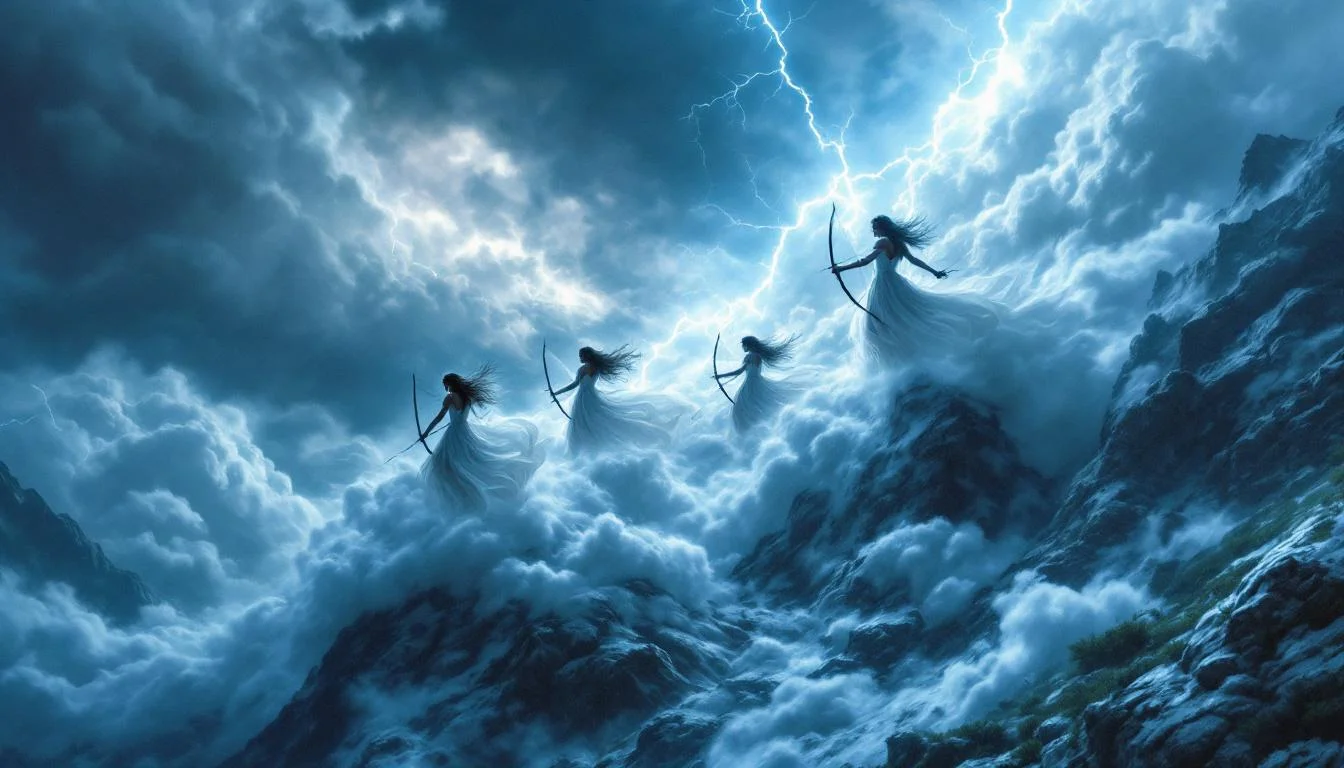
Every Slavic spirit guards a boundary. The Leshy guards the line between the human world and the wild forest. The Rusalka guards the boundary between land and water, between the living and the drowned dead. The Vila guards the mountain heights and the open sky.
The Poludnitsa guards time.
She guards the boundary between labor and rest — the sacred noon hour when the body must stop or the body will break. She is the spirit of a rule that existed for centuries before anyone understood the physiology of heatstroke, a rule encoded not in medical textbooks but in fear. You do not need to explain core body temperature to a peasant farmer. You need to tell him there is a woman in white waiting in the grain, and she will take his head if he does not put down the scythe.
This is what folklore does when it works. It takes a survival rule and makes it sacred. It gives the rule a face, a name, a story that parents tell their children and that children never forget. The Poludnitsa is not a quaint superstition from a simpler time. She is a piece of technology — a system for encoding medical knowledge in a form that an illiterate farming community can preserve and transmit across generations.
The fields are still there. The sun still rises to its highest point and hangs in a white sky and pours heat into the grain until the air itself seems to burn. And somewhere in the shimmer, if you look long enough, you might see a shape — a tall figure in white, walking between the rows, coming toward you with a slow and certain step.
It is noon. Put down the scythe. Go to the shade. Do not look back.