There is a rule in every Slavic village built at the edge of a forest, and it has been passed down in whispers for a thousand years: do not enter the woods without asking permission. Do not whistle between the trees. Do not boast of your skill as a hunter, or mock the silence of the birches, or take more than you need. Because the forest is not empty. The forest belongs to someone. And he is always listening.
His name is Leshy — Leshii, the Forest One, the Master of the Woods — and he is the oldest, most feared, and most respected spirit in all of Slavic mythology. Not a ghost. Not a demon. Something that existed before the Christian god arrived and will exist long after the last church bell falls silent.
The Master of Every Living Thing
The word leshy comes from les (лес) — the Slavic word for forest. The name is a title: he is the forest made conscious, the will of the wilderness given a shape and a terrible intelligence. Every tree, every fox, every wolf, every bear that shelters under the canopy belongs to him. He decides which hunters succeed and which wander in circles until they collapse. He chooses which mushroom-pickers find their baskets full and which ones never find the path home.
In the ethnographic records of 19th-century Russia, compiled by collectors like Alexander Afanasyev and Sergei Maksimov, the Leshy appears not as a fairy tale monster but as a living fact — something peasants discussed with the same matter-of-fact certainty they used when talking about weather or wolves. He was the reason a woodcutter might leave a piece of bread on a tree stump before felling the first trunk. He was the reason a shepherd whispered a prayer before leading his flock past the treeline. He was the explanation when a child wandered into the birches and was found three days later, miles from home, unable to remember anything.
The Leshy does not merely inhabit the forest. He is the forest. And the forest does not forgive those who forget it.
A Face That Is Never the Same
No one has ever seen the Leshy's true form. Or rather — everyone who has seen it describes something different. This is because the Leshy is a shapeshifter of extraordinary range, capable of assuming any form the forest contains and several that it does not.
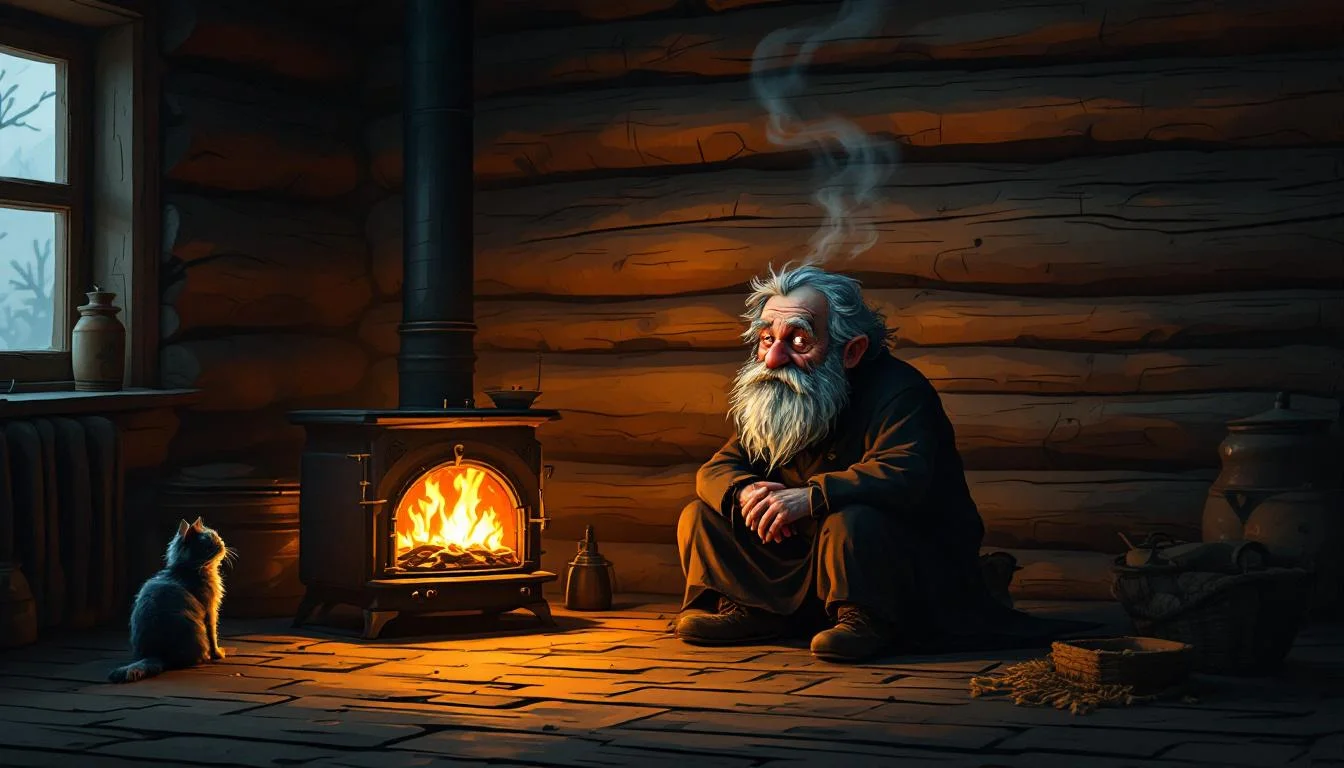
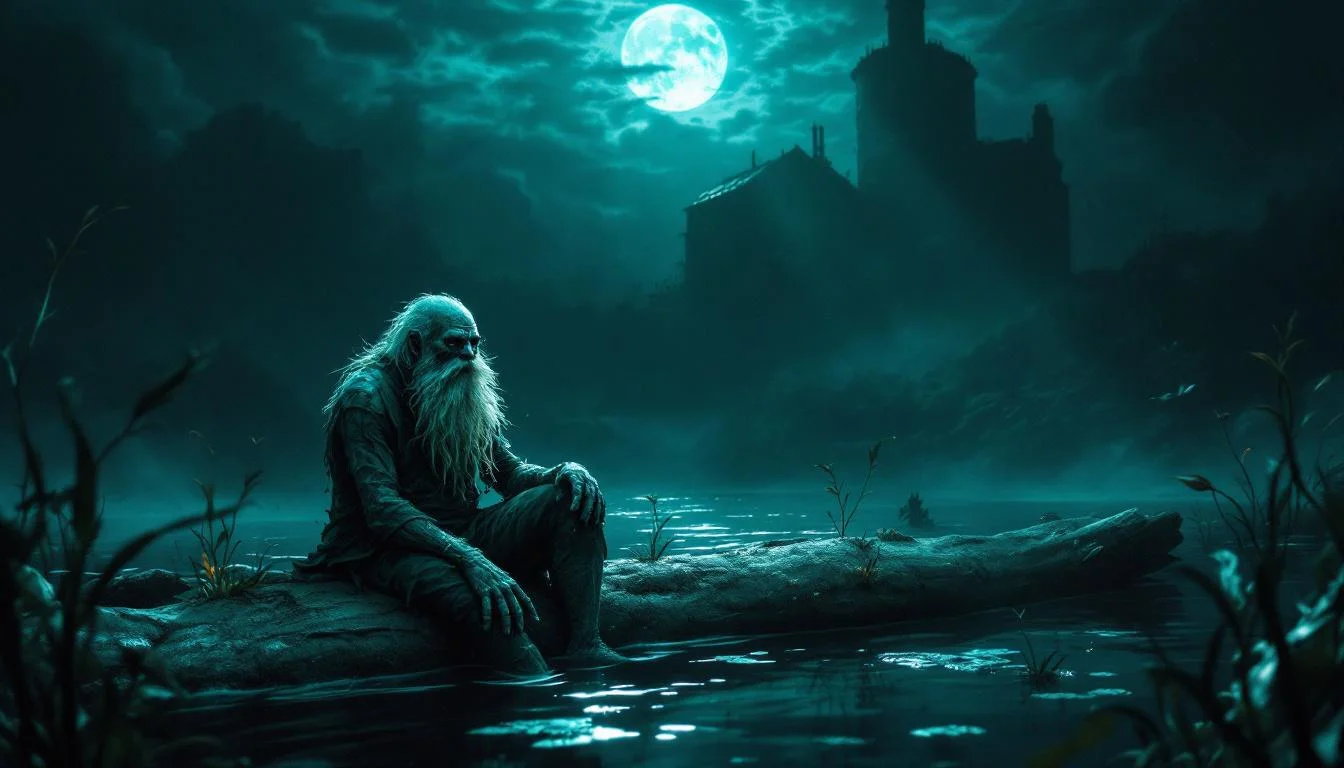
In his most common guise, he appears as a peasant man — but wrong. His eyebrows and eyelashes are missing. His eyes glow green, the color of deep forest light filtered through a canopy of leaves. His hair grows downward instead of up. His left shoe is on his right foot, and the right side of his clothing is buttoned where the left should be — everything about him reversed, as though he is a reflection of a human being rather than the thing itself. Some accounts add horns of bark or antler. Others describe a long tail, pointed ears, or skin the color of moss.
But this is only one shape among hundreds. The Leshy can become a bear, a wolf, an owl, a hare. He can shrink to the height of a single blade of grass when crossing an open meadow, and grow taller than the tallest pine when standing in the depths of his domain. He can appear as your neighbor, your father, your dead brother calling your name from just beyond the next row of trees. He casts no shadow. In some regions, they said his blood ran blue — not red, not warm, not human.
The one constant across all descriptions is this: you do not recognize the Leshy by what he looks like. You recognize him by what happens to you after you meet him.
How the Leshy Kills
The Leshy's preferred method of destruction is not violence. It is confusion.
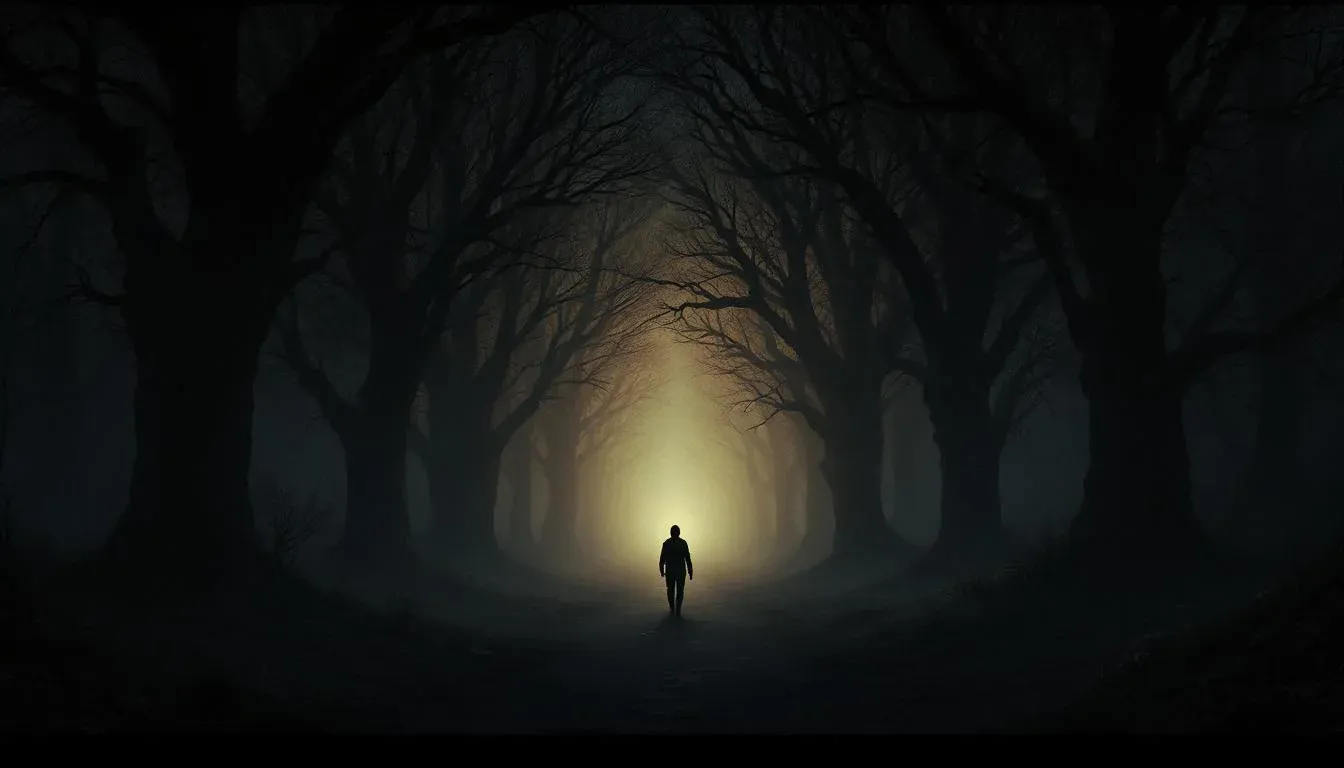
A traveler enters the forest and walks a familiar path — one they have walked a hundred times before. But today the path curves where it should be straight. The landmarks are wrong. The sun seems to hang in the wrong part of the sky. The traveler walks faster, then runs, then stumbles, and after hours of desperate movement discovers they are standing exactly where they started. Or worse — they are deeper in the forest than they have ever been, in a place where the trees grow so thick that no light reaches the ground.
This is the Leshy's signature: the kruzhenie, the circling. He bends the forest around his victim like a trap, folding paths back on themselves, moving trees when no one is looking, filling the air with sounds that pull the traveler in the wrong direction — the cry of a child, the bark of a familiar dog, a voice calling their name. The victim walks and walks and walks, growing weaker and more disoriented, until exhaustion or the cold or the wolves finish what the Leshy started.
But the Leshy also takes a more direct interest in certain victims. Children who wander into the forest alone are sometimes found days later in places no child could have reached on foot — high in the branches of ancient oaks, on the far side of rivers with no bridges, in clearings miles from the nearest village. Some were never found at all. The folklore is clear about where they went: the Leshy took them. Whether he killed them, raised them as his own, or simply kept them — the stories never quite agree.
The Shepherd's Bargain
The Leshy was not only feared. He was negotiated with.
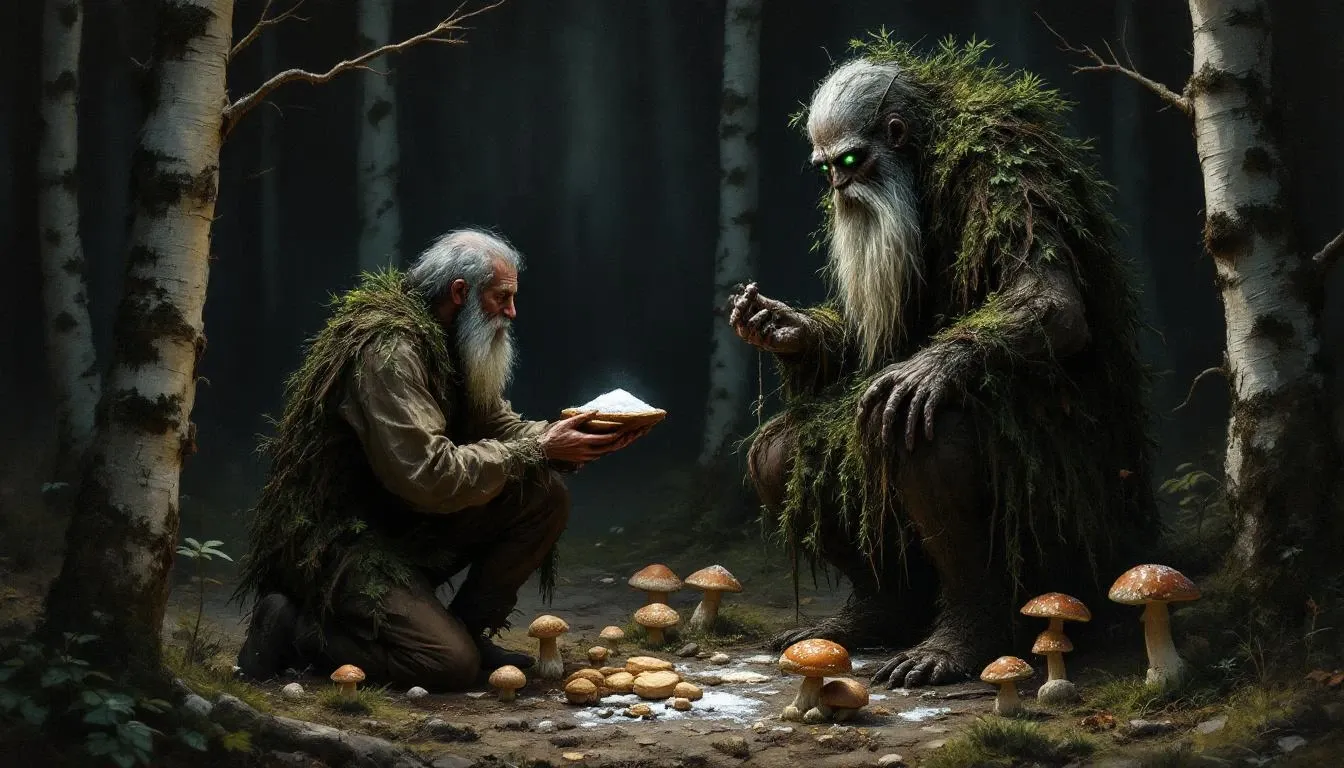
Across the Russian countryside, shepherds maintained a complex and secret relationship with the forest spirit that blurred the line between worship and contract law. Before the grazing season began, a shepherd would go alone to the edge of the forest, remove the cross from around his neck — because the Leshy would not speak to a man wearing a Christian symbol — and offer bread, salt, and sometimes an egg wrapped in cloth. He would then speak an incantation, the words of which varied by region but always amounted to the same request: Protect my herd. Keep the wolves at bay. Do not let any animal stray into your forest. In return, I give you the offering and I swear to obey your rules.
The rules were strict. A shepherd under contract with the Leshy could not pick berries or mushrooms in the forest. He could not kill any wild animal, even in self-defense. He could not speak the Leshy's name aloud. He could not let the livestock graze past certain invisible boundaries that only the Leshy knew. In return, the herd would be safe — wolves would avoid the pastures, cattle would not stray, disease would not touch them.
If the shepherd broke the terms, the consequences were immediate and catastrophic. Animals would scatter into the forest and never return. Wolves would appear in numbers impossible for a natural pack. The shepherd himself might be found dead, or simply vanish.
The shepherd who has made a pact with the Leshy must never carry a cross, never swear an oath, never strike a single tree, and never answer when called by name from the forest. Should he break these commandments, the master of the forest will take back everything he has given — and more besides.
Hunters operated under similar agreements. A successful hunt was understood to be a gift from the Leshy — he had driven the game toward the hunter's path. In return, the hunter owed the first kill or a portion of it, left at the base of a specific tree. Greed was the cardinal sin. A hunter who took more than his share would find the forest closed to him: trails that led nowhere, game that vanished at the moment of the shot, the growing certainty that something was following him between the trees.
The Leshy's Calendar
The Leshy was a seasonal being, bound to the rhythms of the forest itself. He woke in spring when the ice broke on the rivers and the first green shoots pushed through the snow. Through summer he was at his most active and most dangerous — the forest was his kingdom in full bloom, and trespassers were most likely to encounter him during the long, light-soaked days of June and July.
In autumn, his mood darkened. As the leaves turned and fell, the Leshy grew restless and aggressive. Peasants in northern Russia believed that in October, as the forest prepared for winter, the Leshy went on a rampage — tearing up trees, driving animals before him in great stampedes, howling through the forest with a voice that shook the earth. This was his way of grieving the death of the green world, or perhaps of driving his animal subjects south before the killing cold arrived. Mass migrations of squirrels or hares were attributed not to instinct but to the Leshy's command — he was moving his herds to safer ground, or he had lost them in a card game to a neighboring Leshy and was paying his debt.
Then, when the first true frost locked the ground, the Leshy disappeared. He sank into the earth, or into the roots of the oldest tree in his forest, and slept until spring. During winter, the forest was masterless — and therefore, paradoxically, safer. No one was watching. No one was counting the trees you cut or the animals you killed. But woe to the man who was still in the forest when the Leshy woke again.
The Witcher's Leshen: What They Got Right and What They Invented
If you have encountered the Leshy in modern media, it was almost certainly through CD Projekt Red's The Witcher 3: Wild Hunt, where the creature appears as the "Leshen" — a towering, antlered horror with a deer skull for a face and roots for limbs, commanding wolves and crows from the depths of an ancient forest.
The design is spectacular. It is also almost entirely invented.
The folkoric Leshy is not a monster. He is a spirit of place — an intelligence that inhabits and governs a specific territory. He does not exist to kill. He exists to maintain the balance of the forest, to protect its creatures, and to punish humans who violate its laws. The Witcher's Leshen, by contrast, is a boss fight — a creature that "lives only to kill," as the in-game bestiary puts it. The ambiguity that makes the original Leshy so fascinating — the fact that he could help you or destroy you depending on your behavior — has been stripped away in favor of pure predatory menace.
What the game does preserve is the Leshy's connection to animals. The folkloric Leshy commands wolves and bears; the Witcher's Leshen summons wolves and crows. Both versions are rooted in the forest, literally — the game's Leshen bleeds roots and bark, while the folklore's Leshy is sometimes described as having skin like tree bark and hair like moss. And both are fundamentally territorial: the Leshen will not pursue you beyond its forest, just as the folkoric Leshy's power ends at the edge of the trees.
But the skull-faced, antlered design that has become iconic — the image most people now associate with the word "Leshy" — has no basis in Slavic folklore. The real Leshy looked human. That was the whole point. You were supposed to mistake him for a neighbor, a fellow traveler, a friend. By the time you realized the eyes were too green, the shadow was missing, and the shoes were on the wrong feet, it was already too late.
How to Survive an Encounter With the Leshy
Slavic folklore is nothing if not practical. For every spirit that could destroy you, there was a set of rules for getting out alive. The Leshy was no exception.
Turn your clothes inside out. This is the single most widely attested defense against the Leshy across all Slavic regions. If you realize you are walking in circles — if the forest has closed around you and the paths make no sense — stop immediately. Remove your coat or shirt and put it back on inside out. Switch your shoes: left on right, right on left. The logic is that the Leshy's world operates in reverse. By reversing yourself, you step out of his mirror and back into your own reality. Multiple ethnographic sources confirm that peasants believed this with absolute conviction.
Do not respond to your name. If you hear someone calling you in the forest — even if the voice belongs to someone you know — do not answer. The Leshy imitates voices. He will call you deeper and deeper into the woods, always sounding like he is just ahead, just around the next tree. Respond once and the trap closes.
Carry bread and salt. These are the universal offerings of hospitality in Slavic culture. Leaving bread and salt at the edge of the forest before entering is both a greeting and a bribe. It signals respect. The Leshy, for all his power, responds to the old courtesies.
Sit on a tree stump and recite a prayer. Some regions prescribed sitting on the nearest stump, removing all your clothes, and putting every garment back on inside out while reciting the Lord's Prayer backward. Others suggested profanity — the Leshy, as a pagan spirit, was believed to recoil from crude language the way demons recoiled from holy water.
Never boast. The surest way to attract the Leshy's hostility is to enter his forest with arrogance — bragging about how much game you will kill, how many trees you will fell, how the forest holds no fear for you. The Leshy does not tolerate pride. Humility is the best armor the forest allows.
Why the Leshy Still Matters
Every Slavic spirit embodies a relationship between humans and a specific domain. Domovoy is the house. Vodyanoy is the water. Rusalka is the river's edge, the liminal space between land and drowning. And the Leshy is the forest — that vast, dark, breathing expanse that covered most of Eastern Europe for millennia and that our ancestors entered every day knowing they might not come out.
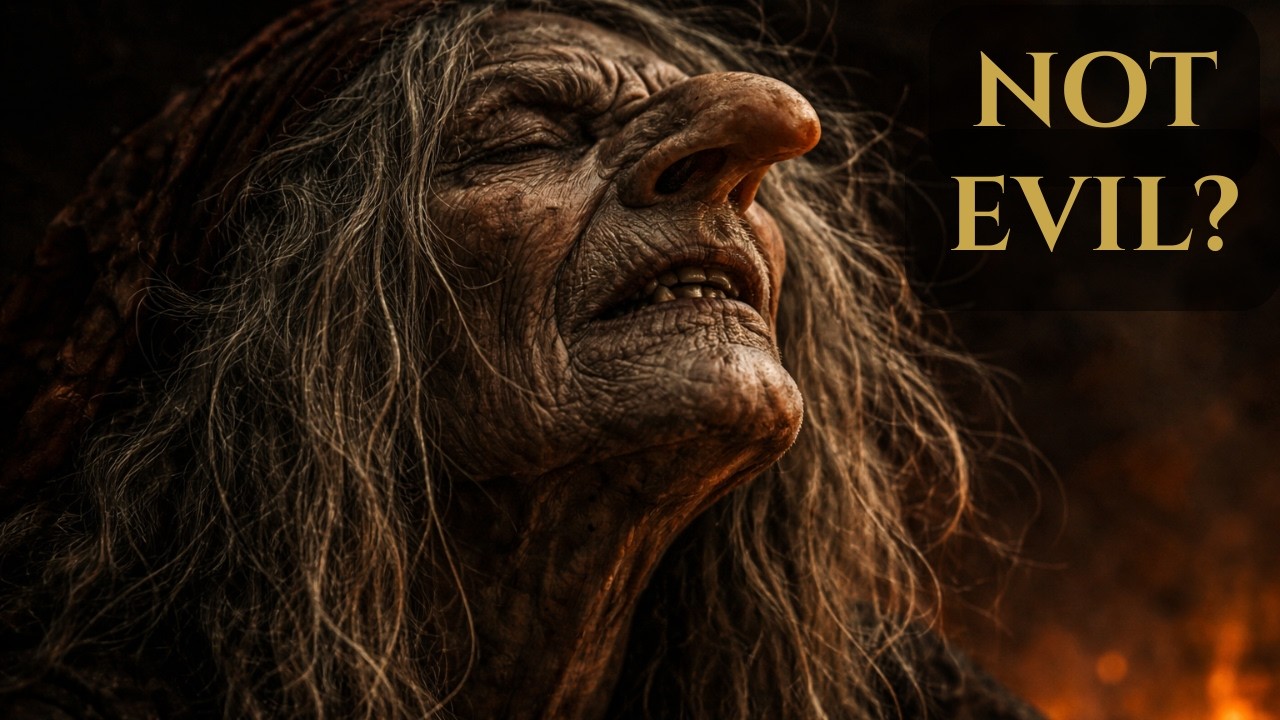
The Leshy is not evil. He is wild. He operates by rules that predate human morality, rules that have nothing to do with good and evil and everything to do with balance, territory, and respect. He punishes the greedy, the arrogant, and the careless. He rewards the humble, the observant, and the respectful. In this sense, the Leshy is the most ecologically sophisticated figure in all of Slavic mythology — a personification of the forest's own logic, which says: take what you need, give back what you owe, and never forget whose ground you are standing on.
Baba Yaga guards the gate between life and death. The Leshy guards something equally important: the gate between the human world and the wild. Cross it without permission, and you may never cross back.
In the old villages, when a child disappeared into the birch forest and the search parties came back empty-handed, the mothers did not curse the Leshy. They left bread on the stumps. They whispered the old words. They asked — not demanded, never demanded — for their child back. Sometimes, days later, the child would be found sitting at the forest's edge, unharmed but silent, unable to explain where they had been.
The forest had given them back. The master of the woods had decided to be merciful.
This time.