There is a sound in the walls of old houses. Not the settling of timber or the complaint of rusted nails — something else. A rustling behind the stove at midnight. A sigh that comes from nowhere. A brush of coarse hair against your hand as you sleep, so faint you convince yourself it was a dream.
In the villages of Russia, Ukraine, and Belarus, people did not convince themselves. They knew exactly what lived behind the stove. They called him Domovoy — the one who belongs to the house. And they treated him with the careful respect you show to something that could either protect your family or destroy it.
The Old Man Behind the Stove
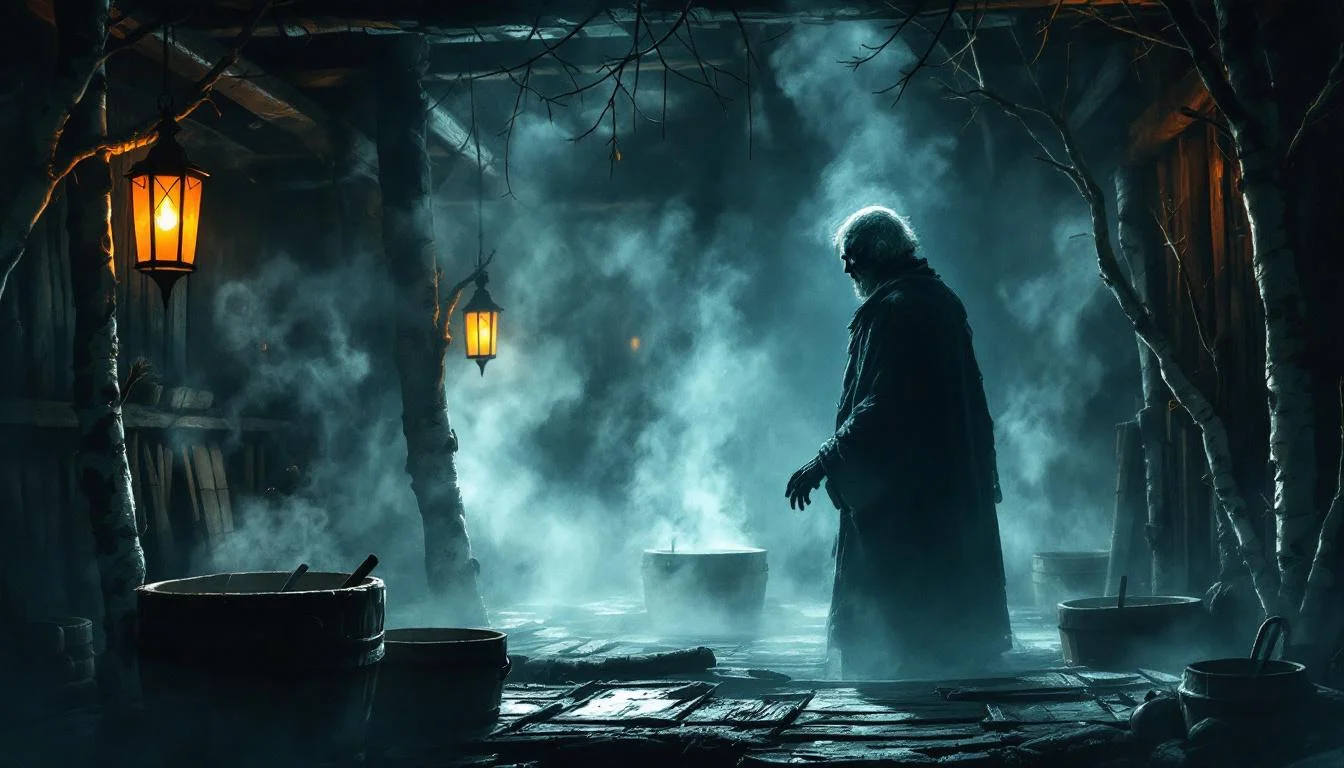
The Domovoy — from the Russian dom, meaning "house" — is the household spirit of Slavic folk belief, and arguably the most intimate supernatural being in all of Eastern European mythology. While Leshy haunts the forests and the Bannik lurks in the steam of the bathhouse, the Domovoy lives where you live. He sleeps where you sleep. He watches your children grow. He has been doing this, according to the oldest layers of belief, since before your grandfather was born.
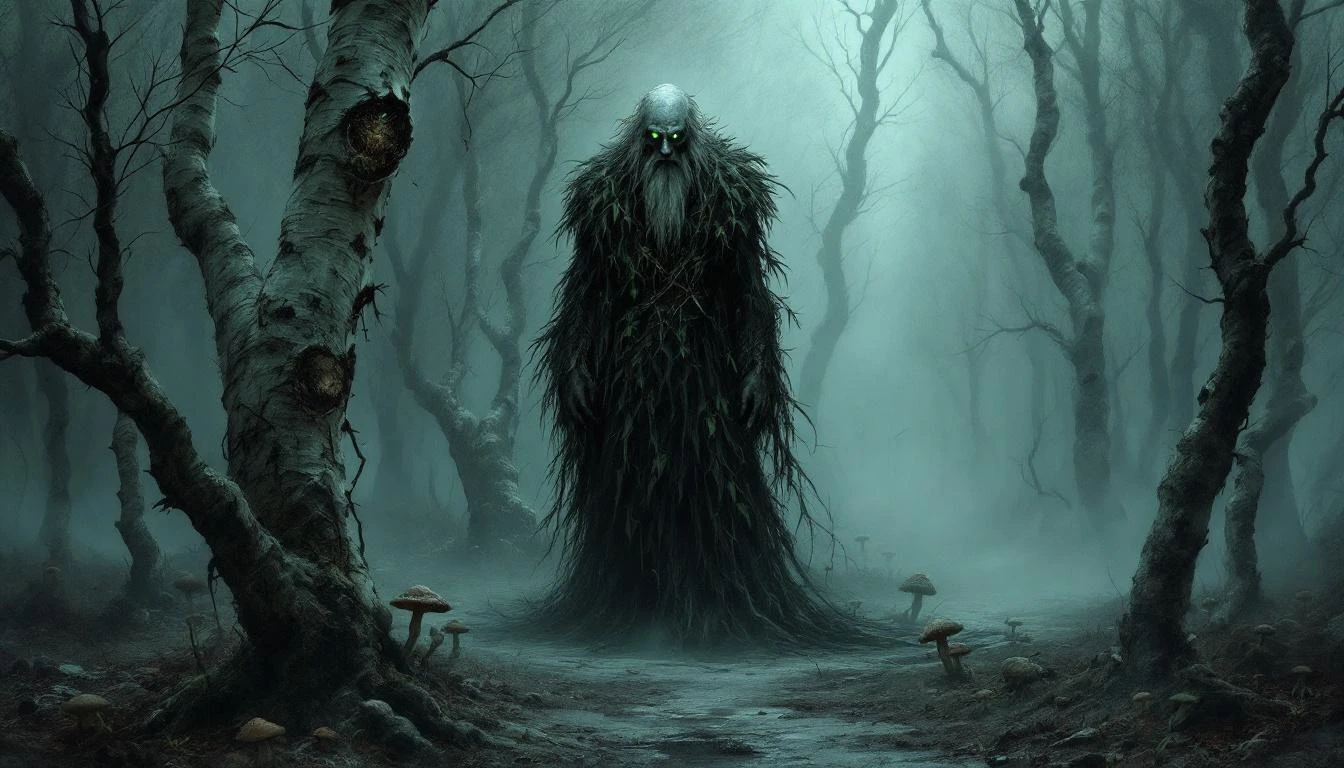
His appearance, when he chooses to show himself, is consistent across centuries of recorded folklore. He is a small old man — rarely taller than a child — covered in thick, coarse hair from head to toe. His beard is long and unkempt, sometimes grey, sometimes white, sometimes dark as soot. His eyes flash in the dark. Some accounts give him small horns and a tail — vestiges of the Christian demonization of pagan spirits. Others describe him as looking exactly like the eldest male ancestor of the family, the dead patriarch returned in miniature form.
This last detail matters. The Domovoy is not a random spirit assigned to a building. In the oldest stratum of Slavic belief, he is the ancestor. When the head of the household died, his soul did not simply depart for the afterlife. Part of it stayed behind — bound to the hearth, to the family bloodline, to the timber walls he had built with his own hands. The Domovoy is a dead man who refuses to abandon his family. Whether this is devotion or a curse depends on how you treat him.
He does not only appear as a small old man. The Domovoy is a shapeshifter. He takes the form of a cat — usually black — and this is why in Russian folk tradition, a cat is the first creature sent into a new house before the family enters. He appears as a dog, a rooster, a snake, even a rat. In some regions, seeing a snake in your home was not cause for alarm but for reverence: the creature might be the Domovoy, inspecting his domain.
Where He Lives and What He Guards
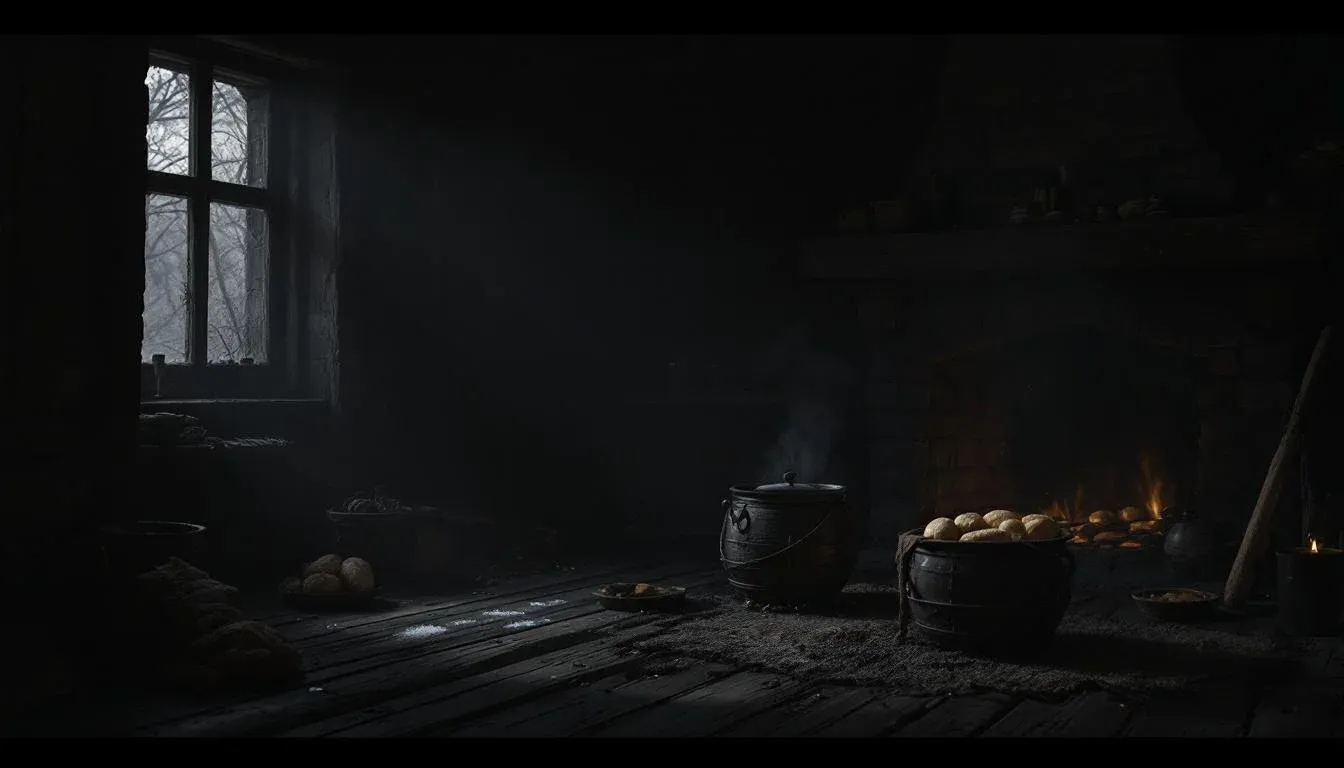
The Domovoy's seat of power is the stove. In the traditional Slavic izba — a single-room log house — the stove was not merely a place to cook. It was the center of existence. Families slept on top of it in winter. Children were born beside it. The dying were laid near it so the warmth could ease their passage. The stove was the heart of the house, and the Domovoy lived behind it, beneath it, inside its warmth.
He also dwelt under the threshold — another liminal space charged with spiritual power in Slavic belief. The doorstep was the boundary between the safe interior and the hostile outer world, and the Domovoy guarded this boundary with the vigilance of a watchman who never sleeps.
His duties were comprehensive. He protected the family from illness, fire, and theft. He watched over the livestock in the barn and the yard — horses were his particular concern, and a well-tended stable was taken as a sign of the Domovoy's favor. He kept the house structurally sound, warned of coming disasters, and drove away malicious spirits that might try to infiltrate the home.
But the Domovoy was not a servant. He was, in the truest sense, the master of the house — the khozyain, a word that means both "host" and "owner." The human family lived in his domain. They were guests who had earned the right to stay through good behavior, hard work, and proper offerings. The moment they forgot this arrangement, the trouble began.
The Warnings No One Should Ignore
A contented Domovoy made his presence known through small kindnesses. The fire burned evenly. The bread rose well. The animals were healthy and calm. At night, a family might hear the soft padding of footsteps across the ceiling beams, or feel a warm, heavy hand press against their chest as they lay in bed — the Domovoy checking on his household, confirming that all was well. If the hand felt warm, good fortune was coming. If it felt cold and rough, the family needed to prepare for hardship.
An angry Domovoy was another matter entirely.
The first warnings were subtle. Objects moved in the night — a cup found on the wrong shelf, a tool relocated from its place. Doors opened and closed by themselves. A persistent, restless banging echoed through the walls after dark, as though someone were pounding the wood with a fist.
Then the warnings escalated. The Domovoy pulled hair. This was documented extensively across Russian and Ukrainian ethnographic records: a sleeping woman would wake to find her braid yanked sharply, or a man would feel his beard tugged in the dark. This was not mischief. It was communication. The hair-pulling was a direct warning — that danger was approaching, that someone in the household was behaving badly, or that a specific person was not welcome in the home.
If the hair-pulling was ignored, the Domovoy turned violent. Dishes shattered without being touched. Animals in the barn fell sick or refused to eat. Milk soured overnight. The horses — the Domovoy's favorites — arrived in the morning with their manes tangled into impossible knots, drenched in sweat, as though ridden through the night by something unseen. In the worst cases, the Domovoy would sit on a sleeping person's chest and press down until they could not breathe — a terrifying nocturnal assault that aligns with what modern sleep researchers call sleep paralysis.
The domovoy moans and howls to warn of coming trouble. If he shows himself to the household, it is a forewarning of death. If he weeps, a death in the family is certain. He rides the horses at night and tangles their manes, and in the morning, the beasts are found lathered and exhausted.
And if none of this worked — if the family continued to fight, to curse, to neglect the house, to dishonor the memory of their ancestors — the Domovoy left. He simply departed. And this was the worst fate of all. A house without a Domovoy was a house without protection. Illness crept in. Fires started. Animals died. The family crumbled. In Slavic folk belief, losing your Domovoy was the spiritual equivalent of having your immune system shut down. Everything that had been held at bay came flooding through the door.
Feeding the Spirit: Offerings and Rituals
Maintaining the Domovoy's goodwill required ritual. The offerings were simple but absolutely non-negotiable.
The most common gift was bread with salt — a slice of dark bread, generously salted, wrapped in a clean white cloth and placed behind or beneath the stove before the family went to sleep. This was not casual snacking. Bread and salt were the foundational symbols of Slavic hospitality and sacred welcome. By offering them to the Domovoy, the family was acknowledging him as the true host of the home.
Other offerings included porridge — particularly kasha, the buckwheat porridge that was a staple of the Russian peasant diet — left in a small bowl near the hearth. Milk was common. On special occasions, particularly during construction of a new house or after a family crisis, the offering might be more substantial: a rooster sacrificed at midnight, its blood sprinkled into the corners of the common room and courtyard. This was the extreme measure, reserved for moments when the Domovoy's anger had reached a critical pitch and nothing less than blood would appease him.
The offerings were always left at night, always near the stove or the threshold, and always with spoken words of respect. A typical address might be: "Dedushka Domovoy, accept our gift, protect our household, keep our family in health." The word dedushka — grandfather — was the most common term of address, reinforcing the ancestral bond between spirit and family.
In some regions, families also set up "Domovoy corners" — small designated spaces, usually near the stove, where they left not only food but also small toys: buttons, beads, shiny objects, scraps of colorful fabric. The logic was disarming in its simplicity: the Domovoy, like a very old and very powerful child, enjoyed trinkets. Keeping him entertained kept him benevolent.
Moving House: The Most Dangerous Moment
The most elaborate Domovoy ritual was the one performed when a family moved to a new home. This was a moment of extreme spiritual vulnerability. Leave the Domovoy behind, and the new house would be unprotected — an empty shell vulnerable to every malicious force in the Slavic supernatural world. Fail to invite him properly, and he might follow anyway, arriving angry and offended, turning the new home into a place of suffering.
The ritual varied by region, but one of the most widely documented versions went like this: On the day of the move, an old woman of the family would heat the stove in the old house one final time. She would scrape the coals and cinders from the fire onto a clean iron pan and cover it with a white napkin. Then, turning to face the corner behind the stove — the Domovoy's corner — she would speak the invitation aloud: "Domovoy, Domovoy, do not stay here. Come with us to our new home."
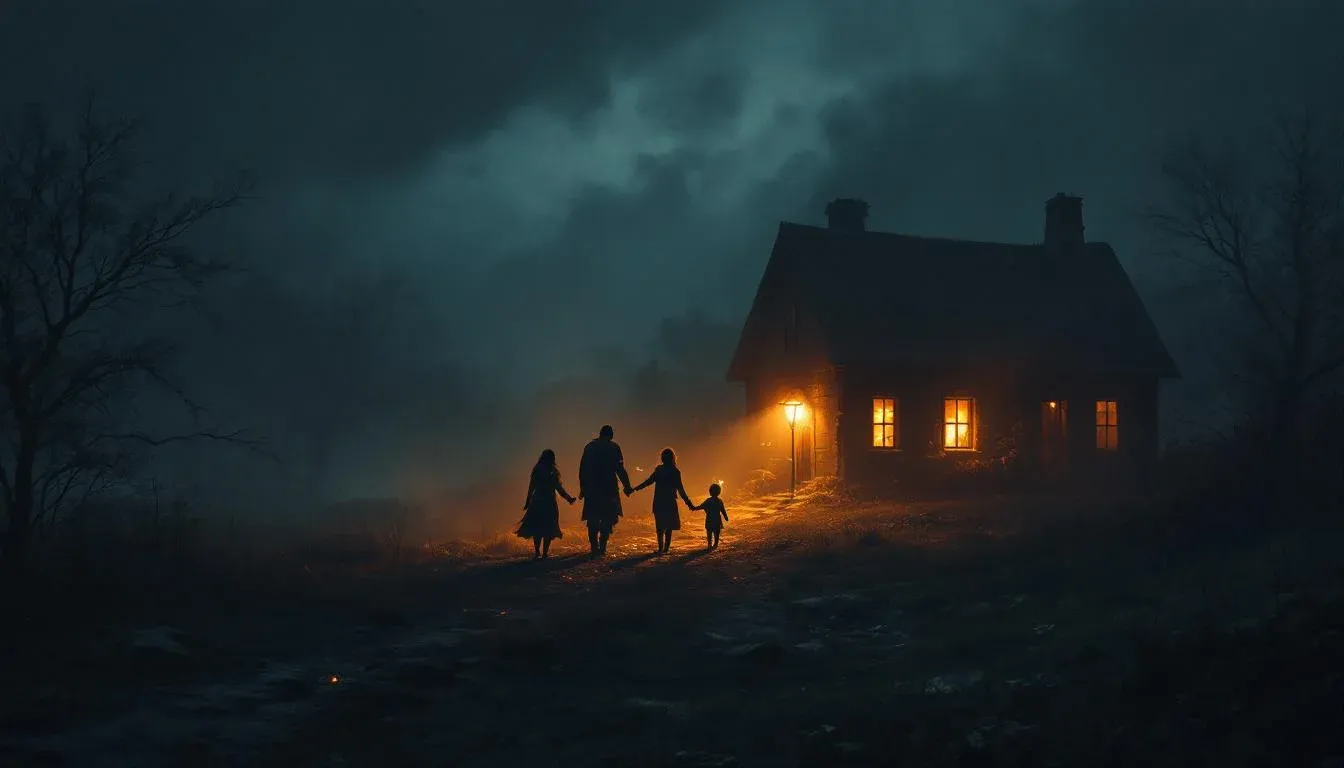
She would then carry the pan with the coals to the new house, where the master and mistress waited at the open gate with bread and salt in their hands. The coals were placed into the new stove. The bread and salt were left behind it. The Domovoy had been transferred — carried in the embers of the old hearth, reborn in the fire of the new one.
Some families carried the Domovoy not in coals but in an old boot or a worn-out lapot (bast shoe), left behind the stove overnight before the move. In the morning, the boot was wrapped carefully and transported to the new house. Others simply opened all the doors and windows at midnight and called: "Khozyain, khozyain, come with us!" — using the title of "master" rather than "grandfather," appealing to the spirit's authority rather than his affection.
The Domovoy and His Kin: A House Full of Spirits
The Domovoy did not guard the house alone. In the full taxonomy of Slavic household spirits, he was the patriarch of an entire spiritual family, each member governing a specific part of the homestead.
The Bannik — the bathhouse spirit — was his closest counterpart, governing the banya with the same mixture of protection and menace. The Bannik was feared more openly than the Domovoy, because the bathhouse was a liminal space associated with both birth and death, and the spirit who lived there was correspondingly less predictable.
The Ovinnik watched over the drying barn where grain was stored, and had a reputation for setting fires if angered. The Dvorovoy — from dvor, meaning "yard" — patrolled the courtyard and outbuildings. These were all aspects of the same animistic worldview: every space where humans worked, slept, or stored their food was inhabited by a spirit who required acknowledgment.
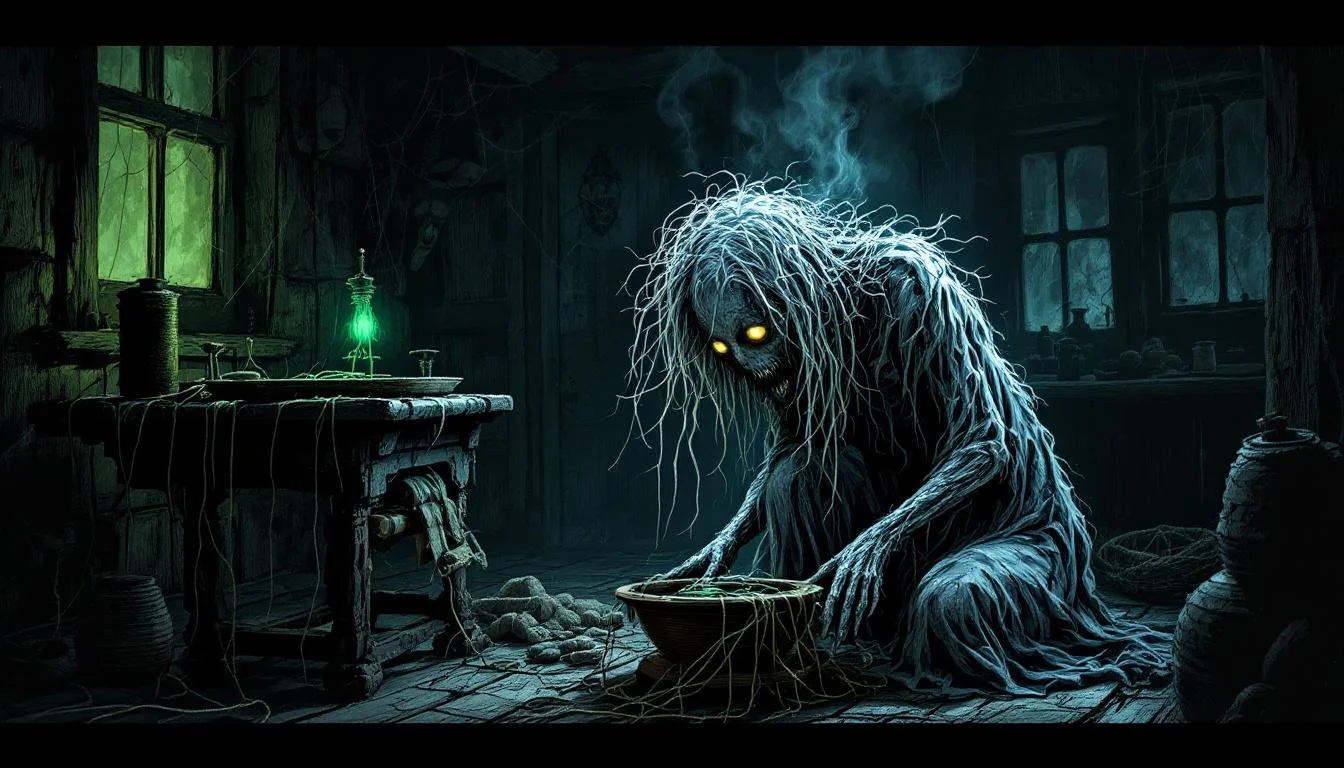
And then there was Kikimora. If the Domovoy was the protective grandfather, the Kikimora was his troubled counterpart — a female house spirit associated with spinning, nightmares, and domestic discord. In some traditions, the Kikimora was the Domovoy's wife. In others, she was his antagonist. A Kikimora might appear in a house where the Domovoy had been driven away, filling the spiritual vacuum with her own particular brand of torment: tangled thread, sleepless nights, the persistent sensation of being watched from the darkest corner of the room. The two spirits represented the poles of domestic life — the well-ordered household presided over by the Domovoy, and the household fallen into chaos, claimed by the Kikimora.
The forest spirit Leshy ruled the wilderness beyond the fence. Baba Yaga presided over the boundary between the living and the dead. But the Domovoy's territory was the most personal of all — the space where you slept with your guard down, where your children played, where you were most vulnerable. He was the last line of defense between your family and everything outside the walls that wanted in.
Names Across the Slavic World
The Domovoy wore different names in different lands, and each name revealed something about how the spirit was understood.
In Russia, the most common folk names were Dedushka (Grandfather), Khozyain (Master), Domozhil (House-dweller), Susedko (Neighbor), and Batanushka (a diminutive of "father"). Some called him Lizun (the Licker) — a reference to the belief that the Domovoy licked the hair of sleeping family members as a sign of affection. Others called him Zhirovik (the Fat One), suggesting that a well-fed Domovoy was a sign of a prosperous household.
In Ukraine, he was Domovyk. In Belarus, Damavik. In Poland, the equivalent spirit was the Domowik or Domownik, though Polish folklore tended to emphasize the spirit's more threatening aspects. The Czech and Slovak traditions called him Dědek or Děduška — both diminutives of "grandfather" — and often conflated him with broader ancestor-worship practices.
Across all these traditions, one pattern held: the Domovoy was never called by his true name lightly. To speak of him was to summon his attention, and summoning the attention of a supernatural being — even a protective one — was never done without purpose. Families used euphemisms and respectful titles precisely because the Domovoy was always listening. He lived in the walls. He breathed in the fire. He was closer than any other spirit in the Slavic pantheon, and that intimacy cut both ways.
Why He Still Matters
The Domovoy endures in the cultural memory of Eastern Europe not because people still literally believe a hairy old man lives behind their stove — though some do, and you would be unwise to mock them for it. He endures because the Domovoy represents something that modern life has largely abandoned: the idea that a home is not just a structure. It is a living relationship between the people who inhabit it, the ancestors who built it, and the invisible forces that hold it together.
When a Russian grandmother leaves a saucer of milk near the radiator in her Moscow apartment, she is performing a gesture that stretches back a thousand years. She is feeding the memory of every person who lived and died in that family line. She is saying: I remember. I have not forgotten you. The house still stands.
The Domovoy asks very little — bread, salt, respect, a clean house, a family that does not tear itself apart. In return, he offers everything: warmth, safety, continuity with the dead. It is the oldest contract in Slavic culture, written not on paper but in the embers of the hearth.
And in the old villages, where the wooden houses still creak at night and the stoves still hold their heat long after the fire dies, people will tell you — if you ask quietly, and with the proper respect — that the contract has not expired. The Domovoy is still here. He has always been here.
He is listening right now.