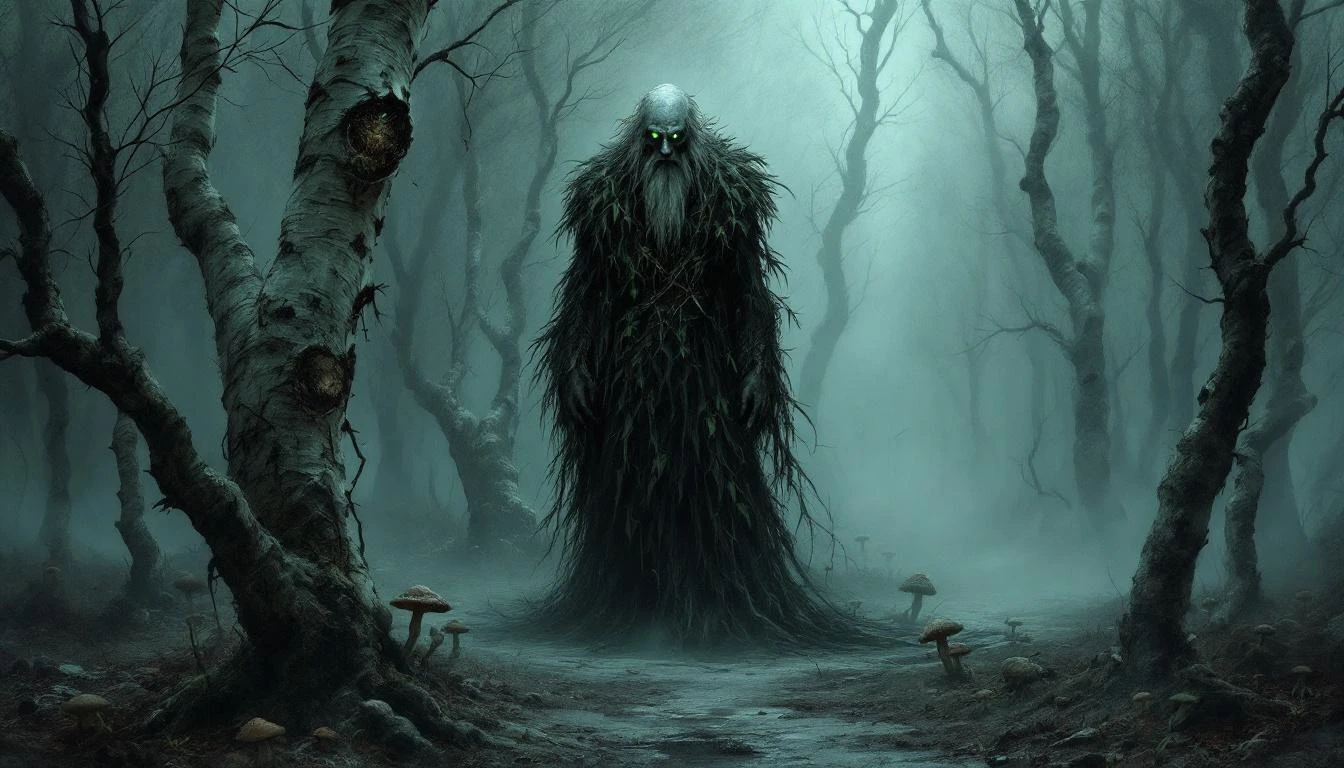
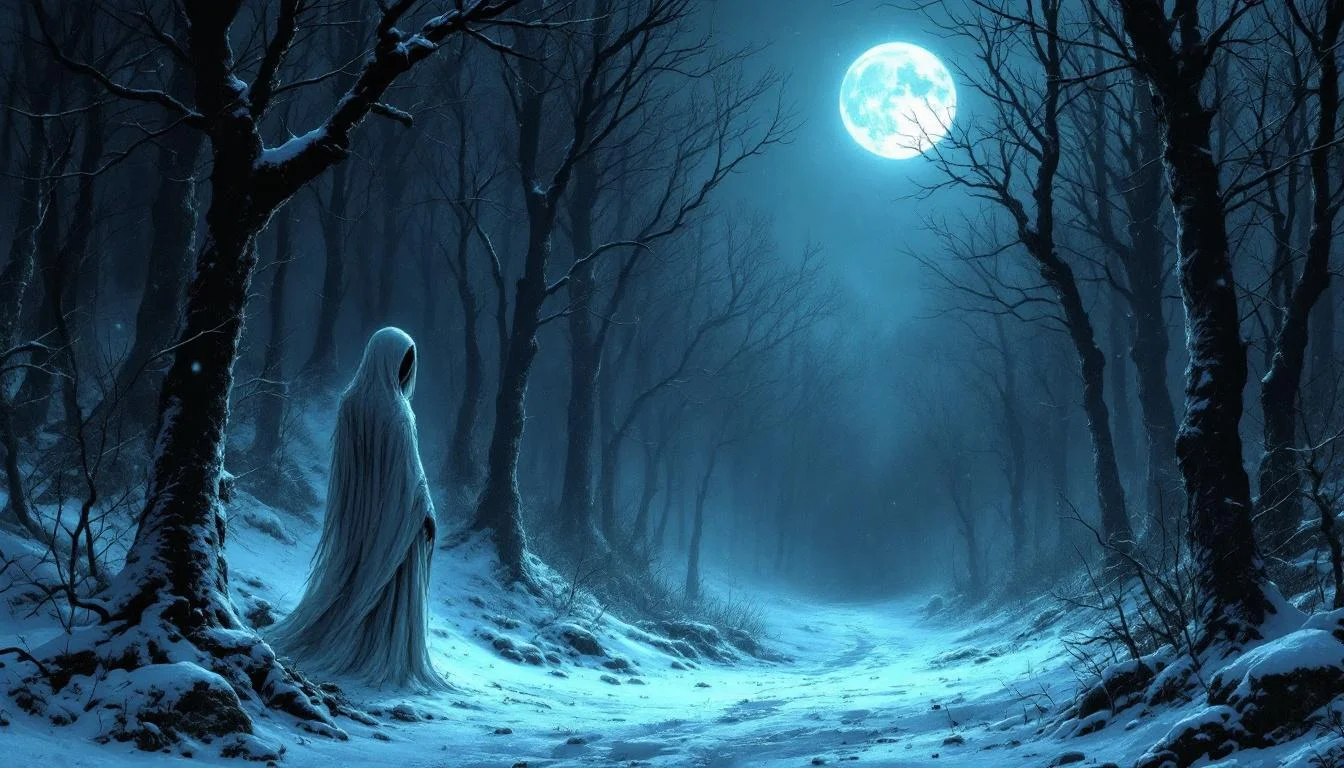
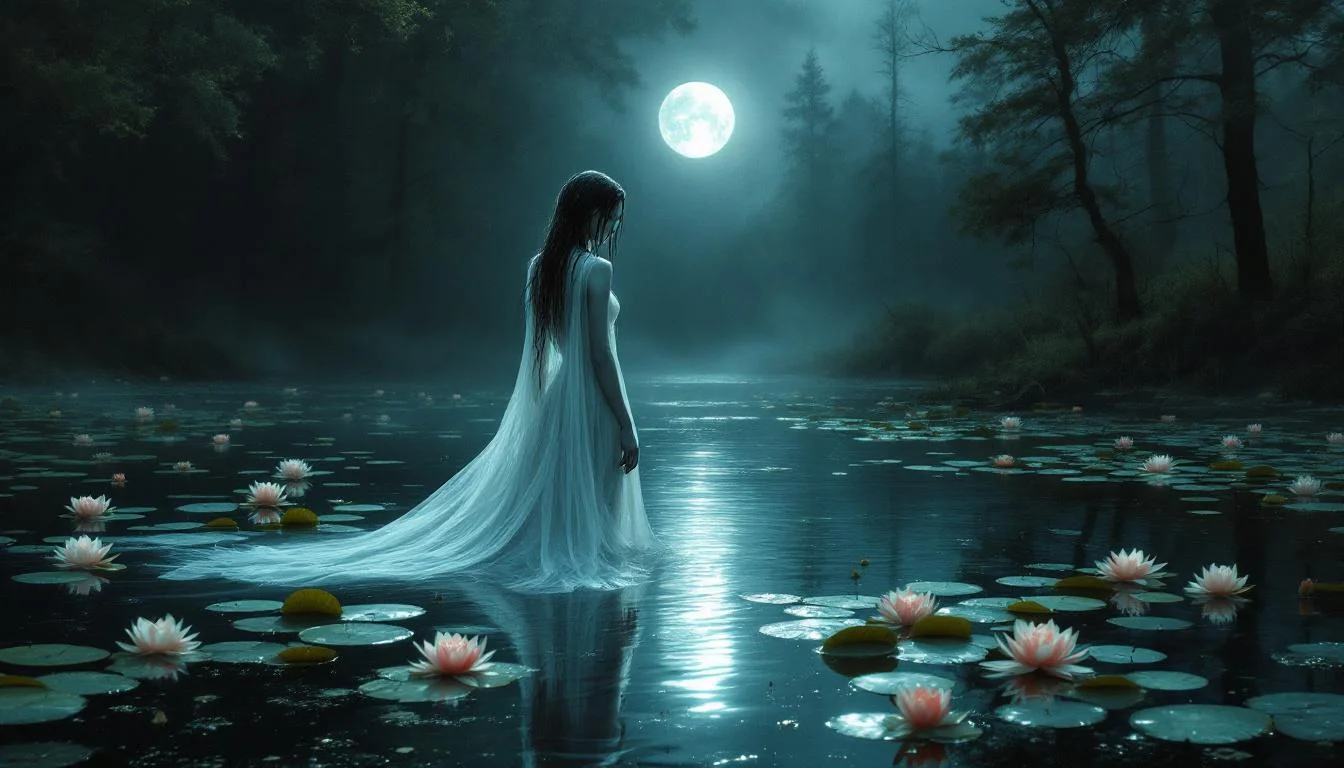
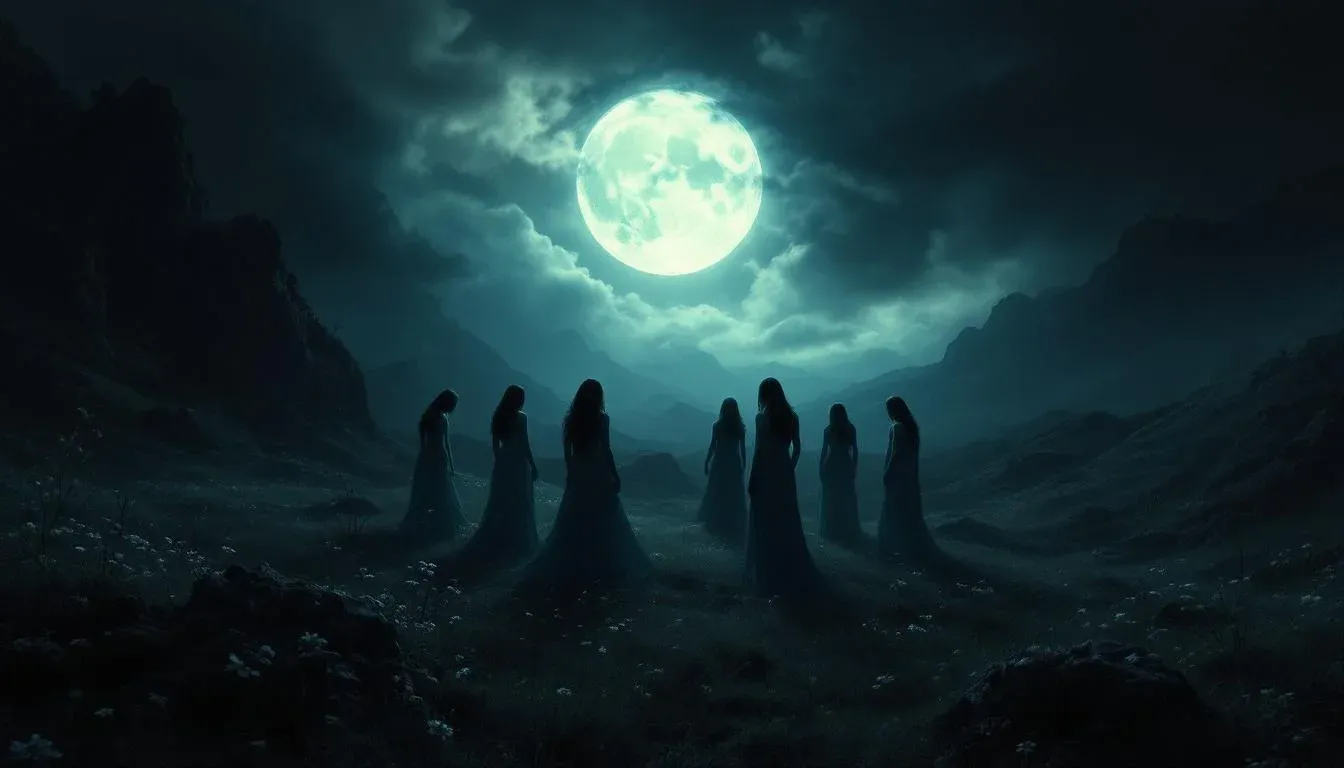
High on a Dinaric peak somewhere in what is now Bosnia, a shepherd walks his flock along a ridge that locals have avoided for generations. He knows why. His grandmother told him about the meadow beyond the treeline — the one where the grass grows in a perfect circle, greener and thicker than the scrub around it, as though something waters it that is not rain. She told him what dances there on moonlit nights. She told him what happens to men who watch.
He walks past the meadow. He does not look. He has made promises in his life, and he has kept them, and that is the only reason the thing in the meadow lets him pass.
The thing is a vila. And she is nothing like a fairy.
What Western Fantasy Got Wrong
Say the word "fairy" in English and the mind conjures something small, decorative, and largely harmless — Tinker Bell trailing pixie dust, a winged girl perched on a toadstool. The Slavic vila has nothing to do with any of that. She was never small. She was never cute. She was never safe.
A vila — the word is South Slavic, plural vile — is a spirit of wild nature as the Balkan peoples understood it: mountain forests, alpine meadows, storm clouds, rivers gorged with snowmelt. She is described in folk tradition as tall, pale, and devastatingly beautiful, with long blonde hair that falls loose to her waist and eyes that flash like lightning in a summer storm. She wears white — always white — and in some accounts she has wings, though not the gossamer insect wings of English fairy illustration. These are the wings of a raptor. A falcon. A swan. Something built for altitude and speed, not whimsy.
The 6th-century Byzantine historian Procopius, writing about Slavic beliefs, identified these spirits as nymphs. The comparison is understandable but incomplete. Greek nymphs were tied to specific natural features and their disposition was fundamentally passive. They existed in nature. Vile do not merely exist in nature. They rule it. They defend it. And they will kill you for trespassing in it.
The fondness of vile for fighting has been compared by scholars to the Teutonic Valkyries, and the comparison holds better than most mythological parallels. Both are female warrior spirits associated with high places and wild weather. But the Valkyrie serves Odin — she is a functionary of a patriarchal afterlife. The vila serves no one. She is sovereign over her domain in a way that no male spirit — not Leshy in his forest, not the Vodyanoy in his river — ever challenged.
Shapeshifters of the Mountain and the Storm
The vila's power begins with her body, which is not fixed. She can become a horse — not a docile mare, but a stallion wild enough to break any rider. She can become a wolf. She can become a swan or a falcon, and in these forms she moves between the earth and the sky with the ease of something that considers both to be home. She can become a snake, and the ambiguity of which kind is itself a warning.
But her most characteristic form is the storm itself.
Vile ride clouds. This is not a metaphor. In Serbian and Croatian folk belief, vile are the beings inside the thunderheads, the intelligence behind the wind that bends trees and strips roofs. When a sudden storm rolls over a Balkan mountain valley with no warning, that is the vile riding. The connection between vile and weather is so deep that folk taxonomy divides them into three categories: oblakinje — the cloud vile, who live in the sky and control storms; planinkinje — the mountain vile, who inhabit forests and peaks; and vodene vile — the water vile, who dwell in rivers and lakes.
The cloud vile are the most powerful. They build castles at the edges of storms, dance on the wind, and sleep among the stars. Folk tradition across the Balkans records offerings made to the cloud vile before planting season — not prayers exactly, but negotiations. A shepherd leaves bread and honey at a mountain spring. A farmer ties ribbons to a tree at the edge of his field. The message is always the same: we acknowledge that the weather belongs to you, and we ask that you be kind with it.
The Vila's Weapons and Her Law
Vile carry bows. This is mentioned so consistently across South Slavic folk tradition — Serbian, Croatian, Bosnian, Bulgarian, Slovenian — that it functions less as a detail than as a defining characteristic. She rides deer bridled with snakes or mounts winged horses, and she hunts with arrows that do not miss. In some accounts, the arrows cause physical death. In others, they confuse the spirit — a phrase that recurs in the folklore and seems to describe something worse than death: a permanent disorientation of the soul, a madness without cure.
But the vila does not fire indiscriminately. She has rules, and they are strict. The transgressions that provoke her wrath are specific: breaking an oath sworn in her name; drinking from a spring or lake that belongs to her without permission; stumbling upon her circle dance and failing to leave; boasting about having seen her; and — most fatally — harming the wild places she protects. Cut down a tree sacred to a vila and no offering will save you.
The emphasis on oath-breaking is particularly revealing. Across the Balkans, an oath sworn before a vila was considered absolutely binding. Not binding in the religious sense, where confession and penance can undo the damage, but binding in the way that gravity is binding: a fact of the world that does not care whether you regret it. A man who swore such an oath and broke it was not merely punished. He was hunted.
This made the vila something unusual in Slavic mythology: a moral enforcer. Morana, the goddess of death and winter, was inevitable but not judgmental. Leshy was territorial but capricious. The Rusalka killed out of grief and rage, not justice. But the vila killed for a reason. She had a code. Violate it and she was merciless. Respect it and she might become the most powerful ally a mortal could have.
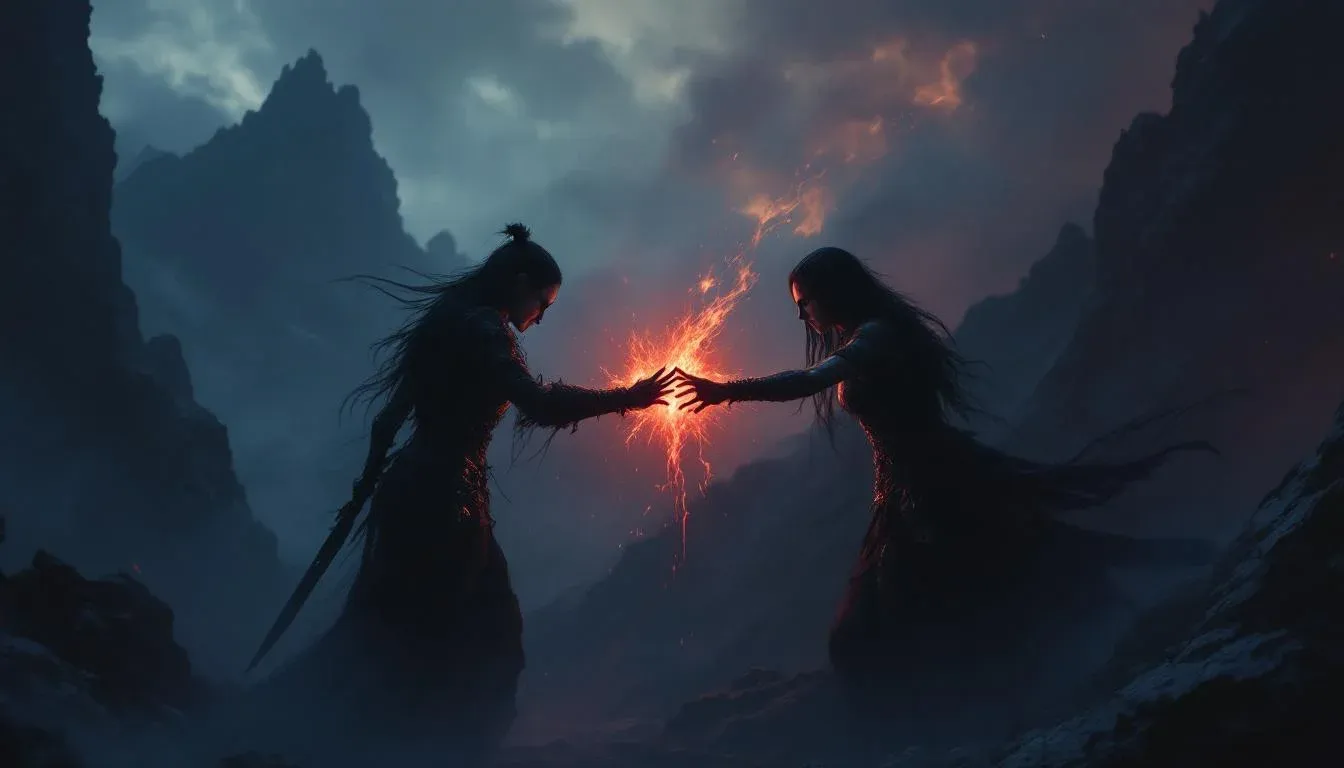
Blood Sisters: The Vila and the Hero
The most striking feature of vila folklore — the one with no real equivalent elsewhere in Slavic mythology — is the institution of blood sisterhood between a vila and a mortal man.
In Serbian and Croatian epic poetry, the bugarstice and deseterac songs that form the backbone of South Slavic oral tradition, heroes enter into binding relationships with vile. The term is posestrimstvo — blood sisterhood — sealed with blood, creating a bond that supersedes every other obligation.
The most famous blood sister is the vila Ravijojla — a name scholars believe derives from the archangel Raphael, suggesting an attempt by Christian editors to graft an angelic pedigree onto a stubbornly pagan figure. Ravijojla is the blood sister of Prince Marko, the great hero of Serbian epic poetry, a historical king who ruled from 1371 to 1395 and whose legend grew far beyond anything his actual reign justified.
Ravijojla is not Marko's lover. She is his combat medic, his intelligence officer, and his conscience. When Marko is wounded, she heals him with herbs no human healer knows. When he is about to make a tactical error, she warns him — and her warnings carry the weight of a command. When Marko's sworn brother, the Vojvoda Milos, is shot by a rival vila's arrows, it is Ravijojla who tells Marko how to save him.
There is a story in the cycle where Marko, traveling through a mountain, hears a vila singing and shouts at her to be silent. The vila responds by shooting him with two arrows through both legs. He calls for Ravijojla. She comes. She heals him. But first she rebukes him, and the rebuke is worth more than the healing, because it reminds the audience that even the greatest hero is subject to the vila's law.
Marko rode through the green mountain, and the vila called from the peak: "Brother Marko, do not ride through my mountain — it is not yours, it is mine. Honor my forest and my water, or you shall know the weight of my arrows."
Not the Rusalka: A Fundamental Difference
Outsiders to Slavic mythology frequently confuse the vila with the Rusalka, and the confusion is understandable on the surface. Both are beautiful female spirits. Both are dangerous. Both inhabit the wild margins of the Slavic world. But the differences are fundamental.
The rusalka is dead. She is the spirit of a woman who drowned, who was murdered, who died unbaptized or unmourned. Her existence is tragic and involuntary. Her violence is the violence of the wronged — undirected, insatiable, aimed at anyone who comes too close. She is an East Slavic figure, anchored in the rivers and birch forests of Russia, Ukraine, and Belarus.
The vila was never human. She was never dead. She is a nature spirit — something that exists because the mountains exist, because the storms exist, because the wild places of the world require a guardian and the guardian requires teeth. Her violence is purposeful: she punishes specific transgressions against specific rules. She can be generous, protective, even loving toward those who earn her trust. The rusalka cannot be any of those things, because grief has burned away everything except the impulse to drag others into the same cold water that swallowed her.
Geographically, the division is clean. The rusalka belongs to the East Slavic world — the flat, riverine landscapes of the steppe. The vila belongs to the South Slavic world — the vertical landscapes of the Dinaric Alps, the Carpathian ranges where Serbia, Croatia, Bosnia, and Bulgaria carve their identities into the rock. They are the same mythological impulse — the female spirit of the untamed world — refracted through two radically different geographies and two radically different relationships with death.
The Vila in the Living World
The vila did not stay in the epics. She seeped into the fabric of Balkan daily life in ways that most nature spirits never managed.
In rural Serbia, a woman who was unusually strong, fierce, or independent might be called a vilarica — a vila-like woman. This was not always a compliment, but it was always a recognition of power. The vila provided South Slavic culture with a template for female strength that operated entirely outside the domestic sphere. She did not cook. She did not weave. She did not wait for anyone. She rode, she hunted, she fought, and she answered to no authority but her own law.
Place names across the Balkans still carry the vila's mark. Vilina Vlas — the vila's hair — is a waterfall in Bosnia. Vilino Kolo names dozens of meadows and clearings from Slovenia to North Macedonia. Mountain springs throughout Serbia are called vilina vodica — the vila's water — and the oldest residents of nearby villages will still tell you, with varying degrees of seriousness, that you should ask permission before drinking from them.
The Bulgarian variant — the samodiva, from samo (self) and diva (wild) — emphasizes the radical independence that is the vila's most defining trait. A samodiva is literally the self-willed one, the spirit that acts on her own authority, the wildness that will not be domesticated. She dances in white, rides deer bridled with snakes, and carries a bow that never misses. She is the vila under a different name, preserved in a different dialect, feared and honored by a different nation, and identical in every way that matters.
The cult of the vile survived visibly into the early 20th century. South Slavic villagers left offerings at mountain springs and cave mouths: fruits, flowers, cakes, ribbons tied to tree branches. These were not the desperate appeasements of a frightened population. They were the routine courtesies of people who understood that they lived in a landscape that belonged to something other than them, and that the something appreciated good manners.
The vila persists because the landscape that created her persists. The Balkans have not been tamed. The mountains are still steep, the forests still dense, the storms still sudden and brutal in the way that only mountain storms can be. Every spring, when the snow melts off the high peaks and the meadows green and the first thunderstorms roll through the valleys, the conditions exist for the vile to return. No one believes in them literally anymore. But no one steps into the fairy circle, either. And when the wind picks up on a ridge above the treeline, and the clouds come in fast and low, and the world goes dark at midday for no reason that meteorology entirely explains, there is still a part of the Balkan mind that knows exactly what is happening.
The vile are riding. And the only sensible thing to do is get out of their way.