There is a particular kind of fear that only comes from something that is almost human but has abandoned every quality that makes humanity bearable. A thing that walks upright, that has hands, that understands doors and locks and the weight of a gravestone — but whose face is the face of a starving dog, whose single eye burns with a hunger that no amount of flesh can satisfy, and whose iron teeth can crack a human femur the way you crack a walnut. The South Slavic peoples called this thing psoglav, and for centuries across the mountains of Serbia, Bosnia, Montenegro, and the Istrian coast of Croatia, it was considered not a fairy tale but a genuine threat — a creature of the deep earth and the unlit places, a cannibal ghoul that fed on the living and the dead with equal appetite.
The name itself is blunt, almost clinical. Pso-glav. From the Serbian Cyrillic Псоглав: пёс (pës) meaning "dog" and глава (glava) meaning "head." Dog-head. No metaphor, no poetry, no euphemism. The Slavic peasant who coined the word was not interested in literary flourish. He was interested in describing, as precisely and economically as possible, the thing he believed was waiting in the cave behind the village, the thing that dug up his grandfather's coffin last winter and left nothing but splinters and a dark stain on the frozen soil.
The Anatomy of a Nightmare
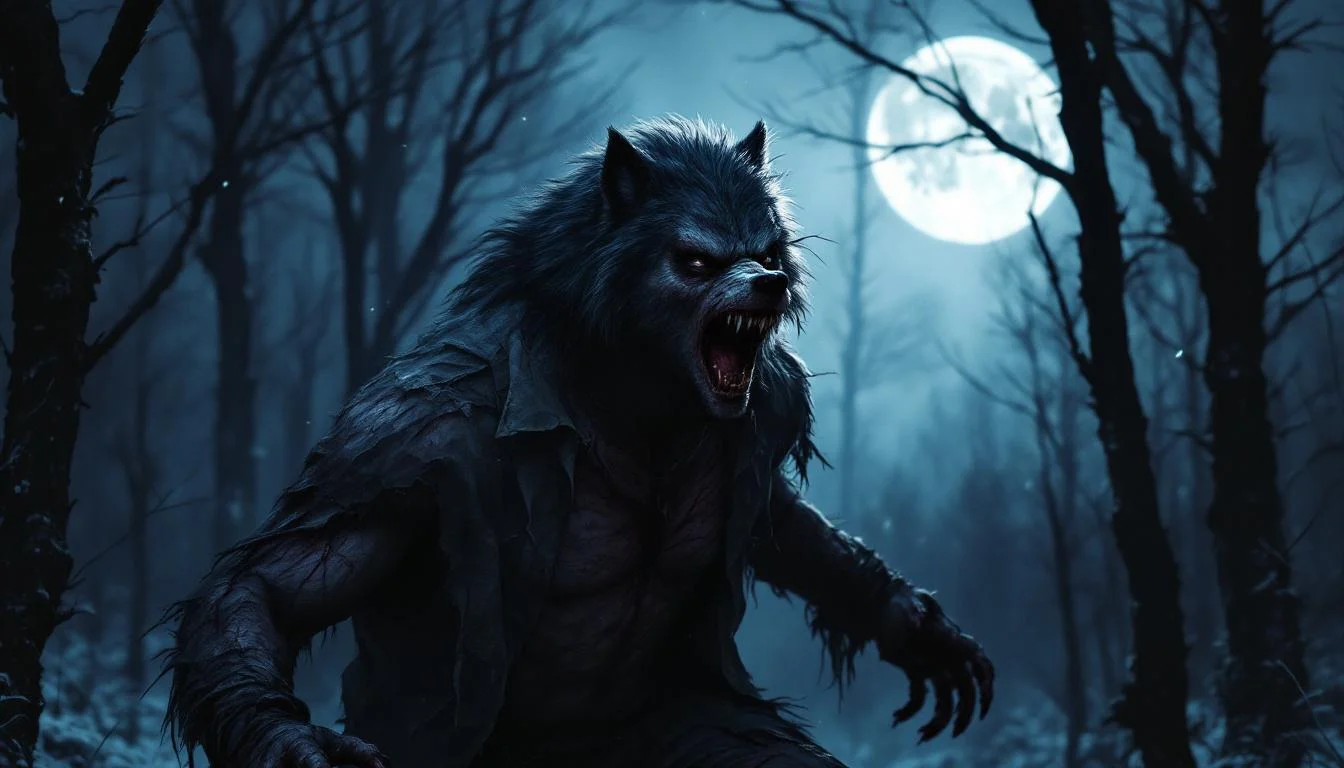
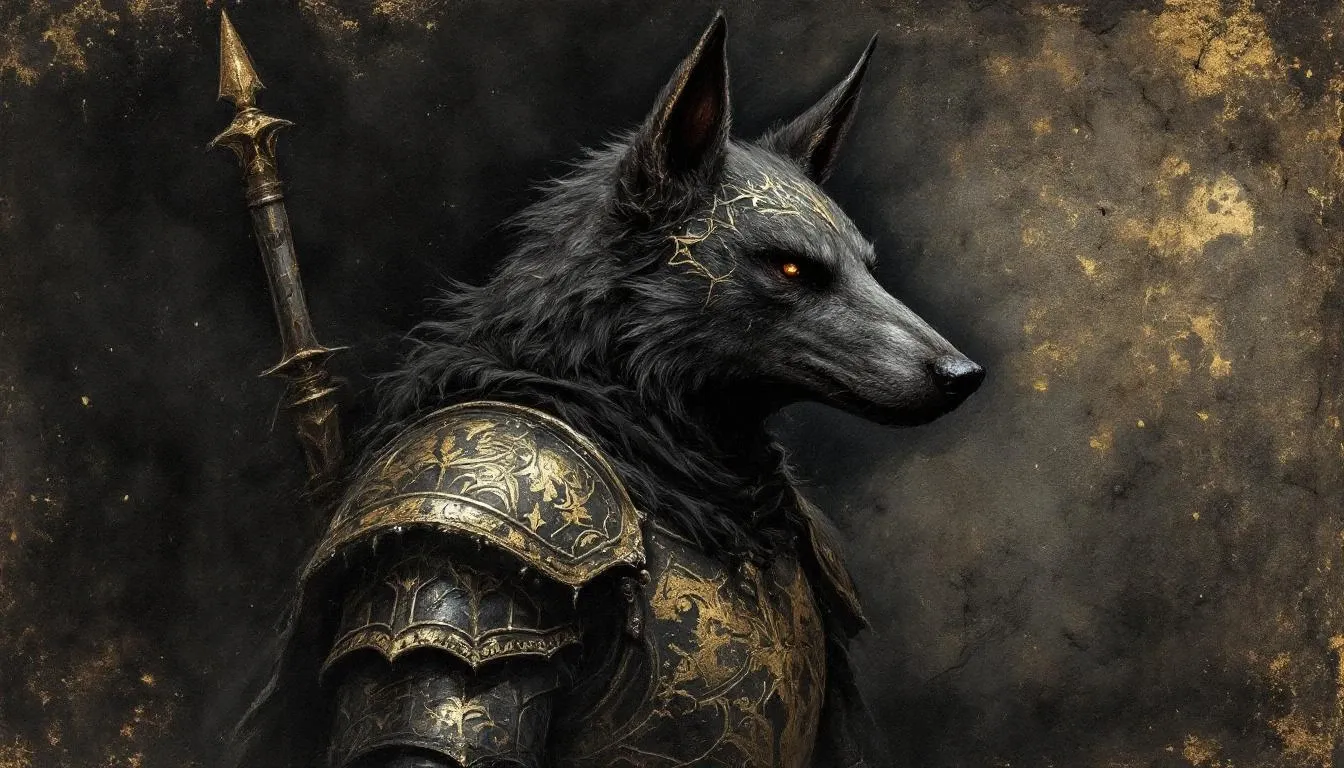
What made the psoglav so enduring in the folk imagination was the specificity of its description. This was not a vague shadow or an ill-defined presence. Every telling agreed on the same grotesque inventory of parts, assembled with the logic of a fever dream: a human torso — muscular, broad-shouldered, unmistakably man-shaped — mounted on the legs of a horse, thick and powerful, ending in heavy hooves that struck sparks from stone. Rising from those human shoulders, where a man's neck and skull should have been, sat the massive head of a dog — not a domesticated breed but something feral and prehistoric, a skull built for crushing bone. The jaws were lined not with ordinary teeth but with iron fangs, metallic and gleaming, capable of tearing through armor, wood, and the lids of coffins. And set into the center of that canine forehead, where two eyes should have been, there glared a single cyclopean eye — enormous, unblinking, burning with a cold and predatory intelligence that was worse than mindless hunger because it suggested calculation.
The composite nature of this creature is significant. Horse legs gave it speed across the rough terrain of the Balkan mountains, an ability to chase down any man or woman foolish enough to run. The dog head gave it the senses of a predator — the nose that could track a scent through kilometers of forest, the ears that could detect a heartbeat through a stone wall. The iron teeth elevated it beyond the merely biological into something supernatural: not a beast that happened to eat flesh, but a demon engineered for the destruction of human bodies, whose very mouth was a weapon forged in some infernal smithy. And the single eye — that cyclops stare — removed the last trace of kinship between it and anything that could be reasoned with, bargained with, or understood. You cannot read the intentions of a face with one eye. You cannot appeal to mercy when the thing looking at you does not even have the correct number of organs for sympathy.
The Dark Land Beneath the World
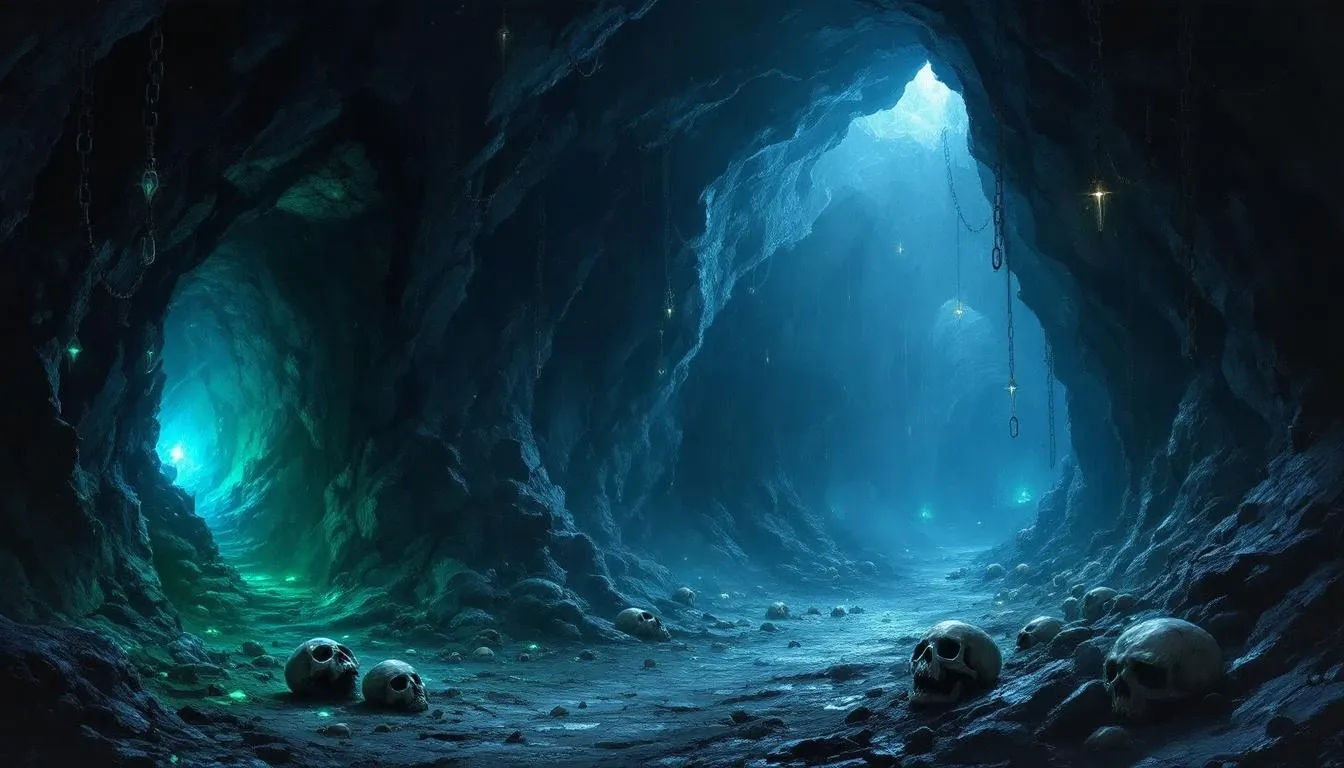
Every monster needs a home, and this one's dwelling tells you everything about what it represented in the South Slavic mind. The creatures were said to dwell in caves — not ordinary caves, but passages that led downward into a place the folklore calls simply the dark land: a vast subterranean territory where no sun has ever reached, where the air is still and cold and carries the faint mineral smell of stone that has never known weather, and where the walls and floors glitter with gemstones of extraordinary value. Rubies, sapphires, diamonds — the folk accounts are generous with the specifics — all scattered across the ground of the dark land like pebbles on a riverbank, unguarded and unclaimed by any human hand, because the price of reaching them was encountering what lived there.
This detail — the lightless kingdom rich in gems — connects the psoglav to a much older tradition in Slavic cosmology. The underworld, known across various Slavic traditions as Nav or Nav', was the realm of the dead, governed by chthonic deities who controlled both death and wealth. The word Nav itself comes from the Proto-Slavic root for "death" or "corpse," and the spirits associated with it — the Nav spirits who rose as pale, dangerous emanations of the unquiet dead — were among the most feared beings in pre-Christian Slavic religion. The dog-headed demon, with its underground domain and its habit of feeding on corpses, sits squarely within this chthonic tradition. It is a guardian of the underworld's treasures and a devourer of those who belong to death, both the already dead and the soon-to-be.
The gemstones are the bait. In several folk narratives from Serbia and the Istrian peninsula, the story follows a recognizable pattern: a man hears rumors of a cave filled with precious stones, ventures inside despite warnings, and discovers too late that the treasure is surrounded by psoglavs waiting in the permanent darkness. The moral is blunt and ancient — the riches of the deep earth are not meant for the living, and the greed that drives a man underground is the same greed that feeds the thing waiting for him. This is a pre-Christian lesson about the boundary between the world of sunlight and the world of the dead, and the dog-headed guardian is the enforcer of that boundary, the customs officer at the gate between life and the abyss.
The Grave-Eater: Psoglavs and the Dead
Of all its habits, the one that most horrified the living was the appetite for corpses. The creatures were said to dig up graves — methodically, with those powerful horse-hooved legs and human hands — to extract the bodies buried within and consume them entirely: flesh, bone, sinew, and marrow. In a culture where proper burial was not merely a social courtesy but a spiritual necessity, where the treatment of the dead determined whether a soul found rest or wandered as a dangerous revenant, this grave-robbing was an act of cosmic vandalism. It did not merely kill. It annihilated. It erased the dead from their resting places and turned the rituals of mourning into a grotesque joke.
This connects the creature to the broader Slavic anxiety about what happens to the body after death. The vukodlak — the South Slavic werewolf-vampire hybrid — was feared partly because it represented a corpse that refused to stay still, a dead body animated by some restless hunger. The dog-headed fiend inverted that fear: here was not a corpse that moved but a thing that came for corpses, an external predator that violated the sanctity of the grave from outside. Between the vukodlak rising from within and the iron-toothed grave-eater digging from without, the dead of the medieval Balkans were under siege from both directions, and the living could only pile more stones on the grave and pray that the weight would be enough.
The anthropophagy extended to the living as well. The creatures were said to attack travelers on mountain roads, to raid isolated farmsteads at night, and to carry off children from villages that bordered the deep forests. But the eating of the dead was always the detail that received the most emphasis in the tellings, because it struck at something more fundamental than physical safety. It struck at the order of the universe itself — the agreement between the living and the dead that each would stay in their proper place. The demon recognized no such agreement. It treated the boundary between life and death as a buffet table.
They say that psoglavs have a dog's head with iron teeth and a single eye on the forehead, that they live in caves without sunlight, and that they dig the dead from their graves to eat them.
The Cyclops Connection: Ancient Roots of a Balkan Demon
The single eye invites a question that scholars of Slavic folklore have been circling for generations: where did this creature come from? The dog-headed races — the cynocephali — appear in Greek literature as early as the fifth century BCE, when Herodotus mentioned them as inhabitants of the distant east. Ctesias of Cnidus described dog-headed men in India. The Alexander Romance, that enormous and endlessly recycled collection of legends about Alexander the Great's conquests, placed encounters with cynocephali at the edges of the known world and became one of the most widely translated texts in medieval Europe. A Croatian version of the Alexander Romance, the Aleksandrida, was circulated from the sixteenth century onward, and its descriptions of monstrous races filtered directly into the folk traditions of the region.
But the Slavic creature is not simply a borrowed cynocephalus. The Greek dog-headed men were tribes — entire populations of dog-headed humanoids living in distant lands. This being is a demon. The Greek cynocephali were sometimes depicted as noble or even saintly — Saint Christopher himself was described as a cynocephalus in certain Eastern Orthodox traditions. The Balkan demon has no redeeming qualities whatsoever. And neither the Greeks nor the Romans gave their dog-men a cyclops eye, iron teeth, or horse legs. Those details are Slavic additions, drawn from the native demonological tradition and layered onto the imported framework of the dog-headed other.
The cyclops eye, in particular, points to an influence from the pre-Christian Slavic underworld mythology rather than from any Mediterranean source. Creatures associated with the chthonic realm — the dark, the subterranean, the domain of chort and the underworld spirits — were frequently described with diminished or singular vision, as though the sunless world they inhabited had reshaped their bodies to match their environment. One eye is enough in a land with no light. One eye, in fact, is more than enough when that eye can see in total darkness and the prey it hunts cannot see at all.
Ottoman Shadows and Historical Terror
The belief in these creatures did not exist in a vacuum. It intensified and mutated during the centuries of Ottoman rule over the Balkans, roughly from the fifteenth through the eighteenth century, a period of extraordinary violence, displacement, and cultural dislocation for the South Slavic peoples. Scholars have noted that many of the folk narratives about the dog-headed demons carry a specific historical flavor — the creatures emerge from darkness to raid settlements, carry off the vulnerable, and retreat to their strongholds in the deep mountains where no human authority can follow them. The parallels with the lived experience of Ottoman-era raiding, forced conversion, and the devshirme (the child-levy system) are difficult to ignore.
This is not to say that the creature was merely a metaphor for the Ottoman soldier. Folk belief does not work that way. But the fear that the demon embodied — the fear of something inhuman that descends from the mountains, that takes your children, that desecrates your dead, and that operates from a place of power you cannot reach — mapped with terrible precision onto the historical reality of the Balkan population during those centuries. The legend grew more vivid and more feared precisely because history kept providing fresh material for the nightmare. The creature from the cave and the raider from the mountain pass merged in the folk imagination until they were indistinguishable, and the iron teeth of the demon became a way of talking about the very real iron weapons of an occupying force without saying so directly.
Why Psoglav Matters
The creature endures because it is unforgettable. You can hear a hundred folktales about generic demons and ghosts and monsters, and they blur together into a fog of interchangeable terrors. But you hear about it once — the dog skull, the iron fangs, the single staring eye, the horse legs striking sparks as it gallops through a lightless cavern filled with gemstones and gnawed bones — and the image sears itself into your memory with the permanence of a brand. The South Slavic imagination, when it set out to build a monster, did not settle for vague menace. It assembled this demon from specific, clashing, irreconcilable parts, each one chosen for maximum wrongness, and the result was a creature that three hundred years of modernity has failed to make less disturbing.
But the psoglav also endures because of what it reveals about the people who created it. The South Slavic peasant lived in a world where the dead needed protecting as much as the living, where the earth beneath your feet was not solid ground but a thin crust over a vast dark kingdom, where wealth and death shared the same address, and where the boundary between the human and the monstrous was guarded by things that were themselves more monstrous than anything on either side. The psoglav is a map of those fears — a creature that combines the predator, the grave-robber, the invader, and the guardian of forbidden treasure into a single iron-toothed, one-eyed, dog-headed figure standing at the mouth of a cave that leads straight down into everything the sunlit world would prefer to forget. It is, in the truest sense of the word, unforgettable. And the Balkans have not forgotten.