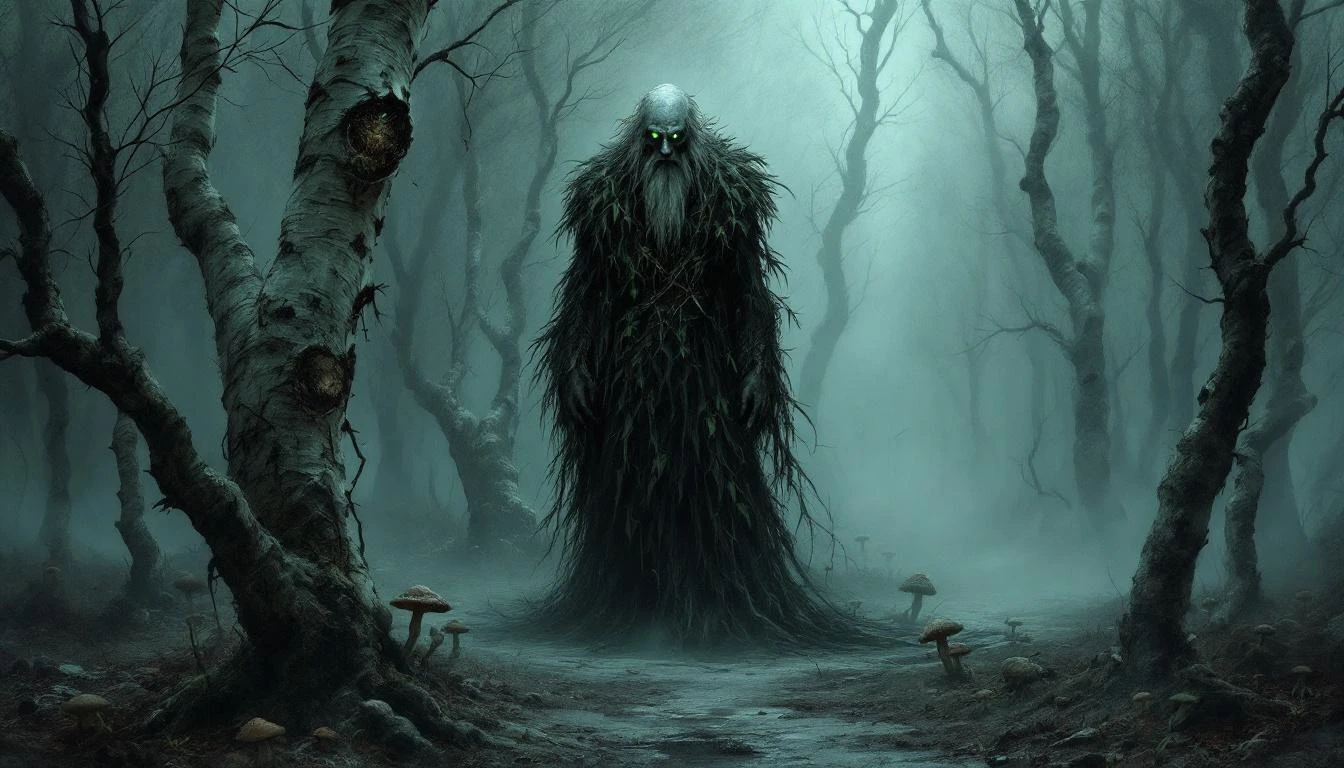
Vukodlak: The Original Slavic Werewolf
The English word "werewolf" comes from Old English. The creature itself comes from somewhere older and further east. Long before Germanic tribes told tales of wolf-men by firelight, Slavic peoples had already named the thing they feared in the dark, had already developed rituals to detect it, methods to curse a man into its shape, and — when they were lucky — ways to bring him back.
His name was vukodlak. Wolf-skin.
The Western werewolf is a creature of moonlight, silver bullets, and tragic lone heroes. The Slavic vukodlak is none of those things. He is a sorcerer who chose the wolf's shape. He is a groom cursed at his own wedding by a witch he never saw. He is a dead man whose body refused to stay still in the grave. And in the South Slavic lands — Serbia, Montenegro, Bosnia — he is something the West never imagined: a werewolf and a vampire fused into one creature, because the Slavic mind understood that these were never two separate fears. They were always the same fear, wearing different skins.
The Word Came First
The Proto-Slavic root vьlko-dlakь breaks apart cleanly: vьlk means "wolf," and dlaka means "fur" or "animal hair." Wolf-haired. Wolf-skinned. The compound is old enough to predate the fragmentation of the Slavic languages, which means the word — and the belief it carried — existed before there were separate Serbs, Poles, Czechs, or Ukrainians. Before there were borders. Before there were nations.
Every Slavic language inherited its own version. Serbian and Croatian kept vukodlak. Slovenian: volkodlak. Czech: vlkodlak. Slovak: vlkolak. Polish: wilkolak. Ukrainian: vovkulaka. Russian: volkolak. Bulgarian: varkolak. The word traveled with the people who spoke it, mutating at the edges, holding firm at the center. Wherever Slavs settled, from the Baltic coast to the Adriatic, they carried the wolf-skinned one with them.
The linguistic evidence alone is enough to push the tradition back to at least the 6th or 7th century CE, when Common Slavic was still a single language. Some scholars argue for an even older layer — that the wolf-man belief connects to Indo-European warrior bands like the koryos, young men who underwent ritual initiations involving wolf pelts, wolf behavior, and symbolic death. If they are right, the vukodlak is not medieval. He is prehistoric.
Two Paths to the Wolf: Voluntary and Involuntary
In Slavic werewolf lore, not all transformations were created equal. The tradition draws a hard line between two kinds of vukodlak, and the distinction matters because it changes everything about how the creature was understood — and feared.
The Sorcerer Who Chose the Shape
The voluntary vukodlak was a practitioner of magic. A znakhar in Russian lands, a vjestica or vještac in South Slavic communities, a czarownik among the Poles. These were people who had mastered the art of transformation through spell-craft and ritual knowledge passed down through bloodlines or extracted from forbidden sources.
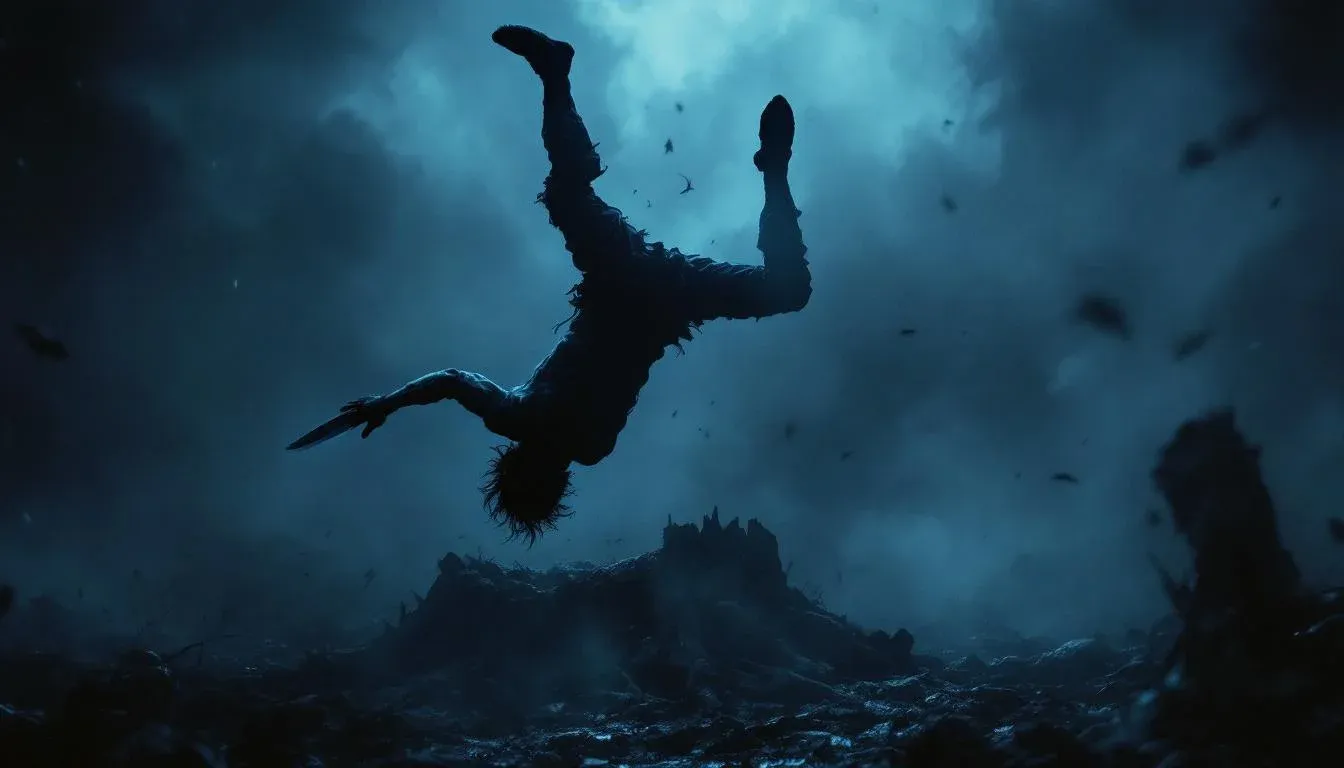
The mechanics were specific and physical. A sorcerer could transform by driving a copper knife into a stump at the edge of a forest, then somersaulting backward over it. Others recited incantations and leapt through a hoop made of birch bark or passed beneath an archway of bound branches. In Belarusian accounts, the sorcerer stripped naked, found a tree stump in the deep woods, drove a knife into it, and tumbled over it three times while speaking the words. To return to human form, the actions had to be repeated in reverse — the same stump, the same knife, the same somersault, but backward. If someone removed the knife while the sorcerer was in wolf form, he was trapped. Forever.
These voluntary werewolves were feared but also, paradoxically, respected. They retained their human intelligence while in wolf form. They chose their targets. They served their own purposes — protecting their herds from natural wolves, scouting enemy lands in wartime, settling grudges in ways that left no human fingerprints. A village might despise its local sorcerer and still rely on his darker skills when winter brought the real wolves closer.
The Victim Who Had No Choice
The involuntary vukodlak was a different creature entirely. He did not choose the wolf. The wolf was forced upon him.
The most common method of forced transformation across all Slavic lands was the cursed wedding. A sorcerer or witch, angered by a slight — an uninvited guest, an unpaid debt, a personal grudge against the groom's family — would arrive unseen at the celebration and throw wolf skins or enchanted belts over the wedding party. Bride, groom, groomsmen, musicians — all of them transformed at once, scattering into the forest as a pack of wolves. The curse could last days, months, years. Some accounts said it lasted seven years exactly.
In Ukrainian Transcarpathian villages, women — wives, mothers-in-law — were said to curse abusive men into wolf form using verbal magic or enchanted objects hidden beneath the threshold of the home. A stick placed under the doorframe, a knotted rope buried in the yard. The man would leave the house one morning and simply never return as himself. To break the curse, his family had to find the hidden object and destroy it, sometimes on a specific holy day — Christmas Eve was considered the most powerful.
The involuntary vukodlak suffered. This is what separates the Slavic tradition from the Western werewolf archetype most sharply. The cursed werewolf did not rage or revel in the kill. He was terrified. He avoided true wolves. He lingered at the edges of villages, not to hunt, but because he remembered being human and could not let go of what he had lost. In some accounts, the cursed vukodlak wept. In others, he refused to eat meat, surviving on roots and berries even in wolf form — a detail that makes no biological sense but carries enormous emotional weight. The wolf's body was a prison, not a gift.
The Werewolf-Vampire: Where the Categories Collapse
Here is where the Slavic vukodlak departs most dramatically from anything the West ever imagined. In Serbia, Montenegro, Bosnia, and parts of Dalmatia, the word vukodlak did not mean only "werewolf." It also meant "vampire."
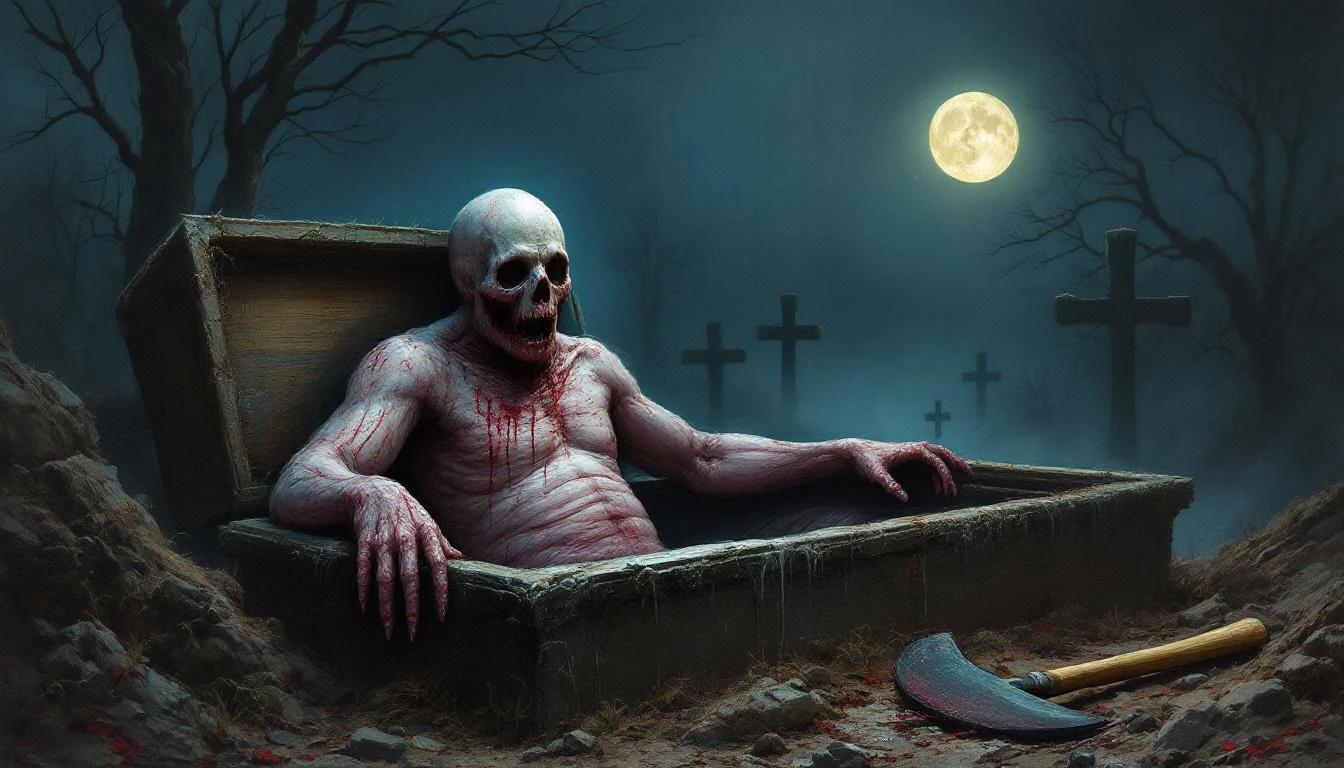
The great Serbian linguist Vuk Karadzic, writing in the early 19th century, defined the vukodlak not as a wolf-man but as a corpse that rises from the grave, swollen with blood, to strangle livestock and torment the living. In Dalmatia, the same word meant a living person who turned into a wolf at night. In Montenegro, it meant both — or either — depending on who was telling the story and how recently someone in the village had died under suspicious circumstances.
A vukodlak is a man who rises from the grave after death. His body is bloated and red, with fresh blood about his mouth. He strangles cattle by night and may visit his former home. In some places it is said he must spend time in the shape of a wolf before he can walk as a dead man among the living.
This was not confusion. It was not a failure to categorize. The South Slavic tradition preserved something that the Western mind, trained to file creatures into neat taxonomies, lost: the understanding that the werewolf and the vampire are two phases of the same phenomenon. A man who was a shapeshifter in life became a blood-drinker in death. The wolf-skin he wore while alive followed him into the grave and became something worse. The transformation did not stop at death. It continued through it.
In Montenegro and the Bay of Kotor region, the connection was made explicit: a vampire had to spend a period in wolf form before it could rise as an undead revenant. The wolf stage was a larval phase — a cocoon of fur and hunger from which the full vampire eventually emerged. The creature that prowled the graveyard on four legs and the creature that knocked on doors at midnight were the same entity at different points in its lifecycle.
This werewolf-vampire fusion is why the word vukodlak — wolf-skin — could be applied to something that had no fur at all. The name remembered the origin even when the form had changed.
The Wolf, the God, and the Underworld
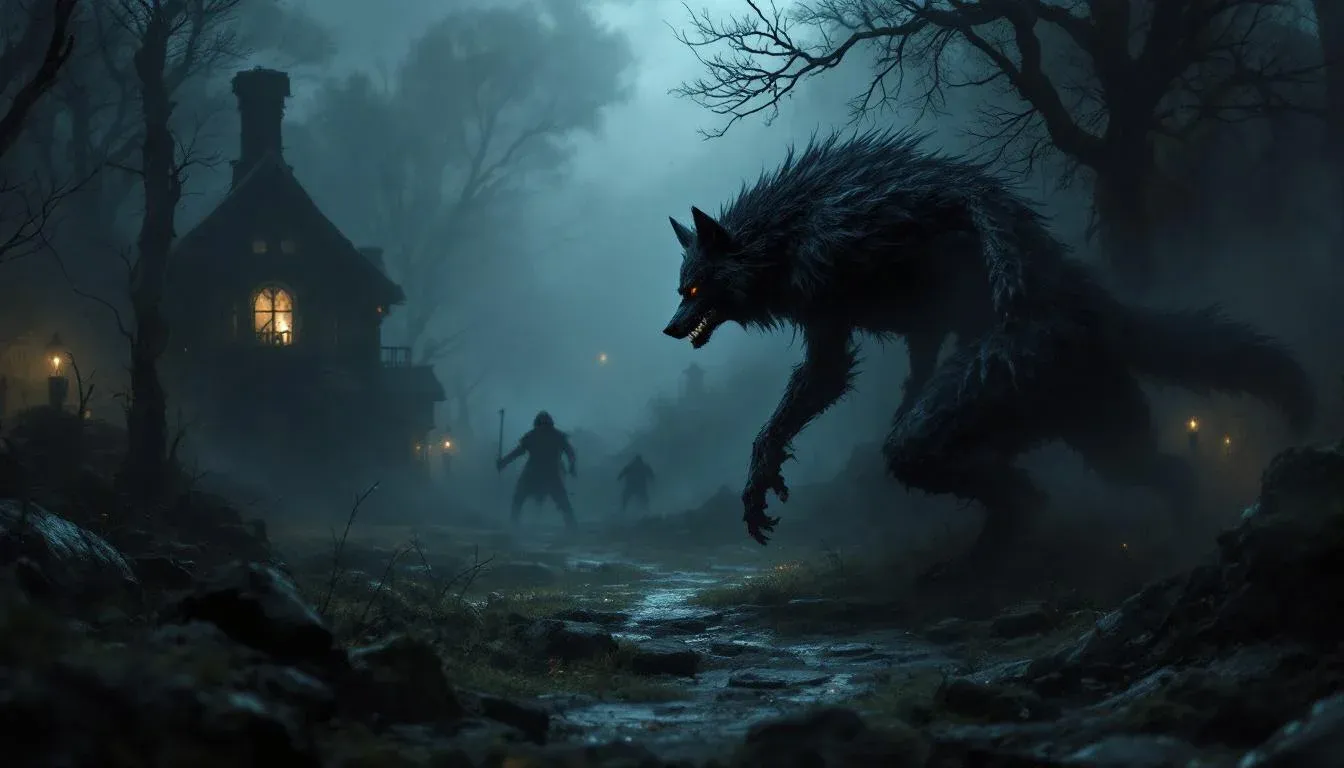
The vukodlak did not exist in isolation. He was threaded into the larger fabric of Slavic cosmology, and the thread leads directly to Veles — the god of the underworld, of cattle, of sorcery, and of wolves.
Veles was called the "wolf shepherd" across the South Slavic lands. He was the lord of all wolves, the deity who released them from the forests to cull the herds when the balance of the natural world demanded it. He wore bear fur and serpent scales, but the wolf was his agent, his extension into the world above. When a wolf took a sheep from the flock, Slavic herdsmen sometimes accepted it as Veles taking his due — a tithe to the god of the underworld, paid in blood and wool.
The vukodlak, then, was not just a cursed man or a cunning sorcerer. He was a creature of Veles's domain. The sorcerer who chose the wolf's shape was drawing on the same chthonic power that Veles wielded. The cursed man trapped in wolf form was, in a theological sense, claimed by the underworld before his time — pulled into Veles's realm while still alive, walking the boundary between Yav (the world of the living) and Nav (the world of the dead) on four legs instead of two.
This connection explains why the vukodlak could slide so easily between werewolf and vampire. Both creatures belong to the border between life and death. Both are governed by the same god. The Leshy, lord of the forest, controlled the wilderness where wolves hunted. But the wolf itself — the predator, the shapeshifter, the boundary-crosser — belonged to Veles.
The Wilkolak: Poland's Werewolf
In Poland, the wilkolak carried its own distinctive weight. Polish tradition emphasized the cursed variety — innocent men transformed against their will by jealous sorcerers or scorned women. The Polish wilkolak was above all a figure of pity, not horror.
Polish ethnographers of the 19th century recorded accounts from rural communities where the wilkolak was described as recognizable by his behavior. He did not hunt with natural wolf packs. He lingered near roads and human settlements. He flinched from loud noises. If you called a suspected wilkolak by his human name, he might pause, turn, and look at you with eyes that held something no wolf's eyes should hold.
Breaking the curse required human contact — literally. Throwing a piece of clothing over the wolf, especially a garment belonging to the cursed person, could trigger the reversal. A belt was preferred. In some accounts, bread worked — bread baked by the cursed man's wife, offered to the wolf at a crossroads. The symbolism is transparent: the domestic world reaching across the boundary to reclaim what the wild had stolen.
The Striga (strzyga) tradition in Poland overlapped with the wilkolak in important ways. Both involved transformation, both carried associations with witchcraft, and both occupied the liminal space between human and non-human. A community that feared the strzyga also feared the wilkolak, and the protective measures against one often worked against the other — garlic, iron, prayers to specific saints, and the watchful eye of neighbors who knew the signs.
The Vovkulaka: Ukraine's Carpathian Wolf
Ukrainian werewolf tradition concentrated in the Carpathian Mountains — specifically in Zakarpattia, the Transcarpathian region where the borders of Ukraine, Slovakia, Hungary, and Romania press together like tectonic plates. The folklore there is layered with influences from every direction, and the vovkulaka reflects that complexity.
The Ukrainian vovkulaka had two origins: born or cursed. A child born under certain conditions — on an unlucky day, during a storm, to parents who had broken a vow — could carry the wolf inside them from birth. These born vovkulakas were said to transform on fixed dates: on Saint George's Day in spring and to return to human form on Saint Nicholas Day in winter. For months at a time they lived as wolves, and their families simply waited.
The cursed vovkulaka was created by human malice, most often by a female relative — a detail that distinguishes the Ukrainian tradition from the broader Slavic pattern. Wives cursed unfaithful husbands. Mothers-in-law cursed sons-in-law who drank too much or raised their hands against their daughters. The curse was enacted through hidden objects — a stick beneath the threshold, a knotted cord sewn into a pillow, an inscription scratched into the hearthstone. The man crossed the threshold and was no longer a man.
A striking feature of the Transcarpathian vovkulaka: he did not eat meat. He did not howl. He wandered the forests eating roots and grasses, silent and miserable, a vegetarian wolf who had forgotten how to hunt. Villagers who encountered such a creature in the woods recognized it immediately — not by its ferocity but by its sadness. An ordinary wolf runs from humans or attacks. The vovkulaka simply stood there, watching, with eyes that seemed to ask for something it could not name.
The Kresnik: When the Werewolf Protects
Not every Slavic shapeshifter was a threat. In Slovenian and Croatian tradition, the kresnik — a figure associated with fire, the summer solstice, and the protection of the harvest — stood against the vukodlak as a guardian.
The kresnik was born, not made. A child born with a caul (the amniotic membrane covering the face) was marked as a kresnik from birth. He could project his spirit outward, taking animal form — sometimes a bull, sometimes a horse, sometimes a wolf — to fight the forces of darkness on behalf of his community. On certain nights, particularly around the solstice, the kresnik fought pitched battles in spirit form against evil shapeshifters, vampires, and storm-bringing demons. If the kresnik won, the crops survived. If he lost, hail destroyed the fields and sickness swept the village.
The kresnik tradition inverts everything the Western world assumes about werewolves. Here was a shapeshifter who served the community. Who took the wolf's form not to prey on the innocent but to defend them. Who existed not as a monster but as a shield. The kresnik is the evidence that the Slavic mind never reduced the wolf to a single meaning. The wolf could be curse or cure, predator or protector, depending entirely on the will behind the transformation.
This duality — the vukodlak who destroys and the kresnik who defends — maps onto the broader cosmic tension that runs through all Slavic mythology. Veles rules the underworld, the wild, the chthonic forces that threaten human order. But Veles is also the god of wealth, of knowledge, of the poet's gift. Darkness is not always evil in the Slavic framework. It is simply the other side — necessary, dangerous, and sometimes the only thing standing between a sleeping village and something worse.
Why the Western Version Came Later
The oldest written references to Slavic werewolf beliefs predate the earliest Western European werewolf trials by centuries. The Word of Saint Grigoriy, an 11th-century anti-pagan polemic, already condemns Slavic villagers for practices associated with wolf-transformation alongside other pagan survivals. The Novgorod Chronicle and other early Rus' texts mention shapeshifters as established cultural facts, not new terrors.
By contrast, the great Western European werewolf panic did not reach its peak until the 15th through 17th centuries, when the witch trials expanded to include lycanthropy as a form of diabolism. The French loup-garou trials, the German cases of Peter Stumpp and others — these belong to the early modern period. They were shaped by Christian demonology, by the Inquisition, by a theology that could only understand the werewolf as a servant of Satan.
The Slavic vukodlak was older and stranger. He predated the Christian framework. He was a sorcerer, a cursed innocent, a warrior in wolf's clothing, a dead man walking, a protector, a predator. He could be all of these things because the culture that produced him had not yet been forced to choose a single explanation. The West narrowed the werewolf to a monster. The Slavs kept the full spectrum.
That spectrum survives. In the Balkans, in Poland, in the Ukrainian Carpathians, the old stories are still told — not as museum pieces but as living folklore, adapted and retold by each generation. The vukodlak endures because he was never just one thing. He was, and remains, the wolf that wears every skin.