In 2022, archaeologists in the Polish village of Pien unearthed the skeleton of a young woman buried in the 17th century with an iron sickle pressed tight across her throat and a padlock fastened to the big toe of her left foot. The sickle was positioned so that if the corpse tried to rise, the blade would sever its own head. The padlock was meant to chain the dead woman to her grave for eternity.
She was not a criminal. She was not a plague victim. The people who buried her believed she was something far worse — a striga.
Born With Two Souls
The striga — known as strzyga in Polish — is one of the most feared creatures in all of Slavic folklore. Unlike Western vampires, who are made through bites or curses, the strzyga is born. She enters the world already marked for damnation.
According to beliefs documented across Poland, Silesia, and Moravia from the medieval period through the early 20th century, a strzyga was a person born with two souls, two hearts, and two rows of teeth. The second row was often barely visible — small, sharp teeth hidden behind the normal ones, noticed only by midwives who knew what to look for. Somnambulists and infants born with teeth already developed were also suspected.
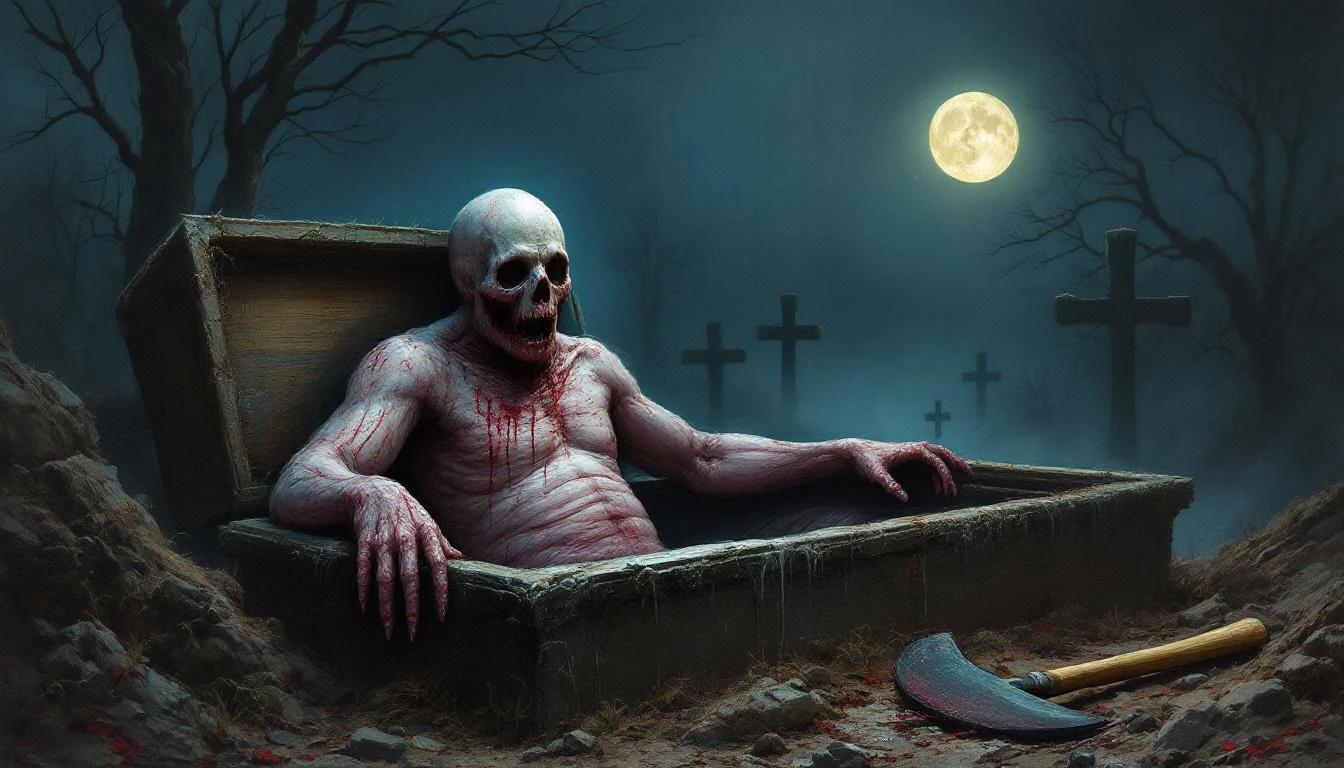
The horror of the strzyga begins not with her death, but with her life. She might live as an ordinary woman for years, even decades. Neighbors might notice something unsettling — a tendency to wander at night, an unusual paleness, an aversion to certain prayers. But the true nature of a strzyga only revealed itself when she died. One soul would depart for the afterlife as nature intended. The other soul — the hungry one, the wrong one — stayed behind. It woke the corpse. It opened the dead eyes in the darkness of the coffin. And it began to claw its way out of the earth.
The Night Hunt
Once risen, the striga became something no longer human. Ethnographic accounts describe her as gaunt and corpse-pale, still wrapped in burial cloth, with sunken eyes that burned with a faint light. In some regions she could transform into a barn owl — the Polish pojdzka — and this connection to the screech owl reaches back thousands of years to the creature's true origin.
The word strzyga derives from the Latin strix, a term the Romans used for a blood-drinking owl-witch that attacked sleeping infants. The poet Ovid described the striges in his Fasti as birds with hooked beaks and grey-white feathers that would fly into nurseries at night and tear at the flesh of newborns. As the Roman Empire fragmented and its language scattered across Europe, strix evolved into strega in Italian, strigoi in Romanian, shtriga in Albanian, and strzyga in Polish. Each culture shaped the creature differently, but the core remained: a dead thing that feeds on the living in the dark.
The strzyga did not simply drink blood. That is the Western vampire's method, clean and almost surgical by comparison. The striga drained breath and devoured innards. She fed on the vital essence of her prey — what Slavic folk belief understood as the life-force itself. Victims were found in the morning drained of color, fevered, unable to speak. They wasted away over days, growing weaker and more confused, as though their very soul had been partially consumed. Many never recovered. Those who survived described the sensation of something heavy pressing on their chest in the night, a paralysis that left them unable to scream — a description that aligns precisely with what modern medicine calls sleep paralysis.
The Witcher Connection
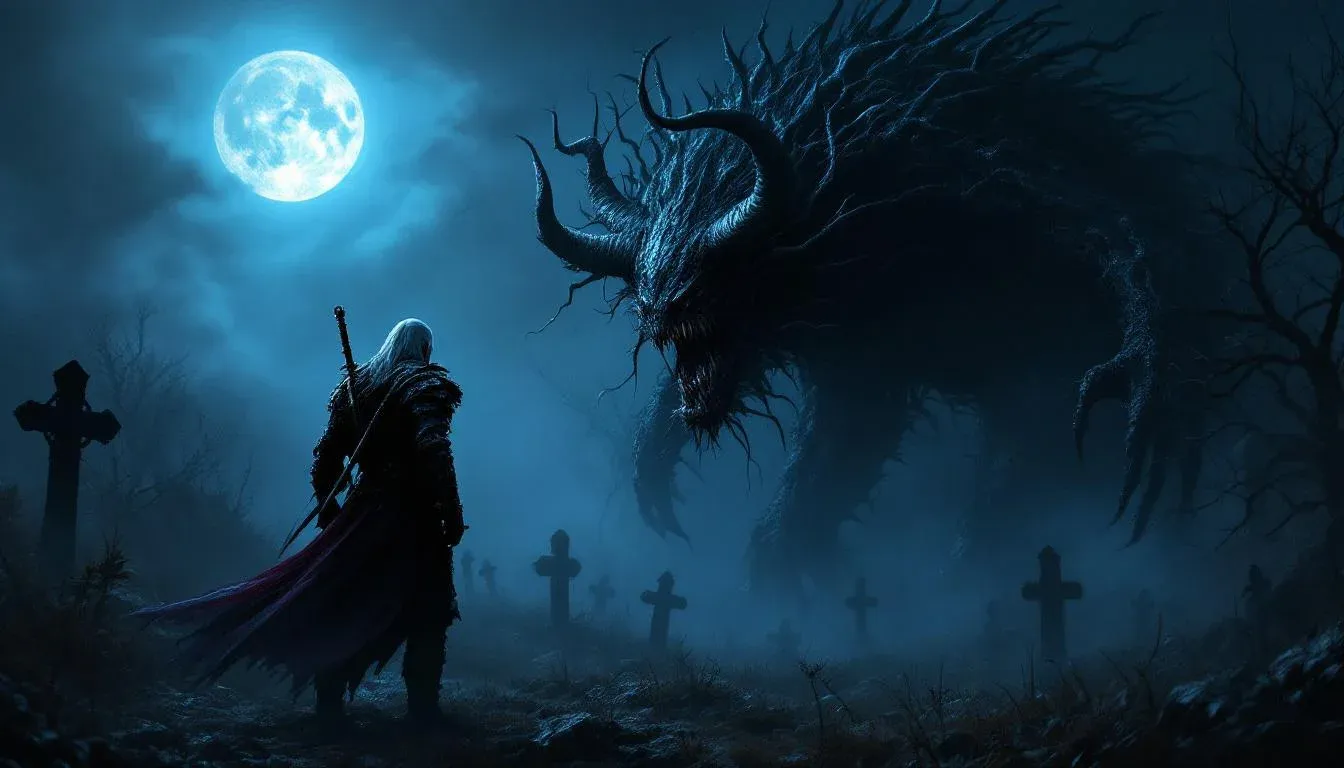
When Andrzej Sapkowski sat down to write Wiedzmin (The Witcher) in 1986, he did not invent the striga. He reached into the deepest strata of Polish folklore and pulled out something that had terrified his ancestors for centuries. The very first Witcher short story — published in the Polish magazine Fantastyka in December 1986 — centers on Geralt of Rivia confronting a striga: a cursed princess who has transformed into a monstrous predator that slaughters anyone who enters her crypt after dark.
Sapkowski himself has acknowledged that this story was partly inspired by a 19th-century Polish folk tale recorded by the writer Roman Zmorski, in which a young man must survive a night with a risen corpse. But Sapkowski did something unusual for fantasy literature — he kept the folklore accurate. His striga witcher monster retains the core elements of the original myth: the creature is born from a curse that affects the unborn child, it rises from its coffin as a predatory horror, and it can potentially be cured if someone endures until the third crowing of the rooster at dawn.
This last detail — the cure — is drawn directly from Polish folk tradition. In countless Slavic tales, the boundary between the living and the dead weakens at night and strengthens at dawn. The rooster's crow was believed to banish evil spirits and force the undead back into their graves. Sapkowski translated this into the narrative logic of his fantasy world, where the striga's curse can be broken by keeping the creature from returning to its sarcophagus from midnight until the rooster crows three times.
The Netflix adaptation of The Witcher (Season 1, Episode 3) brought the striga to a global audience of millions, and the creature appeared in CD Projekt Red's The Witcher video game as the climactic boss of the opening chapter. For most viewers and players, this was their first encounter with the striga. Few realized they were looking at a real piece of Slavic mythology — one that people genuinely believed in within living memory.
The Dead Do Not Stay Buried: Archaeological Evidence
The strzyga was not merely a bedtime story. People acted on this belief with deadly seriousness, and the archaeological record proves it.
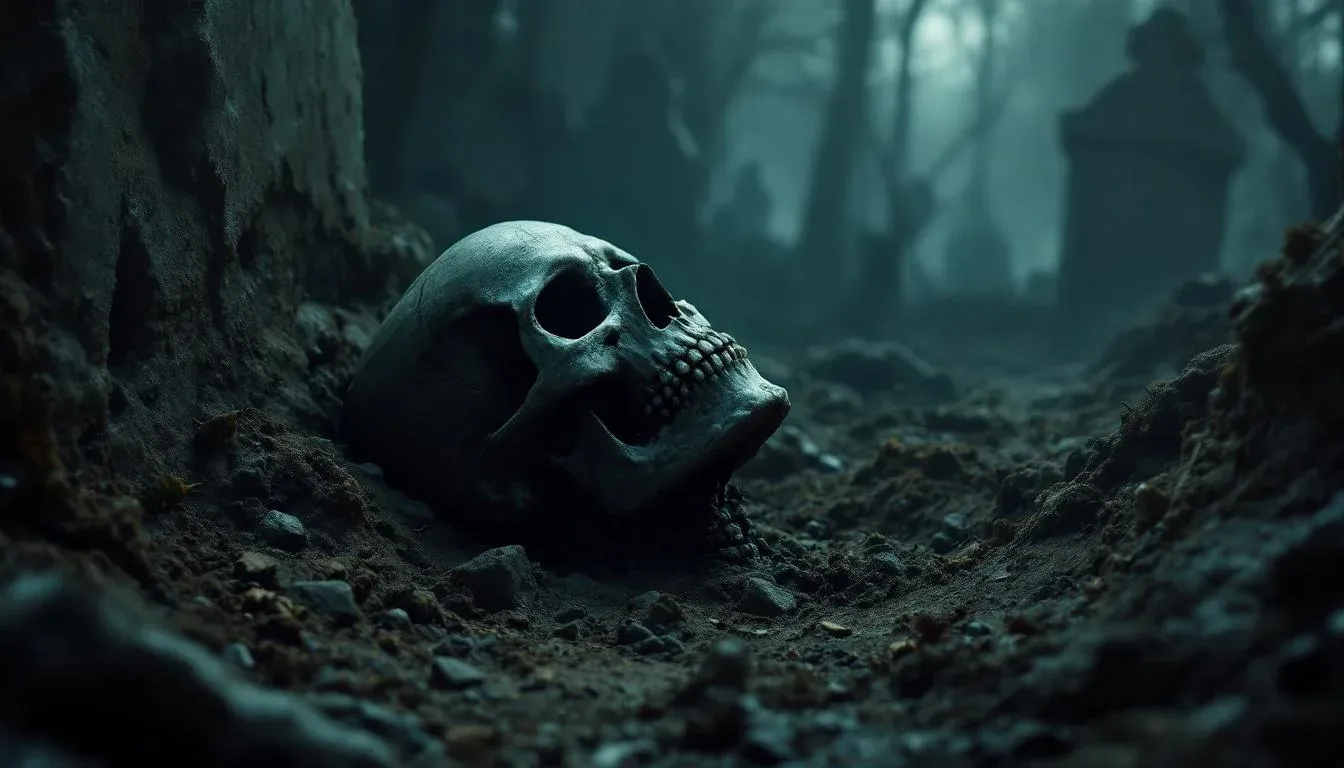
At the post-medieval cemetery of Drawsko in northwestern Poland, excavations led by researchers from the University of South Alabama uncovered six burials from the 17th and 18th centuries that deviated sharply from standard Christian practice. In four graves, iron sickles had been placed with the cutting edge pressed directly against the throat of the deceased. In a fifth, the sickle lay across the pelvis. A sixth individual was found with a large stone wedged beneath the jaw, forcing the mouth permanently shut. These were not acts of violence against the dead. They were acts of protection for the living. The sickle was positioned so that any attempt by the corpse to sit up would result in its own decapitation. The stone prevented the creature from biting.
A biogeochemical study published in PLOS ONE in 2014 analyzed strontium isotope ratios in the teeth of these individuals and reached a conclusion that overturned previous assumptions. Scholars had long theorized that "vampire burials" targeted outsiders — migrants or foreigners whose unfamiliar appearance or customs aroused suspicion. The Drawsko evidence showed the opposite. Every individual buried with apotropaic measures was local. They had lived in the community their entire lives. Whatever marked them as potential slavic vampires was not foreignness but something else — perhaps a physical anomaly, a sudden or unusual death, or the misfortune of dying during an epidemic when the community's fear was at its peak.
The deviant burials at Drawsko are not reflective of social outsiders or immigrant newcomers to the community. Instead, apotropaic practices were afforded to locals whose social identity, physical appearance, or manner of death may have marked them with suspicion in some other way.
The 2022 discovery at Pien, near Bydgoszcz, added another layer. The young woman buried there with the sickle and padlock was found wearing a silk cap — an expensive garment that indicated high social status. She was not an outcast. She was someone important, someone wealthy enough to afford silk. And yet her community feared her enough to pin her to the grave with iron.
How to Destroy a Striga
If you suspected someone in your village was a strzyga — or worse, if one had already risen — Slavic folklore offered a grim toolkit of countermeasures that varied by region but shared a common desperation.
The first line of defense was preventive burial. A suspected striga was buried face-down, so that upon waking she would claw deeper into the earth rather than upward toward the surface. In some communities, the tendons at the backs of the legs were severed before burial, crippling the corpse. Iron nails were driven through the limbs to pin the body in place. The mouth was stuffed with soil, or a brick was forced between the jaws — a practice confirmed by archaeological finds in both Poland and Venice.
If these measures failed and the striga rose anyway, the response escalated. Hawthorn branches were hung across windows and doors, as the thorns were believed to tear at the creature's spectral flesh. Poppy seeds or millet were scattered across the grave and along the path to the village, exploiting a belief that the striga was compelled to count every grain before she could proceed — an obsessive arithmetic that would keep her occupied until dawn rendered her powerless.
When counting seeds was not enough, the community turned to more permanent solutions. The body was exhumed, sometimes in the presence of a priest. A piece of paper with the name of Jesus was placed under the tongue. The corpse was reburied at a crossroads, where the intersection of paths would confuse the creature's sense of direction and prevent it from finding its way back to the village. And if all else failed, there was fire. The body was burned entirely, the ashes scattered, the striga annihilated beyond any possibility of return. In the logic of Slavic folk belief, destruction of the physical body was the only certain way to release — or destroy — the trapped second soul.
Striga Across the Slavic World
The striga is not exclusively Polish. Variations of this creature haunt the folklore of nearly every Slavic and Balkan culture, each adding its own disturbing details.
In Czech and Slovak tradition, the creature is known as striga or strigon, and shares the Polish strzyga's association with dual souls and nocturnal predation. The Romanian strigoi splits into two categories: strigoi vii (living strigas, essentially witches who could project their spirits at night to feed on the living) and strigoi morti (dead strigas, reanimated corpses closer to the classic vampire). This distinction between living and dead variants echoes through much of Slavic belief — the idea that the striga's condition was not merely a post-mortem affliction but a lifelong curse that could manifest while the person still breathed.
In the southern Slavic lands, the Albanian shtriga retained the ancient connection to Baba Yaga-like witchcraft, appearing as an old woman who could drain the life from children by sucking their blood at night. The Balkan versions often blurred the line between striga and witch more than the Polish tradition did, creating a figure that was simultaneously undead monster and living sorceress.
After the 18th century, Polish folklore itself began to differentiate between the strzyga and the upior — a creature closer to the classic blood-drinking vampire. The strzyga became associated more with witchcraft, soul-draining, and owl-transformation, while the upior took on the role of the risen corpse that feeds on blood. But in the older layers of belief — the ones that Koschei and Rusalka also inhabit — these distinctions barely existed. The dead were the dead, and they were hungry, and that was enough.
Why the Striga Matters
The striga endures because she embodies a fear more primal than any fictional vampire can reach. She is not a stranger who breaks into your house. She is your daughter, your sister, your wife — someone who lived among you, ate at your table, slept under your roof. And then she died. And then she came back. And now she is outside your door in the dark, and the thing wearing her face is no longer her.
This is the fear that drove real people to press iron sickles against the throats of their own dead. Not cruelty. Not ignorance. Grief twisted into terror. The striga myth exists at the intersection of love and horror — the unbearable suspicion that the person you buried might not stay buried, that death might not be the end, and that the end, when it truly comes, might wear a face you recognize.
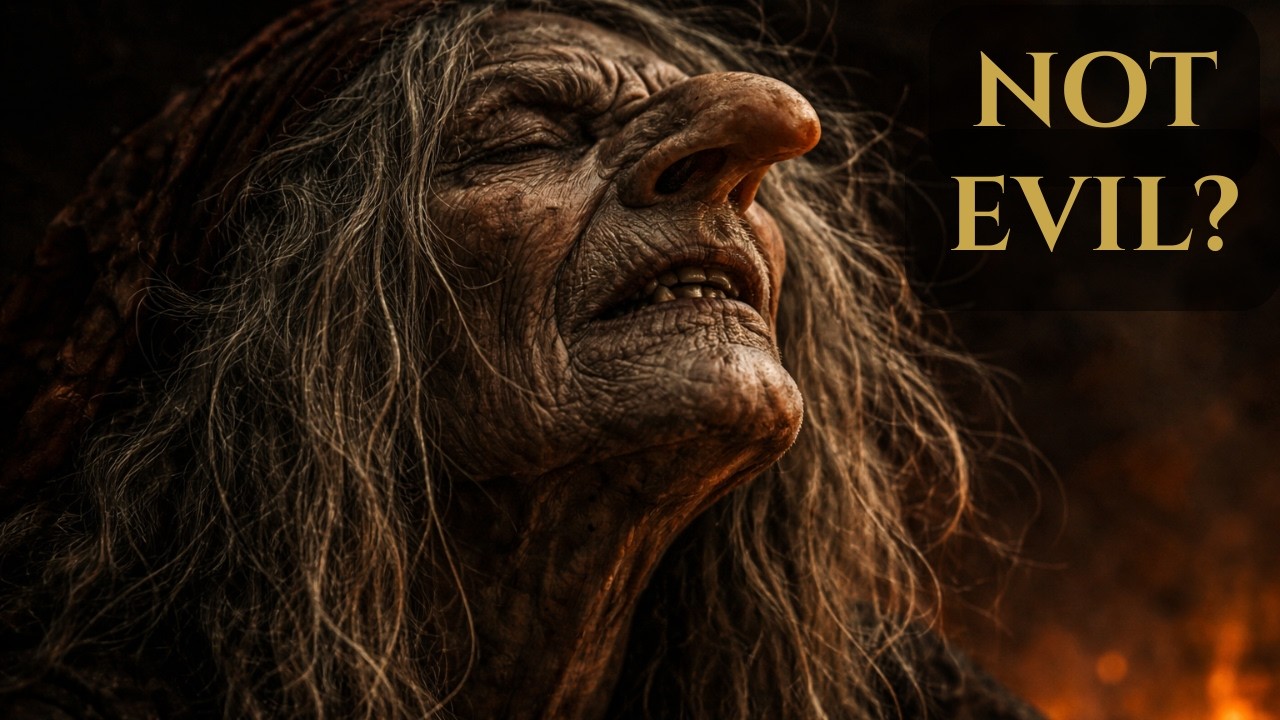
Sapkowski understood this when he made the striga the first monster Geralt of Rivia ever faced. The striga witcher story is not about killing a beast. It is about saving one. Geralt does not destroy the princess-turned-striga — he endures her attacks through the night and breaks the curse at dawn. The message embedded in both the folklore and the fiction is the same: the striga is not evil by nature. She is trapped. The second soul did not choose to remain. It was condemned to hunger and violence by forces beyond its control.
In the old villages of Poland, when the rooster crowed and the striga retreated into the earth, there was no celebration. Only exhaustion, and the knowledge that the dead were only sleeping. That the sickle might not hold. That the next night would come, as it always does, and the darkness would bring its own.