There is a word in every Slavic language that means everything at once. Rod — birth, kin, clan, origin, tribe, nation, nature, harvest, fate. It is one of the oldest roots in the Proto-Slavic lexicon, branching into hundreds of descendants: rodina (homeland), narod (people), priroda (nature), urodzhay (harvest), rozhdenie (birth), rodstvennik (relative). No other root in any Slavic language covers so much territory. It touches the soil, the bloodline, and the stars.
The Slavs also used the word as a name. Rod — the ancestor deity, the one who was there before the gods had individual names and carved idols and hilltop shrines. Before Perun wielded his thunderbolt from the heights of Vladimir's Kyiv, before Mokosh spun fate in the women's quarters, there was Rod. Or so certain medieval texts suggest. And those texts have been argued over for a thousand years.
A God Mentioned Sideways
Rod does not appear in the Primary Chronicle. He was not among the six gods whose wooden idols Vladimir erected outside his palace in 980 AD. He has no detailed myth, no surviving sculpture, no temple ruin. Everything we know about Rod comes from a handful of East Slavic homilies — Christian polemical texts from the eleventh to thirteenth centuries, written by churchmen whose entire purpose was to condemn the old practices and drag their congregations away from them.
The oldest and most important of these is the Word of St. Gregory the Theologian about How Pagans Bowed to Idols, a text from the eleventh century that exists in multiple redactions and has been copied, altered, and reinterpreted by every generation of scholars since. The passage that changed everything is brief. It describes the evolution of Slavic worship in three stages: first the Slavs made offerings to vampires and spirits, then they began to sacrifice to Rod and the Rozhanitsy, and only after that did they turn to Perun as their god.
Also, this word reached the Slavs, and they began to offer sacrifices to Rod and the Rozhanitsy before Perun, their god.
Before Perun. That word — before — is the hinge on which the entire debate turns. Does it mean Rod worship was chronologically older, a more archaic stratum of belief that preceded the organized, princely cult of the thunder god? Or is it simply describing a ritual sequence — that in a given ceremony, offerings to Rod came first, followed by offerings to Perun? The difference matters enormously, and the text does not care to clarify.
A second text, the Word of a Certain Christ-Lover and Zealot of the True Faith, is even more aggressive in its tone. It rails against those who continue setting tables for Rod and the Rozhanitsy — laying out bread, porridge, cheese, and mead — calling the practice demonic and comparing Rod to the Egyptian god Osiris. The comparison is crude theology, the kind of thing a medieval churchman might deploy against any foreign deity, but the very intensity of the condemnation tells us something. You do not write multiple sermons against a practice that nobody is doing. Whatever Rod worship was, it was alive enough in the eleventh and twelfth centuries to make the clergy angry.
What Rod Was — and What He Might Not Have Been
Here is where the ground gets unsteady. The medieval texts are clear that Rod was worshipped. They are not clear about what Rod was.
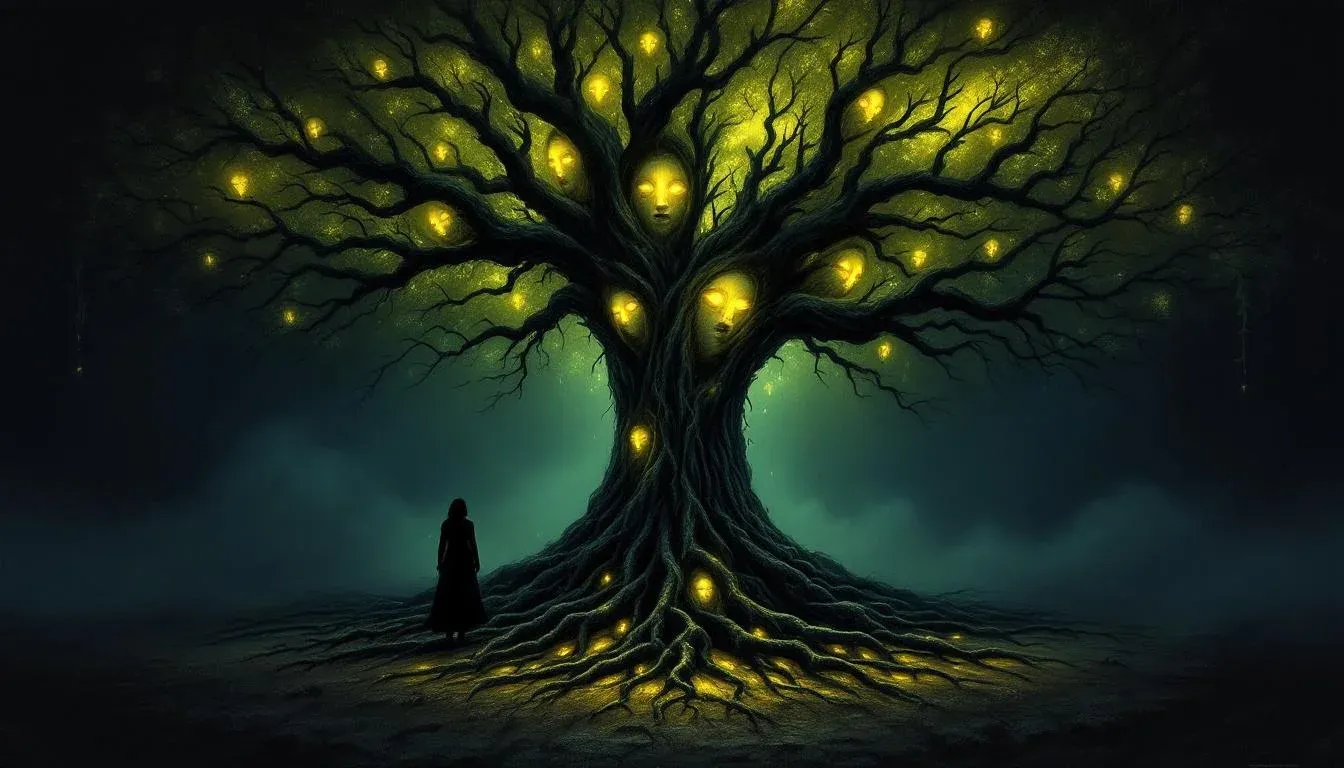
The most conservative reading — held by scholars such as Leo Klejn and Mikola Zubov — is that Rod was never a deity at all, at least not in the way we think of gods. The word rod, they argue, simply means "kin" or "ancestry" or "generation." The feasts described in the homilies were not offerings to a creator god. They were ancestor-veneration rituals — communal meals honoring the dead of one's bloodline, asking the collective weight of the departed to ensure good harvests, safe births, and favorable fate. Rod, in this reading, is not a name but a concept. You did not worship Rod. You honored your rod — your lineage, your clan, your dead.
This interpretation has the advantage of fitting neatly with what we know about Slavic folk practice. Ancestor veneration was ubiquitous across all Slavic cultures, surviving well into the modern era. Russians set places at the table for the dead during funeral commemorations. Serbians poured libations on graves. Poles left food at cemeteries. The cult of the dead was arguably the most persistent and deeply rooted layer of Slavic religion — the bedrock on which everything else was built, and the last thing Christianity managed to scrape away.
But there is another reading, and it is the one that has shaped popular understanding of Rod for the past half century.
Rybakov's Vision: A Supreme Creator
In 1981, the Soviet archaeologist and historian Boris Alexandrovich Rybakov published Paganism of the Ancient Slavs (Yazychestvo drevnikh slavyan), a book that remains both enormously influential and deeply controversial. Rybakov's claim was bold: Rod was not merely a concept of kinship, but the supreme deity of the pre-Christian Slavs — a primordial creator god who preceded and outranked Perun, Svarog, and every other figure in the pantheon.
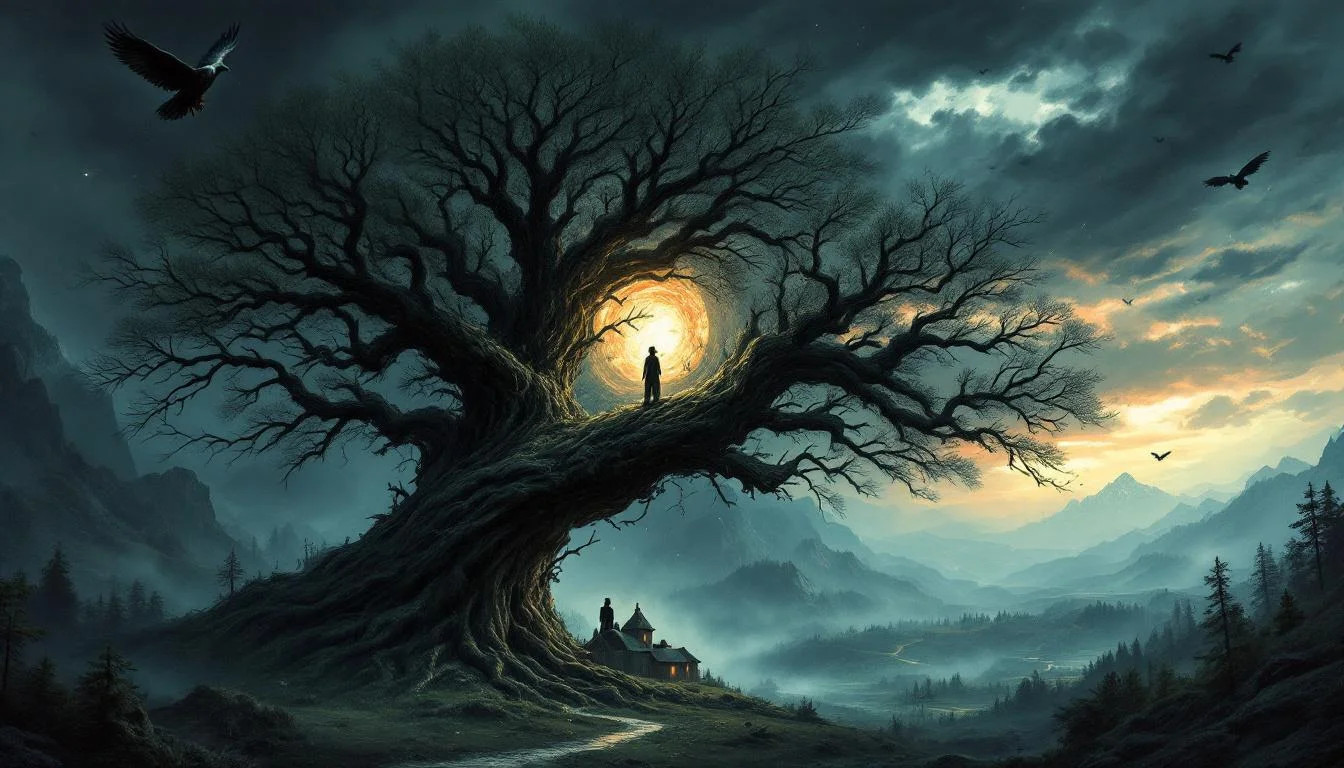
Rybakov built his argument on the three-stage sequence described in the Word of St. Gregory. If the Slavs first worshipped spirits, then Rod and the Rozhanitsy, and finally Perun, then the sequence mapped onto an evolution of religious thought: from animism, through a phase of henotheistic creator-worship centered on Rod, to the warrior-cult polytheism of the princely era with Perun at the top. Rod, in Rybakov's reconstruction, was the god of the universe — the one who separated light from darkness, divided the heavens from the waters, and set the world tree growing between the three realms of reality.
The appeal of this theory is obvious. It gives the Slavs a creation theology to rival the Norse or Greek — a single, all-encompassing figure at the origin of everything. It also conveniently fills a gap that has always nagged scholars of Slavic religion: unlike the Norse, the Greeks, the Vedic Indians, or even the Balts, the Slavs left behind no creation myth. We have no Slavic Genesis, no Kalevala, no Eddas. Rybakov's Rod fills that void.
The problems are equally obvious. Rybakov was working from medieval polemics, not from mythological texts. The Word of St. Gregory is roughly two hundred words long — it is not a cosmogony. Rybakov supplemented the textual record with archaeological interpretation, reading cosmic symbolism into artifacts and ritual objects that other scholars interpret differently. His method has been criticized as circular: he assumed Rod was a supreme creator, then found evidence of a supreme creator everywhere he looked.
Klejn, in his rebuttal, was blunt. He pointed out that Rybakov's three-stage model requires us to read a medieval homily as an accurate history of religious evolution — something the text never intended to be. The author of the Word of St. Gregory was not a historian. He was a preacher. His purpose was not to document Slavic theology but to denounce it. Taking his sequence as literal chronological fact is a category error.
The debate has never been resolved. It likely never will be. The sources are too thin, the evidence too ambiguous. Rod is a god who exists in the space between footnotes.
The Rozhanitsy: Spinners of What Must Be
Whatever Rod was or was not, the Rozhanitsy are better attested — and more interesting than their companion in several respects.
The Rozhanitsy (from rozhat' — to give birth) were female beings associated with birth, fate, and destiny. They appeared at the moment a child was born, and they determined what that child's life would hold. The homilies consistently mention them in the plural, and Slavic folk tradition across multiple regions preserves the idea that they came in groups — most commonly three, though some sources mention as many as nine.
The pattern is unmistakable to anyone with a passing knowledge of Indo-European mythology. Three female figures who determine fate at birth: the Greek Moirai, the Norse Norns, the Roman Parcae, the Baltic laimas, the Romanian ursitoare. The Rozhanitsy belong to this pan-European family of fate-spinners, and they may be the oldest attested Slavic members of the group.
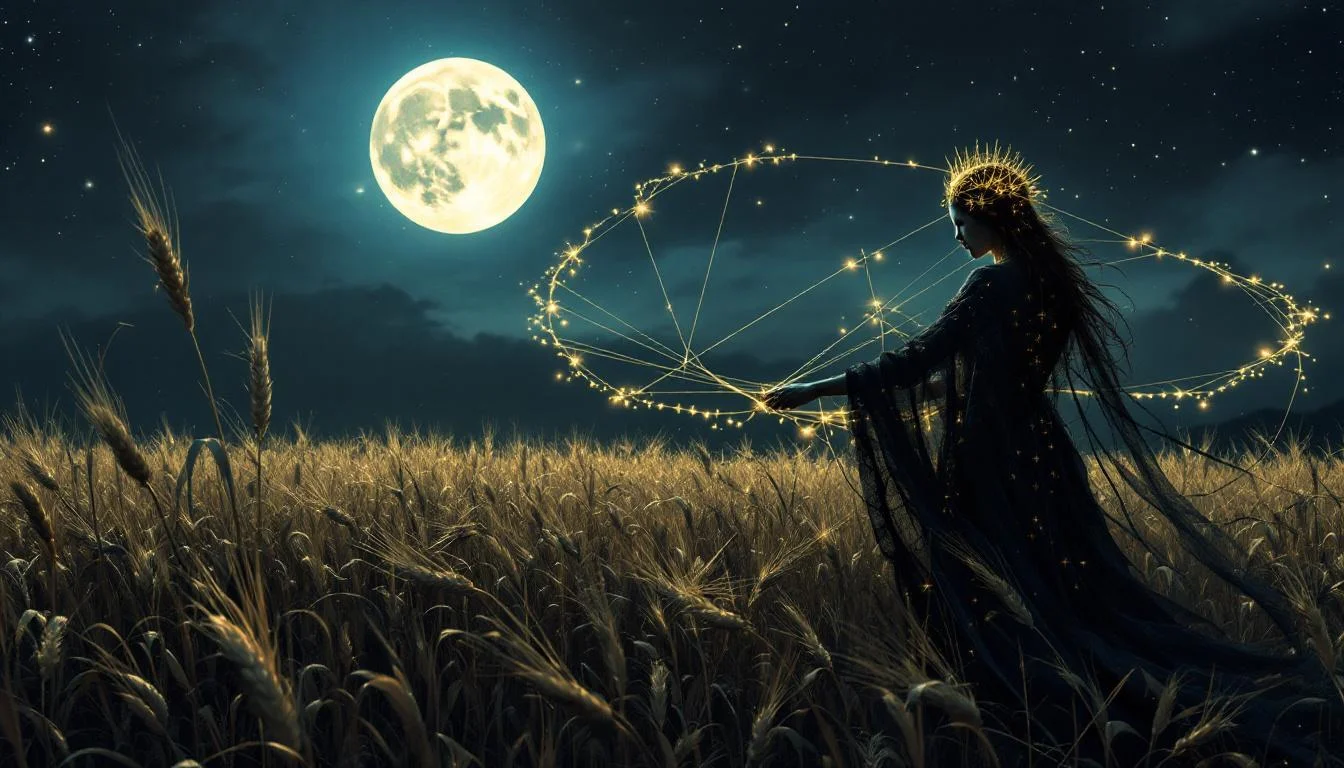
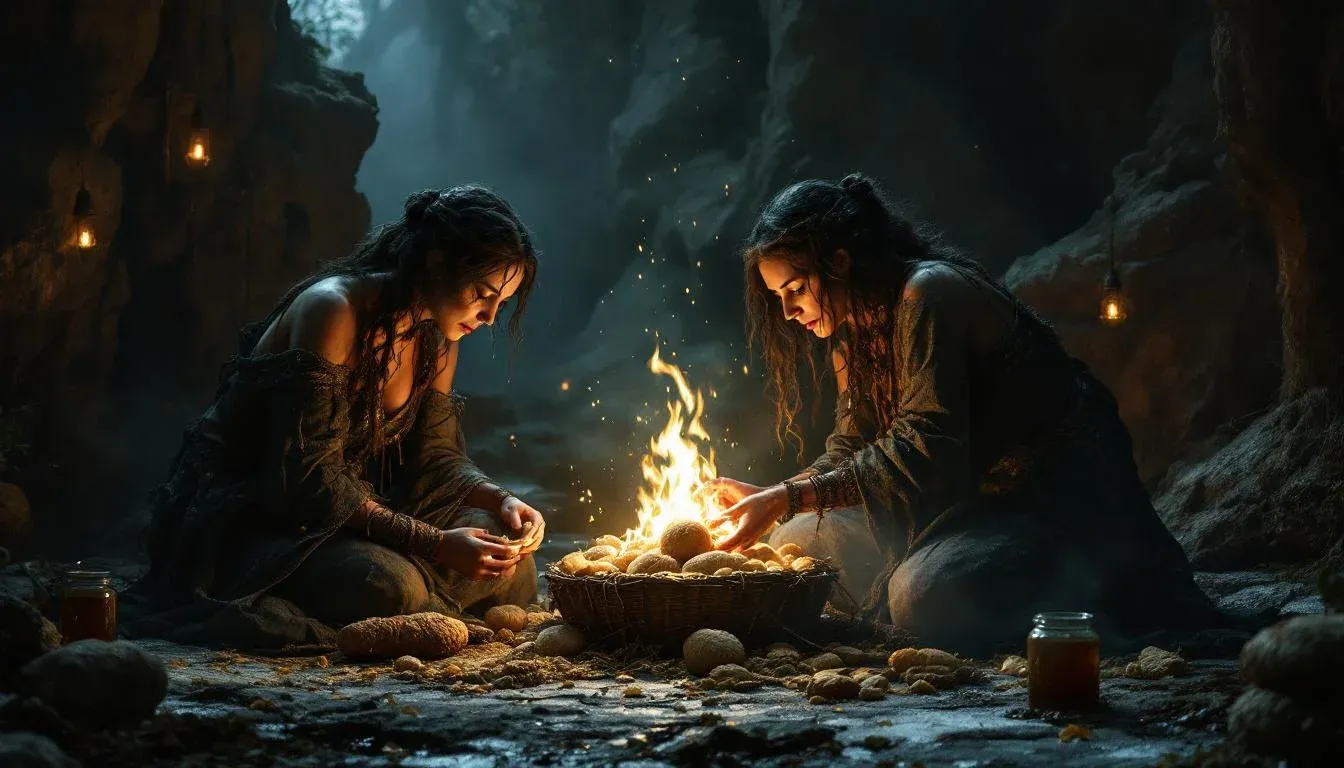
Their rituals were domestic and feminine. When a child was born, a table was set for the Rozhanitsy — bread, salt, porridge, sometimes cheese and beer. In some regions, one's first haircut was dedicated to Rod and the Rozhanitsy, with the cut hair left as an offering alongside the food. Slovenians in Istria left bread under boulders near caves where the Rozhanitsy were said to live. In Czechia, white cloths and chairs were set out for them. In Bulgaria, suppers were prepared in their honor.
The message was clear: if you pleased the Rozhanitsy, they would grant the child a good fate. If you neglected them, the child's fortune would sour. This was not abstract theology. This was the religion of the birthing room, practiced by women, midwives, and mothers in the hours when the gap between life and death was thinnest and the need for supernatural protection was most acute.
The Church hated it. Sermon after sermon thundered against the practice. The high clergy condemned the setting of tables for Rod and the Rozhanitsy with particular venom, returning to the subject again and again across multiple texts and multiple centuries. That persistence tells us everything. The Rozhanitsy cult was not a dying remnant that Christianity inherited and quietly buried. It was a living practice that resisted eradication because it answered a need no church service could touch — the terror of a mother watching a newborn draw its first breath and not knowing if the next breath would come.
The Etymology That Contains a Worldview
Return to the word itself. Proto-Slavic *rodъ carries a weight that no single English word can match. It means birth. It means kin. It means clan, tribe, nation, people. It means origin and nature and the harvest that comes from the earth. It is the root of rodina — the motherland, the place where you were born — and priroda — nature itself, literally "that which is at the rod," the thing closest to the source.
This is not a coincidence of linguistics. It is a worldview compressed into a syllable. For the Slavs who coined this word, there was no meaningful boundary between family and cosmos, between the kin-group that gathered around the hearth and the forces that made crops grow and children live. Your rod was not just your relatives. It was the chain of being that connected you to the first ancestor and through them to the earth and through the earth to the structure of reality. Birth, blood, soil, harvest, fate — all one word, one concept, one god or non-god or something in between.
This is why the debate about whether Rod was a deity or a concept may be asking the wrong question. In the deep stratum of Slavic belief — the layer beneath the princely cults, beneath the carved idols and the political pantheons — the distinction between a god and a principle may not have existed in the way we expect it to. Rod was not Zeus on a throne. Rod was the fact that you existed because someone before you existed, and someone before them, all the way back to the first fire in the first clearing. That chain of existence was sacred. Whether you called it a god or simply called it rod depended on how much you needed a face to pray to.
Rod vs. Perun: Who Was Supreme?
This question haunts Slavic mythology scholarship, and it may be unanswerable.
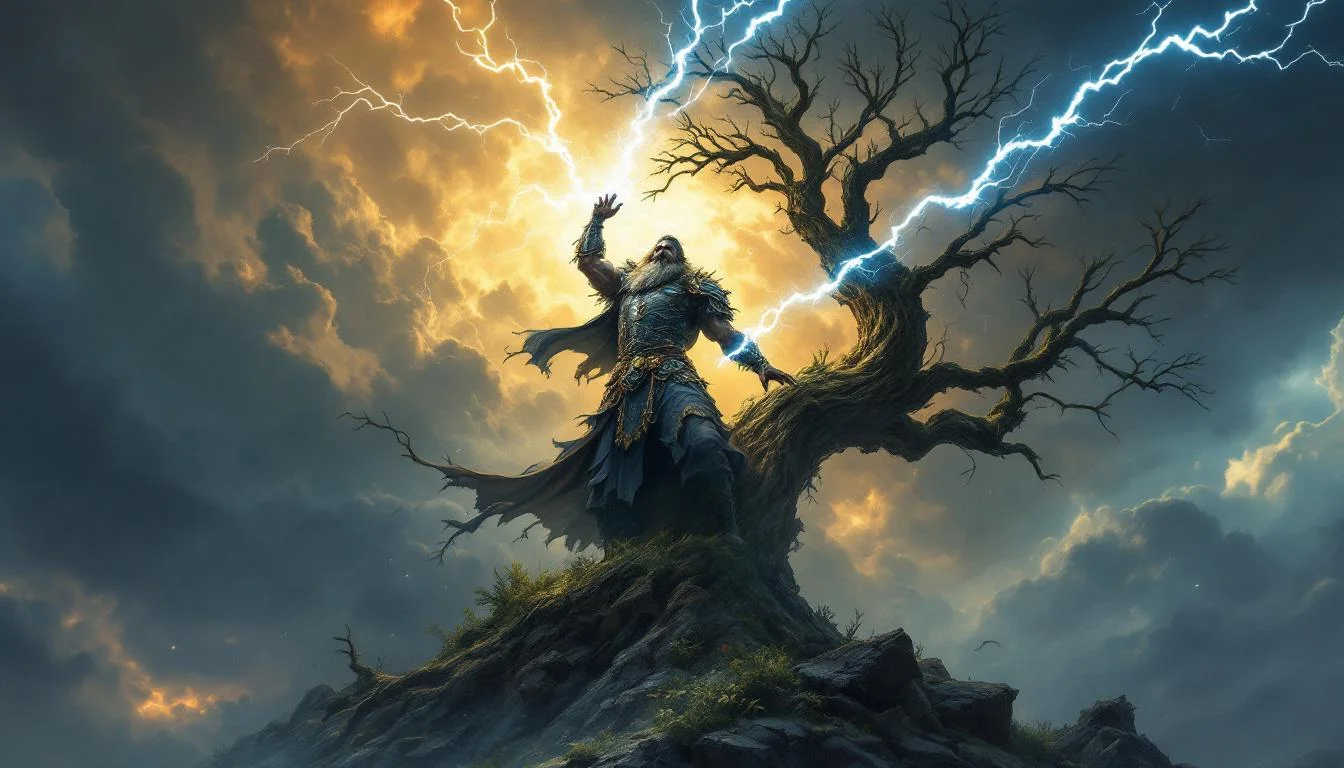
The case for Perun is straightforward. He appears in the Primary Chronicle as the chief god of Vladimir's pantheon. He is the god by whom treaties are sworn in the Russo-Byzantine agreements of the tenth century. He has the richest comparative mythology — his parallels with Thor, Indra, and Perkunas are undeniable, placing him squarely in the Indo-European thunder god tradition. He is the one the Church worked hardest to destroy, the one whose idol was dragged through the streets and beaten with sticks before being thrown into the river. You do not publicly humiliate a minor deity.
The case for Rod is subtler. It rests on the idea that the princely cult of Perun was a relatively late development — a warrior aristocracy's god, imposed from above, serving political purposes. Beneath it lay something older and more fundamental: the cult of ancestors, the veneration of the dead, the feasts for Rod and the Rozhanitsy that continued in peasant homes long after Perun's idol was firewood at the bottom of the Dnieper. In this reading, Perun was the god of the druzhina — the prince's warband. Rod was the god of the people.
There is a pattern here that repeats across Indo-European cultures. The official, state-supported cult — the one with temples and priests and royal patronage — is always the one best preserved in written records. But underneath it, in the kitchens and birthing rooms and graveyards, a different religion persists: less dramatic, less mythological, but more resilient. The Greeks had their Olympians, but they also had household offerings to ancestors and local spirits that no philosophy could replace. The Romans had Jupiter, but they also had the Lares and Penates guarding every hearth. The Slavs had Perun on the hill, but they had Rod at the table.
The honest answer is that Rod and Perun were probably not in competition at all. They belonged to different layers of religious experience — one aristocratic and political, the other domestic and agrarian. Asking which was supreme is like asking whether the president or your grandmother has more authority. It depends on the domain.
A God Without a Face
Rod left no statue behind. No carving, no idol, no archaeological trace that can be identified with certainty. This absence is itself meaningful. The gods who get statues are the gods who serve the state — the ones whose images need to be seen by crowds, whose power needs to be visually demonstrated. Rod belonged to the other religion, the one conducted in homes and at gravesides, the one that needed no image because every newborn child and every ripening field was the image.
The churchmen who wrote against Rod worship were fighting something they could not quite get their hands on. You can topple an idol. You can burn a sacred grove. You can drown a wooden god in a river and post guards to make sure it does not come back. But how do you destroy a word? How do you make people stop believing that their dead watch over them, that the chain of ancestors stretching back into the darkness has power, that the moment of birth is holy and attended by forces that must be fed and honored?
You cannot. That is why the sermons kept coming, century after century. That is why the Rozhanitsy tables kept being set, generation after generation, long after the preachers' voices faded and the parchment crumbled.
Rod is not a god whose story can be told the way we tell stories of Perun splitting the sky or Veles stealing cattle from beneath the world tree. There is no narrative arc, no dramatic confrontation, no moment of destruction or triumph. Rod is the god of the thing that happens whether or not you have a story for it — the fact of being born, the fact of belonging to a line of people who were born before you, the fact that one day you will die and become part of that line for someone else.
Every Slavic language still carries the word. Every time someone says rodina and means the place where they belong, every time someone says narod and means the people they come from, every time someone says priroda and means the living world around them — the old god moves through the sentence, unnoticed and unnamed, doing what he always did.
Being the root of everything, and needing no altar for it.