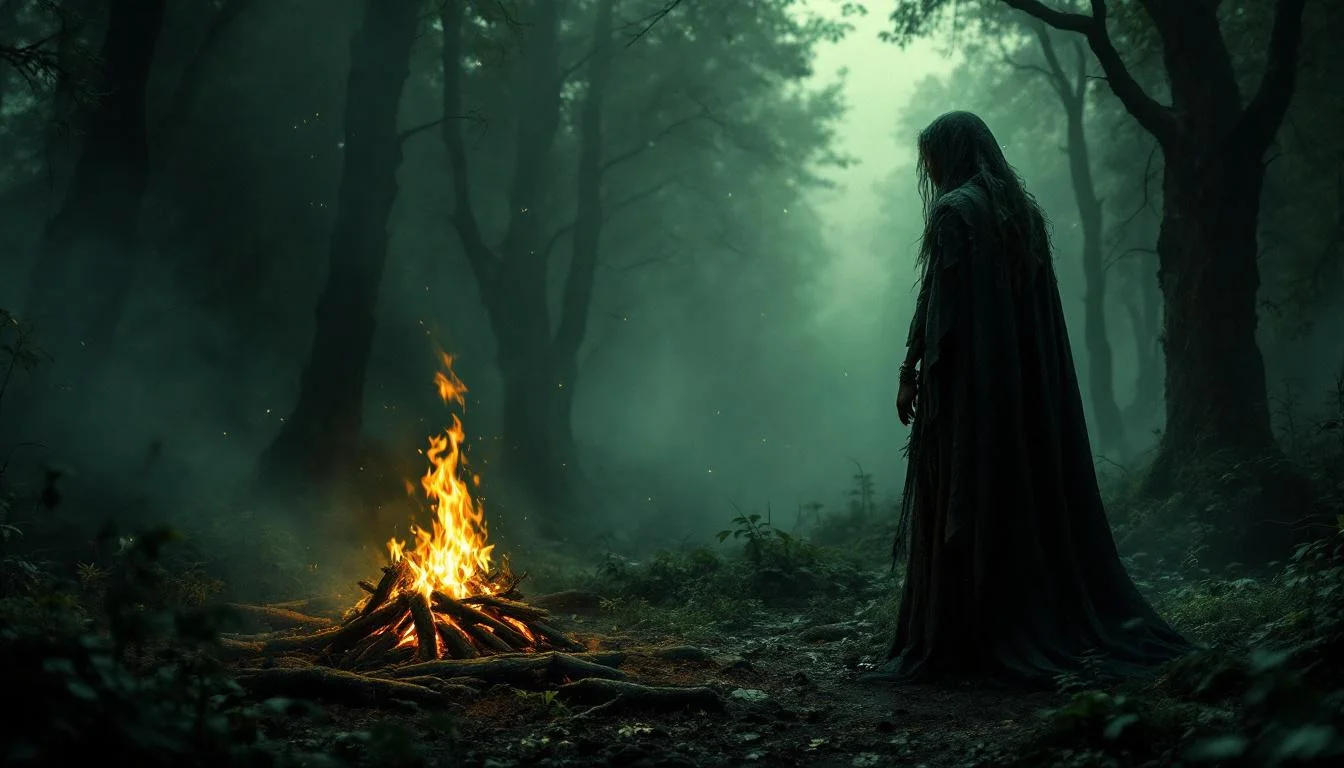
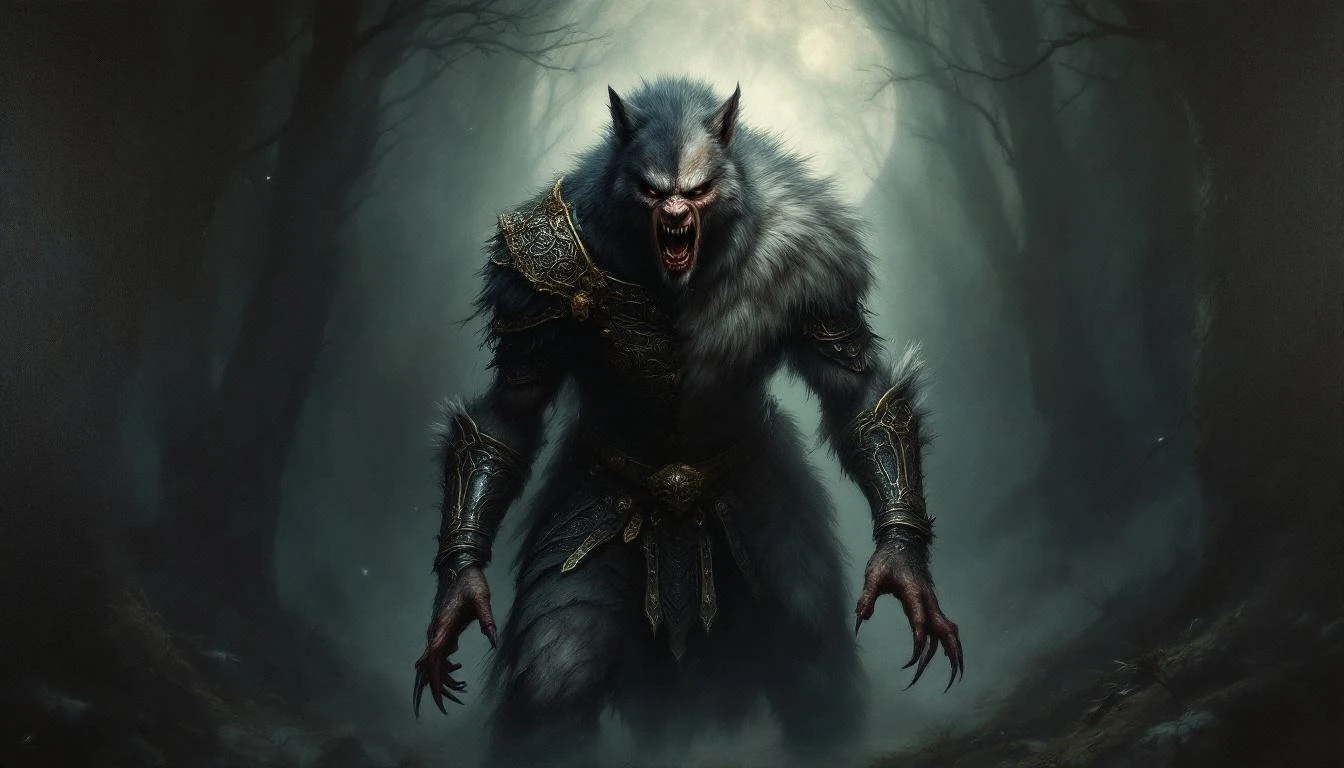
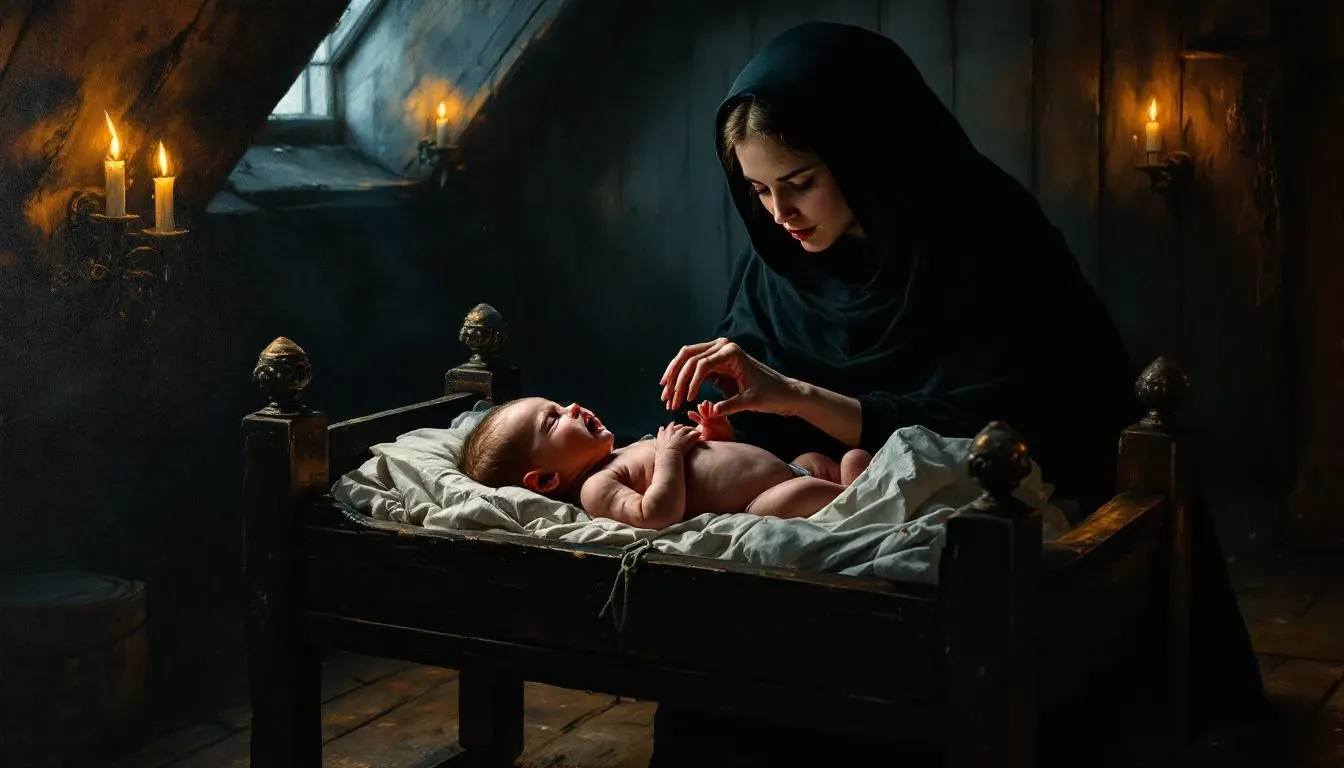
The midwife pulls the child from the mother and stops. Something is wrong — or something is very right, depending on which century you are standing in and what your grandmother taught you about the signs. The infant has teeth. Not the soft, translucent nubs that sometimes appear in newborns and alarm modern pediatricians into scheduling extractions. Real teeth. Hard. White. Already cutting through the gum line as if the child had been chewing on something in the womb and arrived in the world ready to bite.
In parts of Hungary, Slovakia, Romania, and the South Slavic lands, this child was marked. Not cursed — marked. The teeth were a sign that this particular human had been selected, before birth, for a role that no one would envy and no one could refuse. The child would become a taltos.
The taltos was a shaman. Not in the sanitized, New Age sense of the word — someone who burns sage and talks about energy — but in the old, hard, Siberian sense. A person whose soul left the body, traveled to other worlds, fought spirits with weapons made of will and madness, and came back shaking, sometimes bleeding, always changed. A person who stood at the intersection of the human community and everything that wanted to destroy it, absorbing the violence of both sides.
The taltos tradition is primarily Hungarian — taltos is a Hungarian word, and Hungarian ethnography provides the richest documentation. But the tradition does not stop at the Hungarian border. It bleeds into Slovak, Romanian, Croatian, and Serbian folklore, overlapping with the South Slavic Zduhac so precisely that scholars have spent decades arguing whether they are the same figure wearing different names or two parallel traditions that converged through centuries of proximity. The answer, as usual in Balkan folklore, is both.
The Signs at Birth
The teeth were the most dramatic sign, but they were not the only one. A child destined to become a taltos might also be born with extra fingers, extra toes, or — in the most significant variation — extra bones. The Hungarian ethnographer Vilmos Dioszegi, who spent years interviewing elderly informants in the Hungarian countryside during the 1950s, recorded testimony that a taltos child was sometimes born with a visible bone protrusion: a small, hard growth on the body that could not be explained by ordinary anatomy.
The extra bone carried a specific meaning. It was not a deformity. It was evidence that the child possessed something structurally different from other humans — a physical marker of a metaphysical reality. The taltos had more in him than other people. His body was built for a purpose that ordinary bodies were not built for, and the extra bone was the proof.
In some Hungarian traditions, the sign was not physical but behavioral. A taltos child was unusually quiet. He did not cry at birth, or he cried once and then fell into a silence so profound that the family thought he was deaf. He stared at things other children ignored — corners of rooms, patches of empty air, the space above the treeline where the sky met the forest. He was slow to speak but, when he finally did speak, said things that a child should not know how to say.
The caul — the amniotic membrane covering the face at birth — appears here too, as it does in the Zduhac tradition. A child born with a caul was marked for power across most of Central and Southeastern Europe. The caul had to be preserved: dried, wrapped in cloth, sometimes sewn into the child's clothing or hidden in the house. If the caul was lost or destroyed, the power might fail to develop. If it was preserved, the child would grow into what he was born to be.
The Trance and the Battle
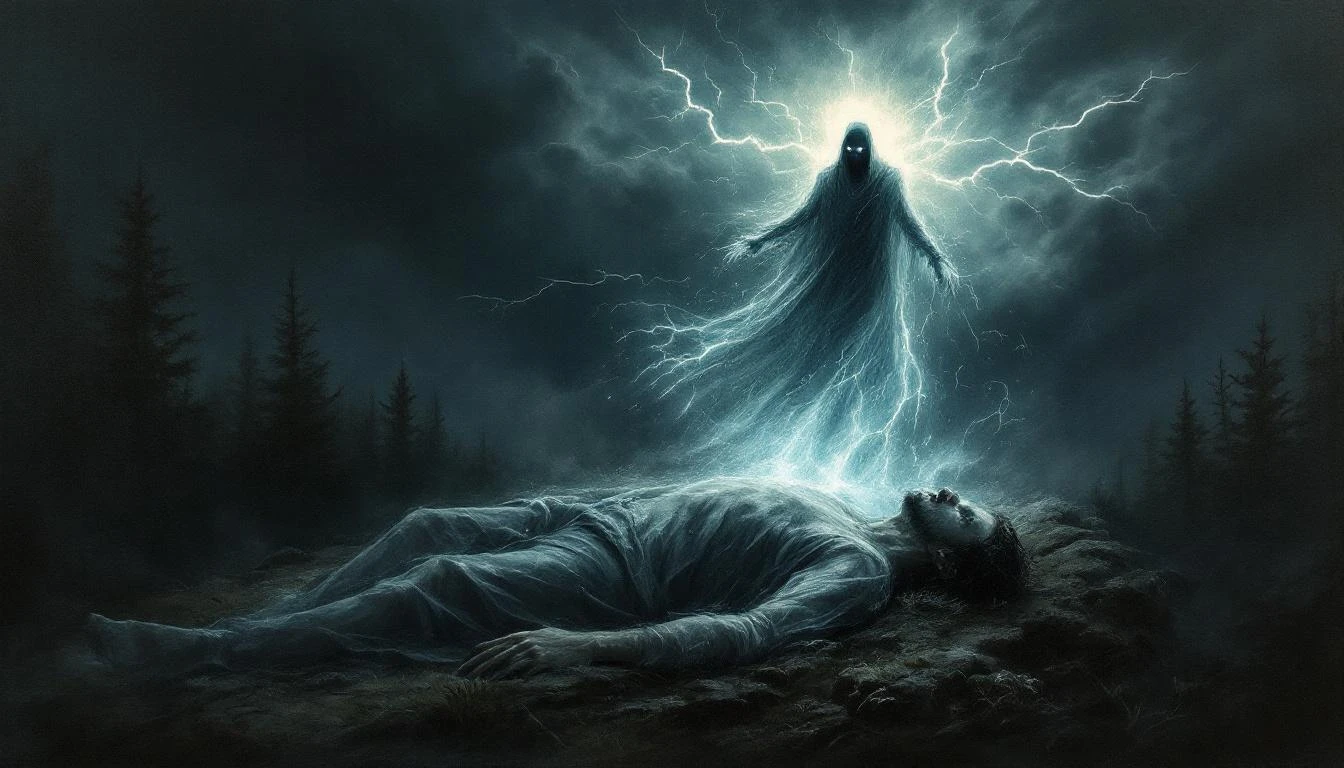
The core function of the taltos was ecstatic combat. This is the term scholars use — "ecstatic" not in the sense of joy but in the Greek sense of ekstasis, standing outside oneself. The taltos left his body. His soul departed, and in its absence, his physical form lay inert, cold, sometimes stiff as a corpse. The family knew not to touch him. The community knew not to panic. The taltos was fighting.
What he fought depended on the tradition and the region. In some Hungarian accounts, the taltos battled other taltos — ecstatic shamans from rival communities, each fighting to redirect storms, drought, or disease away from their own territory and toward someone else's. This is structurally identical to the Zduhac aerial combat tradition, where soul-warriors from neighboring villages fought each other in the clouds, each trying to deflect hail away from their own fields.
In other accounts, the enemies were demons, malevolent spirits, or the agents of disease. The taltos entered the spirit world to wrestle with the forces that caused illness, crop failure, and misfortune. His weapons were not swords or spears but the force of his own soul — amplified, somehow, by whatever it was that the extra bone and the birth-teeth signified. He fought with his hands, with his will, with the sheer violence of his spiritual presence.
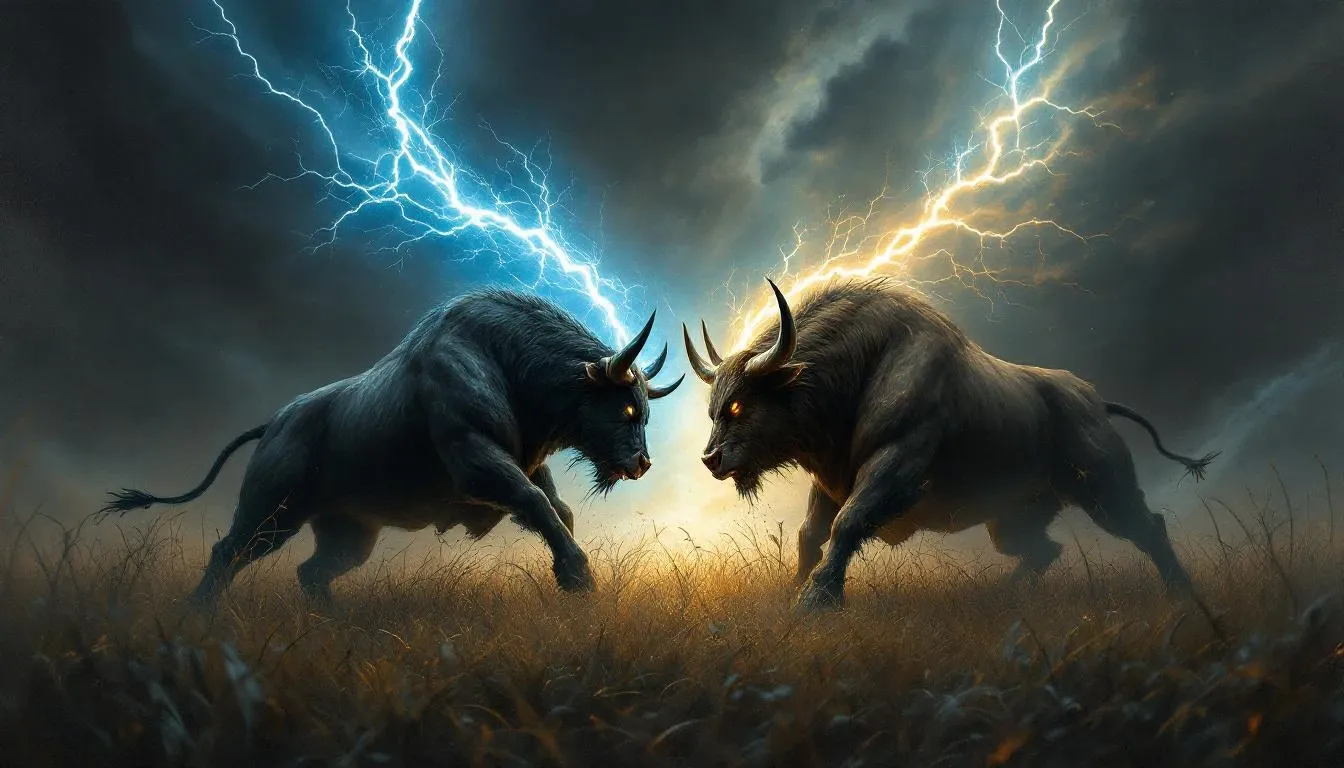
The most dramatic form of the taltos combat was the bull-fight. In Hungarian tradition, the taltos did not always fight in human form. During the trance, his soul could take the shape of a bull — a great, fiery bull, sometimes described as flame-colored, sometimes as blue or black. His opponent — another taltos, a demon, a spirit of disease — also took bull form. The two bulls fought in the sky, or in an invisible arena superimposed on the physical landscape, crashing against each other with a force that manifested in the waking world as thunder, lightning, and wind.
The bull-fight motif is old. It appears in Hungarian sources from the 16th century and was still being reported by informants in the 20th. The bull is not a random choice. Cattle were the primary measure of wealth in the pastoral communities where the taltos tradition was strongest. A fight between supernatural bulls was a fight over the prosperity of the community — its cattle, its pastures, its survival through the winter. The taltos fought in the shape of the thing he was protecting.
The Taltos and the Zduhac: Parallel Traditions
The overlap between the Hungarian taltos and the South Slavic Zduhac is so extensive that ignoring it would be dishonest. Both are born marked — the taltos by teeth and bones, the Zduhac by the caul. Both undergo involuntary trance states. Both fight in spirit form to protect their communities from supernatural threats. Both experience physical exhaustion and unexplained injuries upon waking. Both are respected and feared in roughly equal measure.
The differences are instructive. The Zduhac tradition, as documented in Serbian, Montenegrin, and Bosnian sources, emphasizes the storm-fighting function above all else. The Zduhac's primary enemy is the Ala — the storm demon that destroys crops with hail. His combat takes place in the clouds, among the thunderheads, and his victories and defeats are measured in weather patterns. A village that escapes hail has a strong Zduhac. A village that loses its harvest has a weak one, or none.
The taltos tradition is broader. The Hungarian taltos fights storms, yes, but he also fights disease, curse-spirits, and rival shamans. His trance states are not exclusively triggered by weather. He may enter ecstatic combat at any time, summoned by forces that have nothing to do with the sky. And his transformation into a bull — which has no parallel in the Zduhac tradition — connects him to a layer of Central European shamanic practice that is specifically Hungarian or, more precisely, specifically connected to the steppe cultures from which the Hungarians descended before they settled in the Carpathian Basin.
The taltos is born with teeth, or with bones exceeding the normal number. He falls into a trance lasting three days at the age of seven. During the trance he receives his vocation. Thereafter he battles in the form of a bull or stallion against other taltos, and the outcome of this battle determines the weather, the harvest, and the fortune of his community.
The scholarly debate over whether the taltos and the Zduhac share a common origin or developed independently has produced three broad positions:
First, the common substrate theory: Both traditions descend from a shared Proto-Indo-European or Inner Asian shamanic complex that predates the separation of the Hungarians and the Slavs. The birth-marks, the ecstatic combat, the community-protection function — all of these are so structurally similar that independent invention seems unlikely.
Second, the Hungarian steppe theory: The taltos tradition is specifically Finno-Ugric or Turkic in origin, brought by the Hungarians from the Central Asian steppe, and the Zduhac tradition developed among the South Slavs partly through contact with Hungarian culture during the centuries of coexistence in the Carpathian Basin and the Balkans.
Third, the Balkan convergence theory: The Zduhac and the taltos developed from separate roots but converged through centuries of geographical proximity, cultural exchange, and the shared agricultural anxiety of communities that depended on weather they could not control.
None of these positions has won definitively. The evidence supports all three to varying degrees. What is certain is that the two traditions cannot be studied in isolation.
Shamanism Without Siberia
The word "shaman" comes from the Tungusic languages of Siberia, and most people associate it with the Indigenous peoples of northern Asia — the drum-beating, spirit-journeying practitioners who entered trance states to communicate with the spirit world on behalf of their communities. The taltos is not Siberian. But the structural parallels are so striking that scholars have been unable to avoid the comparison.
The Siberian shaman is born marked — chosen by spirits, often through illness or unusual birth circumstances. The taltos is born marked — by teeth, bones, or the caul. The Siberian shaman undergoes an initiatory crisis — a period of illness, madness, or death-like trance during which the spirits dismember and reassemble his soul. The taltos undergoes a three-day trance at the age of seven, from which he emerges transformed. The Siberian shaman's primary function is to travel to the spirit world, negotiate with supernatural beings, and return with knowledge or power that benefits the community. The taltos does the same, though his "negotiation" typically takes the form of a fistfight.
The Hungarian linguist and ethnographer Dioszegi spent his career arguing that these parallels were not coincidental. He believed that the Hungarians — who migrated from the Ural region to the Carpathian Basin in the 9th century CE — brought with them a shamanic tradition rooted in the same Central Asian complex that produced Siberian shamanism. The taltos, in this reading, is a European survival of a practice that was once continuous from Manchuria to the Danube.
This thesis remains debated. Some scholars accept it; others argue that the parallels between the taltos and Siberian shamanism are structural rather than historical — that similar social conditions (small agricultural communities facing uncontrollable natural forces) produce similar spiritual solutions (ecstatic practitioners who fight those forces in trance).
The South Slavic material complicates the picture further. The Zduhac shows shamanic features — soul-flight, spirit-combat, involuntary trance — without any connection to Central Asian steppe culture. The Zduhac is entirely Slavic, entirely Balkan, entirely rooted in communities that never left Europe. If the taltos tradition is specifically Hungarian-steppe in origin, the Zduhac tradition achieved the same result by a different route. If both descend from a common Indo-European source, then the shamanic complex is older than either.
The Healer, the Weather-Worker, the Outcast
The taltos was not only a fighter. In many Hungarian folk accounts, he served as a healer — diagnosing illness through trance, identifying the spiritual cause of disease, and prescribing remedies that combined herbal folk magic with ritual action. He might demand that a patient's family perform specific acts: leave food at a crossroads, bathe in a river at dawn, bury an object beneath the threshold of their house. The illness was not purely physical. It had been sent — by a rival taltos, by a demon, by the spirit of a wronged ancestor — and it could be un-sent only by someone who understood the invisible economy of cause and effect.
The taltos also served as a weather-worker. This function connects him most directly to the Zduhac and to the broader category of European weather-magic practitioners that includes the Italian benandanti, the Dalmatian krsnik, and various Balkan figures who claimed the ability to redirect storms. The taltos could call rain during drought or drive hail away from ripening fields. He did this not through prayer or ritual in the ordinary sense, but through direct intervention — entering the trance, traveling to where the weather was being made, and fighting whatever was making it wrong.
But the taltos was also, frequently, an outcast. His power made him necessary; his strangeness made him suspect. The community needed him during crisis — during storms, epidemics, unexplained livestock death — and tolerated him at all other times with the wary courtesy reserved for people who could destroy you if they chose to. The Volga Svyatoslavich of the byliny, the shapeshifter-prince born from a serpent, occupies a similar position: valued for his abilities, never fully trusted, always slightly outside the circle of ordinary human life.
After the Counter-Reformation, the taltos tradition came under direct attack from the Catholic Church in Hungary. Ecstatic practitioners were identified as witches, subjected to trials, and in some cases executed. The 17th and 18th century witch trials in Hungary and Transylvania often targeted individuals who had been identified by their communities as taltos — people whose birth-marks and trance-behaviors had once been signs of a sacred vocation but were now reinterpreted as evidence of demonic possession.
The irony is precise and bitter. The same community that had relied on the taltos to fight demons now accused him of consorting with them. The same signs that once indicated divine selection now indicated diabolical corruption. The structure of belief inverted without changing shape: the teeth, the bones, the trances, the battles — all of it remained, but the moral valence flipped from sacred to satanic in the span of a century.
What Remains
The taltos tradition did not survive as a living practice. By the 20th century, Dioszegi was interviewing the last generation of Hungarians who remembered the beliefs firsthand — old men and women in remote villages who recalled their grandparents speaking of taltos children, bull-fights in the sky, and healers who could travel without moving.
But the tradition survives in the structure of Central European folk belief, embedded in customs and anxieties that outlasted the specific figure of the taltos. The reverence for the caul persists: in Hungary, Romania, and across the Balkans, a child born with the caul is still considered lucky, still believed to possess some form of protection or second sight. The fear of hail remains primal in agricultural communities where a single storm can destroy a year's income. And the idea that certain people are born different — not better, not worse, but structurally different, carrying something in their bodies that marks them for a role they did not choose — this idea runs through European folk culture like a buried river, surfacing in unexpected places.
The taltos is the Slavic and Hungarian answer to a question that every agricultural community eventually asks: When the storm comes, when the sickness comes, when the invisible forces that control whether we eat or starve this winter turn against us — is anyone fighting for us? Is there someone out there, somewhere between sleeping and waking, between human and something else, who stands between us and the dark?
The answer, for a thousand years across the Carpathian Basin and the Balkans, was yes. He was born with teeth. He fought as a bull. And when he woke from the trance, bruised and hollow-eyed and unable to explain where the bruises came from, the village looked at the sky and checked the fields, and knew whether he had won.