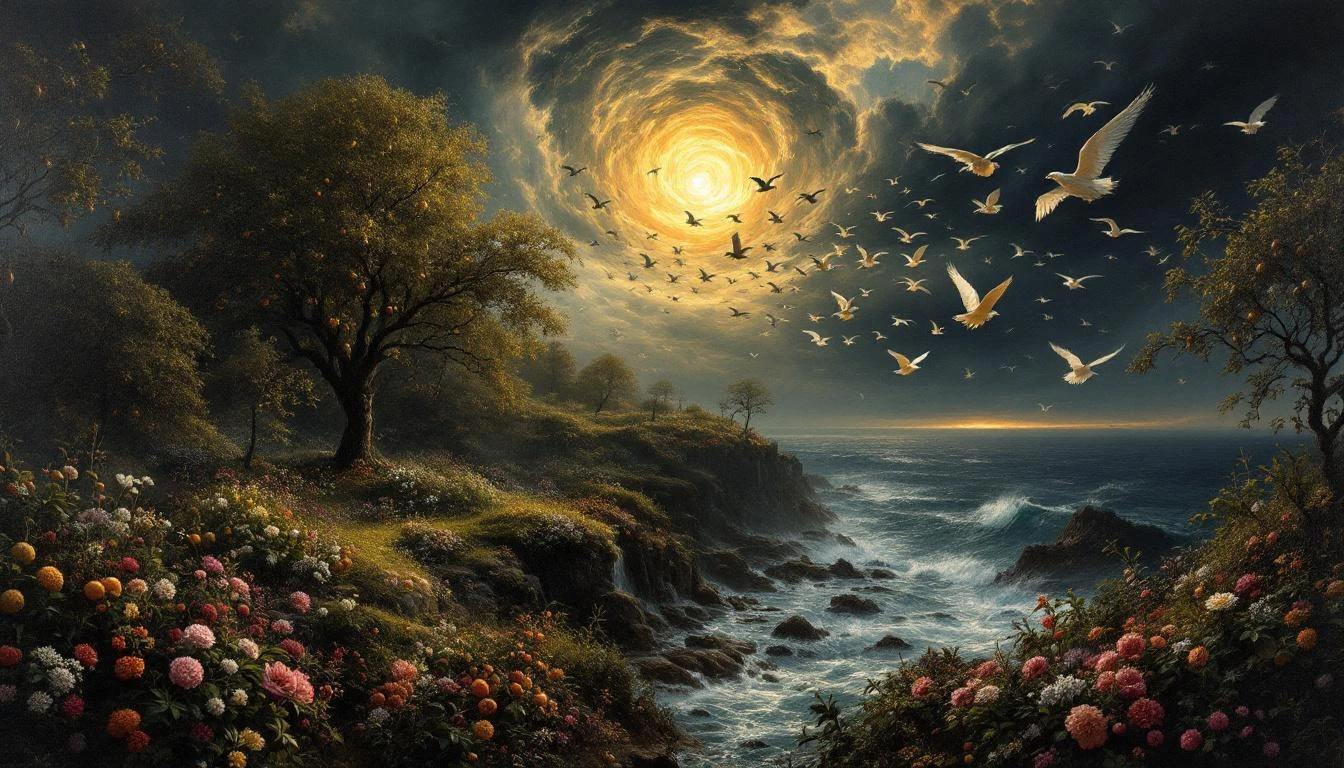
Somewhere — and the tales are deliberately vague about where — there is a garden. It might be at the edge of the world, beyond the thrice-nine kingdom, past the place where the sun sleeps. It might be inside the walls of a tsar's palace, an orchard enclosed by golden fences and patrolled by sleepless guards. The location shifts between stories. What does not shift is the tree.
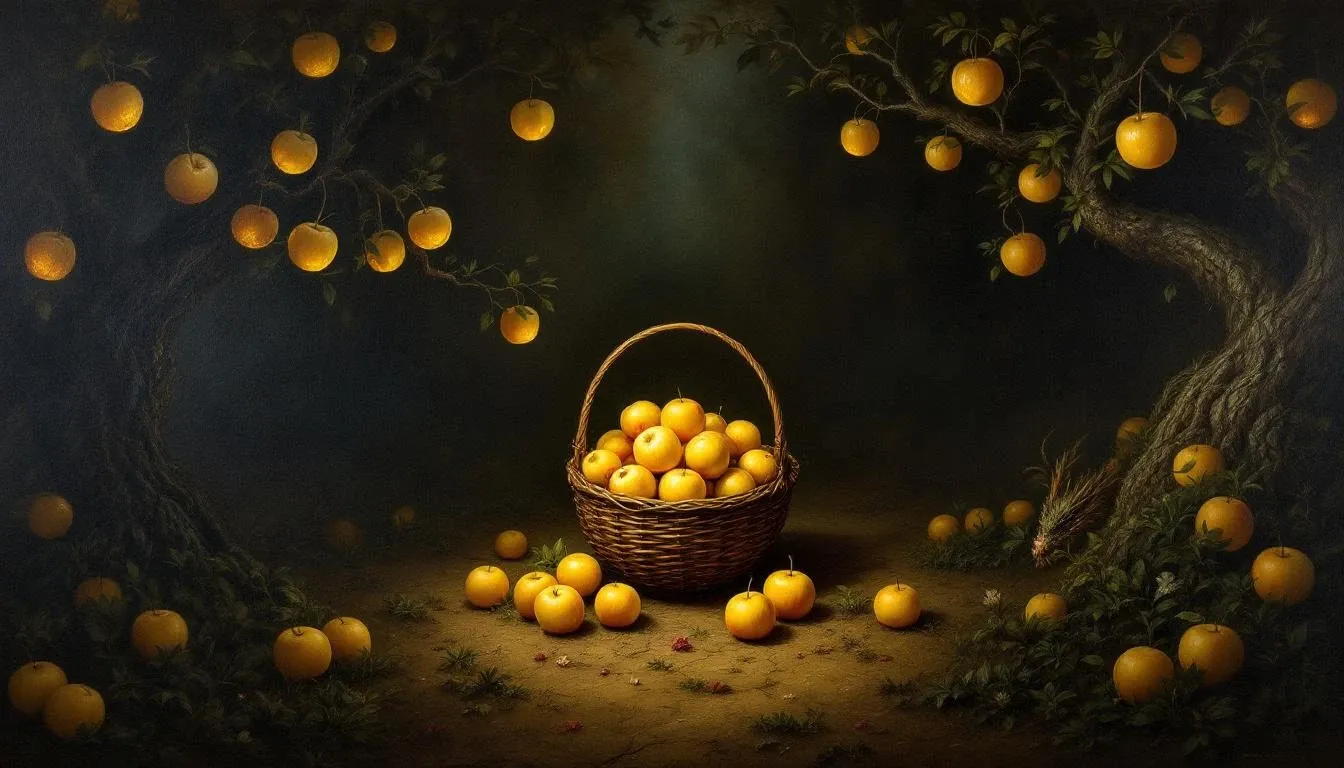
The tree bears golden apples. Not yellow apples, not amber apples — gold. The fruit glows in darkness. It weighs more than fruit should weigh. And it carries a property that has driven the plots of more Slavic fairy tales than any single object in the tradition: anyone who eats a golden apple becomes young again. Not healthier. Not stronger. Young. The years peel away like bark. The wrinkles smooth. The grey hair darkens. The aching joints go quiet. Time reverses, and the eater steps backward across the threshold that separates the living from the dying.
This is the golden apple of Slavic mythology — the fruit of immortality, the target of the Firebird's midnight raids, the prize that launches quests and destroys families and keeps appearing across hundreds of folk tales with the persistence of something that the human imagination cannot stop returning to. Because the golden apple is not merely a magical object. It is the answer to the only question that ultimately matters: can death be undone?
The Firebird and the Apple Tree
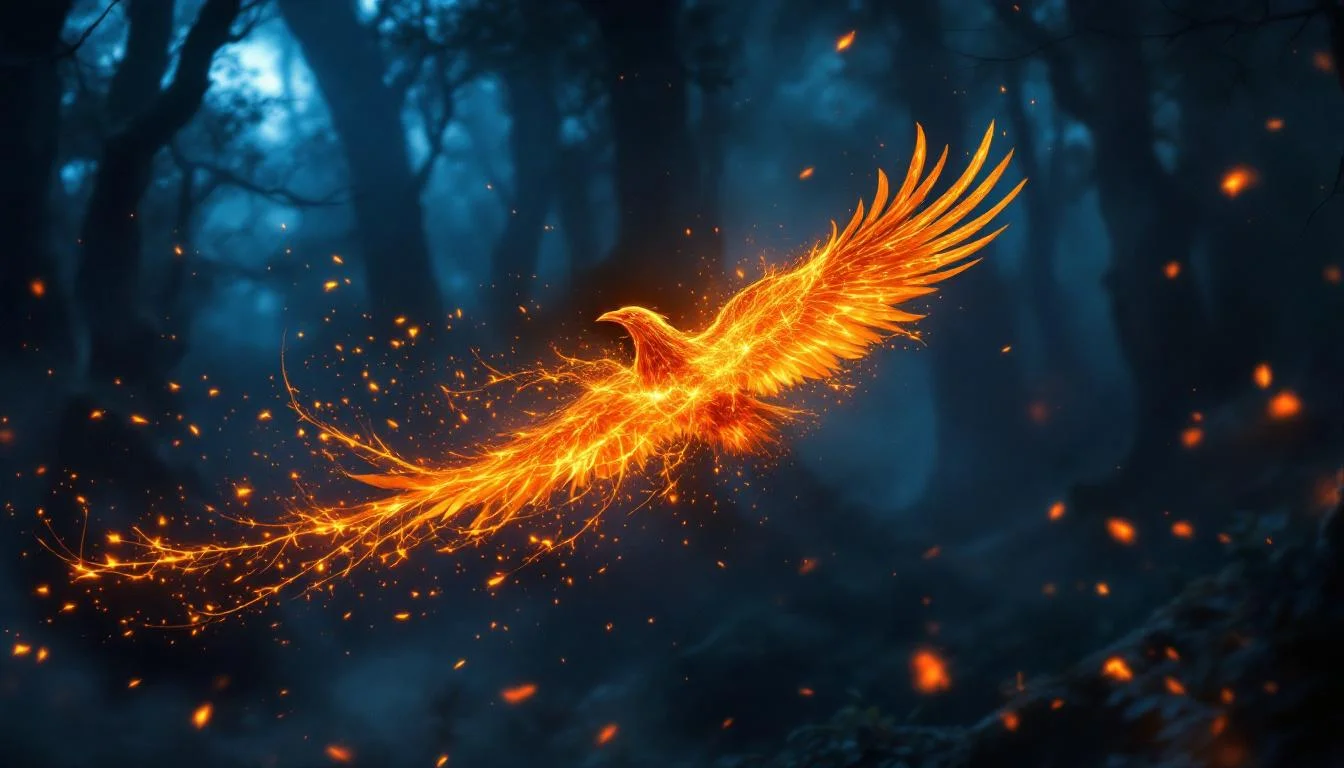
The most famous appearance of the golden apples in Slavic folklore is in the tale cycle of the Firebird — the Zhar-Ptitsa of Russian tradition, the blazing bird whose feathers light up the night and whose theft of golden apples sets the entire plot machinery of East Slavic fairy tales into motion.
The standard version, collected by Alexander Afanasyev and classified as Aarne-Thompson tale type 550, opens with a tsar who owns a garden containing a tree that bears golden apples. Every morning, one apple is missing. Guards are posted. They fall asleep. The youngest son, Ivan Tsarevich, stays awake through the small hours and sees the thief: the Firebird descending in a blaze of radiance, plucking an apple with her beak, and vanishing into the night sky.
Ivan grabs the bird's tail. A single feather comes loose. The bird escapes. The tsar sees the feather, is consumed by desire for the whole bird, and sends his three sons on a quest that will end in betrayal, death, resurrection, and the acquisition of a princess, a golden-maned horse, and the Firebird herself.
But the golden apples are not incidental to this story. They are its cause. The Firebird steals them because they are worth stealing — because they contain something that even a creature of supernatural radiance wants. The implication is extraordinary: the golden apples are more valuable than the Firebird. The bird is beautiful. The apples are powerful. Beauty provokes admiration. Power provokes theft.
Why does the Firebird want the apples? The tales do not say directly, but the folk logic is transparent. The Firebird is an immortal creature — ageless, undying, blazing with a fire that never goes out. The golden apples sustain this immortality. They are not merely a treasure the bird covets. They are the fuel that keeps the Firebird burning. Without the apples, even the Firebird might dim.
The South Slavic Wedding Apple
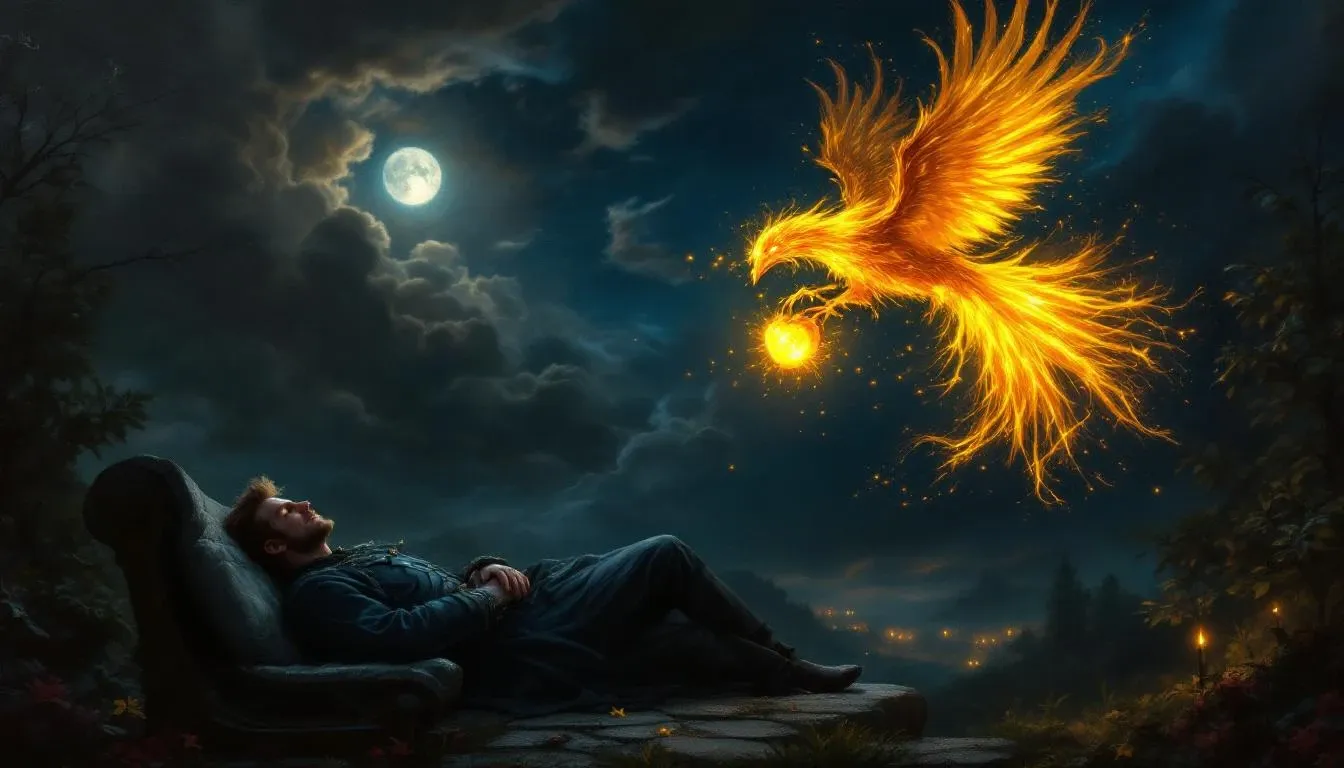
The golden apple appears in a completely different context in South Slavic tradition — not as a fairy-tale object but as a ritual one. In Serbian, Croatian, Bosnian, and Macedonian wedding customs, the apple played a central role that carried clear echoes of the mythological fruit of immortality.
The groom — or his representative — brought a golden or gilded apple to the bride's house. This apple was sometimes a real fruit decorated with gold leaf, sometimes a carved wooden apple covered in gold paint, sometimes a symbolic object that bore only the name "apple" without resembling the fruit at all. The groom offered the apple to the bride. If she accepted it, she accepted the marriage proposal. The apple was the contract.
The symbolism was layered. On the surface, the apple represented fertility — the fruit that bears seeds, the promise of children, the continuation of the family line. But beneath that surface lay something older. The golden apple was the fruit of new life. By accepting it, the bride was entering a new phase of existence — a transformation as absolute, in its social implications, as the physical transformation the mythological apple granted. She was leaving one family for another, one name for another, one identity for another. The golden apple marked the boundary between her old life and her new one.
The ethnographer Veselin Cajkanovic, who studied Serbian folk religion and ritual more deeply than perhaps any other scholar, argued that the wedding apple was a direct survival of the mythological apple of immortality — that the ritual preserved, in compressed symbolic form, the ancient belief that the fruit could transform the person who consumed or received it. Marriage, in the folk mind, was not merely a social arrangement. It was a metamorphosis. The apple was the catalyst.
In Macedonian tradition, the suitor literally threw the golden apple to the girl he wished to marry — a gesture that connects to the broader motif of the "apple of discord" found across Mediterranean and Balkan cultures. The thrown apple was both an offer and a claim. It said: I choose you. This fruit — this power — is for you.
Norse Parallel: The Apples of Idunna
The Norse goddess Idunna (or Idunn) kept a box of golden apples that granted the gods their immortality. Without the apples, the Aesir aged, weakened, and moved toward death. When the trickster Loki arranged for Idunna's abduction by the giant Thjazi, the gods began to wither immediately — their hair turned grey, their skin wrinkled, their strength drained. Only by rescuing Idunna and her apples was their youth restored.
The structural parallel to the Slavic golden apples is precise. In both traditions, immortality is not inherent. It is consumed. The gods (or the Firebird, or the tsar) do not possess eternal youth as a fixed quality. They maintain it through ongoing access to a specific fruit. Immortality is a diet, not a state.
The differences are also instructive. In Norse mythology, the apples belong to a specific goddess who controls their distribution. Idunna decides who eats. The Slavic golden apples have no guardian (unless you count the Firebird, who is more thief than guardian). They grow on a tree that exists in a garden that belongs to whoever owns the garden — a tsar, a king, the landscape itself. The Slavic apples are available. The Norse apples are rationed. This reflects a broader difference in mythological worldview: Norse mythology is hierarchical, structured around gods and their prerogatives. Slavic folk mythology is more egalitarian — the apple tree grows in the world, and the question is not "who is permitted to eat?" but "who is clever enough to get there?"
The connection may be genetic. Both the Norse and Slavic traditions descend from a shared Proto-Indo-European mythological complex, and the golden apple of immortality may trace back to a common ancestral motif — a fruit that confers deathlessness, guarded or cultivated by a specific figure, vulnerable to theft by a trickster or an outsider. The motif survived in both the Germanic and Slavic branches, modified by each culture's specific concerns and narrative preferences, but recognizable as the same fundamental idea.
Greek Parallel: The Hesperides
The Greek tradition offers an even more explicit parallel. At the western edge of the world, in a garden tended by nymphs called the Hesperides, a tree bore golden apples. The tree was a wedding gift from Gaia (the Earth) to Hera, and it was guarded by Ladon, a hundred-headed serpent-dragon who never slept.
Heracles — the Greek hero whose labors parallel the quest-structure of Slavic fairy tales — was tasked with stealing the golden apples as his eleventh labor. He accomplished this by tricking the Titan Atlas into retrieving them, or in some versions by slaying Ladon directly. The apples granted immortality, and their acquisition was considered one of the most difficult feats in Greek mythology.
The parallels line up with uncomfortable precision. A garden at the edge of the world. A tree bearing golden apples that grant immortality. A guardian creature (the serpent Ladon / the Firebird / the eagle that perches atop the World Tree). A hero who must steal the fruit, enduring impossible trials to reach it.
The serpent connection is particularly significant. In Slavic cosmology, a serpent dwells at the base of the World Tree — sometimes identified as Veles in his chthonic form, sometimes as an unnamed primordial creature. The Norse World Tree, Yggdrasil, also had a serpent at its roots: Nithhogg, who gnawed at the tree's foundations. The Greek golden-apple tree was guarded by a serpent. Across all three traditions, the fruit of immortality is associated with a tree that a serpent either guards or threatens, and the tension between the tree and the serpent — between the source of life and the force that undermines it — generates the narrative energy that drives the quest.
The golden apples of the fairy tales preserve the memory of a sacred tree whose fruits conferred immortality or eternal youth. This tree stands at the center of a paradise that exists at the boundary of the known world, and the quest to reach it — and to return with its fruit — is the oldest story the Slavic peoples tell.
Why Gold?
The apples are not described as magical in the abstract. They are described as golden — and the gold is not ornamental. It carries specific meaning.
Gold, in Slavic folk symbolism, was the color of the sun. It was not the color of wealth in the modern sense — the Slavic peasant farmers who transmitted these tales had no experience of gold coins or golden jewelry. Gold was the color of light: the light of the sun that made crops grow, the light of fire that kept the family alive through winter, the light of the Firebird that illuminated the darkness when it descended into the tsar's garden. Golden objects in fairy tales were objects of solar power — connected to warmth, growth, life, and the cyclical return of the seasons.
The golden apple, then, was a solar fruit. It was a piece of the sun made edible. To eat it was to consume sunlight — to fill the body with the same force that drove the agricultural cycle, that warmed the earth, that made things grow. The apple conferred youth because the sun conferred life, and the apple was the sun in concentrated, portable, swallowable form.
This reading explains why the golden apples were associated with Iriy — the paradise where birds migrated in winter, where the sun rested at night, where everything that withdrew from the living world during the cold months went to wait for spring. Iriy was a solar paradise: warm, green, eternal summer. The golden apple tree was its central feature because the apples were the solar energy that made Iriy paradisaical. The birds ate them. The souls ate them. The Firebird — that living fragment of solar fire — was nourished by them.
The Apple in Koschei's World
The golden apple also appears in the orbit of Koschei the Deathless — the skeletal immortal villain of East Slavic fairy tales, the creature who cannot die because he has hidden his death inside a needle inside an egg inside a duck inside a hare inside a chest buried under an oak tree on an island in the ocean.
Koschei's relationship to immortality is the dark mirror of the golden apple's promise. The apples offer immortality through renewal — youth restored, the body made new, time reversed. Koschei achieves immortality through refusal — he has removed death from his body entirely, externalized it, locked it away where no one can reach it. The apple says: you can be young forever. Koschei says: you can never die. These are not the same thing, and the fairy tales understand the difference.
Koschei is immortal but not young. He is ancient, skeletal, withered — a being who has lived so long that his body has dried to leather and bone. He hoards princesses, gold, and magical objects, but he does not seek the golden apples. He does not need to be renewed because he has opted out of the cycle of aging entirely. His is an immortality of stasis, not of restoration.
The heroes who oppose Koschei — Ivan Tsarevich, in most versions — are the same heroes who quest for the Firebird and the golden apples. The narrative structure places the two forms of immortality in direct opposition: the living immortality of the apple (warm, golden, solar, cyclical) versus the dead immortality of Koschei (cold, skeletal, hidden, static). The hero chooses the apple. The villain has already chosen the needle.
What Grows at the Edge of the World
The golden apple is not a real fruit and was never meant to be one. It is an idea compressed into the shape of something you can hold in your hand — the idea that somewhere, at the furthest limit of the known world, there exists a remedy for the thing that kills everyone. Not a god who grants eternal life. Not a ritual that earns it. A fruit. Something that grows on a tree, something natural, something that could theoretically be picked and eaten by anyone who could get to where it grows.
This is what makes the golden apple different from the immortality offered by most mythological traditions. The Greeks gave immortality to heroes through divine apotheosis — the gods chose you, and you ascended. The Norse gave it through Idunna, a goddess with the authority to distribute. The Christian tradition promised eternal life through faith, grace, and the judgment of God. The Slavic golden apple bypasses all of these mediators. It does not require divine favor. It does not require moral worthiness. It requires only the ability to reach the garden, the courage to take the fruit, and the luck to survive the journey home.
The golden apple is democratic in its promise and brutal in its conditions. Anyone can eat it. Almost no one can get to it. The garden is at the edge of the world, guarded by fire-rivers and sleepless beasts, reachable only through quests that demand the hero to give up everything he has, betray or be betrayed by his own brothers, die and be resurrected, and arrive at the tree with nothing left except the hand to reach for the fruit.
And this is why the Firebird keeps stealing the apples. Because immortality was never meant to stay in one place. The golden fruit falls from the tree, is carried by the blazing bird across the night sky, and drops — one feather, one apple, one fragment of eternal youth — into the world of mortals who will spend the rest of the story trying to hold onto it. The apple is the promise. The quest is the price. And the tree keeps growing at the edge of everything, bearing fruit that no one can quite reach.