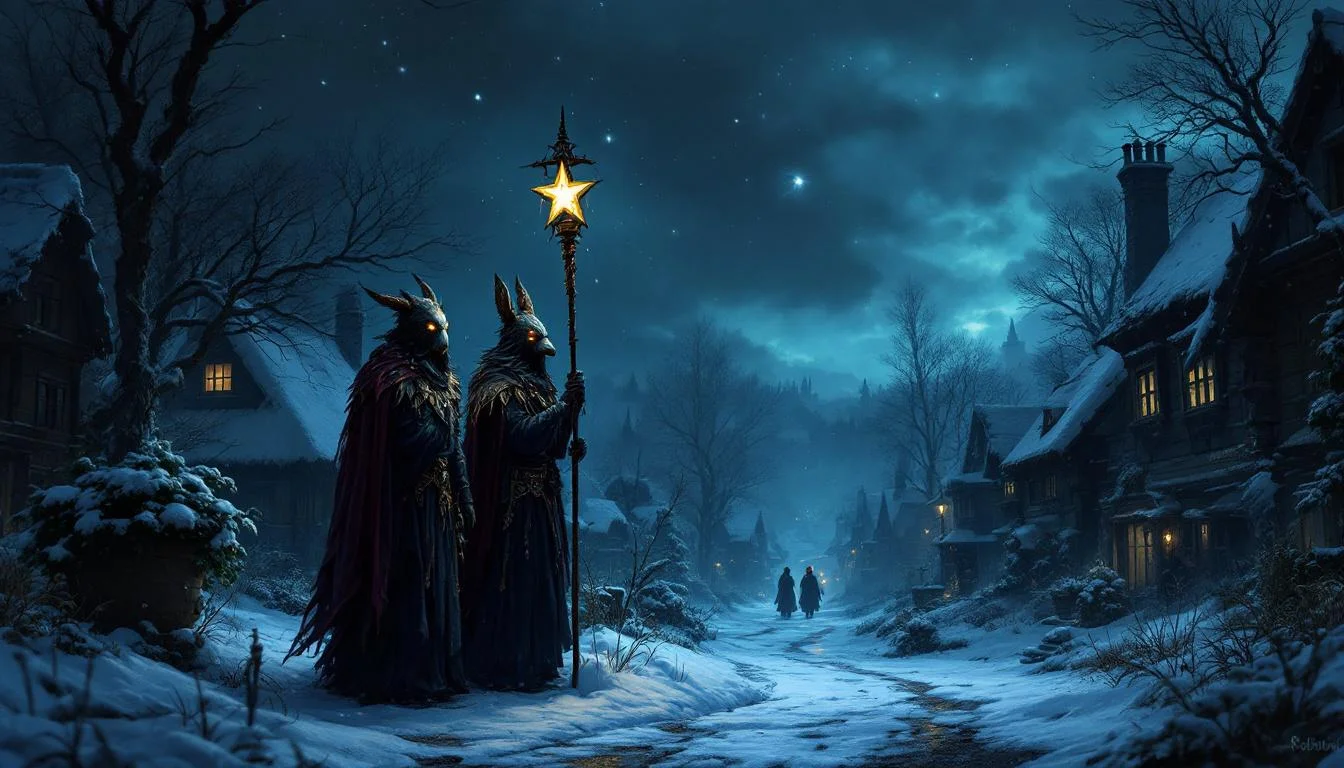
Somewhere in central Russia, in the last week before Lent, a woman made of straw stands in the town square. She is taller than a man, dressed in a sarafan, with a painted face and real kerchief tied around her head. Children run circles around her. Men stack firewood at her feet. The woman has no name — or rather, she has only one name, the name of the festival itself: Maslenitsa. By Sunday evening she will be burning, and half the town will stand watching her go up, cheering, eating the last pancake before forty days of fasting begin.
This has been happening for at least two thousand years. Archaeological evidence from the second century AD suggests Maslenitsa may be the oldest continuously celebrated festival in the Slavic world. It predates the Christianization of the Eastern Slavs by eight centuries. It predates written Slavic languages. It predates the very concept of Russia. When Orthodox missionaries arrived in the 10th century and began the long, grinding work of converting a continent of polytheists, they faced a choice with Maslenitsa: destroy it or absorb it. They chose absorption. They moved it from its original position on the spring equinox to the movable date of the week before Great Lent, slapped a Christian justification on top, and hoped the pagan content would eventually bleed out.
A thousand years later, the pagan content has not bled out. The straw woman still burns.
Before the Church: The Equinox Festival
The original Maslenitsa had nothing to do with Lent. It was fixed to the vernal equinox — the astronomical moment when day and night stand equal and the balance tips toward light. The festival began one week before March 21 and ran one week after it, a full fourteen days of celebration bracketing the pivot-point of the solar year.
The logic was cosmological. Winter was not simply cold weather. Winter was Morana — the goddess of death, darkness, and frozen earth — holding the world in her grip. Spring was Yarilo, the young sun god, burning his way back from the underworld. Maslenitsa was the ritual battlefield where this transfer of power was enacted, not symbolically but — in the minds of the people performing it — actually. The bonfires melted winter. The round golden pancakes fed the sun. The burning of the straw effigy killed the goddess of death. These were not metaphors. They were technologies of survival, performed by people who understood the universe as a system of forces that could be influenced by correct ritual action.
The Slavs rolled burning wheels down hillsides during Maslenitsa, sending discs of fire tumbling through the snow toward rivers and fields. The wheels were the sun. Their descent helped the real sun gather strength. This is sympathetic magic at its most literal — like produces like, and a burning wheel rolling across a frozen landscape encourages the celestial wheel to do the same.
When Orthodoxy claimed the festival, the fourteen-day celebration was cut to seven and divorced from the equinox entirely. Some years Maslenitsa falls in February, sometimes in early March, depending on the Easter calculation. The solar logic was severed. But the rituals themselves proved more durable than the theology layered on top of them.
Bliny: Eating the Sun
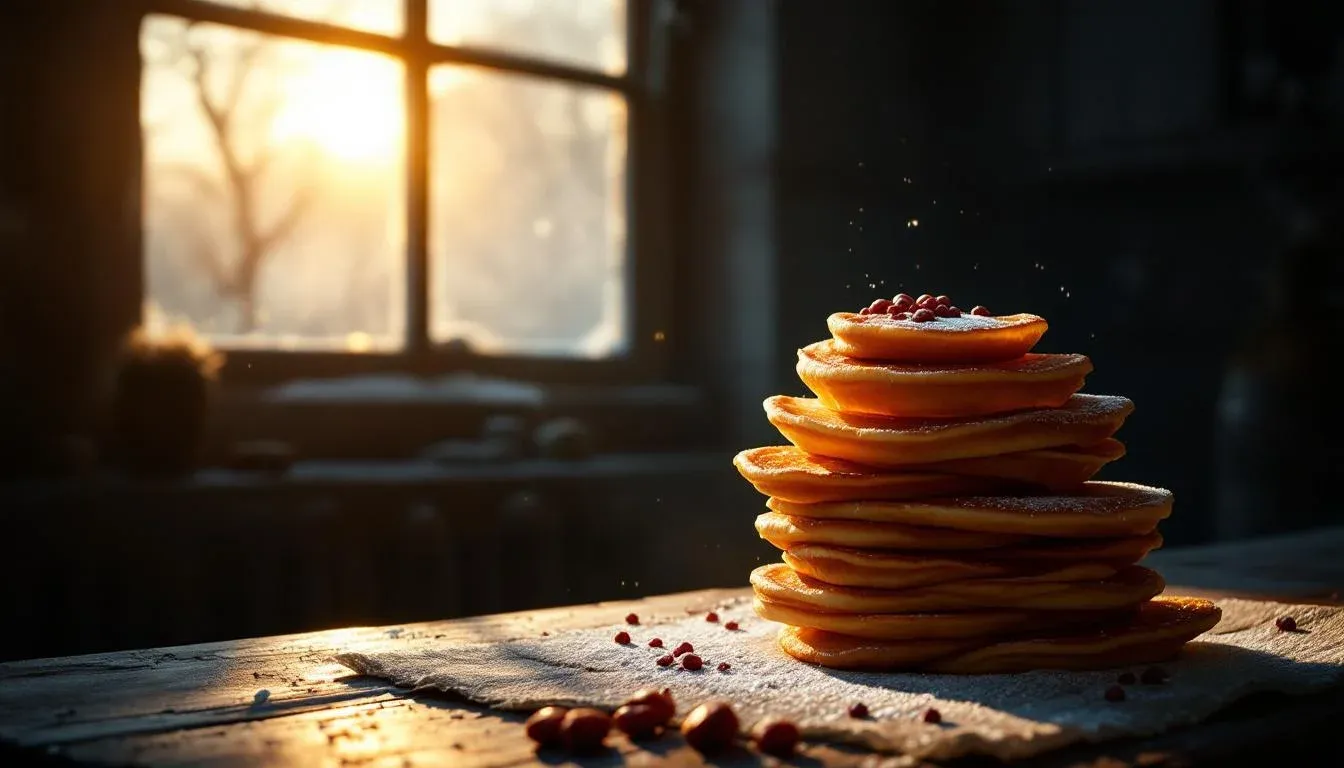
The pancake is the central sacrament of Maslenitsa. Not crepes, not waffles, not any of the pale Western approximations — bliny, the Russian yeasted buckwheat pancakes, round and golden and glistening with melted butter, stacked in towers on kitchen tables across half a continent.
The symbolism is older than any surviving written source can confirm, but every ethnographer who has studied the tradition agrees: the blin is the sun. Round, hot, golden — a small edible disc of solar energy, consumed to internalize the warmth that the world desperately needs after months of darkness. Before Russia adopted Christianity in 988, the Slavs practiced sun worship as a core element of their religious life, and bliny were baked on heated stones as offerings. Eating the sun was not gluttony. It was communion.
The first pancake of Maslenitsa week was sacred. In many regions it was not eaten at all but placed on a windowsill as an offering to the dead — to the ancestors whose spirits, according to pre-Christian belief, returned during liminal periods between seasons. The Russian proverb "the first pancake is a lump" (pervyy blin komom) is widely understood today as a comment about cooking mishaps. But the original form of the saying may have been pervyy blin Komam — "the first pancake is for the Bears," Kom being an old word for bear, the sacred animal associated with the spring awakening. The bears were waking from hibernation. They needed to eat. The first pancake was theirs.
During Maslenitsa, bliny are eaten at every meal, in quantities that would alarm a modern nutritionist. They are served with smetana (sour cream), butter, honey, caviar, smoked fish, mushrooms, and jam. The butter that saturates them gives the festival its name — maslo means butter, and Maslenitsa is the butter festival, the last week when dairy is permitted before the strict Lenten fast bans all animal products. The Church framed this as a theological concession: eat your butter now, because you cannot eat it for forty days. But the pancake predates the fast by centuries. People were eating sun-discs at the equinox long before anyone in the Slavic lands had heard of Lent.
The Seven Days
When the Church compressed Maslenitsa into a single week, the seven days acquired individual names and rituals, creating a structure that survives with remarkable consistency across Russia, Ukraine, and Belarus. The week divides into two halves: the Narrow Maslenitsa (Monday through Wednesday) and the Wide Maslenitsa (Thursday through Sunday), when the real festivities begin.
Monday — Vstrecha (The Meeting). Maslenitsa arrives. The straw effigy is built — usually by women — dressed in old clothes, mounted on a pole, and paraded through the village or installed in a central location. Swings and ice slides are constructed. The first bliny are baked, and the first one goes to the poor or is left for the dead. Mothers-in-law send their daughters-in-law to their parents' homes to prepare for the week's visiting.
Tuesday — Zaigryshi (The Games). The matchmaking day. Young people go sledding together, ride ice slides, and attend performances by traveling entertainers — skomorokhi, the itinerant jesters whom the Church spent centuries trying to suppress. The day's real purpose is courtship: marriages arranged during Maslenitsa were expected to be celebrated after Easter. The ice slides were not incidental. In Russian folk tradition, a long sledding run predicted a good flax harvest, and girls who refused to slide were publicly shamed.
Wednesday — Lakomka (The Glutton). The mother-in-law's day. She invites her son-in-law to her home for bliny, demonstrating her hospitality and the quality of her cooking. The table must be lavish. A stingy Lakomka table was a social catastrophe that the village would discuss for years. This was also the day when bliny consumption reached competitive levels — eating contests are documented in ethnographic records from the 18th century onward.
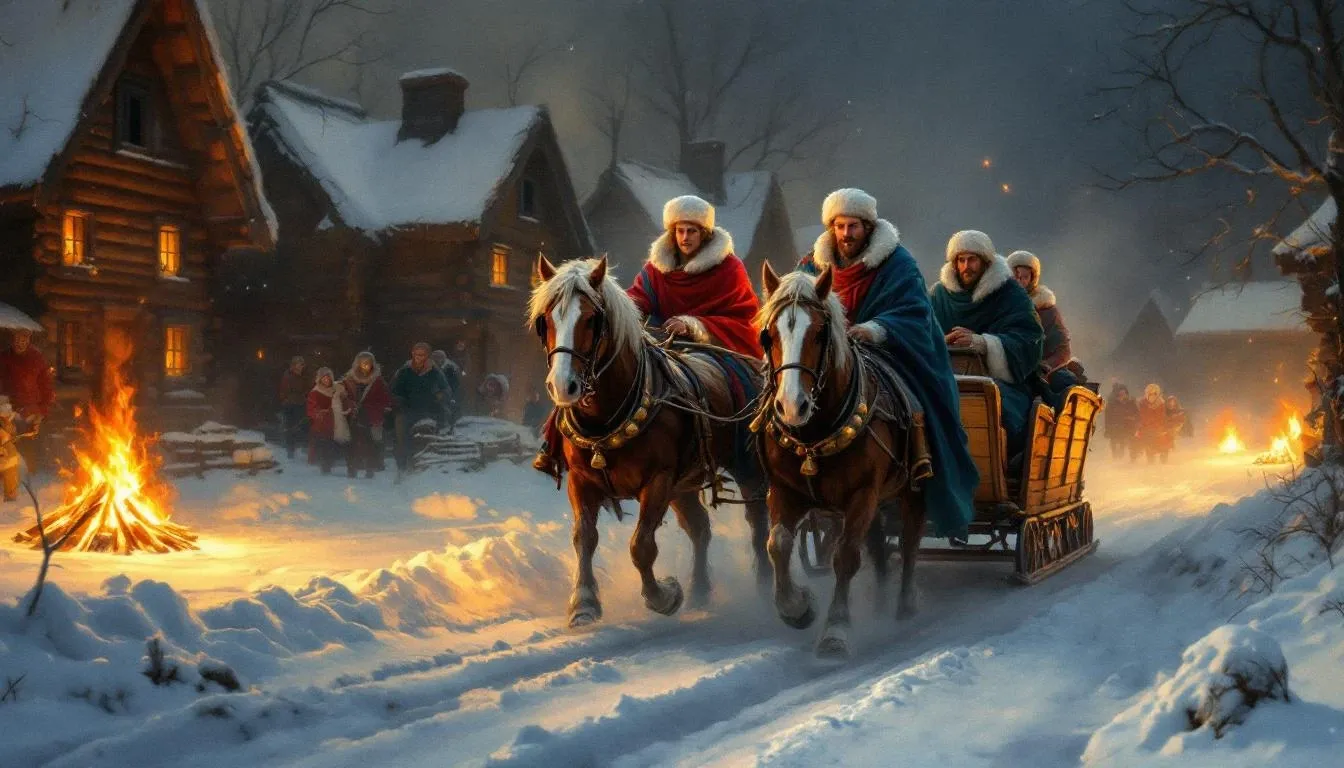
Thursday — Razgulyay (The Revelry). Wide Maslenitsa begins and all work stops. The most physical day of the festival. Fistfights — kulatschnyye boi — were organized between villages, with strict rules governing the combat: no hitting a man who is down, no concealed weapons, no kicking. These were controlled rituals of violence, not brawls. Troika rides, snowball battles, and the storming of snow fortresses rounded out a day that the Church tolerated with visible discomfort.
Friday — Tyoshchiny Vecherki (The Mother-in-Law's Evening). The social dynamics reverse: now the son-in-law hosts his mother-in-law for bliny. He must send a formal invitation the evening before. The quality of the meal and the warmth of the reception are closely observed by the community as indicators of the marriage's health. A son-in-law who failed to invite his mother-in-law committed a social offense that could sour family relations for a generation.
Saturday — Zolovkiny Posidelki (The Sister-in-Law's Gatherings). The young wife invites her husband's sisters and other relatives. If the sisters-in-law are unmarried, she invites her own unmarried friends; if married, her married friends. Gifts are exchanged. The day serves as a performance review of the new wife's social skills and generosity.
Sunday — Proshchyonoye Voskresenie (Forgiveness Sunday). The final day. The climax. Everything that has been building — the eating, the fighting, the socializing, the straw woman standing in the square — converges on a single evening.
The Burning
The destruction of Lady Maslenitsa is the week's culminating act. The straw effigy that was built on Monday and has presided over six days of feasting is now carried to the edge of the settlement, placed atop a massive bonfire, and set ablaze.
The fire is not punishment. It is transformation. The figure being burned is Morana — winter, death, the frozen grip of the dark months — disguised under the festival's own name. When the Orthodox Church absorbed Maslenitsa, it could not permit the open burning of a pagan goddess, so the effigy was gradually rebranded as a personification of the holiday itself: Lady Maslenitsa, Butter Week, a figure of carnival excess being destroyed before the sobriety of Lent. The theological sleight of hand was clever. It did not change what was actually happening. The Slavs were still killing winter. They were still watching Morana burn.
The ashes were scattered across agricultural fields. This was not tidying up. The ashes were the goddess's body, returned to the earth to fertilize the spring planting. Death feeds life. The spent fertility of winter is composted into the new fertility of the growing season. It is the same logic that drives the drowning of Marzanna effigies in Polish rivers, the same logic that connects Morana to the agricultural cycle across every Slavic culture: she must die so the grain can live. The field that receives her ashes will grow.
They put the scarecrow on the highest pile and set fire from all sides. When it was fully ablaze, the young people joined hands and circled the fire, singing: 'Maslenitsa, farewell! Honest one, farewell! You've come for a week, you've brought us bliny, cheese, and butter, you've fed us and watered us — now burn, Maslenitsa, and take winter with you.'
In some villages, particularly in the Russian north, the effigy was not simply burned but first subjected to a mock funeral procession — carried on a board or in a coffin through the streets, with women performing exaggerated wailing and men pretending to be priests reading a funeral service. The parody was intentional. The carnival-death of Lady Maslenitsa mocked death itself. If you can laugh at the funeral, death loses its power. This carnivalesque inversion — identified by Mikhail Bakhtin in his study of Rabelais as central to medieval folk culture — runs through every layer of Maslenitsa. The high are brought low, the solemn is made ridiculous, and the dead are burned in a blaze of laughter.
Forgiveness Sunday: The Hinge Between Worlds
After the effigy burns, the mood shifts. The laughter drains out of the evening, and something older replaces it. Forgiveness Sunday — Proshchyonoye Voskresenie — requires every person to seek forgiveness from every other person they have wronged. Not vague, generalized forgiveness. Specific, face-to-face, named forgiveness. You go to the person you hurt and say: "Forgive me." They answer: "God forgives, and I forgive."
The ritual extended to the dead. In many regions, people visited cemeteries on the evening of Forgiveness Sunday, bringing bliny to leave on graves, speaking to the buried as though they could hear, asking pardon for offenses committed against those who could no longer answer. The boundary between the living and the dead, already thin during the liminal Maslenitsa week, was at its most permeable on this final evening.
The Church claimed Forgiveness Sunday entirely, integrating it into the liturgical cycle as preparation for Great Lent. But the practice of visiting graves with food — feeding the dead — is pre-Christian ancestor worship, documented across Slavic cultures and connected to the broader complex of death rituals that includes Radonitsa (the spring commemoration of the dead) and Dziady (the Slavic day of the dead). The Church provided the theological framework — forgiveness before Lent — but the mechanism was already in place: a night when you settled accounts with both the living and the dead before the long austerity of spring fasting began.
Maslenitsa on the World Stage
In recent years, Maslenitsa has drawn international attention as a tourist spectacle and a point of cultural comparison. Visitors from Western Europe and North America now travel to Moscow, St. Petersburg, and smaller Russian cities specifically to witness the festival — the towering straw effigies, the mountains of bliny, the controlled chaos of a week-long farewell to winter. Travel guides have begun listing it alongside Rio’s Carnival and New Orleans’ Mardi Gras as one of the world’s great pre-Lenten celebrations. The comparison is apt in structure — all three are periods of sanctioned excess before a season of fasting — but misleading in substance. Carnival and Mardi Gras are products of Catholic culture, theatrical and outward-facing. Maslenitsa is something older: a ritual negotiation with the forces of winter and death, wrapped in pancakes and laughter. The tourist sees a festival. The tradition remembers a funeral.
What Survived, What Didn't
Maslenitsa is the only pagan festival that the Russian Orthodox Church officially incorporated into its calendar. Kupala Night was condemned. Kolyada was partially absorbed into Christmas. But Maslenitsa was adopted wholesale, Christianized in name and calendar position, yet left largely intact in its ritual content. The Church understood, apparently, that it could not separate the Russian people from their pancakes and their bonfires.
The Soviet Union tried a different approach. Ideologues rebranded the festival as "Russian Winter Farewell" (Provoды Russkoy Zimy), stripped it of both pagan and Christian associations, and turned it into a state-sanctioned folk celebration with organized activities and approved entertainment. The pancakes remained. The effigy-burning remained. The people ate and burned and forgave, precisely as they had for two millennia, under whatever ideological banner was currently required.
Today, Maslenitsa is celebrated massively across Russia, Belarus, and Ukraine — adapted to local traditions and political circumstances, but recognizable in its core elements everywhere. Moscow builds enormous straw effigies in Gorky Park. Minsk holds city-wide bliny competitions. Ukrainian villages maintain local variations that predate the modern nation-states claiming them. The festival's resilience is not sentimental. It is structural. Maslenitsa addresses needs that neither Orthodoxy nor atheism can fully satisfy: the need to mark the dying of winter with fire and food, the need to consume excess before scarcity, the need to settle debts with the dead, the need to watch something burn and feel, in the heat on your face, the promise that warmth is returning.
The straw woman burns. She has always burned. She will burn next year, dressed in new rags, standing on a new pile of wood, in a square that may have a different name in a country that may have different borders. The borders change. The fire does not.