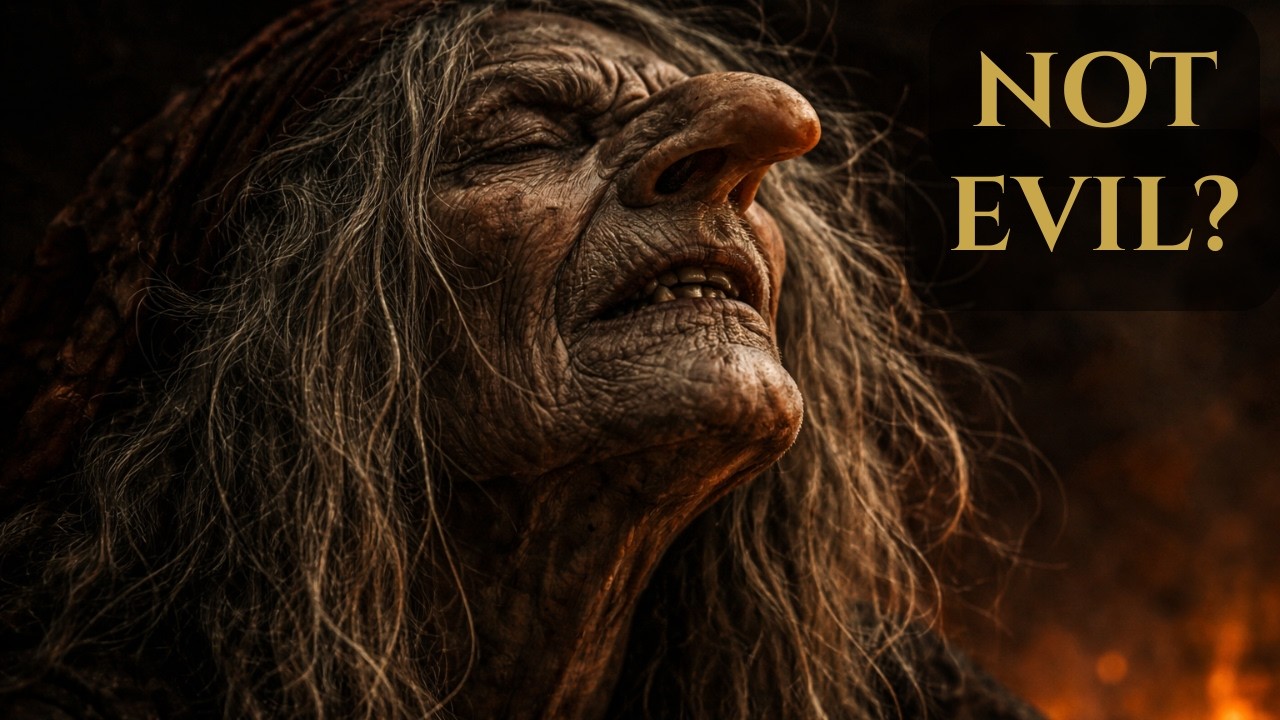
In 1940, a company that made its fortune on singing mice and dancing brooms reached into the oldest darkness of Eastern Europe and pulled out a god. They did not understand him. They did not need to. They needed a monster for the final act, something colossal and terrible to crown the most ambitious animated film ever made. And so they took a name whispered in a single paragraph of a twelfth-century German chronicle — a name that scholars still argue may never have belonged to a real deity at all — and they built from it the most iconic image of evil in animation history.
Disney called him Chernabog. They spelled it wrong, stripped away every scrap of historical context, dressed him in bat wings he never wore, and set him on a mountain he may never have haunted. And in doing so, they accomplished something that centuries of Slavic oral tradition, academic scholarship, and neopagan revival movements had failed to do: they made the entire Western world remember his name.
This is the story of what happens when the largest entertainment empire on earth collides with the oldest and least documented mythology in Europe. It is a story of brilliance, appropriation, distortion, and — buried beneath the spectacle — the ghost of something real that Hollywood was never equipped to understand.
Chernabog in Fantasia: A God Rebuilt from Smoke
The centerpiece of Disney's relationship with Slavic mythology remains the Night on Bald Mountain sequence in Fantasia (1940). Set to Modest Mussorgsky's orchestral tone poem of the same name — itself composed in 1867 as a musical evocation of the Slavic witches' sabbath — the segment depicts a titanic winged demon rising from the peak of a bare mountain on Walpurgis Night. He unfolds wings that span the horizon. He summons the dead from their graves. Spirits, ghosts, and demons spiral upward in a vortex of flame while the creature presides over the chaos with the grim satisfaction of a conductor before his orchestra.
The sequence was animated by Vladimir Bill Tytla, a Ukrainian-American whose parents had emigrated from Kyiv. Tytla was one of the greatest animators who ever lived, and he brought something personal to this assignment — a childhood steeped in Eastern European darkness, in stories told in Ukrainian kitchens about things that moved through the night. Disney originally hired Bela Lugosi, the Hungarian actor who had become synonymous with Dracula, to serve as a live-action reference model. Lugosi spent a full day in the studio, posing and performing. Tytla rejected the footage. It was too theatrical, too Gothic, too Western. Instead, he used sequence director Wilfred Jackson — shirtless, contorting his body into the poses of something inhuman — as his physical reference. The finished Chernabog retains traces of both performances: Lugosi's hypnotic slowness in the way the arms extend, Jackson's raw physicality in the torso and shoulders.
::source-quote{source=Walt Disney, quoted in promotional materials for Fantasia, 1940} Chernabog is not the Devil. He is the representation of the dark side of all of us — the thing we try to keep hidden. He is the Black God, and he has existed in Slavic mythology for centuries. ::
That last claim was generous. The historical Chernobog exists in precisely one primary source: the Chronica Slavorum, written around 1168 by Helmold of Bosau, a German priest documenting the customs of pagan Slavic tribes in what is now northeastern Germany. Helmold describes a feast at which the Slavs pass a bowl and speak words in the name of a good god and a bad god, the latter called Zcerneboch — the Black God. That is all. No wings. No mountain. No army of the dead. Just a drinking toast and a name that might mean dark fate rather than dark deity.
What Disney built was not a depiction of a Slavic god. It was a Hollywood fever dream using a Slavic name as a label.
The Mountain That Moved: Bald Mountain in Slavic Folklore
The mountain in Fantasia is not an invention. Bald mountains — Lysá hora in Czech, Lysa Hora in Ukrainian — occupy a specific and sinister place in Slavic folk belief. These are the gathering points for witches on the nights when the boundary between the living and the dead grows thin: Walpurgis Night (April 30), Midsummer Eve (the Kupala Night), and certain saint's day eves that Christianity never fully managed to sanitize.
The most famous Lysa Hora sits in the Holosiiv district of Kyiv, Ukraine. Local legends stretching back centuries hold that witches flew to this hilltop to hold their sabbath, to dance around bonfires, to report to dark powers on the mischief they had accomplished during the year. Alexander Afanasyev, the great nineteenth-century collector of Russian folk tales, documented traditions in which the first of May marked a gathering of witches who flew to Bald Mountain to present themselves before their chief — sometimes described as Satan, sometimes as an unnamed dark figure, sometimes simply as the oldest and most powerful witch among them.
Mussorgsky drew directly from these traditions when composing his tone poem. In a letter describing his intentions, he wrote that witches gathered on the mountain to gossip, play tricks, and await their chief, who arrived and commanded the sabbath to begin. The music was meant to evoke the chaos and revelry of that pagan night — fire, dancing, the dissolution of order before dawn restored it.
Disney took the mountain, took the music, took the name Chernabog, and welded them into a single narrative. In doing so, they conflated at least three distinct elements of Slavic folk belief: the concept of a dark deity (Chernobog), the tradition of the witches' sabbath on bald mountains, and the Mussorgsky musical tradition rooted in Russian literary romanticism. The result is visually magnificent and mythologically incoherent — a Hollywood composite that no Slavic storyteller would recognize as their own.
The Firebird Suite: Stravinsky Through a Disney Lens
Sixty years after Fantasia, Disney returned to Slavic source material with Fantasia 2000. The closing segment of that film is set to Igor Stravinsky's Firebird Suite (1919 version), originally composed for the Ballets Russes production that drew directly from Russian fairy tales about the Zhar-Ptitsa — the Firebird, the blazing creature whose single fallen feather can illuminate a room and whose pursuit destroys everyone who undertakes it.
Stravinsky's original ballet told the story of Prince Ivan, who stumbles into the enchanted garden of the immortal sorcerer Koschei the Deathless, captures the Firebird, and receives a magical feather that he later uses to break Koschei's power. It was a narrative rooted in specific East Slavic folk traditions: the golden apples, the grey wolf, the impossible tasks set by terrible kings. The Firebird was not a nature spirit. It was a creature of fairy tale logic — a prize, a trap, a key to the underworld's locks.
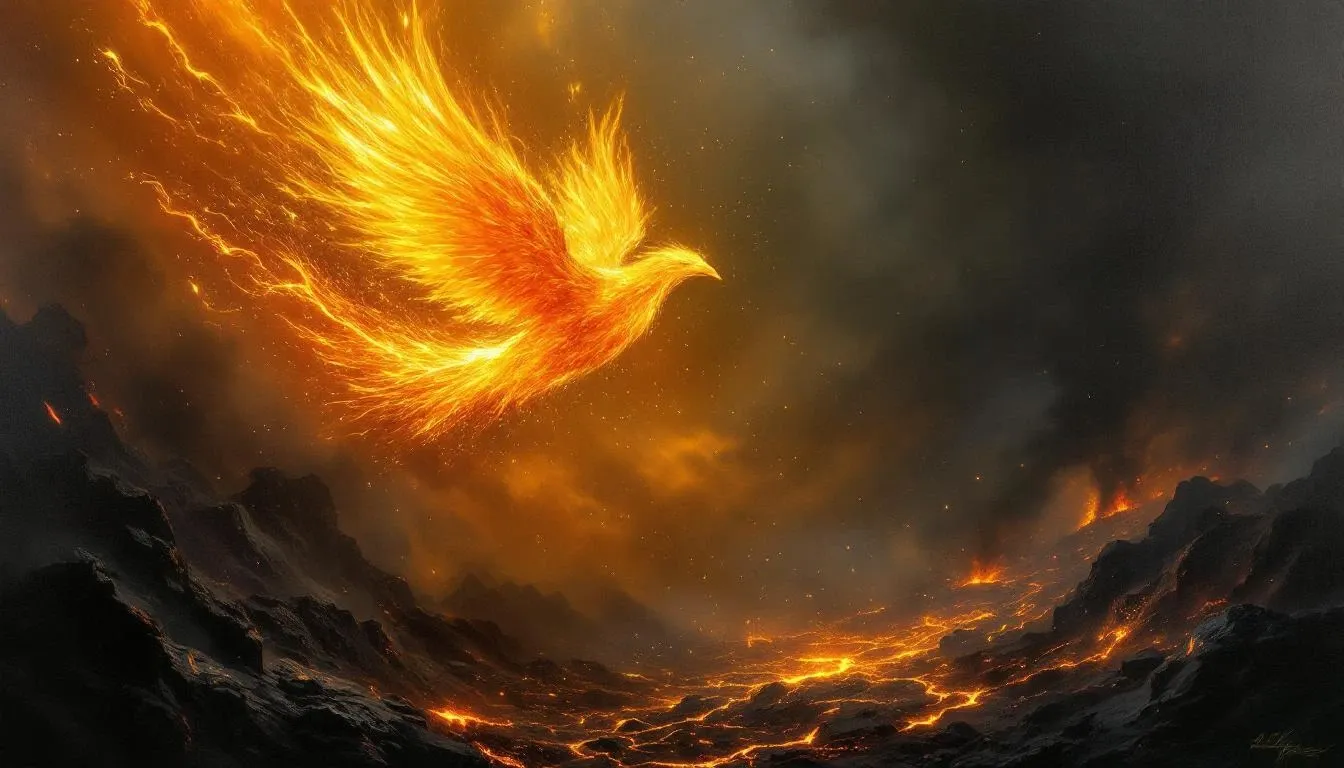
Disney's version abandoned all of this. Directors Gaetan and Paul Brizzi reimagined the Firebird Suite as a tone poem about nature: a forest sprite awakens a volcanic firebird, which erupts and destroys the landscape, after which the sprite slowly coaxes life back from the ashes. The Brizzi brothers cited the 1980 eruption of Mount St. Helens as their primary inspiration. Prince Ivan vanished. Koschei vanished. The golden apples, the enchanted garden, the fairy tale architecture — all gone. What remained was a generic creation-destruction-rebirth cycle that could have been set to any music and called any name.
The segment is beautiful. The animation of the firebird's eruption is genuinely breathtaking. But as an engagement with Slavic mythology, it is a hollow shell. Disney took Stravinsky's music — which was itself a brilliant reworking of Russian folk material — and stripped away the folklore entirely, replacing it with a Mount St. Helens documentary dressed in watercolor.
The Last Warrior and Baba Yaga's Chicken Legs
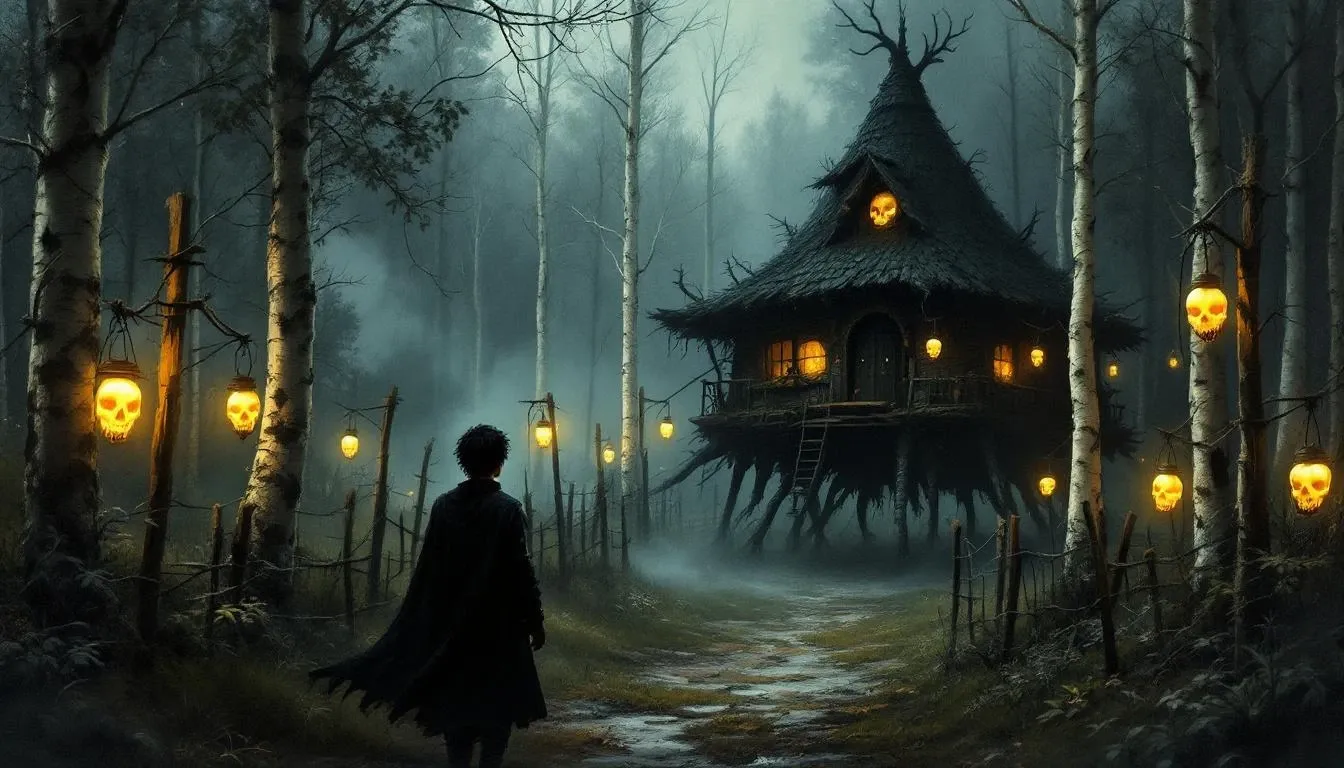
Disney's most sustained engagement with Slavic folklore came not from Hollywood but from Moscow. The Last Warrior (Posledniy Bogatyr, 2017), co-produced by Walt Disney Company CIS and the Russian studio Yellow, Black and White, dropped a modern Muscovite into a parallel world populated by characters from Russian fairy tales: Baba Yaga in her hut on chicken legs, Koschei the Deathless with his hidden needle of mortality, Vasilisa the Wise, the water spirit Vodyanoy, and the three legendary bogatyrs — warrior heroes of the Kievan Rus byliny tradition.
The film became the highest-grossing Russian-language release in history at the time, taking in over 1.68 billion rubles. It spawned two sequels. And it represents something genuinely unusual in Disney's relationship with Slavic culture: an attempt to engage with the folklore on its own terms, using characters and narrative structures that Slavic audiences would actually recognize.
Baba Yaga in The Last Warrior is not a Disney princess villain. She is closer to the figure from the tales — ambiguous, dangerous, capable of helping those who approach her correctly and devouring those who do not. Her hut spins on its legs. She knows things no one else knows. She operates by rules that make sense only within the logic of the fairy tale world. Koschei is not a generic dark lord but a specific kind of immortal whose death is hidden inside a needle, inside an egg, inside a duck, inside a hare, inside a chest, buried under an oak tree on an island in the ocean. The specificity matters. These are not archetypes borrowed and flattened. They are characters with their own mythological DNA.
What Disney Gets Wrong — and Why It Matters
The pattern across all of Disney's Slavic borrowings is consistent: extraction without context. Chernabog becomes a winged Satan divorced from the ambiguity of the original source. The Firebird becomes a volcano metaphor divorced from Prince Ivan and Koschei. Even in The Last Warrior, where the engagement is deeper, the fairy tale world is played primarily for comedy — the darkness and moral complexity of the original tales softened for family consumption.
This matters because Slavic mythology is the most poorly documented major European mythological tradition. The Slavic peoples did not develop written religious texts before Christianization. Nearly everything we know about their gods, spirits, and rituals comes from hostile outside observers — German priests like Helmold, Byzantine chroniclers, Arab travelers — who filtered what they saw through their own theological assumptions. The folk tale tradition survived longer in oral form, but even that was shaped by centuries of Christian overlay.
When Disney takes Chernobog and turns him into a cartoon demon, it does not just distort one character. It fills a vacuum. For millions of people worldwide, the Disney version is the only version they will ever encounter. The nuance of the academic debate — was Chernobog a real deity or a misunderstood concept? — disappears beneath forty feet of animated bat wings. The specificity of the Slavic witches' sabbath — earthly, feminine, tied to agricultural calendars and village life — gets replaced by a cosmic battle between darkness and church bells.
The Slavic world deserves better than to have its deepest stories serve as set dressing for someone else's symphony. Belobog, the white god who may never have existed at all, does not need Disney to give him a story. Morana, the goddess of winter and death, carries more genuine darkness in a single folk ritual — when her effigy is burned or drowned at the end of winter — than the entire Night on Bald Mountain sequence. The Firebird of the fairy tales, the creature whose pursuit ruins princes and kingdoms alike, is more terrifying as a narrative device than any volcanic eruption set to orchestral music.
The Shadow That Remains
Disney did not destroy Slavic mythology. That had already been accomplished, centuries earlier, by the Christianization campaigns that burned sacred groves, toppled idols, and silenced the priests who kept the old knowledge. What Disney did was something more subtle and perhaps more lasting: it replaced the silence with noise. It gave the Western world a version of Slavic darkness that was loud, spectacular, and completely hollow — a Chernabog with wings but no history, a Firebird with flames but no fairy tale, a Bald Mountain with demons but no witches.
The real Slavic darkness is quieter than that. It lives in the passage of a bowl at a feast, in the name of a god no one is sure existed. It lives in a hut that stands on chicken legs and spins to face the forest when no one is looking. It lives in the understanding that winter must die so spring can come, and that someone must carry Morana's effigy to the river and watch it sink.
These are not stories that need a soundtrack. They do not require a hundred animators and an orchestra. They require only what they have always required: a dark room, a voice, and someone willing to listen to what the Slavic world actually said — before the mouse got to it first.