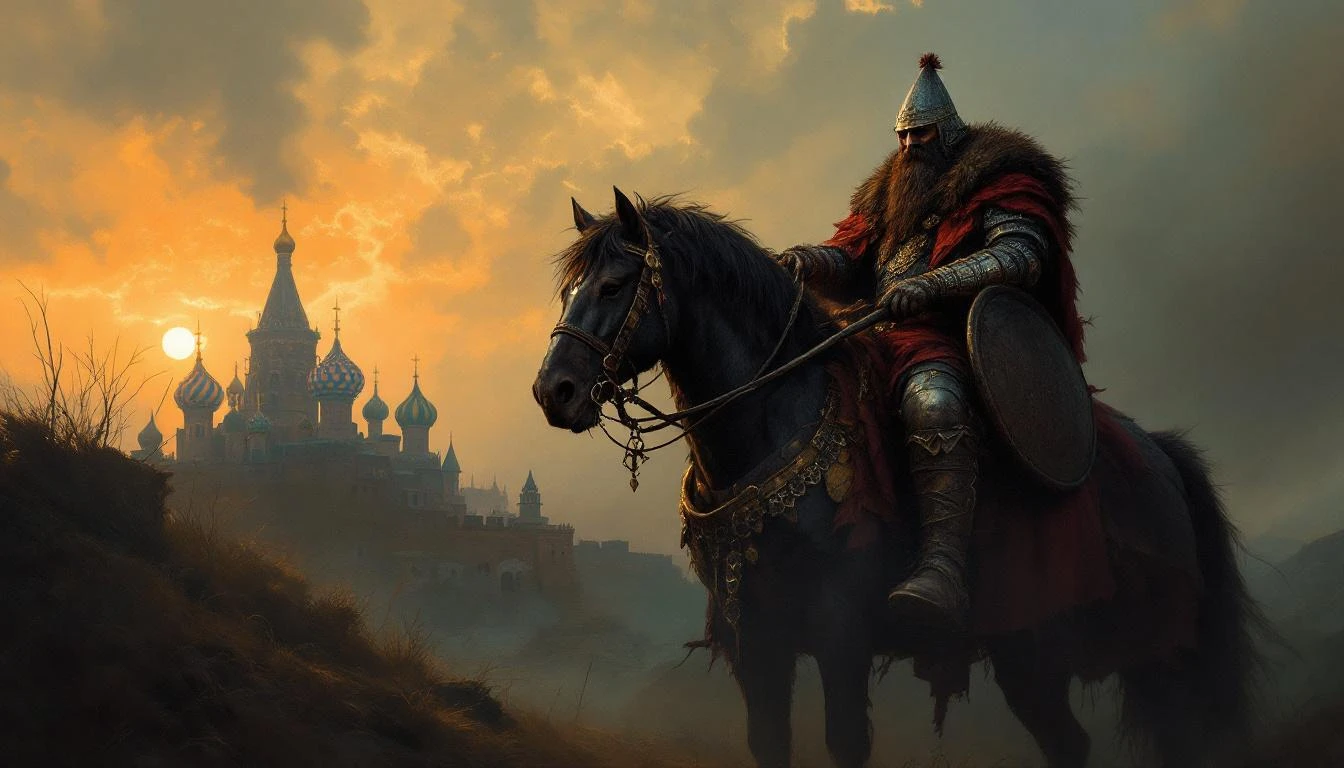
A prince rides across the steppe with his entire druzhina — his personal warband, the best warriors in his realm, armed and armored and mounted on warhorses. They ride for three days across the flat earth, and for all three days they can hear a sound in the distance: the scrape of a plow cutting through soil, the crack of tree stumps being ripped from the ground, the low song of a man working.
On the third day, they finally reach the source of the sound. They find a peasant. He is plowing a field. His plow is enormous — the blade is made of damascene steel, the handles are of maple wood. The furrows he cuts are so deep that a mounted man on horseback disappears into them. He pulls stumps from the earth like weeds, flicking boulders aside the way a man might brush crumbs from a table. He is not straining. He is not sweating. He is singing.
The prince and his entire warband cannot lift the peasant's plow.
This is Mikula Selyaninovich. Selyaninovich means "son of a villager," syn selyanina — the patronymic of the lowest social class, built into his name like a declaration of identity. He is the peasant-bogatyr, the agricultural hero, the man whose strength comes not from magic swords or divine heritage or the favor of princes but from the earth itself. And the byliny that tell his story are not subtle about what they mean: the farmer is mightier than the warrior. The plow is heavier than the sword. The earth obeys the man who works it, not the man who rides across it waving a banner.
The Bylina of Volga and Mikula
The primary Mikula bylina — the one collected most frequently and performed most widely — describes his encounter with Prince Volga Svyatoslavich, the shapeshifting sorcerer-warrior who is among the most formidable figures in the bogatyr tradition.
Volga is riding with his druzhina of thirty warriors — young, fierce, confident in their collective strength. They are on their way to collect tribute from three cities that have been granted to Volga by Prince Vladimir. It is a military expedition dressed in the language of tax collection: thirty armed men riding to extract wealth from towns that may or may not want to pay.
As they ride, they hear the sound of plowing. A peasant is working a field somewhere ahead. They ride toward the sound for one day. They do not reach it. They ride for two days. Still the sound is ahead of them. On the third day — three, always three in the byliny — they finally see the plowman.
The peasant is Mikula. He plows with a mare rather than an ox, and the mare is small and shaggy, nothing like a warhorse. His clothes are ordinary — a peasant's kaftan, bast shoes. His hat is of no distinction. There is nothing about his appearance that suggests he is anything other than what he is: a farmer working his field.
But the plow. The plow is different. It gleams. The blade is damascene steel — the finest metalwork in the medieval world, a material associated with the forging of great weapons. The handles are carved maple. The plow is a masterwork, an instrument of beauty and power, and it cuts through the earth as if the earth were welcoming it.
Mikula plowed and plowed, and he turned the stumps of oak out of the earth with his plow, and the stones from under the stumps he cast aside, and his little mare walked lightly, and the plow sang through the earth.
Volga watches for a while and then invites Mikula to come with him — partly out of admiration, partly because the byliny are honest about power dynamics, and a prince who sees a man that strong wants that man on his side. Mikula agrees. He unhitches his mare and they ride together.
But Mikula asks Volga's men to do him a favor first: pull his plow from the earth and put it behind a bush, so nobody steals it while he is gone.
Volga sends one warrior. The warrior grabs the plow with both hands and pulls. It does not move. He plants his feet and heaves. Nothing. Volga sends five warriors. They strain, they grunt, they pull together. The plow sits in the earth as if it were rooted there.
Volga sends his entire druzhina — all thirty warriors, the best fighting men in his domain, pulling together with ropes and hooks and every ounce of strength thirty armed men can produce.
The plow does not budge.
Mikula walks over, takes the plow in one hand, lifts it from the furrow, and tosses it behind the bush.
The Earth Loves Mikula
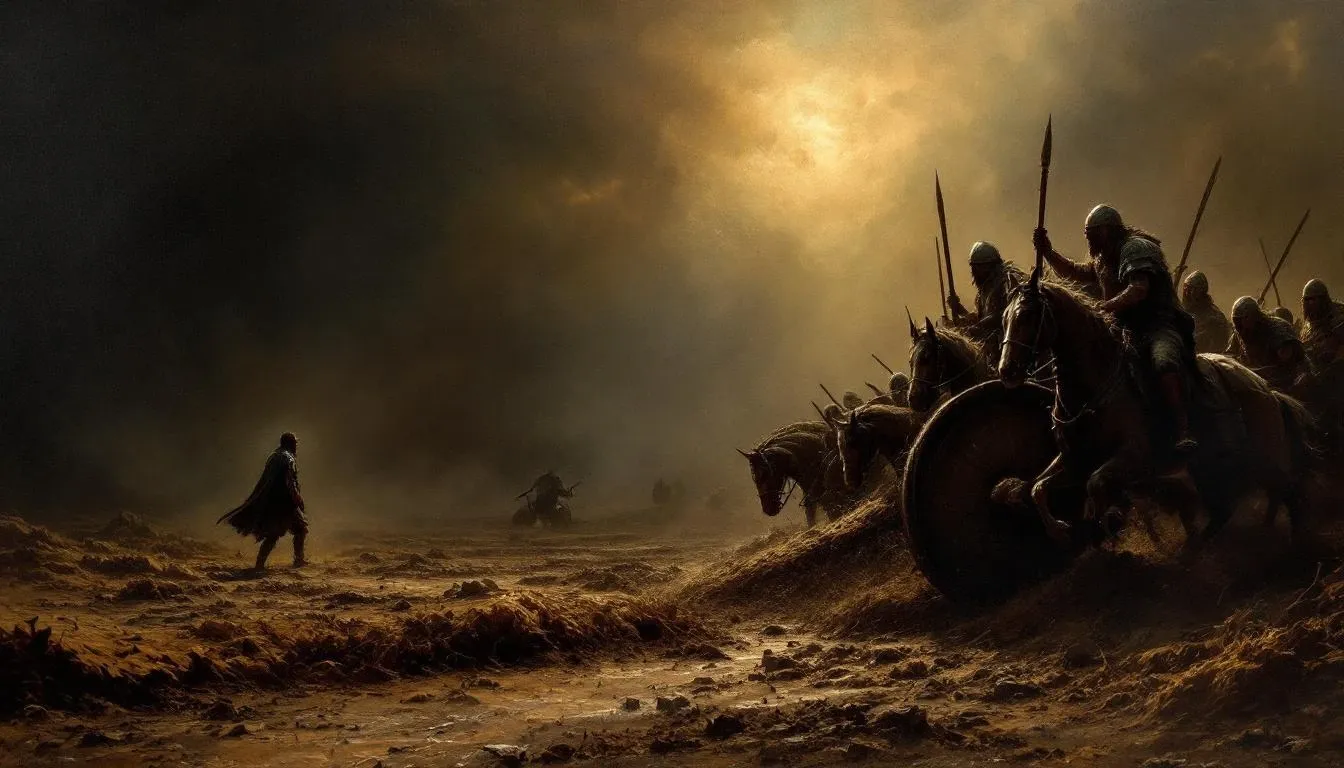
The explanation the bylina gives for Mikula's strength is not magic, not divine favor, not a special heritage. It is simpler and more profound than any of those: Mother Earth loves Mikula.
The phrase in the byliny is explicit. When Volga asks how Mikula can be so strong — stronger than thirty warriors, stronger than a prince and his warband combined — the answer comes not from Mikula but from the narrative itself: Mat Syra Zemlya — Mother Moist Earth — favors the plowman over the warrior, the man who feeds her over the man who rides across her, the worker over the conqueror.
This is a statement of ideology embedded in mythological language. The byliny singers — themselves peasants, or performers who served peasant audiences — were making a claim about the nature of legitimate power. The prince has his druzhina, his swords, his political authority. The peasant has the earth. And the earth is stronger.
The connection between Mikula and the personified earth runs deeper than a single bylina. In East Slavic folk belief, Mat Syra Zemlya — Mother Moist Earth — was one of the most persistent and deeply revered supernatural concepts, surviving long after the named gods had been forgotten. People swore oaths upon the earth. They ate handfuls of soil to seal promises. They pressed their ears to the ground to hear the truth. The earth was not a metaphor for these communities. It was a person — a mother, a living being who nurtured those who treated her well and punished those who abused her.
Mikula is the human expression of that relationship. He is what it looks like when the earth decides to love someone back. His strength is not his own. It is the earth's strength, channeled through a man who has earned it by doing the only thing the earth respects: working it. Tilling it. Feeding it with labor and sweat and the honest repetition of the agricultural cycle.
The Mare and the Warhorse
One of the bylina's most pointed details is the comparison between Mikula's mare and Volga's horses.
Volga rides a warhorse — a powerful animal, bred for battle, impressive in stature and speed. His druzhina rides similar mounts. These are military horses, symbols of aristocratic power, worth more than a peasant's annual income. When the combined party rides together, the warhorses set the pace, and Volga assumes — reasonably — that his horses are faster.
They are not. Mikula's mare — the small, shaggy, unremarkable peasant's mare — outruns every warhorse in Volga's party. The druzhina pushes their horses to a gallop. Mikula's mare trots. The galloping warhorses cannot keep up with the trotting mare.
This is comedy with a blade in it. The bylina is not subtle. The prince's warhorses, symbols of military power and noble wealth, lose a race to a farmer's nag. The expensive, curated, aristocratic display of equine excellence is outperformed by a working animal that has never seen a battlefield. The mare, like Mikula, draws her power from the earth. The warhorses, like Volga's warriors, draw their power from the social hierarchy. And the earth wins.
Volga, to his credit, asks Mikula where such a mare can be bought. Mikula tells him: five hundred rubles as a colt, and now she is worth no price at all, because there is no price for a horse the earth loves. The answer is both literal and metaphorical. You cannot buy what the earth gives. You can only earn it.
Nastasya Mikulishna: The Warrior Daughter
Mikula Selyaninovich does not exist in the byliny in isolation. He has daughters, and the most famous of them — Nastasya Mikulishna — became one of the most remarkable female characters in all of Russian oral poetry.
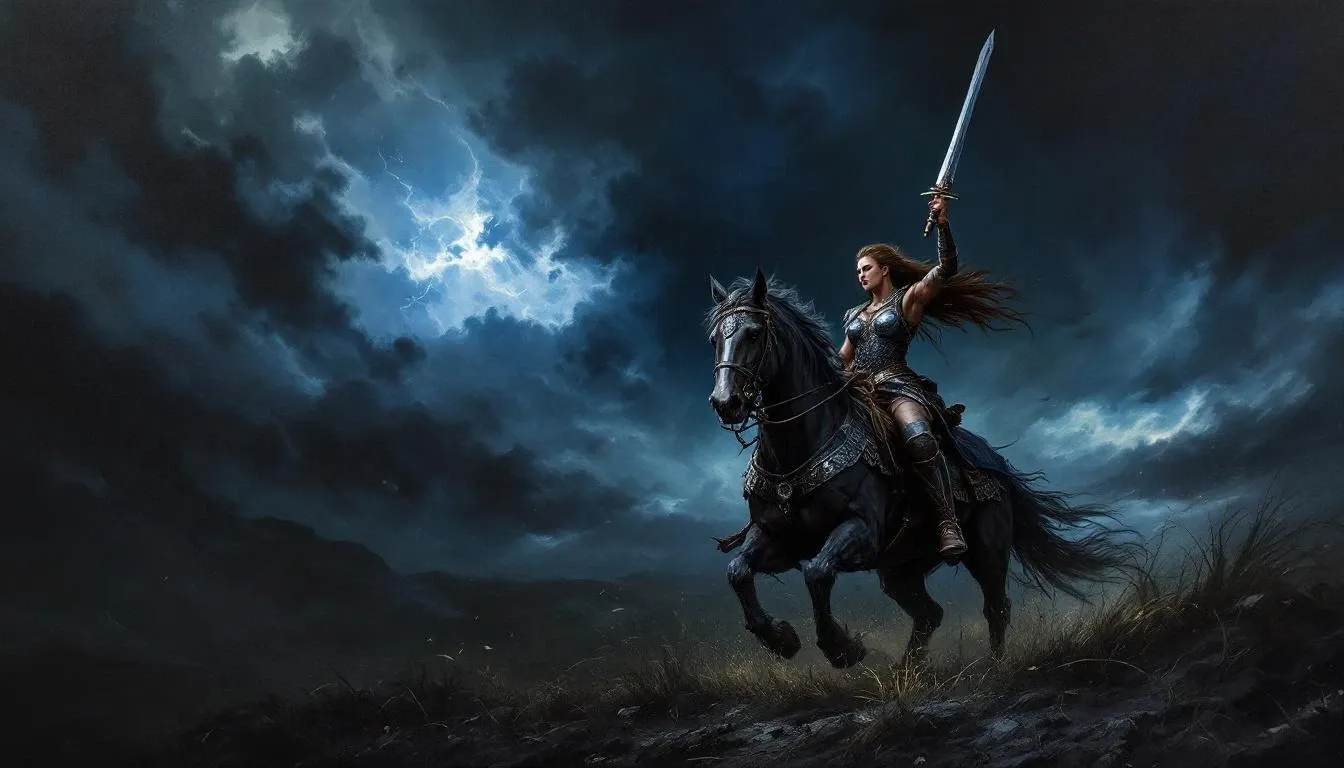
Nastasya is a polyenitsa — a warrior woman, a female bogatyr. The byliny describe her as physically powerful, skilled in combat, and utterly unintimidated by the male heroes she encounters. Her most famous appearance is in the bylina of Dobrynya Nikitich and the polyenitsa, where Dobrynya encounters Nastasya in the open field.
Dobrynya — one of the three great bogatyrs, the nobleman and dragon-slayer — sees a figure riding in the distance and, mistaking it for a warrior, attacks. He strikes the figure with his mace. The figure does not notice. He strikes again. Still nothing. On the third blow, Nastasya Mikulishna finally turns around, picks up Dobrynya with one hand, and stuffs him in her pocket.
The echo of Svyatogor picking up Ilya Muromets is deliberate and devastating. Dobrynya, the noble bogatyr, is treated by a farmer's daughter the same way the primordial giant treated the greatest human hero. The hierarchy is explicit: Mikula's bloodline is stronger than the aristocracy. The farmer's daughter pockets the nobleman's son.
Nastasya eventually takes Dobrynya out of her pocket, examines him, and — finding him handsome — decides to marry him. In some versions she gives Dobrynya a choice: marry me or die. Dobrynya, wisely, chooses marriage. In other versions the proposal is more mutual, though the power imbalance is never fully resolved. Nastasya Mikulishna enters the bylina cycle as Dobrynya's wife, and her father's blood ensures that the peasant-power of Mikula's line flows into the aristocratic world of the bogatyrs.
This is the byliny doing what they do best: using marriage as a vehicle for social commentary. The nobleman marries the farmer's daughter not because he chooses to but because she is stronger than he is. The alliance between warrior and peasant is not voluntary. It is dictated by the simple fact that the peasant class — represented by Mikula and his daughters — possesses a power the warrior class cannot match.
The Sack of Earthly Burden
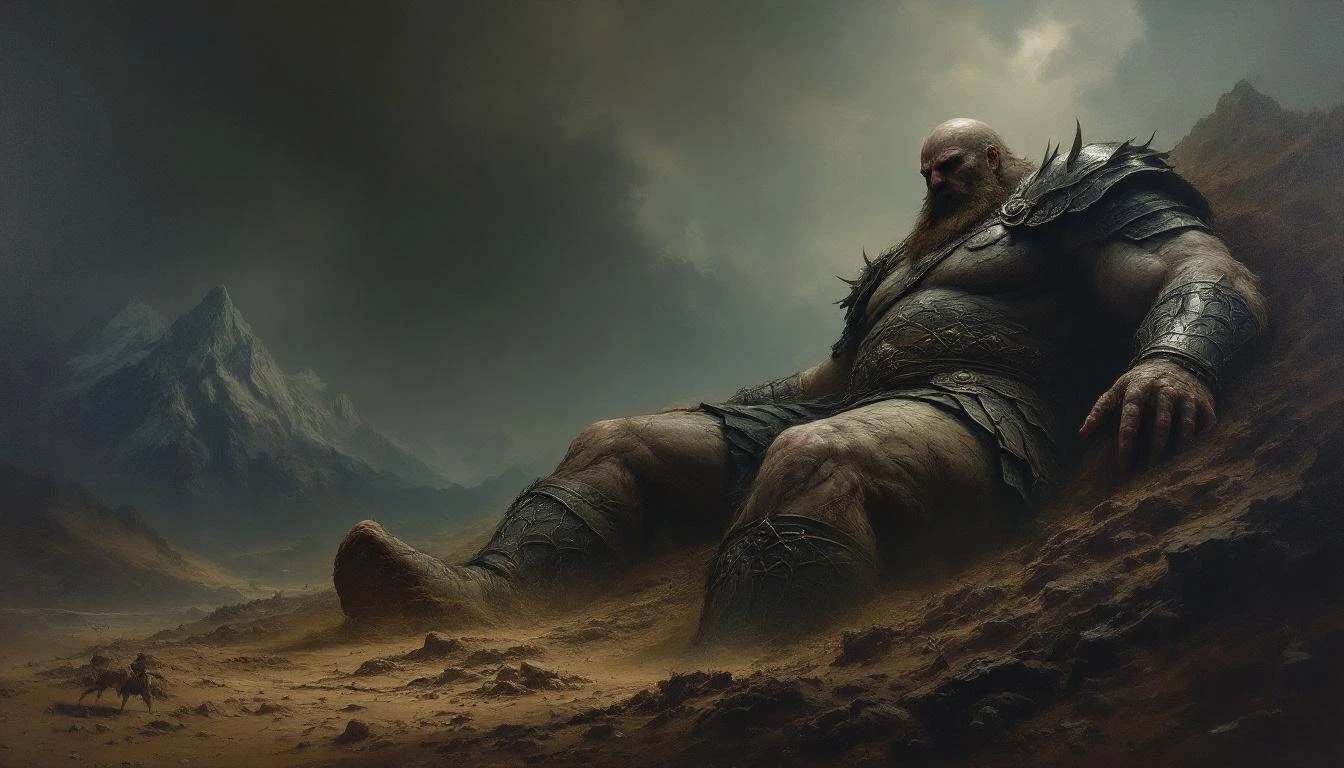
In some versions of the Mikula bylina, the peasant carries a bag — or owns a bag, or knows of a bag — that contains the tyaga zemnaya, the weight of the earth. This is the same bag that appears in the Svyatogor bylina, the one the giant cannot lift before sinking into the ground.
The connection between the two byliny is not accidental. Svyatogor and Mikula are inverted mirrors of each other. Svyatogor is the giant whose strength has no purpose — power without function, might without context. Mikula is the peasant whose strength is entirely purposeful — power in service of the earth, might directed at the plow. Svyatogor tries to lift the earthly burden and is destroyed by it. Mikula carries the earthly burden as part of his daily work, because carrying it is his daily work.
The bag is a test. It tests not how much strength you have but what your strength is for. Svyatogor's strength is for nothing — it exists in a vacuum, impressive and directionless. The bag swallows him. Mikula's strength is for the earth — it exists in relationship, directed and reciprocal. The bag yields to him.
This is the same moral the byliny deliver through the plow, the mare, and Nastasya's pocket. Strength that serves is true strength. Strength that exists for its own sake is a trap. The warrior who rides across the earth with an army cannot lift a farmer's plow. The farmer who works the earth alone can lift anything, because the earth is on his side.
The Political Mythology of the Plow
Mikula Selyaninovich is the most explicitly political figure in the bylina tradition. His story is not about monsters or magic or the defense of the realm. It is about class.
The byliny were performed for peasant audiences. The singers — skaziteli, professional oral poets who traveled between villages — knew their listeners. The people gathered around winter fires in the Russian North were not princes or boyars. They were farmers, fishermen, woodcutters. When the skazitel sang of Mikula — the peasant whose strength exceeded the prince's entire warband — the audience understood the message in their bones.
You are the strong ones. You are the ones the earth loves. The prince rides. You plow. And the plow is heavier than the prince's sword.
This was not revolution. The byliny are not revolutionary texts. They do not call for the overthrow of the aristocracy. Mikula does not seize Volga's throne or reject his authority. He rides with the prince. He cooperates. He is courteous. But he is also, unmistakably, superior — and the bylina makes no effort to disguise this. The prince cannot lift the plow. The prince's warriors cannot lift the plow. The prince's warhorses cannot outrun the mare. Every measure of aristocratic power is weighed against peasant power and found wanting.
This was the peasant's mythology of themselves. It told them that their labor was not merely necessary but sacred — that the relationship between the plowman and the earth was the fundamental bond on which everything else was built. Princes could come and go. Cities could rise and fall. Armies could march and armies could retreat. But the man with the plow — the man who bent his back to the earth every season, who broke the soil and planted the seed and waited for the rain — he was the one the earth itself recognized. He was the one who could not be moved.
What Mikula Carries Forward
Mikula Selyaninovich is not the most famous bogatyr. He does not have Ilya's dramatic arc of paralysis and redemption. He does not have Dobrynya's dragon fights or Alyosha's trickster wit. He appears in relatively few byliny, and his stories lack the sprawling adventure plots that made the other heroes popular across centuries of oral performance.
But he may be the most important. Because Mikula is the byliny's answer to the question that no warrior epic can avoid: who feeds the heroes? Who grows the grain that becomes the bread in the prince's hall? Who raises the horses the bogatyrs ride? Who works the land the bogatyrs defend?
The answer is the peasant. And the byliny, through Mikula, insist that the peasant is not merely the support system for the heroic world. He is its foundation. His strength is greater. His relationship with the earth is deeper. His work is the work that actually matters — not because farming is more glamorous than fighting, but because without the plow, there is nothing to fight for.
Mikula walks to his plow, lifts it in one hand, and drops it into the furrow. The blade sings through the earth. The stumps crack and the stones fly and the dark soil opens like a book. Behind him, a prince watches with his mouth open, surrounded by thirty warriors who together cannot do what this one farmer does alone.
The earth loves Mikula. The byliny tell you why. It is not complicated. He does the work.