Every civilization has a mother. The Greeks had Gaia. The Norse had Jord. The Vedic Indians had Prithvi. The Romans had Tellus Mater. In each case, the mother was the same thing: the ground. Not a woman who represented the ground, or a goddess who ruled over it, but the ground itself — the actual dirt, the actual soil, the actual planet underfoot, understood as alive, aware, and female.
The Slavs had her too. They called her Mat Syra Zemlya — Mother Moist Earth. Three words. Mat — mother. Syra — moist, raw, damp. Zemlya — earth, ground, land. She was not carved in wood or set on a hilltop. She had no temple, no priesthood, no feast day in the calendar. She did not need these things. She was everywhere. You stood on her body every moment of your life. You ate what grew from her flesh. When you died, you were placed inside her, and she held you.
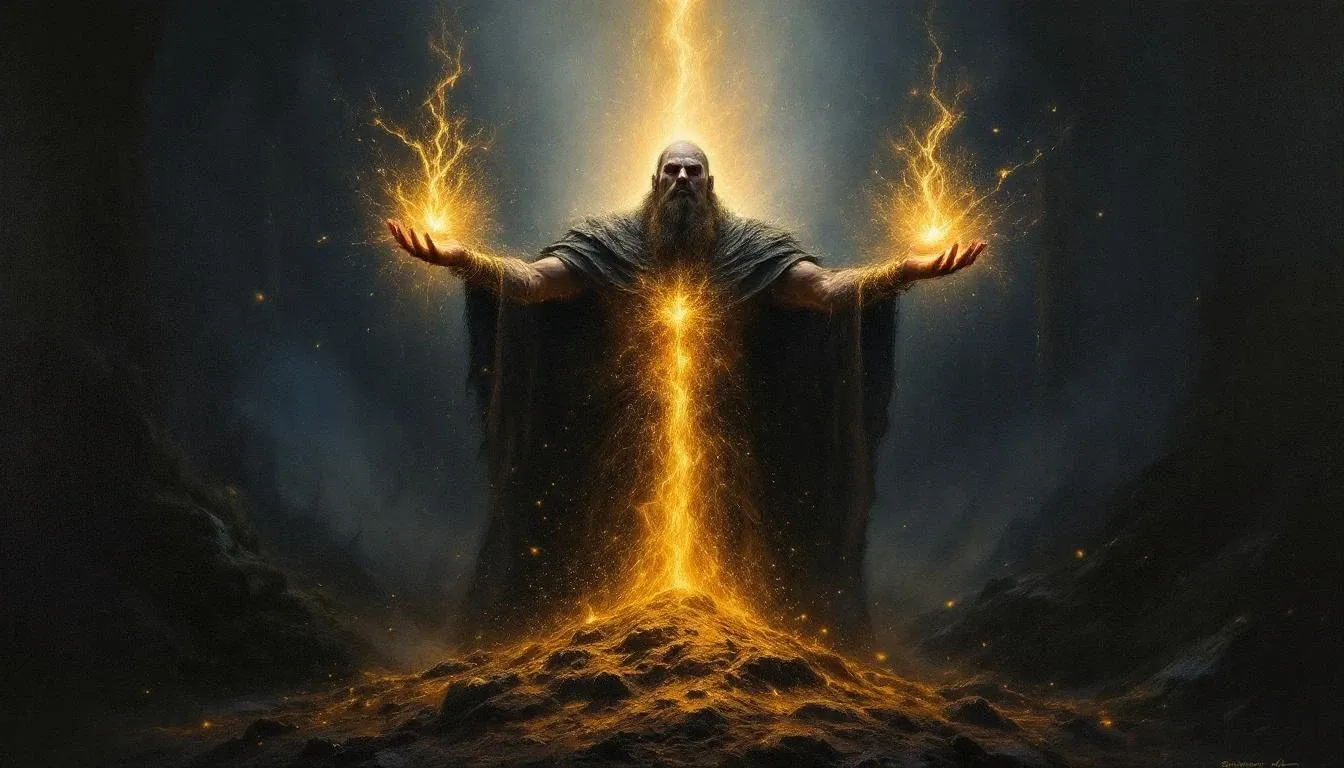
Mat Syra Zemlya is not the most dramatic figure in Slavic mythology. She has no weapon, no animal companion, no epic battle with a rival god. She does not ride across the sky in a chariot or hurl lightning at her enemies. She does something much more fundamental. She exists. She endures. She is the surface on which everything else happens.
And in the Slavic world, she was not a metaphor. She was a person — a vast, slow, attentive person who could be spoken to, sworn upon, asked for help, and deeply, permanently offended.
The Moist Epithet
The word syra — moist, raw, damp — is not decorative. It is definitional. Mother Earth is not dry earth, not dead earth, not barren earth. She is moist earth. The distinction matters enormously in the agricultural and spiritual logic of the Slavic world.
Moist earth is fertile earth. Moist earth is the soil in spring, after the snowmelt, when the ground softens and accepts the seed. Moist earth is the opposite of drought, of sterility, of the cracked hardpan that produces nothing. When the Slavs called their earth-mother "moist," they were not describing a random physical quality. They were naming her essential characteristic — the one thing that made her alive rather than dead, productive rather than barren, a mother rather than a grave.
The moisture is also sacred in a more visceral sense. In Slavic folk belief, the earth sweats. She breathes. She drinks the rain and holds it in her body the way a living creature holds blood. The moisture is her vitality — the sign that she is awake, functioning, nourishing. Dry earth is sick earth. Frozen earth is sleeping earth. Moist earth is earth at the peak of her powers, and this is the state in which she is addressed by her full name.
The Earth-Oath
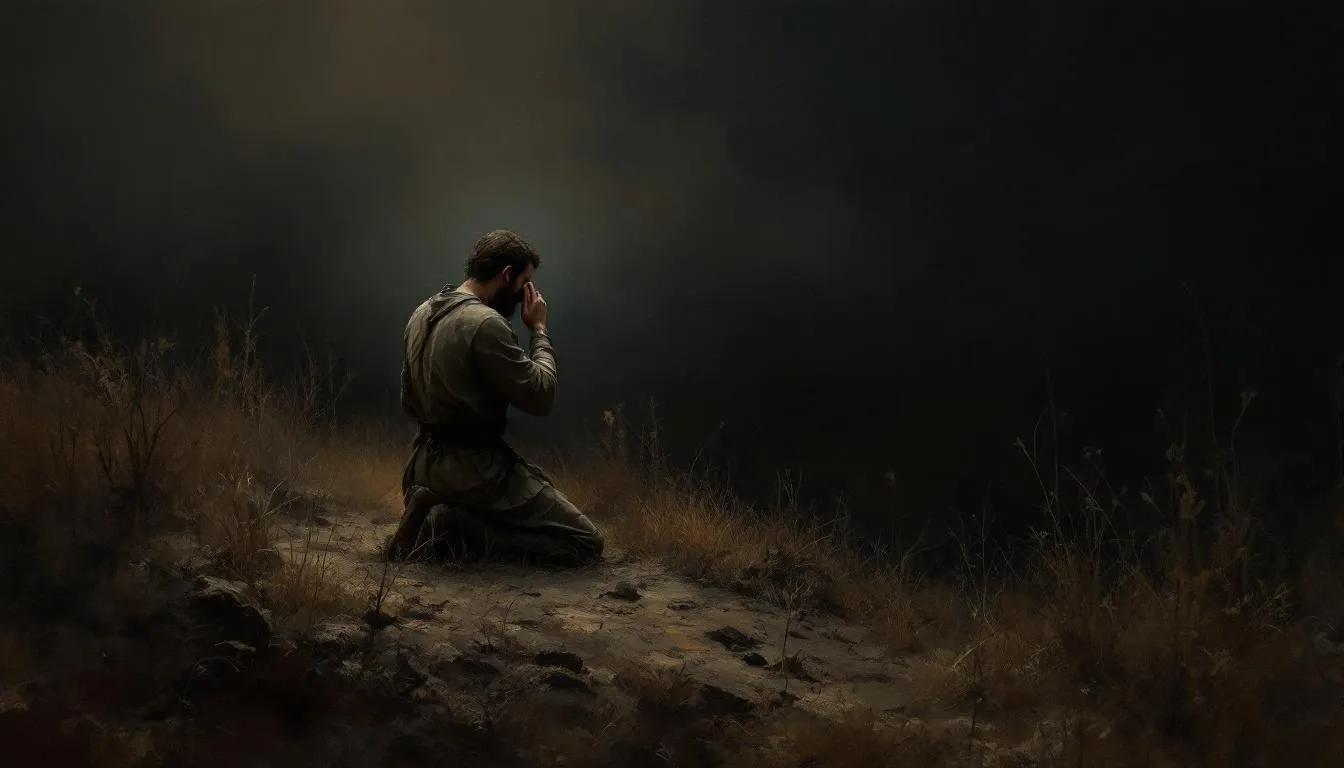
The most striking evidence for the Slavs' relationship with Mother Moist Earth is the practice of the earth-oath — the act of swearing by the ground itself, holding a piece of dirt in your hand or placing it on your head, and making your promise to the earth.
This was not a casual gesture. The earth-oath was the most binding oath a Slavic person could take. More binding than an oath by the gods. More binding than an oath on a weapon or by the sun. When you swore by the earth, you were asking the ground to witness your words and to punish you if you lied. And the punishment was specific and terrifying: the earth would refuse to hold you. She would reject your body after death. You would not decompose normally. You would not return to the soil. You would be spat out, expelled, left to rot above ground — a corpse that the earth herself found too foul to accept.
The practice is documented in Russian, Ukrainian, Serbian, and Bulgarian folk traditions. In Russian peasant law — the customary legal system that operated alongside and beneath the formal law of the state — an earth-oath could settle disputes that no other evidence could resolve. A man accused of moving a boundary marker could clear himself by walking the boundary with a clod of earth on his head. If he lied — if the boundary was wrong — the earth on his head would know, and the consequences would follow.
The act of eating earth was an extension of this practice. To settle the most serious disputes, a person might eat a pinch of soil — literally take the earth into their body as a witness and judge. The earth inside you knew the truth. If you had lied, the earth inside you would destroy you from within.
The earth was the supreme witness. No oath was more terrible than the oath taken on the earth — to place a clod of earth on one's head and swear was to call upon a judge who could not be deceived and whose punishment could not be escaped. The earth knew. The earth remembered. And the earth held the body of the perjurer in special contempt, refusing to accept it in death, so that the liar's corpse would be cast out and never find rest.
The Earth That Rejects
The concept of the earth rejecting a body is one of the most powerful ideas in Slavic folk theology, and it connects directly to Mat Syra Zemlya's status as a moral being.
In Russian and Ukrainian folk tradition, certain categories of sinners were believed to be rejected by the earth after death. Their bodies would not decompose. They would swell, blacken, and be found intact months or years after burial — not mummified but preserved in a state of horrible freshness, as though the ground had refused to process them. These uncorrupted bodies were objects of terror: they were proof that the earth herself had judged the dead person and found them unacceptable.
The categories varied by region but typically included: sorcerers, heretics, oath-breakers, people who died under a parental curse, and — most relevantly — those who had sinned against the earth itself. A person who had spilled blood on the ground, or who had struck the earth in rage, or who had violated the taboos surrounding plowing and planting, might find themselves rejected in death by the mother they had offended in life.
This belief is the theological backbone of the Slavic vampire tradition. The upyr' — the Slavic walking dead, the restless corpse that rises from its grave to feed on the living — was, in many folk accounts, simply a person whose body the earth had refused. The vampire is not a supernatural monster in the Western Gothic sense. The vampire is an agricultural failure — a body that should have decomposed and returned to the soil but did not, because the soil would not have it. The earth's rejection creates the undead.
Mat Syra Zemlya, in this framework, is not merely a fertility goddess. She is a judge. She decides who returns to her body and who does not. She holds the righteous and expels the wicked. She is the final court of appeal, the authority whose verdict is written in the flesh of the dead.
Mokosh and the Question of Overlap
The relationship between Mat Syra Zemlya and Mokosh — the goddess who appears in Vladimir's 980 AD pantheon and who is often identified as the Slavic earth-mother — is complicated and probably irresolvable.
Mokosh is a named goddess with a specific cult. She appears in the Primary Chronicle's list of Vladimir's gods. She is associated with spinning, weaving, women's fate, moisture, and the earth. After Christianization, her functions were absorbed by Saint Paraskeva (Pyatnitsa) — a pattern that confirms she was a real object of organized worship.
Mat Syra Zemlya, by contrast, is not a goddess in the same sense. She has no idol, no priest, no temple. She is not worshipped so much as acknowledged — spoken to, sworn upon, asked for forgiveness, treated as a living presence in daily life rather than a deity to be approached through formal ritual. She is older than organized religion. She predates the pantheons, the temples, the priesthoods. She is the ground itself, understood as alive, and that understanding existed before anyone thought to carve a god from oak and put it on a hilltop.
The scholarly consensus, to the degree that one exists, is that Mat Syra Zemlya represents the archaic, pre-theological stratum of Slavic earth-veneration — the raw belief that the ground is alive and aware, which existed before and beneath the organized cults of named deities. Mokosh represents the crystallization of this belief into a specific divine figure with a specific cult — the point at which "the earth is alive" became "the earth-goddess's name is Mokosh and here is her idol."
Both can be true simultaneously. The peasant who prayed to Mokosh through Saint Paraskeva on Fridays could also swear by Mat Syra Zemlya when settling a land dispute. One was religion. The other was reality. They occupied different registers of belief, and they coexisted without contradiction because they were not answering the same question.
Ilya Muromets and the Strength of the Earth
The connection between Mat Syra Zemlya and the bylina tradition — the Russian oral epic poetry — appears most vividly in the story of Ilya Muromets, the greatest of the bogatyrs, the warrior-heroes of Slavic legend.
Ilya, according to the byliny, was paralyzed for the first thirty-three years of his life — unable to walk, unable to stand, confined to the stove-bench in his father's house. He was healed by wandering holy men (kaliki perekhozhie) who gave him a drink that restored his strength. But the strength they gave him was not random. It was the strength of the earth.
In several variants of the tale, Ilya's power is explicitly connected to the ground. He draws strength from physical contact with the soil. When he is weakened in battle, he touches the earth and his power returns. This is not a metaphor. It is a theological statement: the earth is the source of the hero's physical force, and that force is available to anyone whom the earth chooses to empower.
The parallel to the Greek myth of Antaeus — the giant who was invincible as long as he touched the ground and whom Hercules could only defeat by lifting him into the air — is direct and may reflect a shared Indo-European concept. The earth gives strength to those who maintain contact with her. Separation from the earth is weakness. Contact is power.
For Ilya Muromets, this connection goes deeper. He is a peasant's son — not a prince, not a nobleman, not a product of the ruling class. He is a man of the soil, literally. His strength comes not from lineage or divine favor in the aristocratic sense but from the earth that his family works. Mat Syra Zemlya gives her power to the people who tend her, and Ilya is her champion — the bogatyr of the black earth, the warrior whose body is an extension of the ground he walks on.
Afanasyev and the Scholarly Tradition
The most important nineteenth-century treatment of Mat Syra Zemlya appears in Alexander Afanasyev's monumental Poeticheskiye vozzreniya slavyan na prirodu (The Slavs' Poetic Views of Nature), published in three volumes between 1865 and 1869. Afanasyev, a contemporary of the Brothers Grimm and a collector of Russian fairy tales, devoted extensive attention to the earth-mother concept, tracing its manifestations across Russian folk practice, proverb, legal custom, and oral literature.
Afanasyev argued that Mat Syra Zemlya was the single most fundamental figure in Slavic folk religion — more basic than Perun, more persistent than Veles, more universal than any named deity. His reasoning was simple: gods come and go. Perun was erected on a hilltop and thrown into a river within eight years. Temples burn. Idols rot. But the earth does not change. It does not need to be carved or named or placed on a hill. It is already there, under every person's feet, every day of their life. A belief system built on the earth itself is nearly indestructible because the object of belief is inescapable.
Afanasyev also documented the range of folk practices associated with the earth-mother: the earth-oath, the eating of soil, the taboos on striking or insulting the ground, the practice of confessing sins to the earth (literally lying face-down and speaking into the soil), and the tradition of asking the earth's permission before building, digging, or plowing. These practices, he argued, were not quaint peasant customs. They were the fragmentary remnants of a theological system in which the earth was not merely sacred but sentient — a being who listened, judged, remembered, and responded.
Confession to the Earth
Among the most extraordinary practices documented in Russian ethnography is the confession to the earth — the act of lying face-down on the ground and speaking your sins into the soil.
This practice existed alongside — and sometimes in competition with — Christian confession to a priest. In some communities, confession to the earth was performed when no priest was available, or when the sin was too shameful to speak aloud to another person. The earth, being everywhere and already knowing everything, did not need to be told. The confession was not for her information. It was for the sinner's relief — the act of speaking the truth into the body of the one being that could not be shocked, could not gossip, and could not refuse to listen.
In the Russian tradition of the stranniki — the wandering pilgrims who walked from monastery to monastery across the vast distances of the Russian countryside — confession to the earth was sometimes the only form of confession available. Alone on the steppe, days from the nearest church, a strannik would lie down on the bare ground, press his face to the soil, and speak. The earth heard. The earth always heard.
The theological implications are profound. If the earth hears confessions, she is not merely a living surface. She is a moral authority — a being to whom you owe the truth, a witness whose judgment is as real as any priest's absolution. The practice of earth-confession survived into the twentieth century in isolated rural communities, and its persistence suggests something about the depth of the belief: people confessed to the earth because, at some level they could not articulate in theological language, they trusted her more than they trusted any human intermediary.
The Sacred Groves and the Unplowed Earth
Mat Syra Zemlya's most visible manifestation in the landscape was the sacred grove — the patches of uncut forest that dotted the Slavic countryside and that were treated as inviolable. These groves were not dedicated to specific gods (though some were). They were places where the earth herself was untouched — where no axe had fallen, no plow had cut, no human activity had disturbed the ground's primordial state.
The logic was direct: if the earth is alive, then there must be places where she is allowed to exist in her natural form, uncut and unworked. The sacred grove was the earth at rest — the earth as she was before humans arrived, the earth as she would be after humans were gone. To enter a sacred grove was to stand on ground that had never been wounded. To cut a tree in a sacred grove was to assault the earth's body in its most vulnerable, most sacred condition.
The Russian word zapovednik — which today means "nature reserve" — derives from zapoved', meaning "prohibition" or "commandment." A zapovednik was originally a place where the earth's commandment was in effect: do not cut, do not dig, do not disturb. The modern nature reserve, with its legal protections and its boundaries, is the secular descendant of the sacred grove — a space where the earth is left alone because something (once a goddess, now a law) says it must be.
The Ground You Stand On
Mat Syra Zemlya did not die. She could not die. She is not a concept that can be abandoned or a god that can be overthrown. She is the physical ground, and the physical ground is still there.
What died was the recognition. The understanding that the earth is a person. The practice of speaking to her, swearing by her, confessing to her, asking her forgiveness before cutting into her body with a plow. The set of customs and beliefs that treated the ground as a conscious, moral, attentive presence — this faded under the pressure of Christianity, modernity, and the mechanization of agriculture that turned the soil from a mother into a resource.
But the echoes persist. The Russian peasant who kissed the earth before a long journey. The Serbian farmer who poured the first water on the ground before drinking. The Ukrainian saying zemlya ne bude terpiaty — "the earth will not endure it" — used to describe a crime so terrible that the ground itself would rebel. These are not metaphors in the casual modern sense. They are the residue of a worldview in which the ground was a being with preferences, limits, and a long memory.
Every other Slavic god can be debated. Did Chernobog exist or was he a Christian invention? Was Rod a supreme creator or a minor ancestral spirit? Was Lada a goddess or a misunderstood song lyric? Scholars argue about these questions because the evidence is fragmentary and ambiguous.
Nobody argues about Mat Syra Zemlya. She is not fragmentary. She is not ambiguous. She is the ground. She is the most documented, most attested, most persistent element of Slavic folk religion because she is the one element that does not require a text to prove she exists. You are standing on her right now.
She is moist, if the season is right. She is listening, if the tradition is true. And she has been here longer than any god, any temple, any scripture, any civilization that has ever tried to name her.
She will be here after the last one forgets.