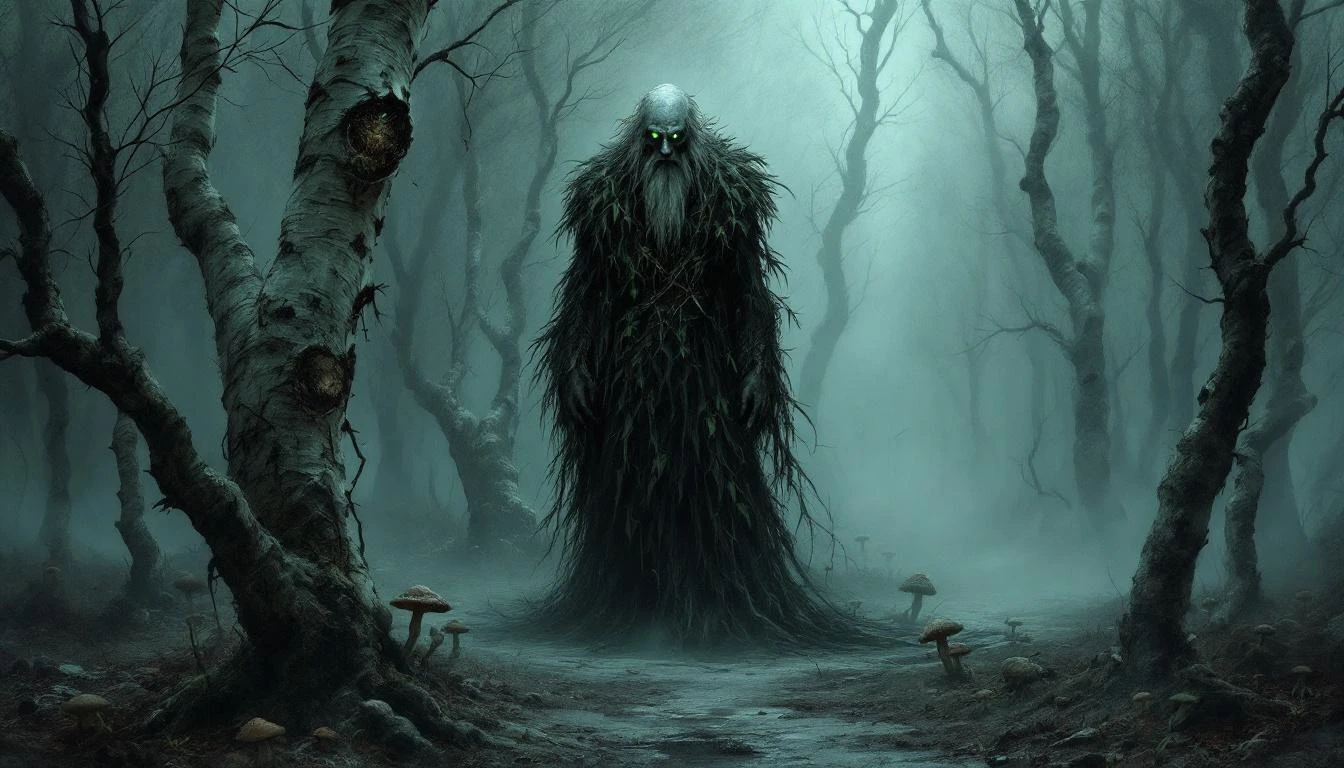
For most of human history, Slavic mythology survived in whispers. Grandmothers warning children about the thing in the woods. Shepherds leaving bread at the forest edge for the spirit who controlled the wolves. Midwives burying stillborn children under thresholds so the dead would protect the living instead of hunting them. None of it was written into scripture. None of it was carved into temple walls. The old Slavic faith left almost no monuments, no canonical texts, no organized priesthood that could have preserved its doctrines. What survived did so through oral tradition — fragile, shifting, and perpetually at risk of vanishing entirely.
Then something unexpected happened. Video games picked up the thread.
Over the past two decades, a growing number of developers — primarily from Poland, Russia, Romania, and Ukraine — have turned to Slavic folklore as source material for interactive worlds. Some of these games treat the mythology with the rigor of ethnographic fieldwork. Others use it as atmospheric wallpaper. The best ones do something that no academic paper or museum exhibit can: they let you walk through the mythology, make decisions within its logic, and feel the weight of beliefs that governed millions of lives for centuries.
This is a survey of the games that matter — the ones that moved Slavic mythology from the margins of cultural memory into the living rooms and hard drives of millions.
The Witcher: The Gateway Drug
No discussion of Slavic mythology in games can begin anywhere else. Andrzej Sapkowski's Witcher novels, and the CD Projekt Red games that adapted them, did more to spread awareness of Slavic folklore than any other cultural product in history. This is not an exaggeration. Before The Witcher 3: Wild Hunt shipped thirty million copies, the average Western gamer could not have named a single creature from East European mythology. After it, the striga, the leshy, the vodyanoy, and the noonwraith became part of the shared vocabulary of popular fantasy.
The games draw from a deep well. The striga — Sapkowski's adaptation of the Polish strzyga, a person born with two souls whose corpse reanimates after death — is reproduced with startling fidelity. The botchling, based on the Polish poroniec (the spirit of an improperly buried stillborn), preserves not just the creature but the cure: naming the dead child, wrapping it in cloth, and burying it beneath the family threshold so it transforms into a protective spirit. The vodyanoy, master of his particular lake or river, retains the folkloric capacity for both alliance and hostility — a water spirit who drowns the disrespectful but cooperates with those who offer proper tribute.
Where the games diverge is revealing. The leshy — called Leshen in the game — becomes a territorial predator with an antlered skull-face borrowed more from modern folk horror and Algonquian wendigo imagery than from any Slavic ethnographic record. The real leshy was a shape-shifting forest guardian who could appear as a peasant, a giant, or a whirlwind, and who could be negotiated with. The kikimora suffers worse: a domestic house spirit in folklore, she becomes a giant arachnid monster in the game, retaining nothing but the name. These distortions are not failures of research. They are deliberate choices driven by the need for combat encounters in an action RPG. You cannot sword-fight a house spirit who tangles your yarn at night.
The result is a mythology delivered in fragments — accurate in some places, invented in others, always filtered through the demands of interactive entertainment. But the fragments stuck. Millions of players who will never read Aleksandr Afanasyev's Poetic Interpretations of Nature by the Slavs now carry some version of the striga and the leshy in their heads. Imperfect transmission is still transmission, and for a mythology that nearly died in silence, any transmission at all is a victory.
Black Book: The Ethnographer's Game
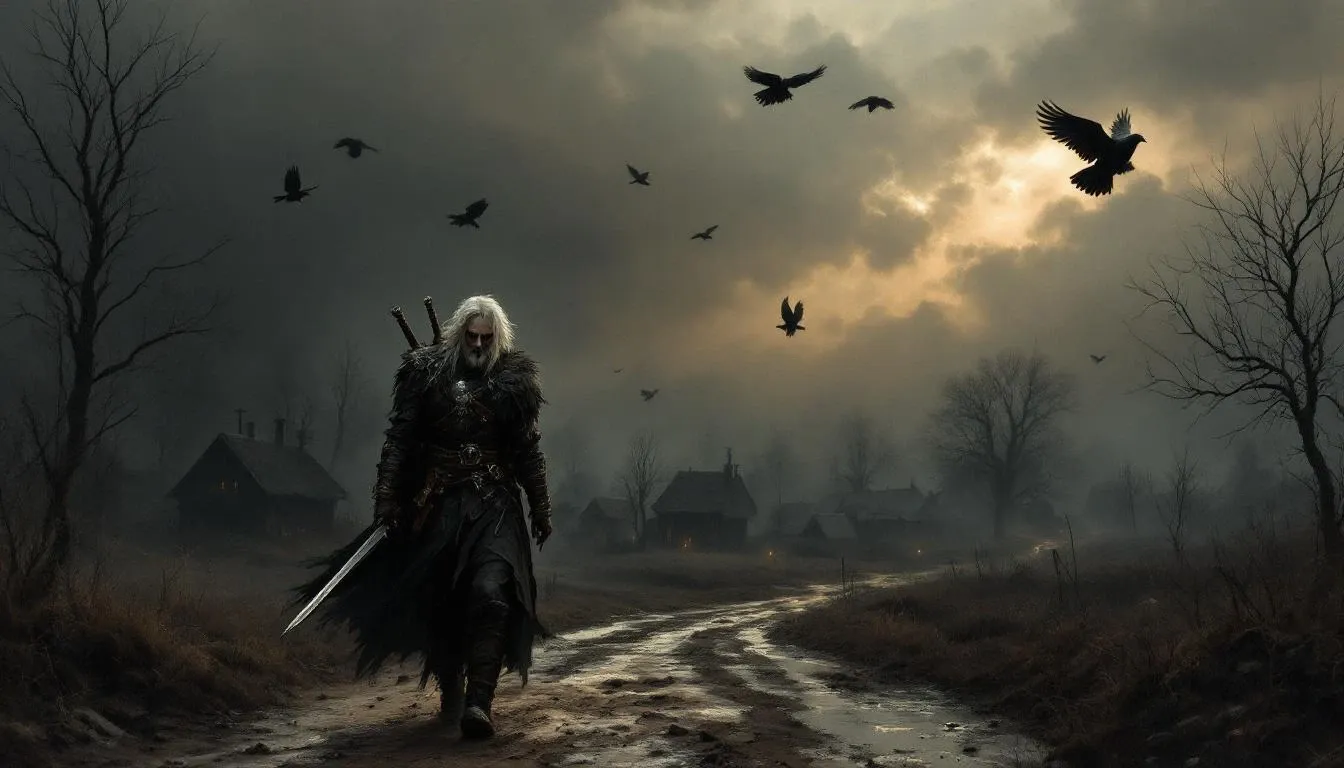
If The Witcher is the blockbuster adaptation, Black Book (2021, Morteshka) is the doctoral thesis. Developed by a small Russian studio from Perm — the very region whose folklore the game depicts — Black Book is built on a foundation of genuine ethnographic research. The developers worked alongside scholars of Russian and Komi folk belief to ensure that the mythology was not merely atmospheric but structurally accurate.
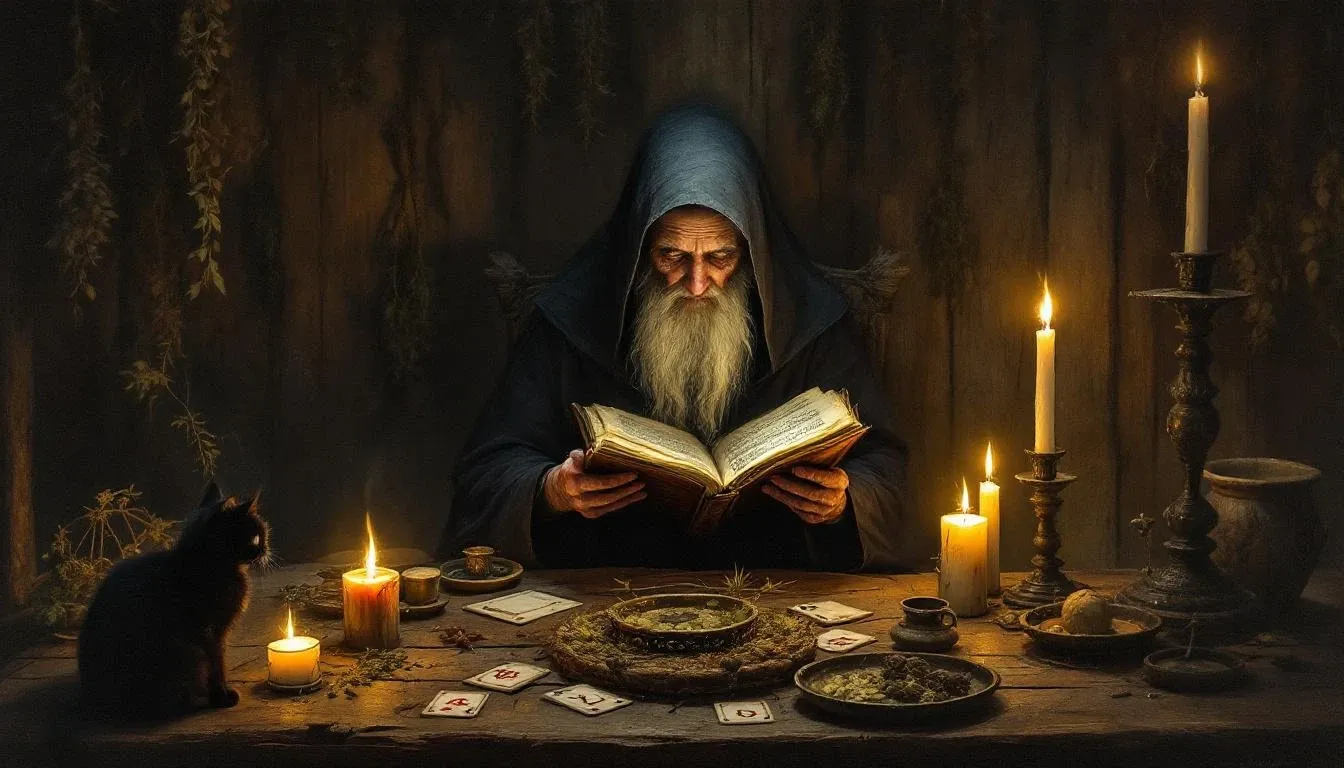
The game is set in nineteenth-century rural Russia, and you play as Vasilisa, a young woman who becomes a koldun'ya (sorceress) to rescue the soul of her dead beloved. The premise itself comes from the Slavic magical tradition: the Black Book of the title is a grimoire that grants its owner power over demons in exchange for their soul. Open all seven seals, and you can command the forces of the spirit world. Fail, and the demons you have bound will turn on you.
What sets Black Book apart from virtually every other game on this list is its treatment of the spirit world as a system — not a gallery of monsters to be slaughtered, but an interconnected ecology of beings with rules, hierarchies, and social contracts. The domovoy protects the household but demands respect and offerings. The chort (a low-ranking demon, essentially the Slavic devil's foot soldier) can be bound and commanded if you know the right words. The baba-yaga is not a boss fight but a figure of terrifying ambiguity — she may help you, devour you, or test you, depending on how you approach her.
The card-based combat system reinforces this. Your "cards" are zagovory — folk incantations, actual verbal charms drawn from recorded ethnographic material. You are not swinging a sword. You are reciting words of power that peasants genuinely believed could bind spirits, heal wounds, and curse enemies. The game even includes an encyclopedia of Slavic folk beliefs that expands as you play, functioning as a genuine educational resource.
"We wanted players to feel the weight of these beliefs. When a peasant comes to you and says a demon is tormenting his cows, we wanted the player to have to actually diagnose which kind of demon it is — a domovoy who has been offended, a kikimora who has moved in, or a chort sent by a rival sorcerer. In real folk belief, the treatment was different for each one. We kept that."
The result is the most faithful adaptation of Slavic folk magic in any interactive medium. It is also, admittedly, a niche game — a card-based RPG with heavy reading requirements and a deliberately slow pace. It sold well enough to fund a successor, One-Eyed Likho (2025), which applies the same ethnographic rigor to Slavic horror folklore. But it will never reach the audience that The Witcher did. The question is whether reaching millions with a simplified mythology is more valuable than reaching thousands with an accurate one. Black Book makes a compelling case for the latter.
Yaga: Folklore as Fairy Tale
Yaga (2020, Breadcrumbs Interactive) takes a fundamentally different approach. Where Black Book is ethnographic, Yaga is storybook — a hand-drawn action RPG set in a fairy-tale version of Eastern Europe, told in the cadence of a bedtime story narrated by an old grandmother.
You play as Ivan, an unlucky blacksmith sent on impossible tasks by a capricious Tsar, manipulated by a mysterious witch, and nagged by his grandmother to find a wife. The world is populated by house spirits, forest demons, and unclean creatures drawn from Romanian and broader Slavic folk tradition. The baba-yaga of the title is present but elusive — a force that shapes the narrative rather than a character you fight.
The Romanian developers at Breadcrumbs Interactive approached Slavic mythology not as scholars but as people who grew up with it. The game's art style mixes motifs from Russian storybook illustration — the lubok tradition, with its bold outlines and flat perspectives — with embroidery patterns and folk art from rural Romania, Ukraine, and Russia. The soundtrack, produced by Romanian hip-hop collective Subcarpati, layers folk instruments over modern beats in a combination that sounds exactly as irreverent and alive as the folklore itself.
What Yaga captures better than any other game on this list is the tone of Slavic folk tales. The original stories were not grimdark. They were not particularly reverent. They were earthy, funny, cruel, and arbitrary — stories where the hero succeeds through cunning and luck rather than virtue, where the supernatural is dangerous but also absurd, where a witch might eat you or give you a magic sword depending on whether she has already had lunch. Yaga reproduces this anarchic energy. Your choices determine Ivan's reputation — righteous, selfish, aggressive, or foolish — and the story reshapes itself around your personality, just as oral folk tales would shift with each retelling.
The game is light on mythological depth. It does not explain the cosmological significance of the house spirits or the ritual logic behind the folk magic. But it does something equally important: it preserves the feel of a world where the supernatural is not awe-inspiring but ordinary, where spirits are neighbors rather than aliens, and where the boundary between the mundane and the magical is as thin as a grandmother's patience.
Thea: The Awakening — Mythology as World System
Thea: The Awakening (2015, MuHa Games) is the entry on this list most likely to be overlooked and most deserving of attention. A hybrid of 4X strategy, RPG, and card game, Thea drops you into a post-apocalyptic Slavic world where you play as one of eight gods from the Slavic pantheon — Svarog, Mokosh, Veles, Perun, and others — guiding a small settlement through a land still recovering from a catastrophic darkness.
The genius of Thea is structural. Instead of adapting individual creatures or stories, it adapts the worldview. The Slavic cosmological framework — the division of reality into the world of the gods (Prav), the world of the living (Yav), and the world of the dead (Nav) — forms the underlying architecture of the game. More than ninety creatures roam the procedurally generated map, drawn from across the full breadth of Slavic tradition: leshies guard forests, vodyanoys control rivers, strzygi haunt cemeteries, and strigoi prowl the darkness. Encounters with these beings are resolved not just through combat but through diplomacy, magic, social manipulation, and even cooking — because in Slavic folklore, the correct offering of food could placate a spirit more effectively than any weapon.
The game treats Slavic mythology as a functioning ecosystem rather than a monster manual. The gods have distinct personalities drawn from fragmentary historical sources. Veles, god of the underworld, cattle, and poetry, favors cunning and commerce. Perun, god of thunder and war, rewards martial valor. Mokosh, goddess of earth and fate, strengthens crafting and fertility. These are not arbitrary game-design choices — they reflect the actual domains attributed to these deities in the limited primary sources that survive, primarily the Primary Chronicle and the writings of Procopius.
The sequel, Thea 2: The Shattering (2019), expanded the formula further, adding more creatures, more gods, and more complex narrative events. Together, the two games represent the most comprehensive attempt to simulate Slavic mythology as a living, interconnected system — not just its monsters, but its gods, its cosmology, its social contracts between humans and spirits, and its understanding of a world where the sacred and the profane are never fully separated.
The New Wave: Authenticity Rising
The mid-2020s have seen a surge of games engaging Slavic mythology with increasing sophistication. The End of the Sun (2025), developed by a Polish team, is a first-person narrative game built around the four great Slavic seasonal festivals — Kupala Night, Forefathers' Eve, and others — where you play as a time-traveling sorcerer witnessing the same village across different eras. The game does not feature combat. Instead, it asks you to observe, participate in rituals, and piece together a mystery woven through centuries of folk practice. It is, in effect, an interactive ethnographic documentary dressed in the language of fantasy.
Bylina, announced in 2024 and named after the Russian heroic epic poetry tradition, promises an action RPG rooted in the byliny narratives — the same oral tradition that gave us Ilya Muromets, Dobrynya Nikitich, and Alyosha Popovich. Slavania (2024) takes the metroidvania template and fills it with Slavic creatures and environments. One-Eyed Likho (2025), from the same Morteshka studio behind Black Book, adapts the Slavic folk tale of the one-eyed demon of misfortune into a psychological horror experience.
The pattern is clear: as the global gaming audience grows tired of the same Norse-and-Tolkien template that has dominated fantasy games for decades, Slavic mythology is emerging as the richest untapped source of narrative material in European folklore. It offers creatures that Western audiences have never seen, moral frameworks that do not map onto Christian good-and-evil binaries, and a relationship between humans and the supernatural that is transactional rather than devotional — a world where you do not worship the forest spirit, you negotiate with him.
What Games Preserve and What They Lose
Every adaptation is a negotiation between fidelity and function. Games need enemies to fight, quests to complete, mechanics to engage. Folklore does not care about game balance, progression curves, or player agency. The tension between these demands produces predictable patterns of distortion.
The creatures that translate most cleanly into games are the ones that were already dangerous and specific: the striga, the vodyanoy, the rusalka. They had defined habitats, recognizable behaviors, and clear threat profiles. The creatures that suffer most in adaptation are the domestic and ambient spirits — the domovoy, the kikimora, the dvorovoy — beings whose entire function was to exist alongside humans in everyday settings, performing small acts of help or mischief that do not translate into combat encounters or quest objectives.
What is lost most consistently is moral complexity. Slavic folklore did not divide the spirit world into good and evil. The leshy could protect your herd or lead your children into the swamp, depending on whether you had shown proper respect. The vodyanoy could drown you or fill your nets with fish. The baba-yaga could eat you or give you the answer that saved your life. Games — especially action games — require clearer categories. The result is a flattening: ambiguous beings become unambiguous enemies or unambiguous allies, and the folklore's central insight — that the supernatural is neither good nor evil but powerful and indifferent — gets quietly discarded.
What is preserved, and what matters most, is presence. Before these games existed, Slavic mythology was a specialist subject — studied by folklorists, remembered by grandmothers, otherwise forgotten. Now it lives in the muscle memory of millions of players who have fought a leshen in a Velen forest, bound a chort with a folk incantation in Black Book, or negotiated with a vodyanoy in the swamps of Vizima. The mythology has been simplified, dramatized, and occasionally mangled. But it has also been rescued from the silence that was killing it — pulled from crumbling ethnographic records and placed into a medium that reaches more people in a single day than those records reached in a century.
The grandmothers who kept these stories alive through centuries of suppression and neglect would probably not recognize them in their pixelated forms. But they would recognize the essential transaction: a story told to someone who is listening. That was always enough.