The sound comes from somewhere beyond the cemetery wall. It is not an animal sound, though some who hear it will tell themselves it must be — a fox in heat, perhaps, or a cat caught in wire. It is not a human sound either, though it has the cadence of human distress, the rhythm of a voice that once knew language and has forgotten everything except the ability to scream. It rises and falls. It warbles. It catches on something — a sob, a hitch — and then climbs again, higher and thinner, until the sound seems to come from inside your own skull rather than the dark field beyond the stones.
In the morning, you will find no body. No animal carcass. No footprints in the mud. Only the echo lingering in your memory, and the unwillingness of your neighbors to discuss what everyone heard but nobody wants to name.
They will call it drekavac — the screamer. And what they will not tell you, unless pressed, is what it used to be before it became a sound in the darkness. It used to be a child.
The Name That Means Screaming
Drekavac derives from the Serbian verb drečati — to scream, to shriek, to howl. Some scholars trace it further to the Proto-Slavic *drekati, carrying the same meaning. The creature is named entirely for what it does, not what it is. It is the Screamer, the Shrieking Thing, the entity defined by a single action performed endlessly across the dark hours. The name tells you everything you need to know about encountering one: you will hear it before you see it. You may only ever hear it. And you will not forget the sound.
Regional variants exist. In some parts of Serbia, the creature is called drekalo. In parts of Bosnia, plačko — the weeper, from plakati (to cry). In Croatia, related traditions speak of stenjak or stenjača — the groaner. In Macedonia, cognate creatures bear names derived from similar roots: sounds of distress, given form. Each region shaped the creature differently — its appearance, its habits, its degree of danger — but the unifying element across all traditions is the sound. The drekavac is, above all else, a thing you hear.
And what you hear is the voice of a dead child that was never baptized.
The Unbaptized Dead: A Theological Horror
To understand the drekavac, you must understand what it meant in Orthodox Christian folk theology for a child to die without baptism. This was not merely sad. It was not merely unfortunate. It was a catastrophe with supernatural consequences that extended far beyond the individual soul.
In the rigid cosmology of medieval Serbian Orthodoxy — and the village-level theology that persisted long after medieval times — baptism was the mechanism by which a soul entered the Christian community and gained access to its spiritual protections. An unbaptized child existed in a theological no-man's-land. It was not fully human in the eyes of the Church, because humanity in the full spiritual sense required the sacrament. It could not enter Heaven, because the gates were barred to those who had not received the water and the word. But it also could not rest in Hell, because it had committed no sin — it was an infant, after all, incapable of moral choice. It had not earned damnation. It had merely missed the paperwork.
This created an impossible category of being. The soul of the unbaptized child was denied both salvation and punishment. It could not go up. It could not go down. It was trapped in the space between — the liminal zone that the Slavic cosmology called Nav, the realm of the restless dead, the underworld of those who died wrong. But even within Nav, the unbaptized child had no settled place. It was condemned to wander, to drift, to haunt the boundary spaces between the village and the wild, between the sacred ground of the cemetery and the unsanctified earth beyond it.
And because it was a child — because it had been born with lungs and a voice and the instinct to scream when it was frightened or in pain — it screamed. It screamed for the rite it never received. It screamed for the life it never lived. It screamed because screaming was the only thing it knew how to do, and death had not given it new skills.
What It Looks Like (When You Can See It)
The physical description of the drekavac is one of the most variable in all Slavic folklore. Unlike creatures with fixed forms — the Zmey Gorynych is always a multi-headed dragon, Baba Yaga is always an old woman in a chicken-legged hut — the drekavac appears differently in nearly every region, village, and individual account. This variability suggests either that the creature is genuinely shape-shifting or, more likely, that the concept is older and more diffuse than any single image can contain.
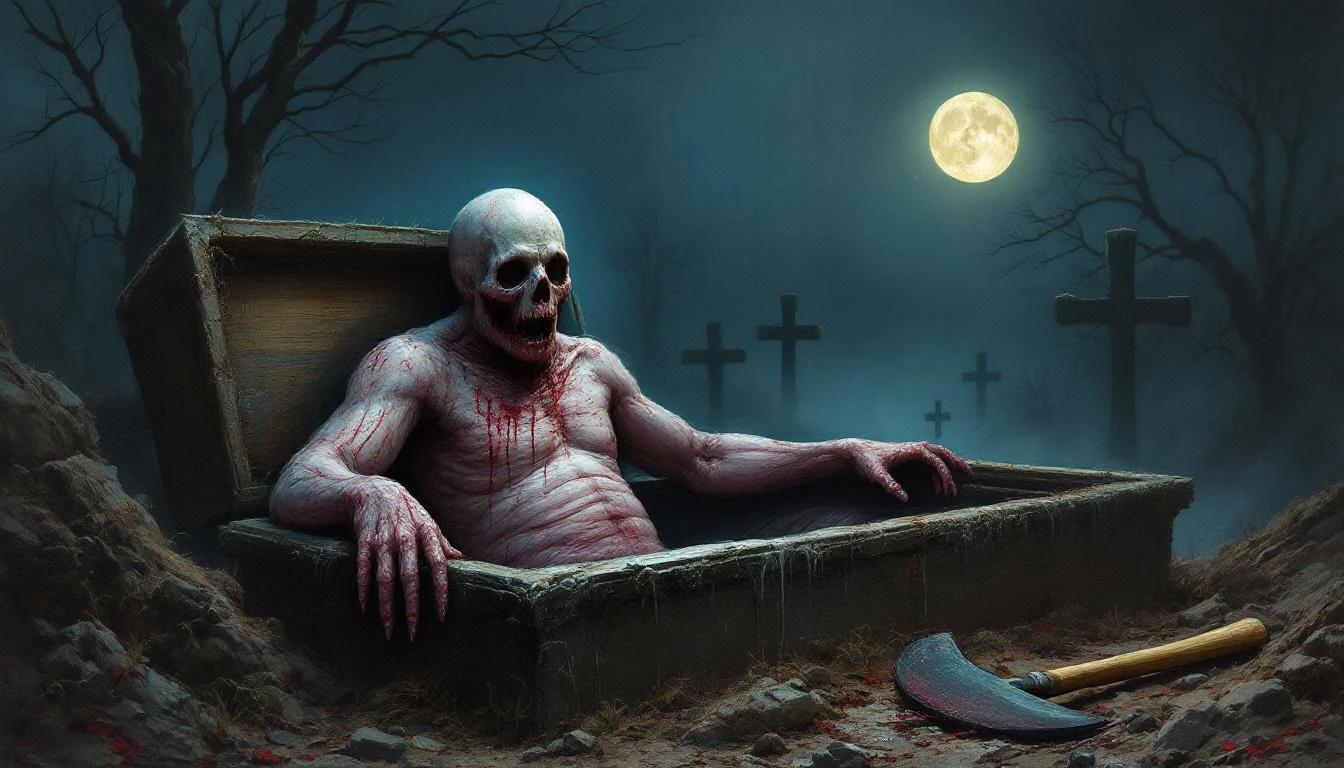
The child form. In the most common Serbian tradition, the drekavac appears as a small, pale, emaciated child — naked or wrapped in a thin shroud, with elongated limbs and a distended belly. Its mouth is open in a permanent scream. Its eyes are dark holes, or they glow faintly, or they weep constantly. It moves with an unnatural gait — hopping, crawling, dragging itself along the ground as though it has never learned to walk properly, because it died before it could.
The spindle form. In parts of central Serbia and the Šumadija region, the drekavac is described not as child-shaped but as elongated and thin — a spindle-shaped body, stretched vertically, pale and luminous, floating just above the ground. This form is sometimes called navje or navjak, connecting it explicitly to the Nav spirits of the dead. The spindle shape may represent a swaddled infant seen in dim light — the wrapped body of a dead newborn, vertical rather than horizontal, moving through the cemetery with the terrible patience of something that has nowhere else to go.
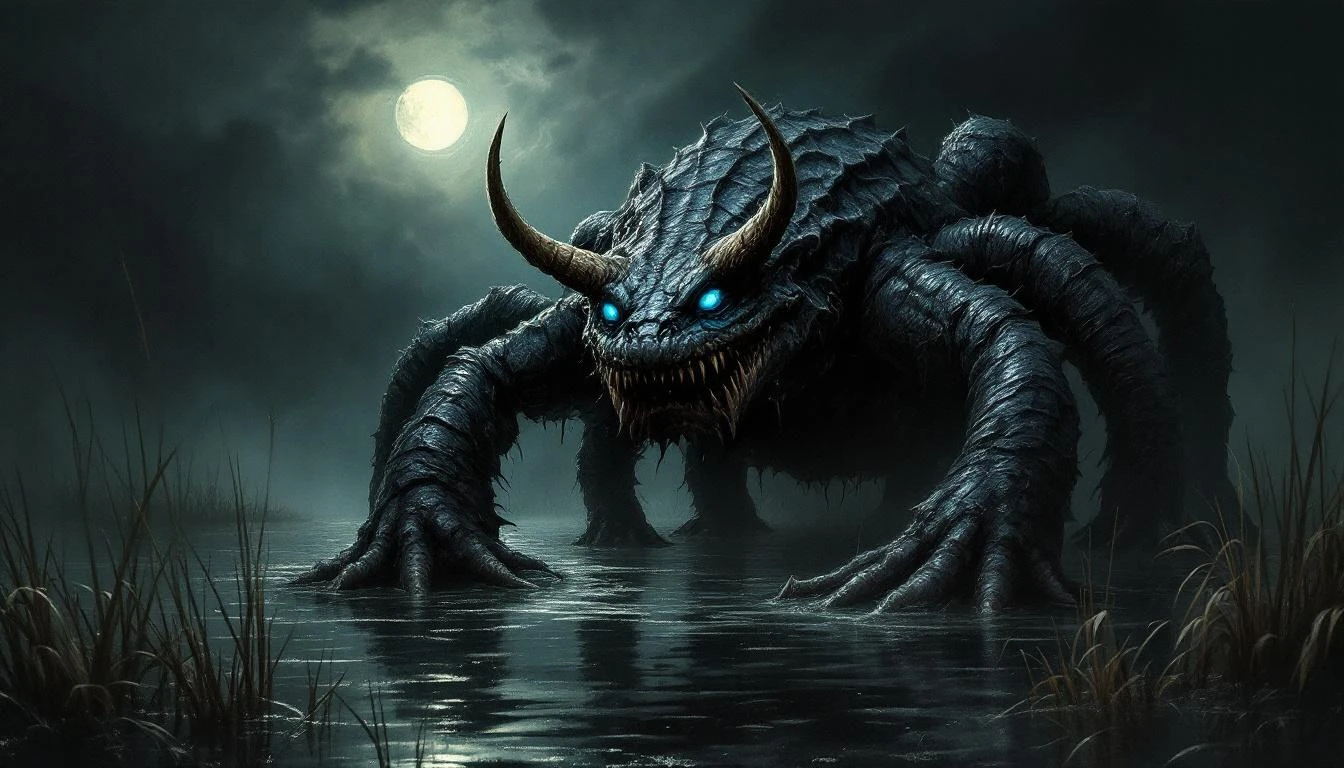
The animal form. In villages closer to the borders of Kosovo and southern Serbia, the drekavac takes animal shapes — a bird with a child's cry, a dog that walks on two legs, a cat with human hands, a shapeless thing with matted fur that moves through the brush making sounds no animal should make. In these traditions, the creature is closer to the Bukavac — another South Slavic monster associated with nocturnal sound — and the boundary between them blurs.
The invisible form. In many accounts, the drekavac has no visible form at all. It is pure sound — a voice without a body, a scream without a source. Witnesses report hearing it from a specific direction, walking toward the sound, and finding nothing. The voice seems to move, to retreat as the listener advances, to circle around and appear behind. Some folk accounts describe this as deliberate malice — the drekavac leading the living astray, drawing them deeper into the cemetery or the field until they are lost. Others frame it as the nature of the thing itself: a soul too incomplete to manifest visibly, too damaged to achieve form, existing only as an acoustic wound in the fabric of the night.
Where It Appears
The drekavac is a creature of specific places. It does not haunt randomly. Its territory is defined by the geography of death, boundary, and spiritual failure.
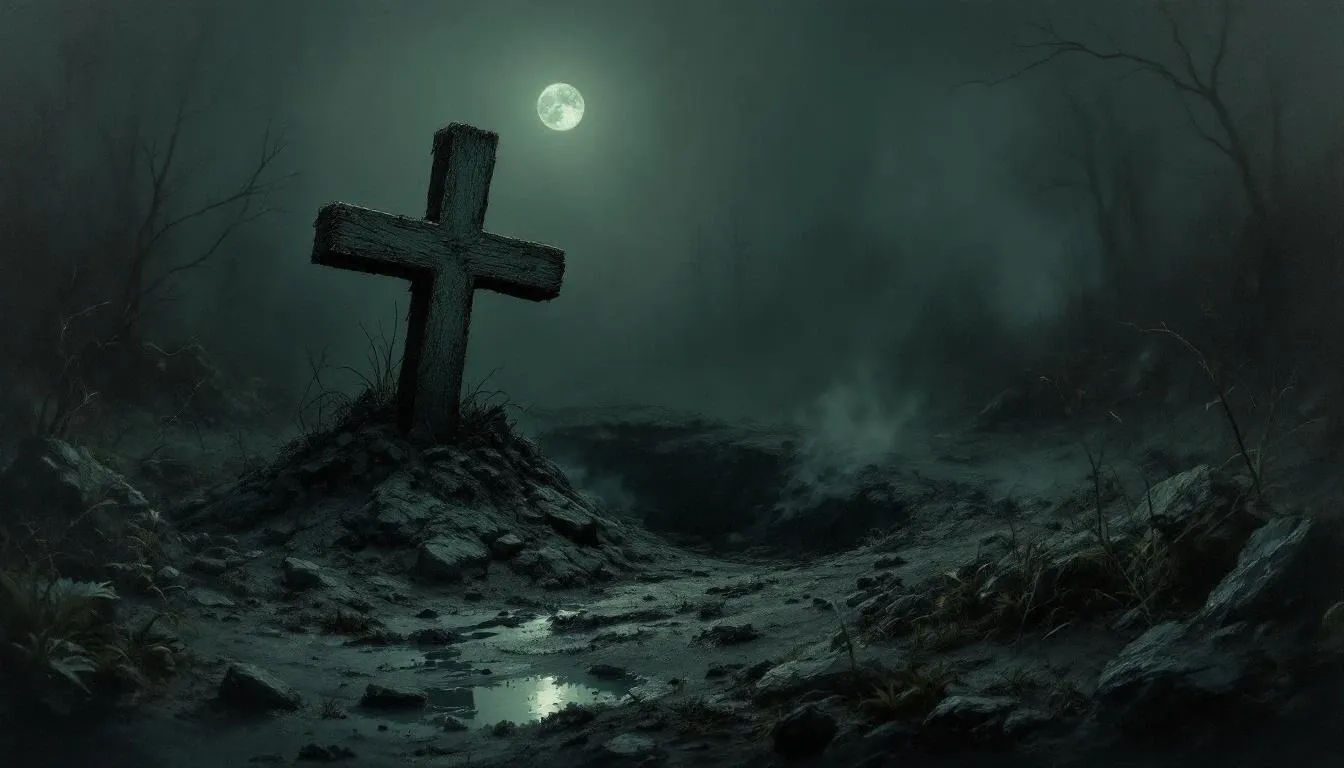
Cemeteries. The most common location, because the drekavac is drawn to the dead — or because it was buried here, in unsanctified ground at the cemetery's edge, in the section reserved for suicides, unbaptized infants, and those who died outside the Church's grace. It circles the graves of the properly buried dead the way a starving dog circles a table — close enough to sense what it lacks, unable to partake.
Crossroads. The intersection of paths is a liminal space in virtually all European folk traditions, a place where the boundaries between worlds thin. The drekavac appears at crossroads because it exists between categories — not alive, not dead; not saved, not damned; not in Heaven, not in Hell. The crossroad mirrors its condition. It belongs to the place that belongs to no one.
Fields and meadows at night. Particularly in spring, when the ground thaws and the new growth begins. Some traditions hold that the drekavac emerges from the earth itself — pushing up through the softened ground like a terrible germination, the dead child surfacing with the season's first green shoots. The contrast is ghastly: life returning to the fields, and with it, the dead who can never fully participate in life's renewal.
Near water. Rivers, streams, marshes — particularly those adjacent to cemeteries or those places where drowned infants were disposed of. The connection to water links the drekavac to the broader complex of Slavic water-spirits and the unclean dead — souls who entered the spirit world through water and remain trapped in its vicinity.
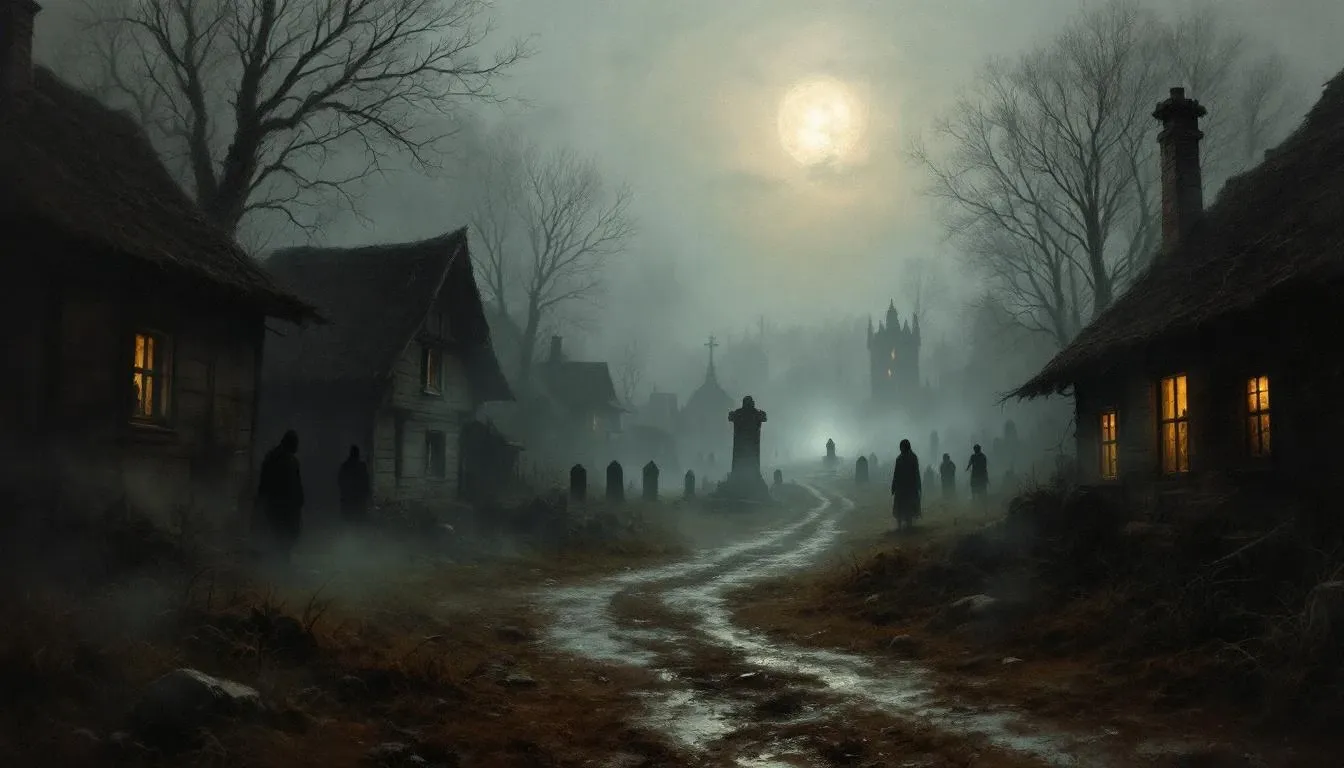
The drekavac is most often heard during the spring, from the first warm nights until the wheat is high. It screams in the vicinity of cemeteries and crossroads, less frequently near rivers. Those who claim to have seen it describe something pale and thin moving low to the ground, but most witnesses report only the sound — a child's voice, distorted, repeating endlessly without words.
The Connection to the Bukavac
The Bukavac — another screaming creature from South Slavic folklore — shares enough features with the drekavac that some scholars have proposed they are variants of the same being. Both are defined by sound. Both appear at night. Both haunt water sources and boundary spaces. Both are connected to death and the failure of proper burial.
But the differences are significant. The Bukavac is a monster — a six-legged creature that emerges from lakes and strangles people and livestock. It is physically dangerous in a direct, violent way. The drekavac, by contrast, is pathetic. It does not attack with physical force. It does not strangle or drown. Its danger is spiritual and psychological: the sound it makes causes illness, particularly in children. Hearing the drekavac's scream can cause fever, night terrors, wasting sickness. In some traditions, it can drive a person mad — not through any supernatural mechanism, but simply through the sustained exposure to a sound that the human mind cannot tolerate hearing night after night.
The two creatures may represent different responses to the same underlying fear — the fear of sounds in the darkness that cannot be explained. The Bukavac is the aggressive interpretation: the unknown sound is a predator. The drekavac is the tragic interpretation: the unknown sound is a victim. Both are real in the sense that the sounds are real — animals in the night, wind through hollow spaces, the settling of old graves — and both are attempts to give those sounds meaning within a folk-theological framework that demanded explanations for everything.
Modern Encounters
The drekavac has not disappeared into pure folklore. As recently as the 2000s and 2010s, reports of drekavac encounters have surfaced from rural Serbia — particularly from the regions of Zlatibor, Tara, and the Drina river valley. Farmers report hearing sustained screaming from fields and forests at night. Dogs bark and refuse to leave the house. Livestock huddle together in the corners of their enclosures. In the morning, the fields are undisturbed, but the people who heard the sound look as though they have not slept in weeks.
Serbian media has periodically covered these reports with a mixture of folk-tourism enthusiasm and genuine unease. In 2011, a series of nighttime recordings from a village near Trstenik — capturing high-pitched, wavering screams that defied easy identification — circulated online and were widely discussed as potential drekavac evidence. Zoologists suggested foxes, owls, or wild cats in distress. The villagers, who had lived alongside foxes and owls their entire lives, said it was not any animal they knew. The sound was wrong. It had the quality of something trying to speak and failing.
What makes these modern accounts compelling is not their supernatural content — which requires no creature to explain — but the persistence of the cultural framework. The word drekavac is still used in these villages. People who do not believe in literal ghosts or unbaptized undead children still reach for the word when they hear sounds at night they cannot identify. The creature has survived the death of literal belief by becoming a category of experience — the name for the particular terror of an unexplained sound in darkness, the voice that might be a fox but does not quite sound like one, the cry that seems to come from nowhere and everywhere and will not stop.
The Theological Nightmare That Persists
The horror of the drekavac is not that it is dangerous. Compared to the Striga or the vampire or even the Bukavac, the drekavac poses relatively little physical threat. You can walk away from it. You can close your window. You can outlast the night. It cannot enter your home. It cannot drain your blood. It is small, weak, confused, and endlessly suffering.
And that is precisely why it is horrifying.
The drekavac confronts you with the suffering of the innocent — suffering that has no resolution, no redemption, no end. The child did nothing. It was born, it died, it was denied a rite that might have given its soul rest, and now it exists in perpetual agony — screaming, screaming, screaming into a darkness that offers no comfort and no escape. There is no hero who can fight it. There is no priest who can save it. In most traditions, the baptism that would release it can only be performed on the living, and the drekavac has been dead for a very long time. Its condition is permanent. Its screaming is forever.
This is a horror that organized religion created — a byproduct of the theological decision that unbaptized children occupy a damned category. The drekavac did not exist in pre-Christian Slavic belief, because pre-Christian Slavic cosmology had no concept of baptismal exclusion. It is a creature born from the collision between old Slavic death-beliefs (the restless dead, the spirits trapped between worlds) and Christian doctrinal rigidity (the sacrament of baptism as the sole mechanism for salvation). The drekavac is what happens when theology creates a problem it cannot solve — when a system designed to provide meaning and comfort instead produces a category of eternal, innocent suffering.
And so it screams. In the fields outside Serbian villages, in the marshy ground between cemeteries and crossroads, in the spring nights when the earth is warm enough to let things rise from beneath it. It screams because it has nothing else. It screams because screaming is all that remains of it. It screams and no one comes, and no one can help, and the morning brings silence but not peace — only a delay until the next night, and the next scream, and the next reminder that some things, once broken, cannot be repaired.
Listen carefully, in the dark hours, near the places where the dead are kept. If you hear it — if the sound finds you across the distance between the buried and the breathing — you will understand why the villages do not like to speak its name. Not because speaking summons it. It is already there. But because saying drekavac aloud means acknowledging what it is, and what it is — a dead child, forgotten by God, screaming forever — is a truth that no one wants to hold in their mouth.