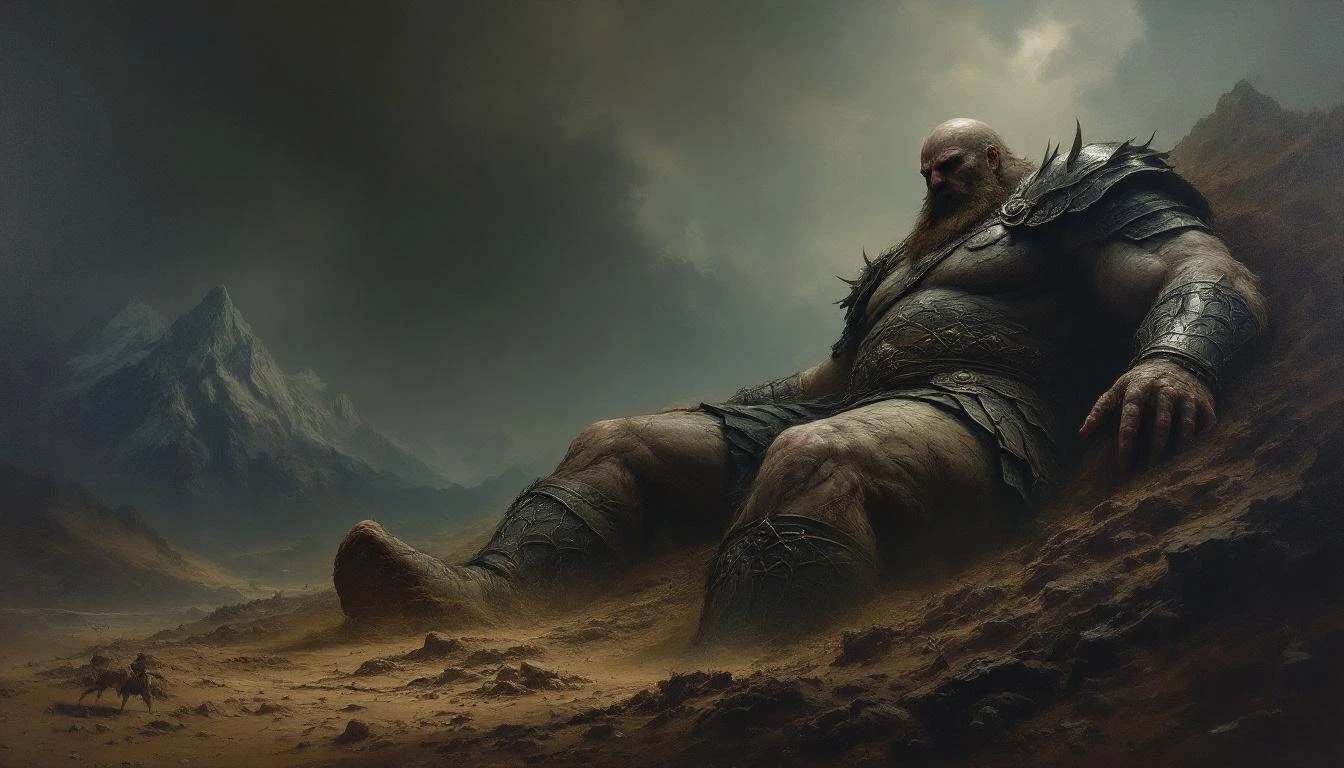
Before there were people, there were giants. They stood taller than the oaks. The ground shook when they walked. They threw boulders at each other across the valleys — not in anger but in play, the way children throw snowballs, except each snowball weighed a thousand tons and left a crater where it landed. They tore mountains from the earth and stacked them in new places. They dug rivers with their fingers. The landscape you see from the window of any train crossing Belarus or western Russia — the scattered boulders in flat fields, the unexplained hills on the plain, the riverbeds that curve in ways that defy the logic of natural drainage — all of this, according to the oldest East Slavic traditions, was the work of the Osilki.
Then God destroyed them. Not all at once, and not without reason. The giants had grown proud. They had decided that nothing in creation could challenge them — not the earth, not the sky, not God himself. So they challenged God. And God answered.
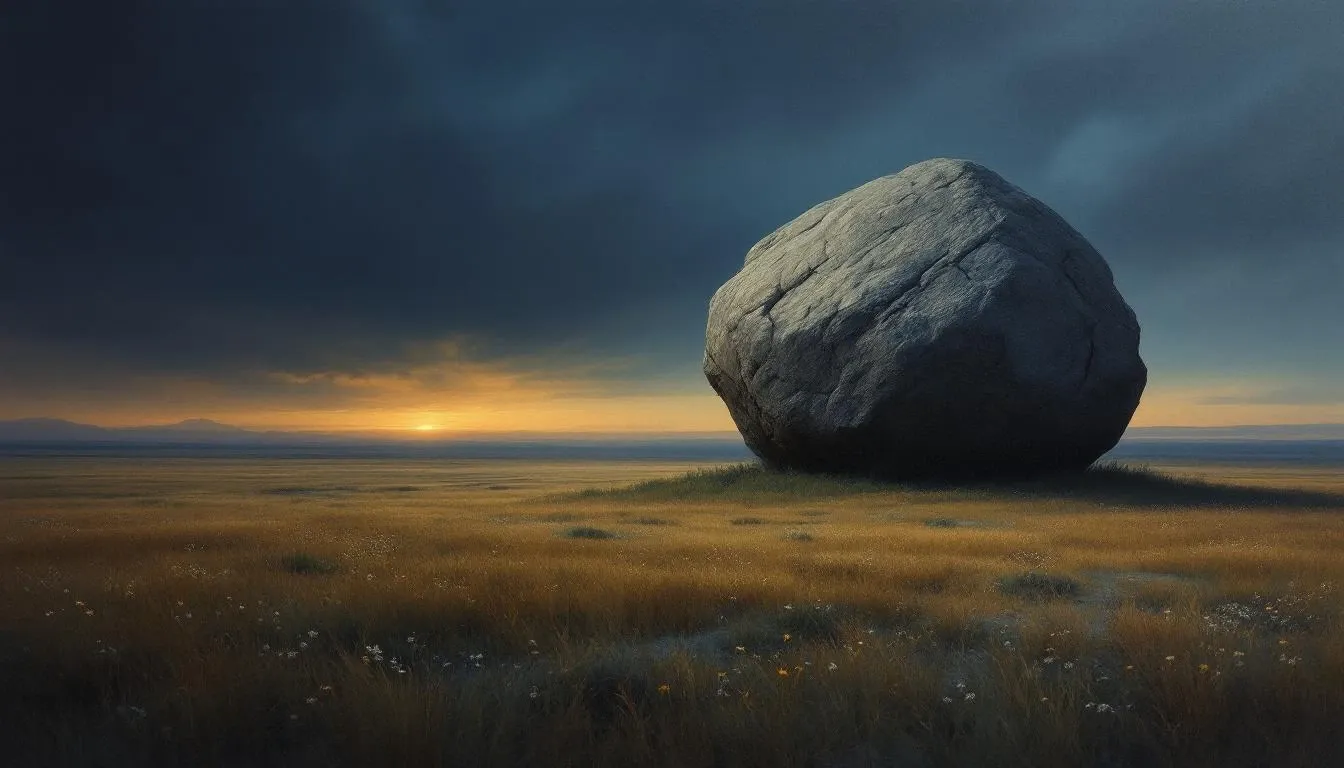
The details of the destruction vary. In some tellings, God opened the earth and swallowed them. In others, he drowned them in a great flood. In others still, he turned them to stone — which is why certain enormous boulders, stranded impossibly in the middle of plowed fields with no geological explanation a peasant farmer could understand, are shaped like sleeping figures if you look at them from the right angle.
The Names
The East Slavic tradition gives several names to its primordial giants, and the names are not synonyms — they carry different connotations and appear in different regional and textual contexts.
Osilki (Осилки) — The most widespread term, especially in Belarusian tradition. The word derives from osila or sila, meaning "strength" or "force." Osilki are, literally, "the strong ones," "the mighty ones." The name emphasizes their defining characteristic without specifying anything else about them. They are strong, and strength is what they are.
Asily (Асілкі) — The Belarusian form, sometimes spelled asilki. Functionally identical to osilki but preserved with the phonetic specificity of the Belarusian language, which retained archaic features that Russian smoothed away. When Belarusian folklorists use asily, they are typically referring to the specifically Belarusian version of the giant tradition, which is the richest and best preserved.
Voloty (Волоты) — An alternative term that appears in Ukrainian and some Russian sources. Volot or veleten carries the meaning of "giant" more directly — the word is cognate with terms across the Slavic languages that mean "great" or "mighty" in the sense of physical size. In some contexts, voloty is used interchangeably with osilki; in others, it refers to a slightly different category of ancient beings — less the playful mountain-throwers and more the grave, ancient predecessors of humanity who simply faded away.
Bogatyri of old — In some Russian sources, the primordial giants are described not with a specific term but with the phrase starshie bogatyri — "elder bogatyri," placing them at the beginning of the hero lineage that runs through Svyatogor, Mikula Selyaninovich, and down to the historical bogatyri of the Kievan cycle like Ilya Muromets. This framing integrates the giants into the narrative structure of the byliny (epic songs) rather than treating them as a separate category of being.
What the Giants Did
The Osilki did not build civilizations. They did not have cities or temples or written laws. In the folk accounts, they are beings of pure physicality — their existence is expressed entirely through feats of strength and the marks they leave on the landscape.
They threw mountains. This is the single most consistent activity attributed to them across all regional variants. The Osilki picked up hills and hurled them at each other, sometimes in combat, sometimes in competition, sometimes apparently just because they could. The hills landed where they landed, which is why — according to the folk explanation — the terrain of Belarus and western Russia contains isolated elevations that seem to belong somewhere else. A lone hill in the middle of a marsh, a cluster of boulders in the center of a plowed field, a ridge that runs perpendicular to every other geological feature in the area — all were attributed to the giants' throwing games.
They dug rivers. The Osilki dragged their fingers through the earth, or the weight of their footsteps cut channels in the soil, and water filled the depressions. The winding paths of rivers — the meanders, the oxbow curves, the sudden direction changes — were explained as the tracks of giants who walked without straight lines, the way any being would walk through a landscape it did not need to navigate efficiently because it feared nothing in it.
They stacked stones. The enormous erratic boulders that glacial action deposited across the North European Plain during the last ice age were, to the people who lived among them, evidence of supernatural activity. The stones were too large to have been placed there by any human effort. They sat in places where no cliff face or mountain was visible, offering no natural origin point. The Osilki had put them there — carried them from distant mountains, dropped them casually while passing through, tossed them aside the way a man might toss a pebble.
The Challenge and the Punishment
The destruction of the Osilki follows a pattern familiar from giant traditions worldwide: beings of enormous power grow arrogant, challenge the supreme authority (divine or cosmic), and are destroyed as a consequence. The structure is identical whether the giants are Greek Titans, Biblical Nephilim, or Slavic Osilki. The specifics change. The arc does not.
In the Belarusian variants, the Osilki's sin is not mere disobedience but a specific transgression: they declared that they had no need of God. They could move mountains, reshape the earth, do anything that needed doing with their own hands. What use was a god to beings who were already the most powerful things in creation? The question was not rhetorical. It was a challenge — a declaration of independence from divine authority that, in the theological framework of the stories (which blends pre-Christian and Christian elements without visible seam), constituted the one unforgivable act.
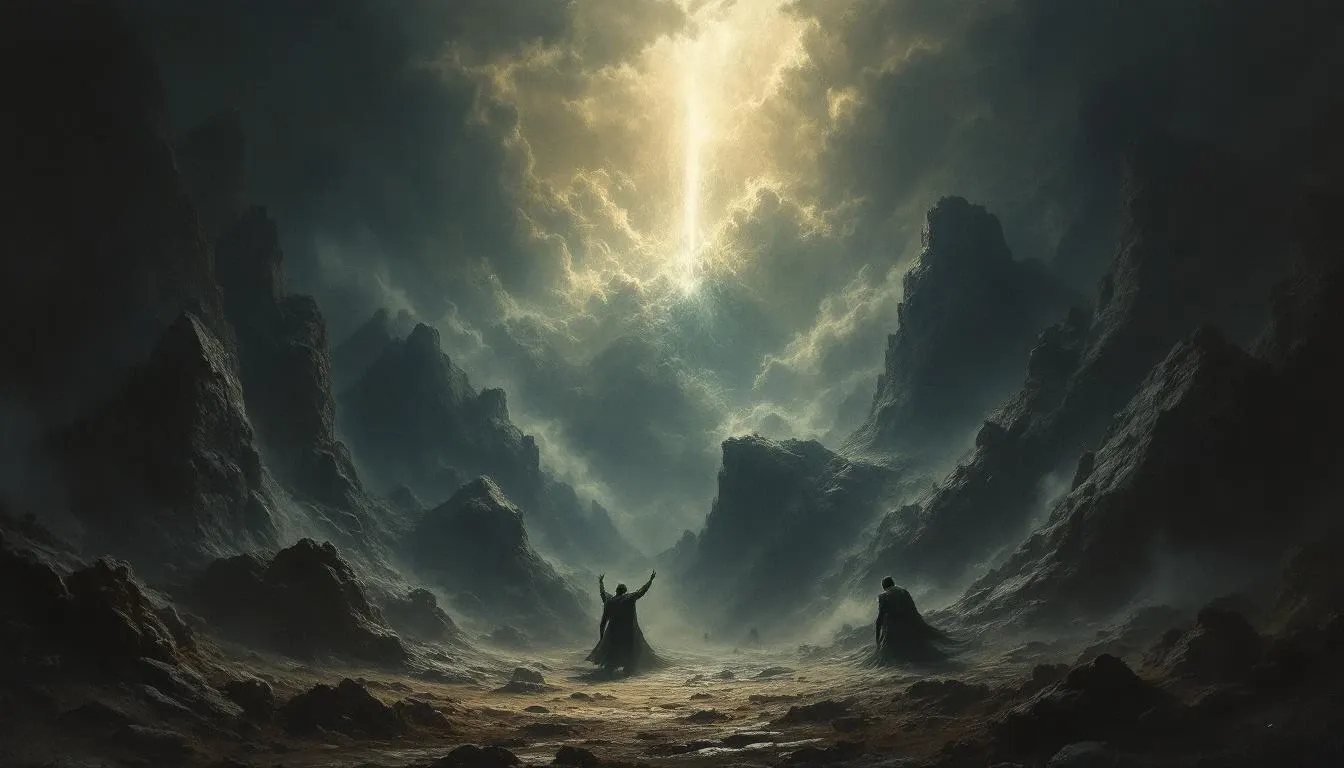
God's response was proportional. He sent a flood — in some versions, he simply caused the rivers the Osilki had dug to overflow and fill the lowlands until the giants drowned. In other versions, he buried them under the very mountains they had thrown, pressing them into the earth they had reshaped so casually. In still others, he struck them with lightning — the weapon of Perun, the thunder god, which suggests an older, pre-Christian version of the story in which the giants' destruction was the work of the pantheon's enforcer rather than the Christian God.
The ambiguity of the destroying agent is significant. In the Belarusian folk accounts collected by Shein and by Yevdokim Romanov in the late nineteenth century, the "God" who punishes the Osilki is sometimes referred to simply as Bog (God), without specifically Christian attributes. This may reflect a Christianized surface laid over a pre-Christian substrate — the original giant-slayer may have been Perun or Svarog or the primordial Rod, and "God" may be a later substitution that preserved the narrative while updating its cast.
"The asily were so strong that they uprooted forests and moved mountains from place to place. They grew proud and said: We need no God, for we are mightier than all. And God was angered, and he sent the waters upon them, and they perished. And where they fell, there mountains stand to this day."
Svyatogor: The Last Giant
The Osilki vanished. But one of their kind — or at least one who carries their essential nature — survived into the byliny, the heroic epic songs of the East Slavic tradition. His name is Svyatogor, and he is the bridge between the age of giants and the age of human heroes.
Svyatogor is the mightiest bogatyr who ever lived. He is so heavy that the earth groans beneath his feet. He cannot visit the settled lands of Rus' because his weight would sink the roads and collapse the bridges. He wanders instead in the Holy Mountains — the boundary between the human world and something older and vaster — carrying a strength so great that no enemy can challenge it and no task can exhaust it.
And yet Svyatogor dies. He dies in a stone coffin that he finds on the road, lies down in out of curiosity, and then cannot escape. The lid closes. The stone seals. Ilya Muromets — the greatest of the "younger" bogatyri, the human heroes — watches it happen and cannot help. Svyatogor transfers part of his strength to Ilya before the end, but he cannot transfer all of it, because a mortal frame cannot hold what a giant carried.
The symbolism is transparent. The age of giants gives way to the age of humans. The older, stronger, larger beings pass their power to their successors and then vanish into the earth — into the mountains, under the stones, inside the coffin that no one can open. The world becomes smaller. The heroes become weaker. But the landscape the giants shaped — the mountains, the rivers, the boulders — remains, and anyone who looks at it with the right knowledge can read the giants' story in the contours of the land.
The connection between the Osilki and Svyatogor is not explicit in every source, but the structural parallels are unmistakable. Both are beings of impossible strength. Both are older than the current order of the world. Both are destroyed — the Osilki by God, Svyatogor by fate — and both leave the landscape as their monument. The Osilki threw mountains; Svyatogor is buried in one. The symmetry is too clean to be accidental.
The Landscape as Memory
The Osilki tradition is, fundamentally, an explanation of terrain. It belongs to the category of etiological myth — stories that explain why things are the way they are. Why is there a boulder in the middle of this field? Why does this river bend here? Why is there a hill where the surrounding land is flat?
Modern geology provides answers to these questions — glacial erratics, fluvial dynamics, terminal moraines — but these answers require an understanding of processes that operate over timescales incomprehensible to the human mind. The ice sheet that deposited a boulder in a Belarusian wheat field retreated twelve thousand years ago. The river that carved a particular valley did so over millions of years. These are durations that cannot be experienced, only calculated, and for the vast majority of human history, no one could calculate them.
The Osilki provided an alternative explanation that was immediate, personal, and satisfying. The boulder is there because a giant put it there. The river bends because a giant walked through here. The hill exists because a giant threw it. The explanation required no understanding of deep time, no knowledge of physics, no grasp of processes that operate below the threshold of human perception. It required only giants — beings like humans but larger, doing things that humans do but on a scale that explained the inexplicable.
This is not primitive thinking. This is rational inference from available evidence, constrained by the conceptual tools at hand. A Belarusian farmer in the seventeenth century, staring at a boulder that weighed more than his entire village and sat in the middle of a field with no mountain within fifty kilometers, was facing a genuine puzzle. The giant hypothesis was a reasonable solution given the information available. It was wrong, but it was not stupid.
The Biblical Parallel: Nephilim and the Flood
The structural similarity between the Osilki and the Biblical Nephilim is striking and has been noted by every scholar who has examined the tradition.
Genesis 6:4 — "There were giants in the earth in those days" — establishes the existence of a race of powerful beings who lived before the Flood. The Nephilim were the offspring of the "sons of God" and the "daughters of men," and their presence on earth was one of the provocations that led God to send the Deluge. They were mighty, they were ancient, and they were destroyed by divine wrath expressed through water.
The Osilki parallel is almost exact. Mighty beings, ancient beyond human memory, destroyed by God (or a god) through flood, buried under the earth, surviving only as landscape features and stories. The question of whether the Osilki tradition is an indigenous Slavic myth that coincidentally parallels the Biblical account, a Slavic adaptation of the Biblical account absorbed through Christianization, or a case of both traditions drawing on a common Indo-European or Near Eastern source, remains genuinely unresolved.
The Christianization argument is the simplest: East Slavic populations adopted Christianity between the tenth and thirteenth centuries, and the Bible's giant-and-flood narrative could have merged with existing local landscape-explanation traditions to produce the Osilki as we know them. But the Belarusian versions — collected from rural populations with low literacy and limited direct exposure to biblical texts — have a feel of indigenous oral tradition that sits uneasily with the idea of wholesale borrowing from Genesis.
The likelier answer is convergence reinforced by contact. The Slavic world had its own giant traditions rooted in the need to explain terrain. Christianity arrived and brought the Nephilim. The two traditions recognized each other, merged at the points of contact, and produced a hybrid that was neither purely pagan nor purely Christian — the Osilki who are "like the Nephilim" but are not the Nephilim, who are destroyed by "God" but perhaps originally by Perun, who explain Belarusian boulders rather than Canaanite ruins.
The Flat Earth Problem
The Osilki tradition is particularly well-developed in Belarus and the flatlands of western Russia — precisely the regions where the landscape is most in need of explanation. The North European Plain is one of the flattest major landforms on Earth. For thousands of kilometers in every direction, the terrain is level, monotonous, punctuated only by the features that glaciation left behind: scattered boulders, isolated hills, winding rivers that seem to have been drawn by a hand that kept changing its mind.
In mountainous regions, the terrain explains itself. Mountains are obviously the product of enormous forces. No one needs a myth to explain why the Carpathians exist. But on the plain, every deviation from flatness demands an account. Why is this hill here? Who put this boulder in the middle of nowhere? Why does this river make a sharp right turn for no visible reason?
The Osilki answered all of these questions with a single narrative. The giants did it. Before us, before history, before anything we know, there were beings strong enough to reshape the earth, and what we see around us is what they left behind. It is a genesis story — not for humanity, but for geography. And it is told with the confidence of people who looked at the evidence of their own eyes and drew a conclusion that, given what they knew, was perfectly reasonable.
Why the Giants Matter
The Osilki occupy a specific position in the Slavic cosmological hierarchy. They are not gods — they do not create, do not rule, do not maintain the cosmic order. They are not humans — they do not farm, do not pray, do not submit to any authority. They exist in the space between: too strong for the mortal world, too arrogant for the divine one, too ancient for the present, too physical for the spiritual.
Their destruction is the precondition for the human world. The Osilki had to be removed before humans could inhabit the earth — not because they were evil, but because they were incompatible. A world with giants in it is a world where human-scale existence is impossible. The ground shakes too much. The boulders fly too frequently. The rivers change course without warning. The Osilki's world was magnificent and uninhabitable, and God (or the gods) cleared it away to make room for something smaller, weaker, and more sustainable.
This is not a story about good defeating evil. It is a story about scale. The giants were not wrong to be strong. They were wrong to believe that strength was sufficient — that raw physical power, no matter how great, could substitute for the wisdom to know when to yield. They could move mountains, but they could not move past their own pride. And in the end, the mountains they threw are all that remains of them — silent, enormous, scattered across the flat earth like the toys of children who grew too wild and were sent away.