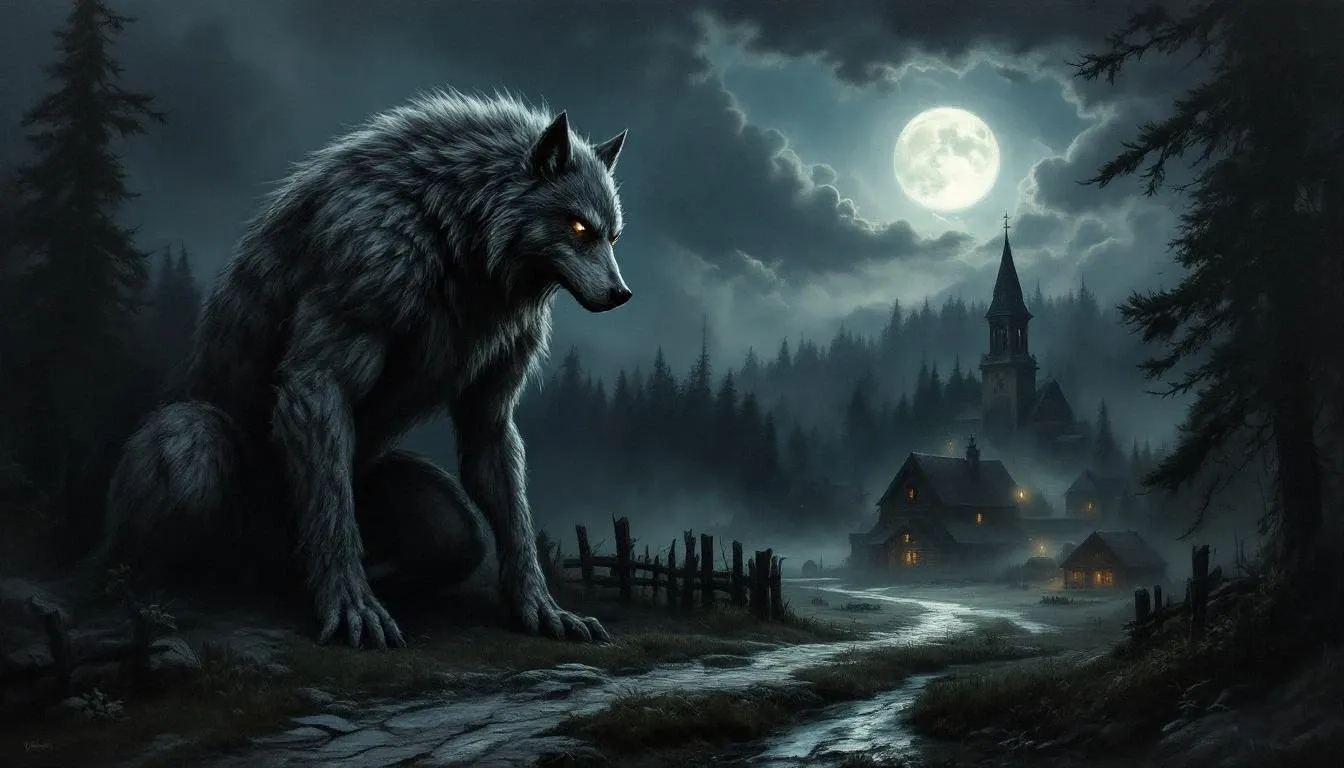
There is no single Slavic werewolf. There are dozens. The word changes across every border, the creature changes with it, and by the time you have crossed from Belgrade to Moscow you have encountered something that started as a vampire-corpse, became a cursed groom, turned into a sorcerer's tool, and ended as a Siberian spirit-walker who barely resembles the thing you started with. The Western werewolf — the tortured man who transforms under the full moon, kills against his will, and can be stopped only by a silver bullet — is a composite, a Hollywood assembly job stitched together from fragments of European folklore and then sold back to Europe as the original. The originals are stranger, more various, and more interesting than the composite ever was.
This is a map. Not of a single creature, but of a family of creatures scattered across the largest linguistic territory in Europe, each one shaped by the specific fears, landscapes, and religious pressures of the community that produced it. The Slavic werewolf is not one thing. It is every version of the wolf-man that Slavic-speaking peoples invented, preserved, feared, and — in some remarkable cases — revered.
Serbia: The Vukodlak Who Is Also a Vampire
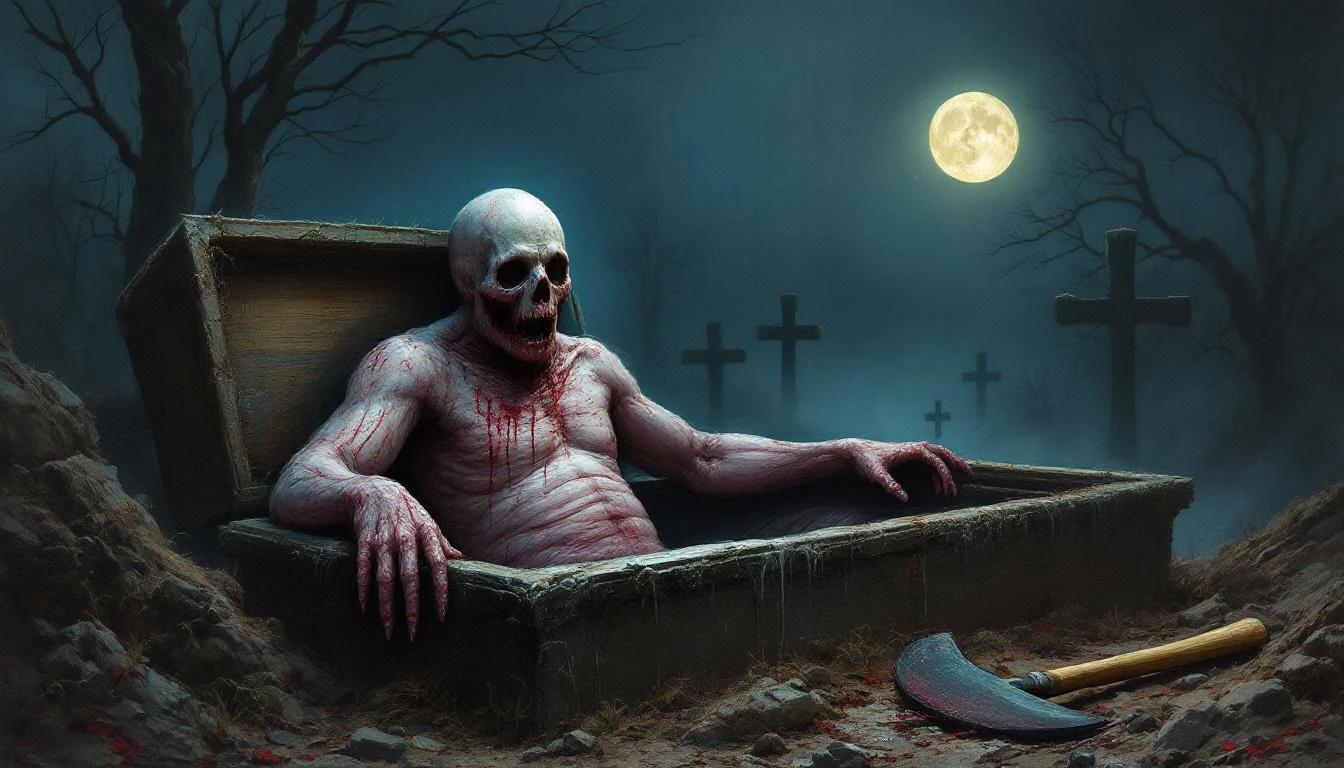
The Serbian vukodlak is the most conceptually radical werewolf in the Slavic world, because it is not only a werewolf. In Serbian folk tradition, the word vukodlak — literally "wolf-skin," from vuk (wolf) and dlaka (fur, hair) — referred simultaneously to a shapeshifter who takes wolf form and to a corpse that rises from the grave to feed on the living.
This was not confusion. It was a theological position. The Serbian folk mind understood that the werewolf and the vampire were not two separate phenomena but two phases of the same condition. A man who was a shapeshifter in life became a blood-drinker in death. The transformation that had given him the wolf's body while alive followed him into the grave and metastasized into something worse. The living werewolf was the larval stage; the vampire was the adult form.
The great Serbian linguist Vuk Karadzic documented this in his 1818 dictionary, defining the vukodlak as a dead man whose body swelled with blood, rose from the grave, and strangled cattle and humans by night. In Montenegrin tradition, the connection was made even more explicit: the vampire had to pass through a wolf-phase before it could walk as an undead revenant. The body in the grave first sprouted fur. Then it began to move.
The Serbian vukodlak could be created in several ways. A man born with a caul might become one. A man who ate meat from a sheep killed by a wolf risked contamination. A corpse over which a cat or dog had jumped before burial was vulnerable to transformation — the animal's passage over the body was believed to transmit something, some spark of the restless wild, that kept the dead man from staying dead. The most dangerous period was the forty days after death, during which the soul was still considered present and vulnerable to corruption.
Croatia and Slovenia: The Volkodlak and the Kudlak
Cross the border from Serbia into Croatia, and the wolf-man fractures into a more complex system. Croatian and Slovenian traditions preserved a dualistic framework in which the werewolf was not a single figure but one half of a pair.
The kudlak (also kodlak, kudlac) was the dark half — a person, usually a man, born under unlucky circumstances, who transformed into a wolf or other animal at night and spread disease, destroyed crops, and attacked livestock. The kudlak was not always conscious of his nature. In some Istrian traditions, the kudlak's human self was entirely unaware that his spirit left the body at night in animal form and wreaked havoc across the countryside. He slept peacefully while his double — his wolf-self — ran through the darkness.
The krsnik was the light half. Also born marked, also capable of transformation, but dedicated to fighting the kudlak rather than joining him. The krsnik was the village's supernatural defender — a benevolent shapeshifter whose soul left his body during sleep to battle the kudlak in the spirit world, exactly as the Zduhac battled the Ala in the clouds of Serbian tradition.
This dualism — the dark werewolf and the light werewolf, locked in eternal combat — is one of the most sophisticated werewolf concepts in European folklore. It transforms the werewolf from a simple monster into a cosmic principle. The wolf-nature is neither inherently good nor inherently evil. It is a power, and what matters is how that power is directed. The kudlak directs it toward destruction. The krsnik directs it toward protection. The same transformation, the same leaving of the body, the same animal form — but opposite purposes.
The Slovenian volkodlak added its own variations. In parts of Slovenia, the volkodlak was specifically associated with the solstice period — the twelve days between Christmas and Epiphany, when the boundary between the human world and the spirit world was thinnest. Men born during this liminal period were believed to be at risk of transformation. The volkodlak of the solstice was often a pitiful figure — not a predator but a sufferer, forced to wander in wolf form until the liturgical calendar turned and the boundary sealed again.
Poland: The Wilkolak as Tragic Victim
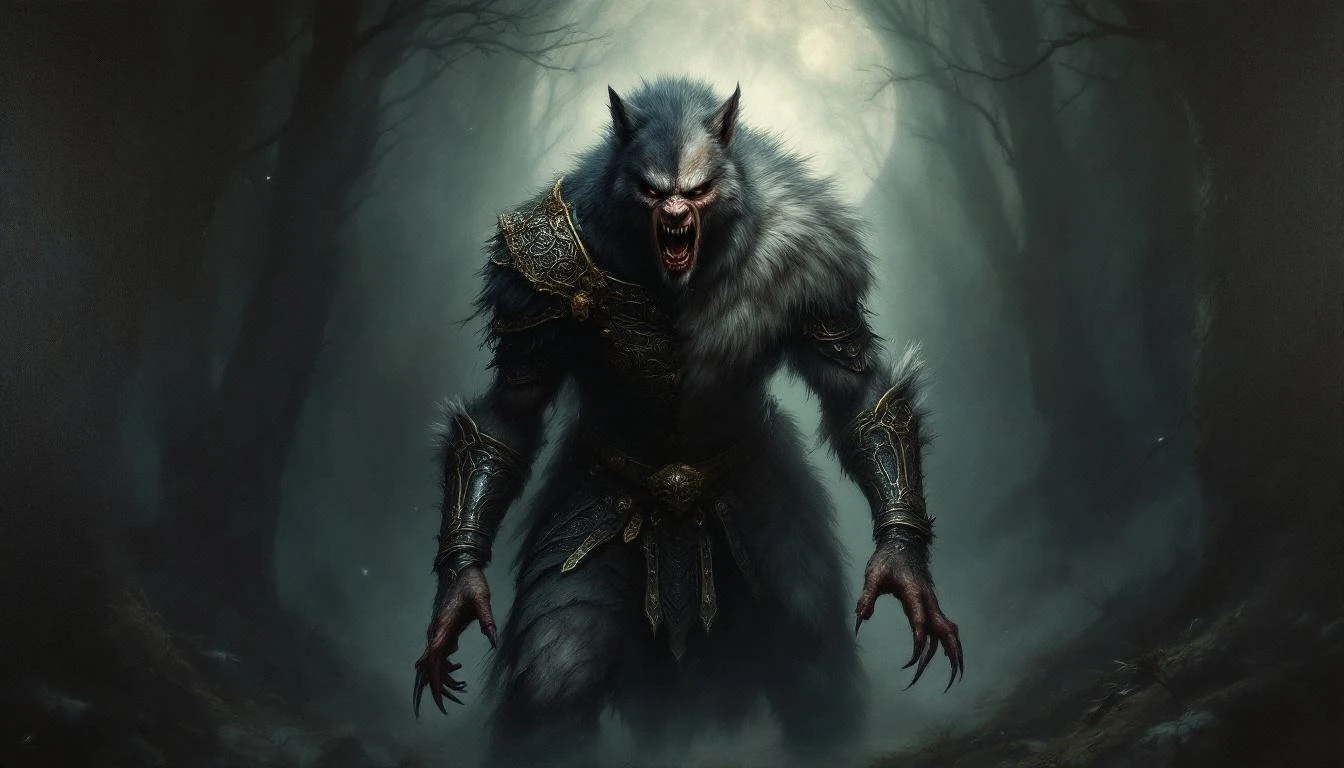
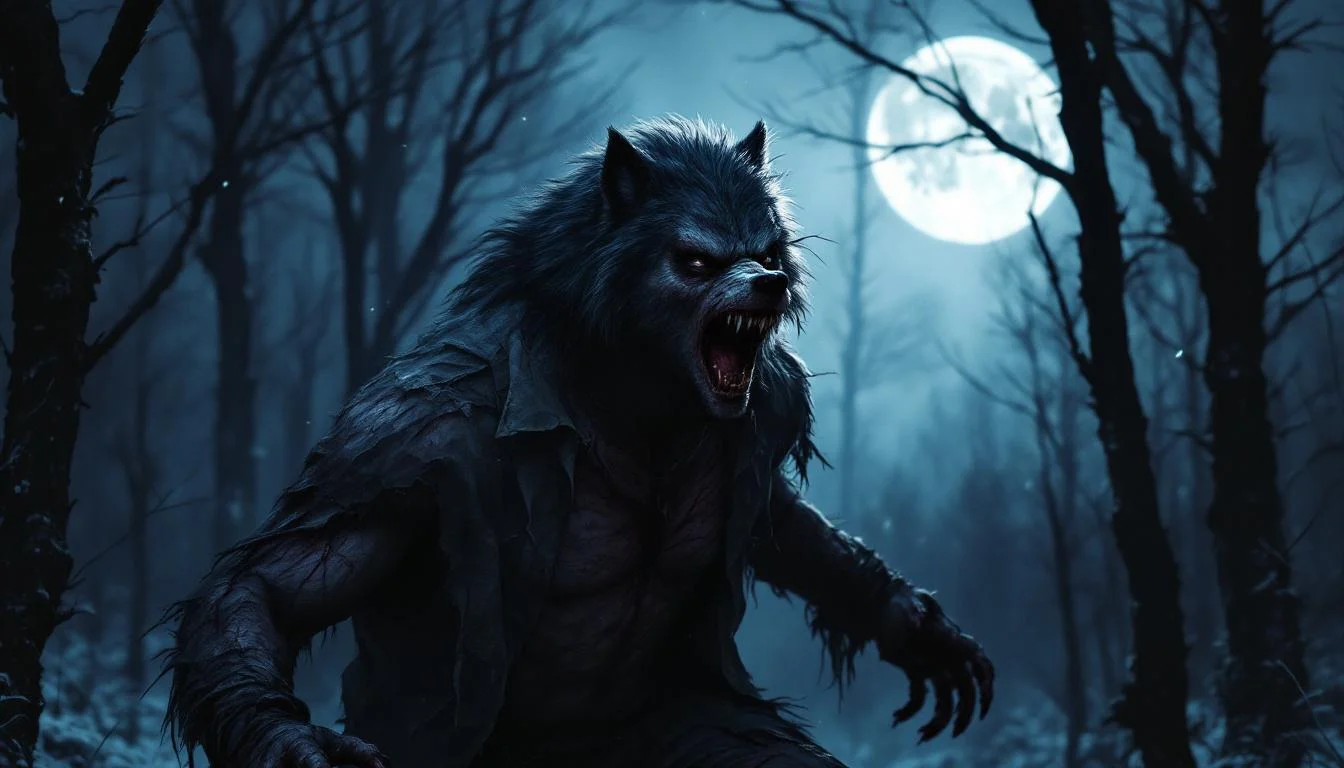
The Polish werewolf — wilkolak (sometimes wilkolak or wilkotlak) — is perhaps the most sympathetic figure in the entire Slavic werewolf complex. Polish tradition overwhelmingly emphasized the involuntary nature of the transformation. The wilkolak was not a sorcerer who chose the wolf. He was a victim — cursed by a witch, transformed against his will, and trapped in a body that was not his own.
The cursed wedding was the primary mechanism. A sorcerer or witch, bearing a grudge against the groom's family, would arrive unseen at the celebration and throw enchanted wolf-skins or belts over the wedding party. Bride, groom, attendants — all transformed at once, scattering into the forest as a pack of wolves. The curse could last years. Seven years was the most commonly cited duration, a number that appears across Slavic and broader European werewolf traditions with a consistency that suggests either cultural transmission or deep structural patterning.
Polish ethnographers of the 19th century — Kazimierz Moszynski, Oskar Kolberg, and others — documented accounts from rural communities where the wilkolak was identified by his behavior rather than his appearance. A wolf that lingered near human settlements, that avoided other wolves, that flinched from loud noises or turned when called by a human name — these were signs that the creature was not a true wolf but a cursed person. If you threw a piece of human clothing over such a wolf — a shirt, a belt, a hat — the curse might break. Human contact, human objects, human speech: these were the tools that pulled the wilkolak back across the boundary between species.
The wilkolak tradition in Poland was also deeply intertwined with Christian morality in a way that distinguished it from the more pagan-inflected traditions further south and east. Polish priests sometimes used the werewolf as a cautionary figure — the transformation was God's punishment for sin, or the devil's reward for wickedness, or the consequence of missing Mass on too many consecutive Sundays. This Christian overlay did not replace the older tradition of the cursed wedding. It supplemented it, adding a layer of moral judgment to what had originally been a tale of magical victimization.
In Mazovia they say that a wilkolak can be recognized by his tears. A true wolf does not weep. But a man in wolf form weeps without ceasing, for he remembers his wife, his children, and the house he cannot return to. Those who hear a wolf crying at night cross themselves and pray, for they know it is not a beast but a neighbor.
Belarus: The Vawkalak and the Sorcerer's Knife
Belarusian werewolf tradition — the vawkalak (ваўкалак) — preserves some of the most mechanically detailed transformation methods in all of Slavic folklore. Where other traditions are vague about how a person becomes a wolf, the Belarusian accounts are specific to the point of being instructional.
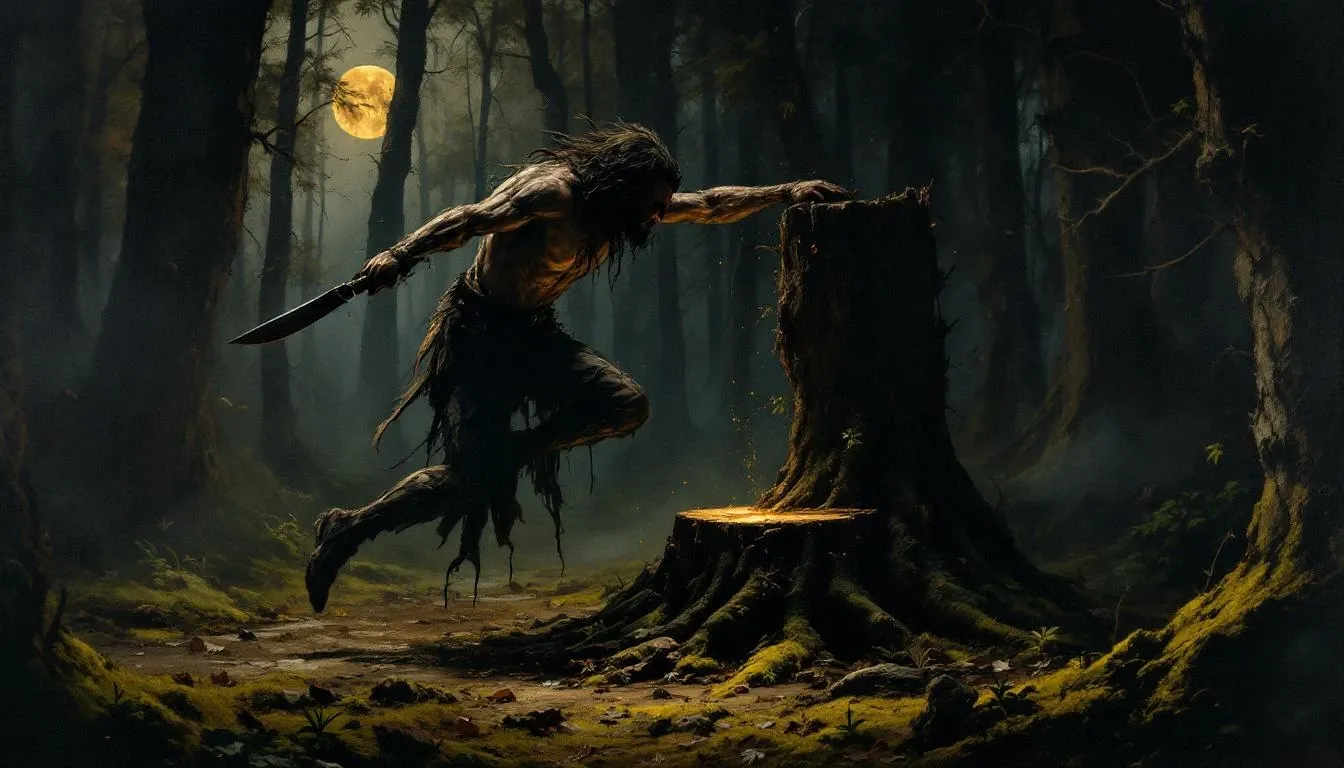
The voluntary transformation required a specific ritual: the sorcerer found a tree stump in the deep forest, drove a copper or iron knife into the stump, and somersaulted backward over it three times while speaking an incantation. Upon landing the third time, he was a wolf. To return to human form, the procedure was reversed: the same stump, the same knife, the same backward somersault. If someone found the knife and removed it while the sorcerer was in wolf form, he was trapped — permanently, irrevocably, condemned to live and die as a wolf.
This detail — the knife in the stump — is extraordinary for its mechanical precision. It treats shapeshifting not as a mystical experience but as a technology, a procedure with inputs and outputs, steps that could succeed or fail. The knife is a lock, and the stump is the door between forms. Remove the lock, and the door seals. The sorcerer is locked out of his own body forever.
The Belarusian tradition also preserved the wedding-curse motif, with its own distinctive details. The witch would tie enchanted knots in a rope or cord and bury it beneath the threshold of the house where the wedding feast was held. As the wedding party crossed the threshold, each person who stepped over the hidden cord transformed. In some accounts, the witch could be selective — cursing the groom but sparing the bride, or cursing the entire party except one person who would be left human to witness and suffer.
The ethnographer Pavel Shein, collecting Belarusian folklore in the late 19th century, recorded accounts of vawkalak packs — groups of cursed humans running together in wolf form, maintaining their human relationships within the pack. A cursed husband and wife might stay together. Brothers would run side by side. The pack structure mirrored the human family structure, a detail of devastating emotional precision: the wolves were still, inside, the people they had been.
Russia: The Oboroten and the Sorcerer's Art
In Russian tradition, the werewolf was the oboroten (оборотень) — a word derived from the verb oborotit'sya, meaning "to turn, to transform." The oboroten was not exclusively a wolf-man. The word covered any shapeshifter — a person who could become a wolf, a bear, a hare, a bird, a pig, or any other creature. The wolf was the most common and most feared form, but the Russian tradition was more generous with its transformations than the South Slavic one, which tended to fix the werewolf firmly in lupine shape.
The oboroten of Russian folklore fell into two broad categories. The first was the sorcerer — the koldun or vedmak — who used magical knowledge to transform at will. These practitioners were feared and respected in rural Russian communities. They could take wolf form to scout enemy territory, protect livestock from natural predators, settle personal grudges without leaving human evidence, or simply travel faster and more secretly than any human could. The transformation was a tool, deployed for specific purposes and then reversed.
The second category was the victim of sorcery — the involuntary oboroten, usually transformed by a vengeful witch or a rival sorcerer. Russian folk tales are full of these figures. A young man offends a witch; she turns him into a grey wolf. A bride rejects a sorcerer's advances; he transforms her entire wedding party. A tsar's son is cursed to wander in beast form until someone loves him despite his appearance — a motif that bleeds directly into the fairy-tale tradition of the Frog Princess and similar transformation stories.
The Russian tradition contributed something that no other Slavic werewolf tradition emphasized as strongly: the oboroten as a figure in the byliny, the oral epic songs. Volga Svyatoslavich, the shapeshifter-prince born from a serpent's union with a princess, is the most famous bylina oboroten. Volga could become a falcon, a wolf, a pike, an ant — any creature he needed to be. His shapeshifting was not a curse but a birthright, a power inherited from his serpent father and deployed in the service of his druzhina (war-band). In Volga, the oboroten was not a monster or a victim but a hero.
Czech and Slovak Lands: The Vlkodlak
The Czech vlkodlak and the Slovak vlkolak were quieter figures than their southern and eastern cousins — less dramatic, less violent, more deeply embedded in the Christian folk piety that dominated Central European village life after the Counter-Reformation.
In Czech tradition, the vlkodlak was most commonly associated with specific calendar periods. The period between Christmas and Epiphany — the "unclean days" — was when transformations were most likely. People born during this period, or conceived during it, were at risk. The vlkodlak of Czech tradition was often involuntary, his transformation triggered by the calendar rather than by a specific curse. When the unclean days ended, the transformation reversed. This cyclical werewolf — cursed to transform at the same time each year, then return to human form — is a distinctly Central European variation that reflects the liturgical consciousness of communities where the Church calendar organized not just religious life but supernatural life as well.
Slovak tradition preserved a stronger connection to the voluntary sorcerer-werewolf. In the mountainous regions of central and eastern Slovakia, folk healers and cunning-folk were sometimes believed to possess the ability to transform into wolves. These were not malevolent figures — they were knowledge-keepers, practitioners of the same kind of folk medicine and protective magic that vedma and znakhari practiced across the Slavic world. Their wolf-nature was an extension of their healing power: the ability to cross boundaries, to enter the wild and return with something useful.
Bulgaria: The Varkolak and the Eclipse-Eater
The Bulgarian werewolf — varkolak (върколак) — shares the etymological root of all Slavic werewolves (vlk + dlak), but the Bulgarian tradition pushed the concept in a direction that no other Slavic culture matched: the varkolak as an eater of celestial bodies.
In Bulgarian folk belief, the varkolak was responsible for eclipses. When the sun or moon disappeared from the sky, it was because a varkolak was devouring it. The community responded with enormous noise — banging pots, firing guns into the air, shouting, ringing church bells — to frighten the varkolak into releasing the sun or moon before it was entirely consumed. The red color of a lunar eclipse was the moon bleeding from the varkolak's bite.
This eclipse-werewolf is structurally identical to the Ala tradition — the storm-demon that swallows the sun — but translated into werewolf terms. The Bulgarian folk mind apparently did not see a contradiction in attributing eclipses to both wolf-creatures and storm-demons. Both were predators of cosmic scope, both consumed what they should not consume, and both required human intervention — noise, prayer, violence — to be driven off.
The terrestrial Bulgarian varkolak was a more conventional figure: a person transformed into a wolf through curse, sorcery, or improper death. A corpse that was not buried correctly — without the proper rites, without the candle, without the binding — might rise as a varkolak. This blended the werewolf with the vampire in the same way that the Serbian vukodlak did, though the Bulgarian tradition was less systematic about the connection. In Bulgaria, the varkolak who rose from the grave was simply one more manifestation of the "unclean dead" — the restless corpses that haunted every Slavic culture's nightmares.
Ukraine: The Vovkulaka
The Ukrainian vovkulaka (вовкулака) synthesized elements from multiple surrounding traditions, reflecting Ukraine's position at the crossroads of Eastern, Central, and Southeastern European cultural zones.
The Transcarpathian tradition — the westernmost Ukrainian region, bordering Hungary, Slovakia, and Romania — produced the most vivid accounts. Here, the vovkulaka was typically a cursed victim, transformed by a vengeful woman. Wives cursed abusive husbands. Mothers-in-law cursed unsatisfactory sons-in-law. The mechanism was domestic magic: an enchanted stick placed under the threshold, a knotted rope buried in the yard, a whispered incantation spoken over the man's food. The transformation was not instantaneous. The man would feel it coming — a heaviness in the limbs, a sharpening of the senses, a pulling sensation as if something inside him were trying to rearrange his bones. Then one night he would leave the house and not come back as himself.
The Transcarpathian vovkulaka was, like the Polish wilkolak, a figure of overwhelming pathos. He avoided humans not from predatory stealth but from shame. He lingered at the edge of the village, watching his own house, hearing his children's voices through the walls but unable to enter, unable to speak, unable to do anything except exist in the wrong body and remember what it felt like to be in the right one.
The Central and Eastern Ukrainian tradition leaned more toward the sorcerer-werewolf model. The kharakternik — a Cossack warrior-sorcerer of Ukrainian folk legend — was said to possess the ability to transform into a wolf, a dog, or a horse. These were not victims of curses but masters of power, men who had learned the old words and the old gestures and used them for military advantage. The kharakternik who became a wolf behind enemy lines, scouted positions, and returned to human form to report to his ataman was a figure of folk-heroic pride, not horror. The wolf-nature, in this context, was a weapon — as practical as a saber and more versatile.
The Benevolent Werewolf: A Slavic Invention
Here is the detail that most sharply distinguishes the Slavic werewolf complex from the Western one: in multiple Slavic traditions, the werewolf was not evil. He was a protector.
The Croatian krsnik, the Serbian and Bosnian Zduhac, the Friulian benandanti (who, while not Slavic, inhabited the same conceptual territory) — all of these were shapeshifters who used their transformation to fight evil on behalf of the human community. The wolf-form was not a curse but a vocation. The benevolent werewolf was born marked — by the caul, by unusual birth circumstances, by the calendar — and his transformation served the same function as the taltos's trance or the shaman's drum-journey: it took him to the place where the invisible enemies were, and it gave him the means to fight them.
This idea — the good werewolf — is essentially absent from Western European werewolf tradition post-Christianization. The French loup-garou, the English werewolf, the German Werwolf: these are uniformly monstrous, uniformly threats, uniformly evil. The Church ensured this by classifying all shapeshifting as demonic. If a man became a wolf, it was because the devil had given him that power, and the devil gave nothing for free. There were no benevolent werewolves in the Church's taxonomy, because there were no benevolent deals with the devil.
The Slavic lands, where Christianity arrived later and sat more lightly on the older belief systems, preserved what the West destroyed: the understanding that the wolf-nature could serve the community. That a man who became a beast might do so not because he had fallen but because he had been called. That the boundary between human and animal was not a moral boundary — not a line between good and evil — but a functional one, crossable in either direction by those who had the power and the purpose.
The Witcher Connection
It would be dishonest to discuss the Slavic werewolf in the 21st century without mentioning the work that brought these traditions to global attention: Andrzej Sapkowski's Witcher novels and the games and television series that followed.
Sapkowski, a Polish author steeped in Slavic folklore, built his fictional world directly on the foundations described in this article. The Witcher himself — Geralt of Rivia — is a figure who walks the boundary between human and monster, who transforms (through alchemy rather than magic, but the structure is the same), and who serves as a community's defender against supernatural threats. The werewolves that appear in the Witcher universe are complex figures: some are cursed victims, some are willing shapeshifters, some are sympathetic, some are monstrous. This range is not Sapkowski's invention. It is the Slavic tradition itself, accurately reflected.
The striga — the cursed princess who becomes a monster in the first Witcher story — is drawn directly from Slavic striga/strigoi tradition. The vodyanoy of the games is the Vodyanoy of East Slavic folklore. And the moral ambiguity that defines the Witcher's interactions with monsters — the insistence that not all monsters are evil and not all humans are good — is the fundamental insight of the Slavic werewolf tradition. The wolf is not the villain. The wolf is the shape that power takes. What matters is who wears the skin and why.
The Slavic werewolf was never a single story. It was a continent's worth of stories, told in a dozen languages, shaped by a thousand years of agricultural anxiety, religious pressure, and the simple, primal, never-quite-conquered fear of what happens when the boundaries between human and animal, living and dead, protector and predator, dissolve in the dark.