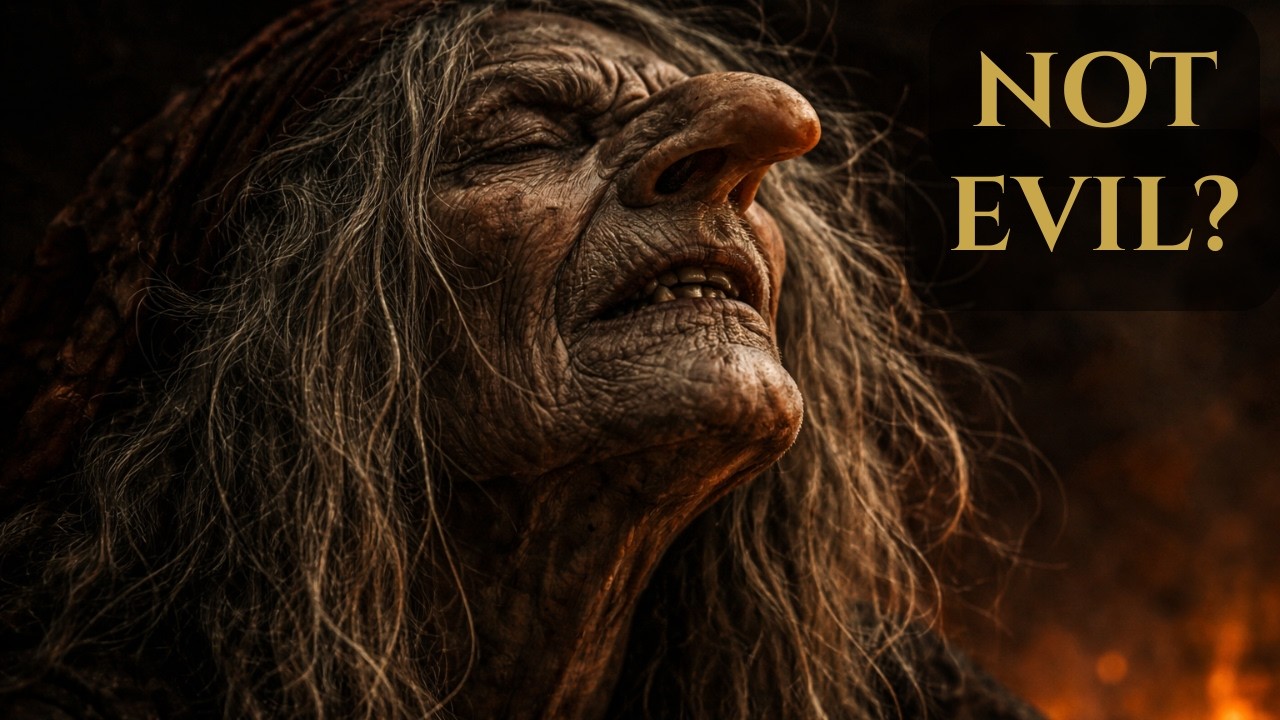
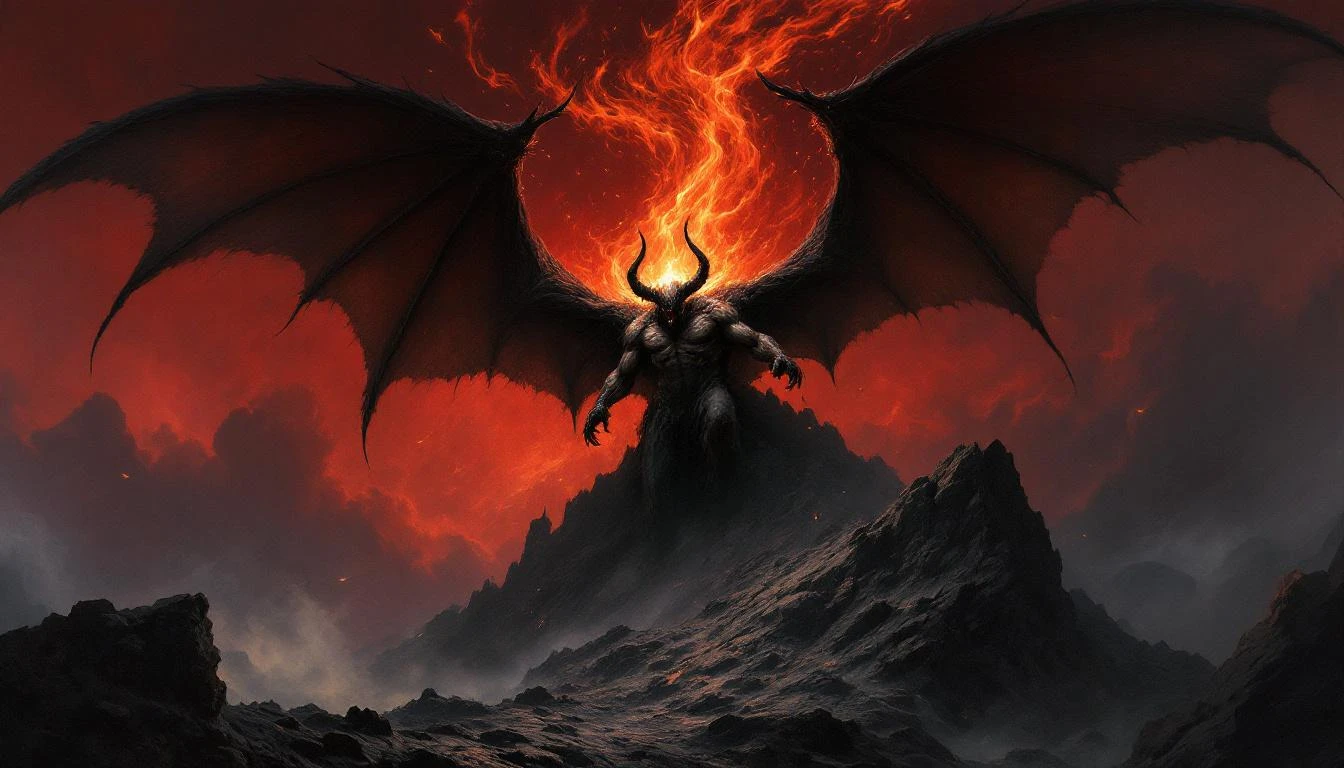
She has been a witch in a hut on chicken legs for a thousand years. She has been a grandmother with iron teeth who tests heroes and devours cowards. She has been a goddess of death and rebirth, a keeper of fire, a guardian of the boundary between the living world and whatever waits beyond it. For centuries, she belonged to the Slavic peoples — to the tales told in darkened rooms across Russia, Ukraine, Poland, and the Czech lands, to the collections of Alexander Afanasyev and the scholarship of Vladimir Propp.
Then Hollywood found her.
In the past two decades, Baba Yaga has become one of the most frequently borrowed figures in global pop culture. She has appeared in blockbuster film franchises, bestselling fantasy novels, AAA video games, tabletop role-playing manuals, and animated children's films. Her name has been spoken by Keanu Reeves's enemies, painted across comic book panels by Mike Mignola, coded into the spell kits of online battle arenas, and whispered in the frozen forests of next-generation open-world games.
Almost none of these adaptations get her right. Some get her spectacularly wrong. A few — a very few — come close enough to something genuine that the original Baba Yaga might recognize her own reflection.
This is a field guide to every major Baba Yaga in modern pop culture: what each version takes from the folklore, what it invents, and what it loses in translation.
John Wick: The Baba Yaga Problem
The most famous use of "Baba Yaga" in modern Western culture is almost certainly its deployment in the John Wick franchise, where the name serves as a fearsome nickname for Keanu Reeves's unstoppable assassin. When the Russian crime boss Viggo Tarasov describes John Wick to his son in the first film (2014), he says the name with the gravity of a man who has seen what it can do. The subtitles translate it as "The Boogeyman."
This translation is wrong. And the error reveals something important about how Western pop culture handles Slavic material.
Baba Yaga is not the boogeyman. She is not male. She is not a shadowy figure who frightens children into obedience. In Slavic folklore, the boogeyman equivalent is the Babay (or Babayka) — a formless, genderless night terror invoked by parents to scare children into sleeping. Baba Yaga is something else entirely: a specific, named, female figure with a house, a mortar and pestle, a fence of human bones, and a set of rules that heroes must follow if they wish to survive.
Viggo does partially correct the error in his own dialogue — he clarifies that John Wick is not exactly the boogeyman, but rather "the one you sent to kill the boogeyman." This is a clever screenwriting move that sidesteps the translation problem, but it does not fix the underlying issue: the franchise treats "Baba Yaga" as a generic Slavic word for "something terrifying," when in fact it is a proper name belonging to a specific mythological figure with her own stories, her own rules, and her own meaning.
What the films accidentally get right is the sense of inevitability. In the original tales, once you have entered Baba Yaga's domain, there is no leaving without her permission. She sets the terms. She controls the boundary. You pass her test or you do not pass at all. John Wick operates with a similar implacable logic — once he is set in motion, he cannot be stopped, only survived. The feeling is correct even if the mythology is mangled.
What they got right: The atmosphere of inescapable, rule-bound lethality. What they got wrong: Everything else. The gender, the translation, the nature of the figure, the entire mythological context.
The Witcher 3: The Ladies of the Wood
CD Projekt Red's The Witcher 3: Wild Hunt (2015) contains what may be the most faithful and most disturbing adaptation of the Baba Yaga archetype in any video game ever made. The Crones of Crookback Bog — known as the Ladies of the Wood, named Brewess, Weavess, and Whispess — are a trio of ancient beings who rule over the swamps of Velen from a gnarled tree at the heart of the bog.
The Crones draw from multiple mythological traditions simultaneously. They echo the three Fates of Greek mythology, the Norns of Norse legend, and Shakespeare's Weird Sisters. But their deepest roots are Slavic. They live in a swamp. They demand tribute from the local villagers. They consume children. They possess knowledge that no mortal should hold. They are, in every meaningful sense, three Baba Yagas.
This aligns with an often-overlooked aspect of the original folklore. In many East Slavic fairy tales, the hero encounters not one but three Baba Yagas — sometimes sisters, sometimes the same figure encountered at different stages of a journey. Each one is older and more powerful than the last. Each sets different tasks. The tripling of the witch is a structural feature of Slavic fairy tale logic, and the Crones of Crookback Bog honor it.
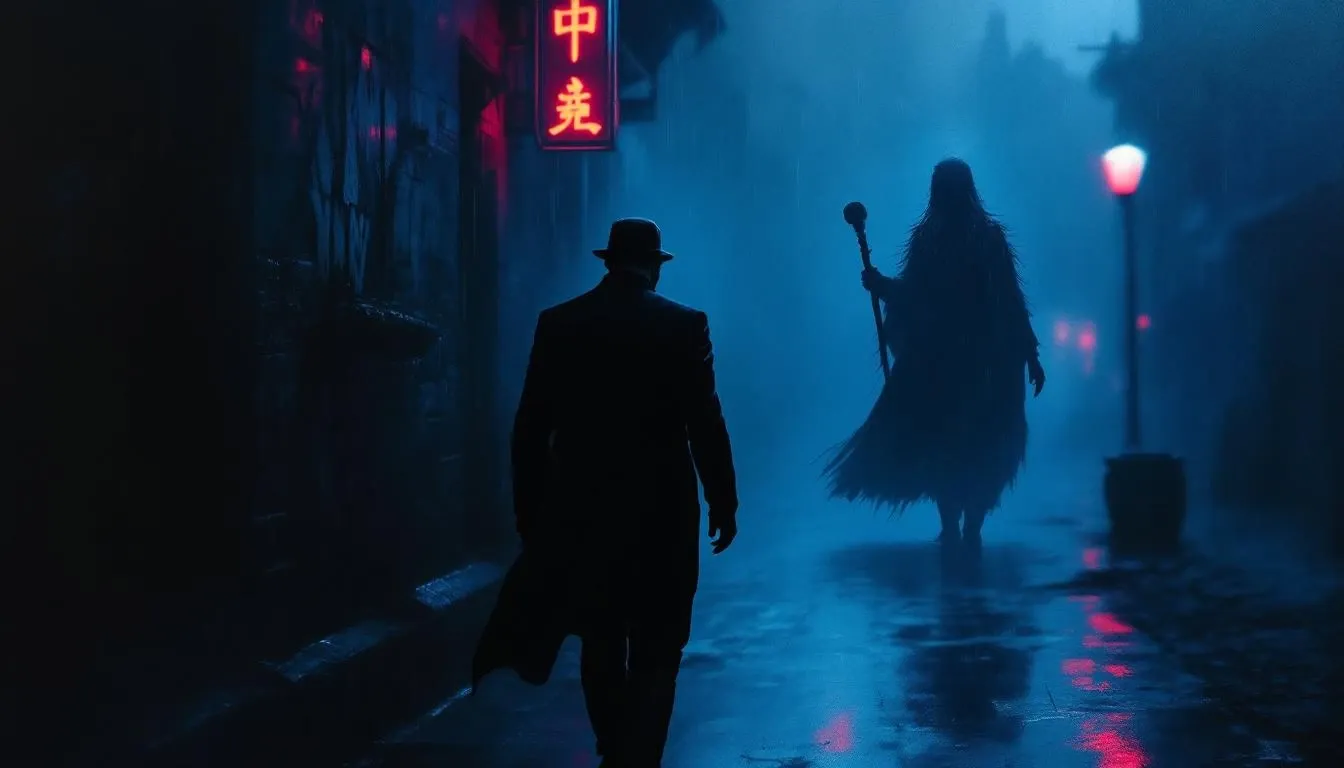
The "Ladies of the Wood" questline forces the player into a moral trap with no clean exit — a hallmark of the Baba Yaga encounter in folklore, where the hero's choices are never between good and evil but between different kinds of cost. The Crones offer protection to the village in exchange for the children. Refuse them, and the village suffers. Accept them, and the children disappear. This is precisely the kind of impossible bargain that defines Baba Yaga in the original tales: she gives, but the price is always higher than you expected.
What they got right: The tripling of the witch, the impossible moral bargain, the connection to swamp and forest, the devouring of children as mythological function rather than simple villainy. What they got wrong: The Crones are presented as purely malevolent. The original Baba Yaga is ambiguous — she helps as often as she harms, provided you know the correct rituals and words.
Hellboy: The One-Eyed Witch
Mike Mignola's Hellboy comics contain one of the most sustained and mythologically grounded portrayals of Baba Yaga in Western pop culture. She first appears in Hellboy: Darkness Calls (2007) and returns across multiple story arcs as a major antagonist — a one-eyed hag nursing a grudge against Hellboy for shooting out her left eye during a mission in Russia in 1964.
Mignola's Baba Yaga lives in a house on chicken legs. She flies in a mortar. She counts dead men's fingers in the dark. She operates according to rules that even she cannot break — ancient laws of hospitality, reciprocity, and boundary that echo directly from Afanasyev's collected tales. When Hellboy enters her domain, he must follow the protocols: announce himself, ask permission, accept what is offered.
The Hellboy version also captures something that most adaptations miss entirely: Baba Yaga's connection to Koschei the Deathless. In Slavic folklore, Baba Yaga and Koschei are entangled figures — she often knows where his death is hidden (inside the needle, inside the egg, inside the duck, inside the hare, inside the chest, on the island). Mignola weaves this relationship into his narrative, giving Baba Yaga a political dimension as a power broker in the world of the dead who trades information and allegiance with other immortal beings.
I wanted Baba Yaga to feel like she had been there forever — like she was part of the landscape, not just a character in the story. She is the forest. She is the swamp. She is the thing that was there before the houses and will be there after they fall down.
What they got right: The house, the mortar, the ritual protocols, the connection to Koschei, the sense of ancient and impersonal power operating by rules older than human civilization. What they got wrong: Very little. Mignola is one of the most mythologically literate creators working in comics, and his Baba Yaga is among the most faithful adaptations in any medium.
Katherine Arden's Winternight Trilogy: Baba Yaga as Ancestor
Katherine Arden's Winternight Trilogy — The Bear and the Nightingale (2017), The Girl in the Tower (2017), and The Winter of the Witch (2019) — represents the most literarily ambitious engagement with Baba Yaga in contemporary English-language fiction. Set in medieval Russia, the trilogy follows Vasilisa Petrovna, a young woman who can see the spirits of Slavic folklore that Christianity is slowly erasing from the world.
Baba Yaga appears in the trilogy not as a villain but as something closer to her original function: a figure of terrifying wisdom who exists outside the categories of good and evil. She is described as "ancient and mad," a being whose power and knowledge operate on a scale that makes human morality irrelevant. Most remarkably, the trilogy reveals that Vasilisa is a descendant of Baba Yaga — the witch's blood runs in her veins, which is why she can see the spirits that others have forgotten.
This genealogical connection captures an aspect of the Baba Yaga myth that almost no other adaptation has attempted. In several folk tales collected by Afanasyev, the heroine's ability to survive Baba Yaga's tests comes not from cleverness alone but from a form of kinship — the heroine carries something of the old world in her, a thread connecting her to the powers that existed before Christianity redrew the spiritual map. Arden makes this subtext into text, and the trilogy is stronger for it.
Arden also populates her world with other figures from Slavic folklore — the Domovoy who guards the household hearth, the Vodyanoy in the frozen rivers, the Firebird whose feathers burn with otherworldly light, the frost demon Morozko who becomes a love interest. The result is a world where Baba Yaga is not an isolated monster but part of an ecosystem of belief — one spirit among many, all of them fading as the old faith gives way to the new.
What they got right: The ambiguity, the ancestral connection, the embeddedness in a living mythological system, the sense of loss as the old world dies. What they got wrong: Almost nothing of substance. Arden clearly did her research, and the trilogy treats Slavic folklore with a seriousness that most Western fantasy does not attempt.
Disney's The Last Warrior: The Russian Blockbuster
The Last Warrior (Posledniy Bogatyr, 2017), co-produced by Walt Disney Company CIS and the Russian studio Yellow, Black and White, is Disney's most direct engagement with Slavic folklore. The film drops a modern Muscovite into a world populated by characters from Russian fairy tales, and Baba Yaga is among the most prominent.
The Baba Yaga of The Last Warrior hews closer to the original than most Western adaptations. Her hut stands on chicken legs and spins to face visitors. She possesses knowledge that other characters lack. She is dangerous but not unambiguously evil — closer to a volatile force of nature that can help or destroy depending on how you approach her. The franchise, which became the highest-grossing Russian-language film series in history, treats its fairy tale characters with a specificity that Western audiences rarely encounter.
What they got right: The hut, the ambiguity, the rules of engagement, the embedding of Baba Yaga within a larger fairy tale ecosystem alongside Koschei and the bogatyrs. What they got wrong: The comedy softens the darkness. The original Baba Yaga is not funny. She is a figure who makes your skin crawl even when she is helping you.
Bartok the Magnificent: The Friendly Witch
Don Bluth's Bartok the Magnificent (1999), a direct-to-video spin-off from Anastasia, features a Baba Yaga voiced by Andrea Martin who is arguably the most sympathetic version of the character in any film. She lives in a house on chicken legs in the Iron Forest. She has iron teeth. She sets three impossible tasks for the hero. But in the film's twist, Baba Yaga is revealed to be not the kidnapper everyone assumes — her fearsome reputation is based on stories that are simply false.
This inversion is clever, and it touches on something real in the folklore. The Baba Yaga of the tales is feared, but fear and evil are not the same thing. The heroes who approach her correctly — who show proper respect, who follow the ritual protocols, who eat her food and answer her questions — receive help. The terror is real, but so is the aid. Bartok simplifies this into a "don't judge a book by its cover" lesson, which is less interesting than the original but not entirely dishonest.
What they got right: The house on chicken legs, the iron teeth, the three tasks, the idea that Baba Yaga's reputation is more complex than simple villainy. What they got wrong: The original Baba Yaga genuinely is dangerous. She does not need to be rehabilitated into a misunderstood grandmother. Her danger is the point.
Rise of the Tomb Raider: The Temple of the Witch
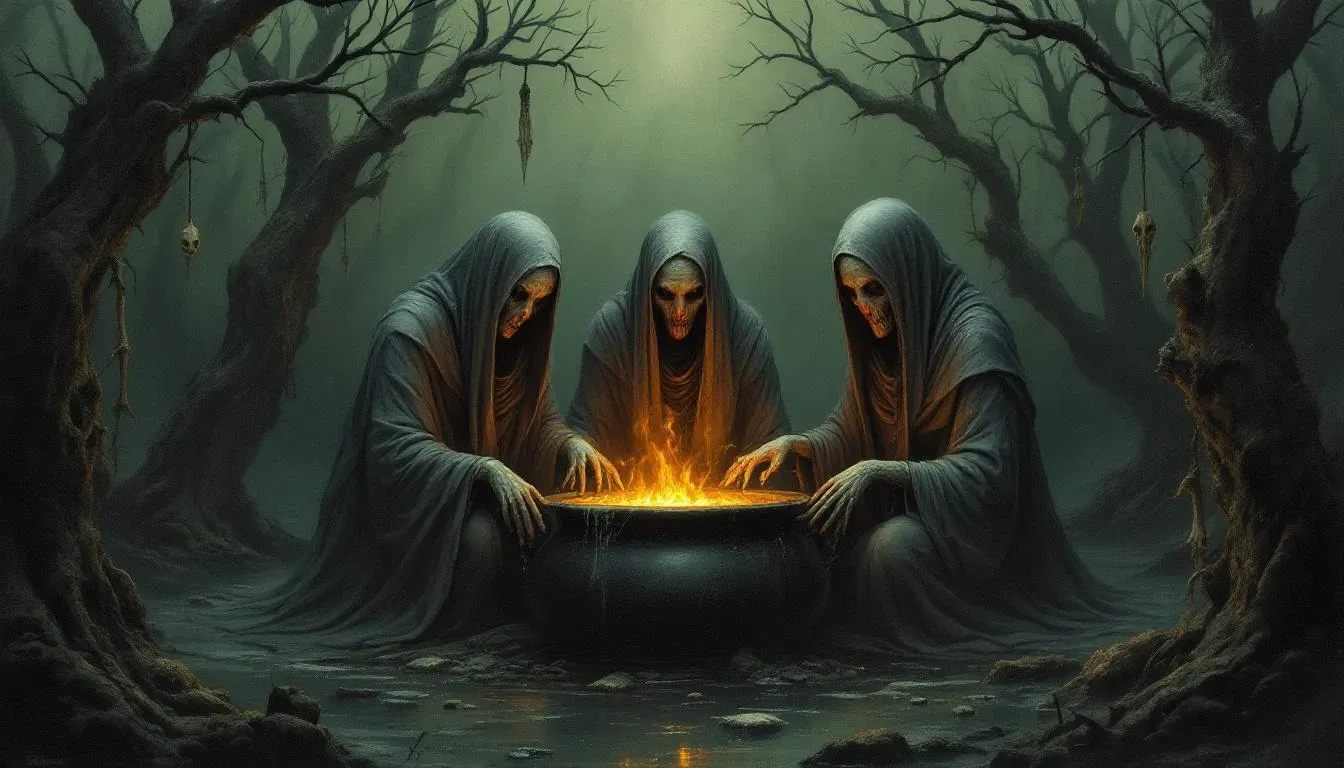
The 2016 DLC Baba Yaga: The Temple of the Witch for Rise of the Tomb Raider sends Lara Croft into a Soviet-era mining facility in Siberia where hallucinations of Baba Yaga terrorize the population. The DLC's twist reveals that the "Baba Yaga" is actually a woman named Serafima who has weaponized hallucinogenic pollen to take revenge on her captors, adopting the witch's identity as a weapon of psychological terror.
This is a surprisingly thoughtful approach. The DLC does not present Baba Yaga as literally real within the game's world — instead, it explores how the idea of Baba Yaga persists as a cultural force, a name so powerful that merely invoking it can paralyze people with fear. The hallucinogenic sequences, in which Lara sees the hut on chicken legs and a towering witch figure moving through toxic fog, are among the most visually striking moments in the franchise.
What they got right: The cultural power of the Baba Yaga myth, the idea that her name carries force independent of whether she is "real," the visual iconography of the hut and the forest. What they got wrong: Reducing Baba Yaga to a disguise undercuts the mythological weight. In the original tales, she is not a metaphor. She is a fact of the world.
SMITE: The Witch of the Woods
Hi-Rez Studios added Baba Yaga to their multiplayer battle arena game SMITE in 2020 as the first deity of the Slavic pantheon. She was the most requested character in the game's history, and the developers clearly did their homework: her kit includes her mortar and pestle (reimagined as a vehicle), her house on chicken legs (which stomps around the battlefield as an ultimate ability), and a potion-brewing mechanic called "Baba's Brew" where random ingredients create different combat effects.
The SMITE version captures the chaotic, unpredictable quality of Baba Yaga — the sense that you never quite know what she will do next. Her abilities are deliberately randomized, reflecting the folklore's portrayal of a figure whose responses depend on context, mood, and whether you have followed the proper rituals.
What they got right: The mortar, the hut, the unpredictability, the status as a major figure deserving of inclusion alongside gods from other pantheons. What they got wrong: Turning a figure of death and transformation into a damage-dealing mage necessarily strips away everything that makes her mythologically significant. But that is a limitation of the genre, not a failure of intent.
Dungeons & Dragons: The Arch-Hag
Baba Yaga has been part of Dungeons & Dragons lore since the earliest days of the game. In current 5th Edition material, she is described as an extraordinarily powerful archfey and arch-hag — a 20th-level spellcaster with godlike intelligence, a dancing hut on chicken legs, a mortar and pestle that functions as a flying carpet, and three hag daughters named Skabatha, Bavlorna, and Endelyn who appeared as antagonists in the adventure The Wild Beyond the Witchlight (2021).
D&D's treatment of Baba Yaga is among the most comprehensive in any pop culture property. The game gives her a stat block that reflects her near-divine power level, a backstory that spans multiple planes of existence, and — crucially — the three daughters, which echoes the tripling motif from Slavic folklore. Her hut has its own stat block, can travel between dimensions, and acts semi-autonomously, which captures the folklore's treatment of the izbushka as a living entity with its own will.
What they got right: The power level, the tripling, the hut as a living entity, the placement of Baba Yaga as a figure who operates between and above the categories that organize the rest of the game's mythology. What they got wrong: D&D frames Baba Yaga primarily as an antagonist to be fought, when the original tales more often present her as a figure to be negotiated with.
Shadow and Bone: The Ghost of Baba Yaga
Leigh Bardugo's Grishaverse novels — adapted by Netflix into Shadow and Bone (2021-2023) — do not feature Baba Yaga by name, but her shadow falls across the entire narrative. The character of Baghra, the ancient and bitter teacher who instructs the heroine in the use of her power, has been widely noted by readers and scholars as a Baba Yaga figure: an old woman living in isolation, possessed of terrible knowledge, who tests the heroine and sends her onward transformed.
The Grishaverse draws broadly from Slavic and Russian culture — its vocabulary, its military structures, its geography, its naming conventions. The Firebird appears as a crucial plot device. The Darkling echoes aspects of Koschei the Deathless. Baghra, with her cave-dwelling isolation, her harshness, her refusal to comfort, and her possession of knowledge that could save or destroy the world, sits squarely in the Baba Yaga tradition even without the name.
What they got right: The archetype of the harsh female elder who tests and transforms, the integration of Slavic mythological motifs into a larger narrative. What they got wrong: By never naming Baba Yaga, the series loses the specificity that makes the folklore powerful. Baghra is a character inspired by Baba Yaga, not a portrayal of her.
The Pattern: What Pop Culture Keeps and What It Loses
Across all of these adaptations, a clear pattern emerges. Pop culture reliably preserves certain elements of the Baba Yaga myth:
- The hut on chicken legs — this image is too striking to lose, and nearly every adaptation includes it
- The sense of ancient power — Baba Yaga is always old, always formidable, always operating on a different scale than the human characters around her
- The testing of heroes — whether through combat, riddles, or impossible moral choices, most adaptations preserve the idea that Baba Yaga puts you through something before she lets you pass
What pop culture consistently loses is more significant:
- The ambiguity — the original Baba Yaga helps and harms in equal measure, and most adaptations flatten her into either a villain or a misunderstood ally
- The ritual structure — in the tales, there are specific words you must say, specific protocols you must follow, specific foods you must eat. This is not decoration; it is the entire mechanism of the encounter
- The connection to death — Baba Yaga's hut is a grave. Her fence is made of bones. Her realm is the boundary between the living and the dead. Most adaptations treat these as visual elements rather than as mythological statements about what Baba Yaga actually is
- The gender — John Wick turned her into a man. Other adaptations reduce her femininity to cackling and ugliness. The original Baba Yaga's femaleness is central to her meaning: she is connected to older, pre-Christian traditions of feminine power over death, birth, and transformation
Why It Matters
The Baba Yaga of the original Slavic tales does not need Hollywood to make her interesting. She is already one of the most complex, psychologically rich, and narratively powerful figures in world mythology — a character who refuses to be reduced to a single moral category, who operates by rules that reflect an entire civilization's understanding of death, transformation, and the cost of knowledge.
Every time a filmmaker, game designer, or novelist borrows her name, they carry an obligation — not to reproduce the folklore exactly, but to understand what they are taking and what they are leaving behind. The best adaptations (Mignola's Hellboy, Arden's Winternight, CD Projekt Red's Crones) succeed because their creators did the work of learning what Baba Yaga actually means before deciding what to do with her. The worst succeed only in spreading a version of the myth that is thinner, flatter, and less true than what the Slavic world created over a thousand years of telling and retelling.
She is still out there, in the forest where the birch trees grow so close together that sunlight never reaches the ground. Her hut is still spinning on its chicken legs. The fence of skulls still glows. And she is still waiting for someone to say the right words, follow the right protocols, and approach the boundary between worlds with the respect it demands.
Most of pop culture has not figured out the right words yet. But it keeps trying. And the fact that it keeps trying — that a thousand-year-old Slavic witch has become one of the most borrowed figures in global entertainment — says something about the power of the original myth that no amount of Hollywood mistranslation can diminish.