The Greeks carved their gods into marble. They gave them human faces, human jealousies, human love affairs, and then set those faces on pedestals in open-air temples where sunlight struck the stone at calculated angles. They wrote their myths down — first in hexameter verse, then in prose, then in the commentaries of philosophers who treated the old stories as raw material for arguments about the nature of the soul. By the fifth century BCE, Athenian playwrights were staging mythological dramas for audiences of fifteen thousand, and the gods had become characters in a literary tradition so robust it would survive the fall of Rome, the Middle Ages, the Renaissance, and the invention of cinema without ever leaving the Western imagination.
The Slavs did none of this. They worshipped in forest clearings and on riverbanks. They carved their gods into wooden pillars that rotted and burned and left almost no archaeological trace. They had no Homer, no Hesiod, no tradition of recording the old stories in a form that could outlast the people who told them. When Christianity swept across the Slavic lands between the ninth and twelfth centuries, the missionaries burned the wooden idols, smashed the stone altars that existed, and replaced the sacred groves with churches. What survived did so the way seeds survive a fire — buried in folk songs, harvest rituals, fairy tales, embroidery patterns, and the habits of grandmothers who made offerings to spirits they no longer called by their old names.
Two mythological systems. Both descended from the same Proto-Indo-European ancestor tradition. Both structured around thunder gods, underworld lords, mother goddesses, and a cosmos divided into layers. And yet the distance between them is not measured in centuries or kilometers. It is measured in something harder to quantify: in what each culture believed the gods were for.
The Sky Fathers: Perun and Zeus
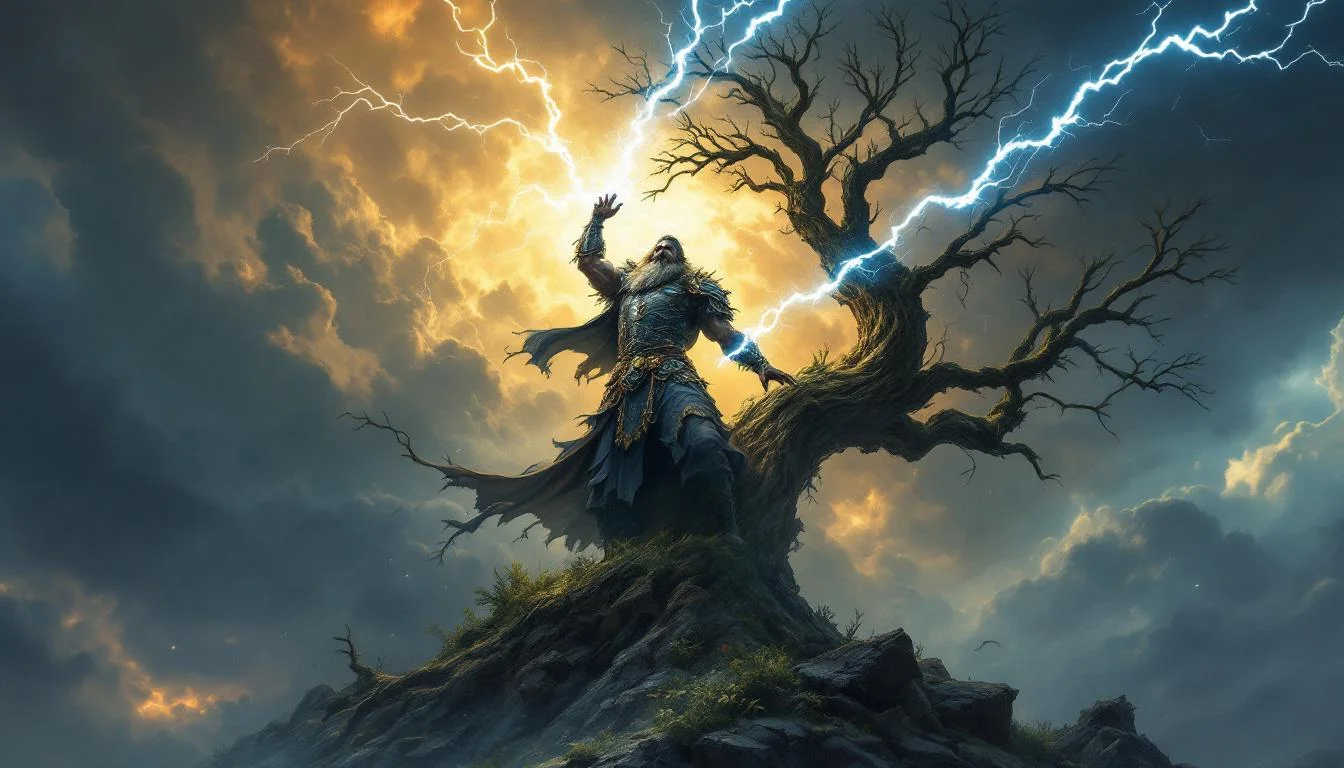
The most immediate parallel is the one that appears in every comparative mythology textbook: Perun, the Slavic god of thunder, lightning, and cosmic law, and Zeus, the Greek king of the Olympians, ruler of the sky and master of the thunderbolt. Both descend from a reconstructed Proto-Indo-European deity associated with the sky and the oak tree — the linguistic root dyeu- ("to shine, sky") feeds into Zeus, Jupiter, and the broader Indo-European sky-father archetype, while perkwu- ("oak, to strike") gives us Perun, Lithuanian Perkunas, and the entire Baltic-Slavic thunder tradition. They are not the same god. They are two branches that grew from the same root and reached toward the same sky.
The resemblances go beyond genealogy. Both Perun and Zeus wield the thunderbolt as their primary weapon. Both are associated with the oak — the tree most frequently struck by lightning, which ancient peoples across Europe interpreted as proof of divine favor. Both stand at the apex of their respective divine hierarchies. Both function as enforcers of cosmic order, punishing oath-breakers and defending the structured world against primordial chaos. The Procopius of Caesarea, writing in the sixth century, recorded that the Slavs considered the god of lightning to be "the lord of all," a description that would sit comfortably in any account of Zeus's Olympian supremacy.
But beneath these structural similarities, the two gods inhabit fundamentally different mythological ecosystems. Zeus rules from Olympus — a specific, named mountain with a peak that humans could theoretically climb. His court has architecture: thrones, halls, a gate of clouds. He participates in an elaborate social network of gods with distinct personalities, rivalries, and romantic entanglements. Zeus seduces mortal women in the form of swans and bulls. He argues with Hera. He punishes Prometheus. He is, in the fullest sense, a character — a figure with psychological depth, rendered in narrative detail by centuries of poets and dramatists who treated the gods as mirrors of human behavior.
Perun is something more elemental and less personal. We have no Slavic narrative in which Perun seduces anyone, no domestic comedy, no Olympian soap opera. What we have is a cosmic function: the storm that strikes the serpent. Perun is the force that maintains the boundary between the ordered upper world and the chaotic world below. His mythology is not a story about a character — it is a description of how the universe maintains itself. When Perun raises his axe against Veles, the rain falls, the waters flow, and the agricultural cycle continues. He is less a king on a throne and more a law written in lightning.
The Lords Below: Veles and Hades
If the thunder gods mirror each other from above, the underworld deities diverge so dramatically that the comparison becomes more interesting for what it reveals about difference than about similarity.
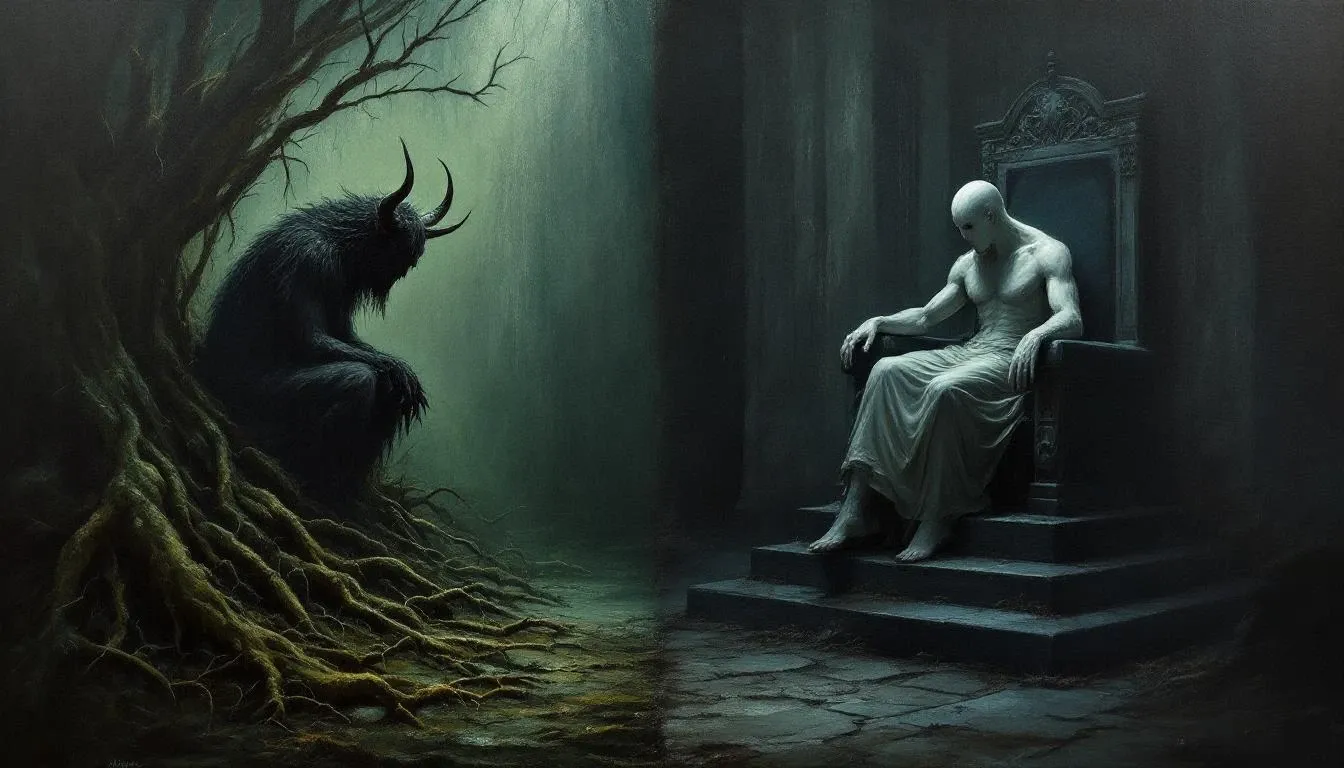
Hades, the Greek god of the dead, rules a subterranean kingdom with the administrative precision of a bureaucrat. His realm has geography: the river Styx, the fields of Asphodel, the punishment of Tartarus, the bliss of Elysium. Souls arrive, are judged by Minos, Rhadamanthus, and Aeacus, and are sorted into their appropriate districts. Cerberus guards the gate. Charon ferries the dead across the water. The Greek underworld is an institution — grim, orderly, and permanent. Hades himself is not evil. He is simply the administrator of a system that operates with the cold inevitability of a court that never adjourns.
Veles is nothing like this. The Slavic god of the underworld is simultaneously the lord of the dead, the god of cattle and material wealth, the patron of music and poetry, a master shapeshifter who takes the form of a serpent, a bear, or an old man at crossroads, and the eternal adversary of Perun in the central myth of Slavic cosmology. Where Hades sits in his kingdom and waits for the dead to come to him, Veles actively reaches upward — stealing cattle (a mythological code for rain and fertility), challenging the order of the sky, provoking the thunderstorm that the world requires to stay alive.
The Slavic underworld itself, called Nav, bears little resemblance to the Greek one. Nav is not a place of judgment. It is a wet meadow where the dead are shepherded by Veles the way a herdsman tends his flock. There are no trials, no sorting mechanisms, no Elysian rewards or Tartarean punishments. The dead simply go to the place below, and they are not entirely gone — they can return as ancestors who protect the household, or as restless spirits if the proper funeral rites were neglected. The boundary between Nav and the living world of Yav is porous. During certain feast days, the liminal hours of dusk and dawn, and the turning points of the agricultural calendar, the dead walk among the living, and the living leave food at graves to keep the dead content.
This porosity is the deepest difference between the two mythological underworlds. The Greek system draws hard lines. The living belong above. The dead belong below. Orpheus tried to cross that line and failed. Persephone crosses it, but only under strict contractual terms — six months above, six months below, the seasons themselves governed by a custody arrangement negotiated between gods. The Slavic system treats the boundary between life and death the way it treats the boundary between the forest and the village: always there, never quite solid, crossed routinely by things that do not ask permission.
The Mother Figures: Mokosh, Demeter, and the Earth Itself
Greek mythology distributes the feminine divine across a crowded pantheon. Hera governs marriage. Demeter governs grain and the harvest. Athena governs wisdom and war. Aphrodite governs desire. Artemis governs the hunt and the wilderness. Hestia governs the hearth. Each goddess occupies a defined lane, and the mythological tradition provides each with a biography, a set of stories, a personality rendered in enough detail to fuel centuries of art and literature.
Slavic mythology concentrated these functions into fewer figures, and Mokosh carried the heaviest load. She was the earth mother, the spinner of fate, the protector of women, the guardian of sheep and wool, the goddess of moisture and fertility, and possibly the only female deity in Vladimir's hilltop pantheon of 980 CE. Where Greek mythology gave femininity six addresses, Slavic mythology gave it one — and that one address was the earth itself.
The closest Greek parallel to Mokosh is Demeter, the goddess of grain, harvest, and the fertility of the soil. Both are fundamentally agricultural deities whose worship was embedded in the rhythms of planting and reaping. Both are associated with the practical, life-sustaining work of feeding people. Both carry an emotional weight that the warrior gods do not — the grief of Demeter searching for Persephone is one of the most powerful episodes in Greek mythology, and the Slavic veneration of Mokosh carried a similar tenderness, expressed not in literary narrative but in the ritual act of leaving offerings of wool and thread at crossroads, pouring libations onto the earth, and decorating distaffs with symbols that invoked her protection.
But Mokosh's role extends into territory Demeter never touched. Mokosh is a fate-spinner — she determines the length and quality of human lives, a function the Greeks assigned to the Moirai, the three Fates who cut the thread of destiny. She is also a hearth protector, overlapping with Hestia. And she is connected to water and moisture in ways that link her to the deep structure of Slavic cosmology, where wetness, fertility, and the underworld form an interconnected complex that has no exact Greek equivalent. Mokosh is not one goddess doing the work of six. She is a different kind of goddess entirely — one who was never separated into specializations because the culture that worshipped her did not think of the world in those terms.
The Seasonal Cycle: Morana, Persephone, and the Meaning of Winter
Both mythologies grapple with the same agricultural reality — winter comes, the earth goes dormant, and something must explain why — but they explain it in radically different ways.
The Greek solution is a story. Persephone, daughter of Demeter, is abducted by Hades and taken to the underworld. Demeter's grief causes the earth to wither. A compromise is reached: Persephone spends part of the year below and part above. When she returns, spring comes. When she descends, winter follows. It is a narrative with characters, motivation, emotional stakes, and a resolution that explains the seasons as a consequence of divine family drama. The seasons exist because of something that happened once, in mythological time, and keeps repeating as a contractual obligation.
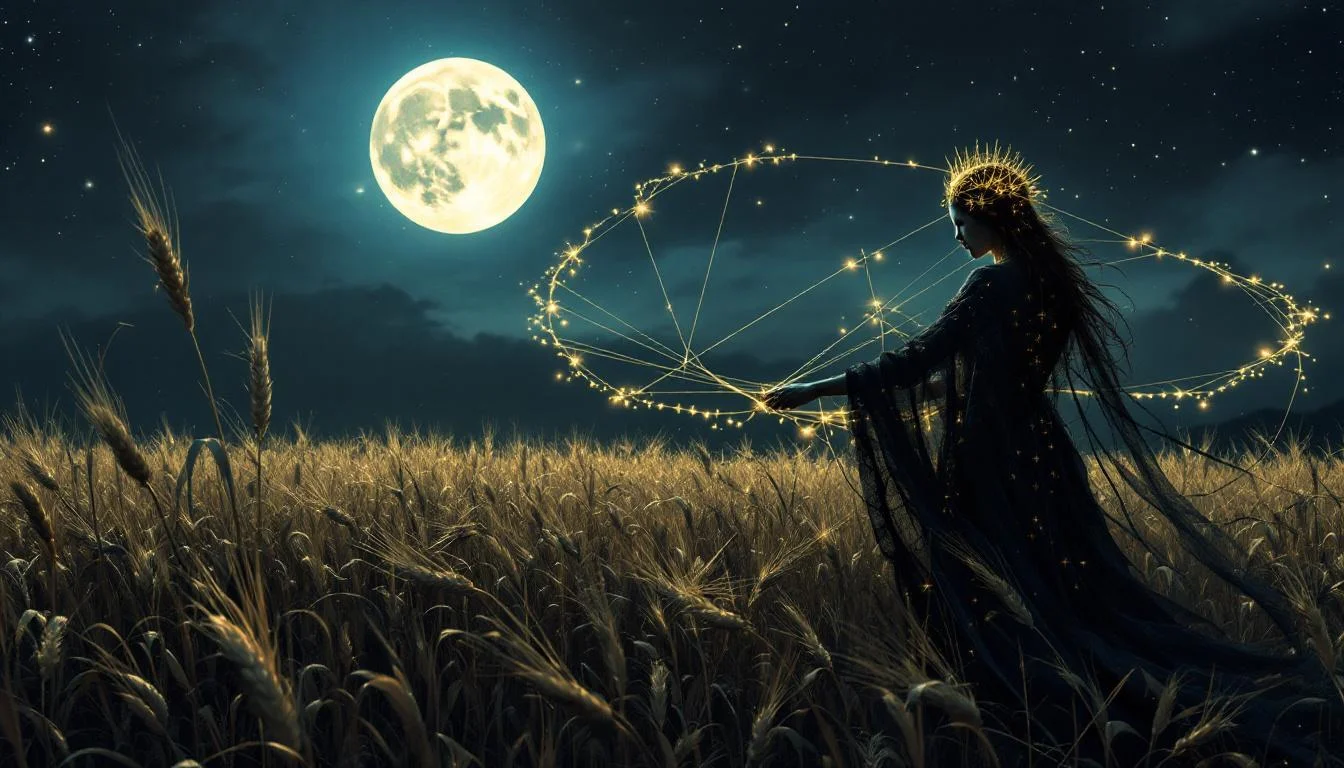
The Slavic solution is a ritual. Morana, the goddess of winter and death, does not get abducted. She arrives. She reigns. And then, at the end of winter, she is killed — not in a myth, but in an annual ceremony performed by living people. Across the Slavic world, from Poland to Russia to the Czech lands, communities crafted effigies of Morana from straw and cloth, paraded them through the village, and then drowned them in rivers or burned them in bonfires. This was not a retelling of a story. It was a direct action: the community itself destroyed winter. The seasons did not turn because of a bargain struck between gods. They turned because human beings participated in the mechanism that made them turn.
The Slavic ritual calendar does not narrate the myth — it enacts it. The drowning of Morana, the welcoming of Vesna, the burning of the Kupala bonfire — these are not commemorations of past events but present-tense interventions in the cosmic order. The participants are not audiences. They are agents.
This distinction runs through the entire comparison. Greek mythology is fundamentally narrative. It tells stories about gods and heroes, and those stories explain the world. Slavic mythology is fundamentally ritual. It provides frameworks for doing things — for acting upon the world through ceremonies, offerings, charms, and seasonal observances that maintain the relationship between humans, spirits, and the forces that make crops grow and rivers flow.
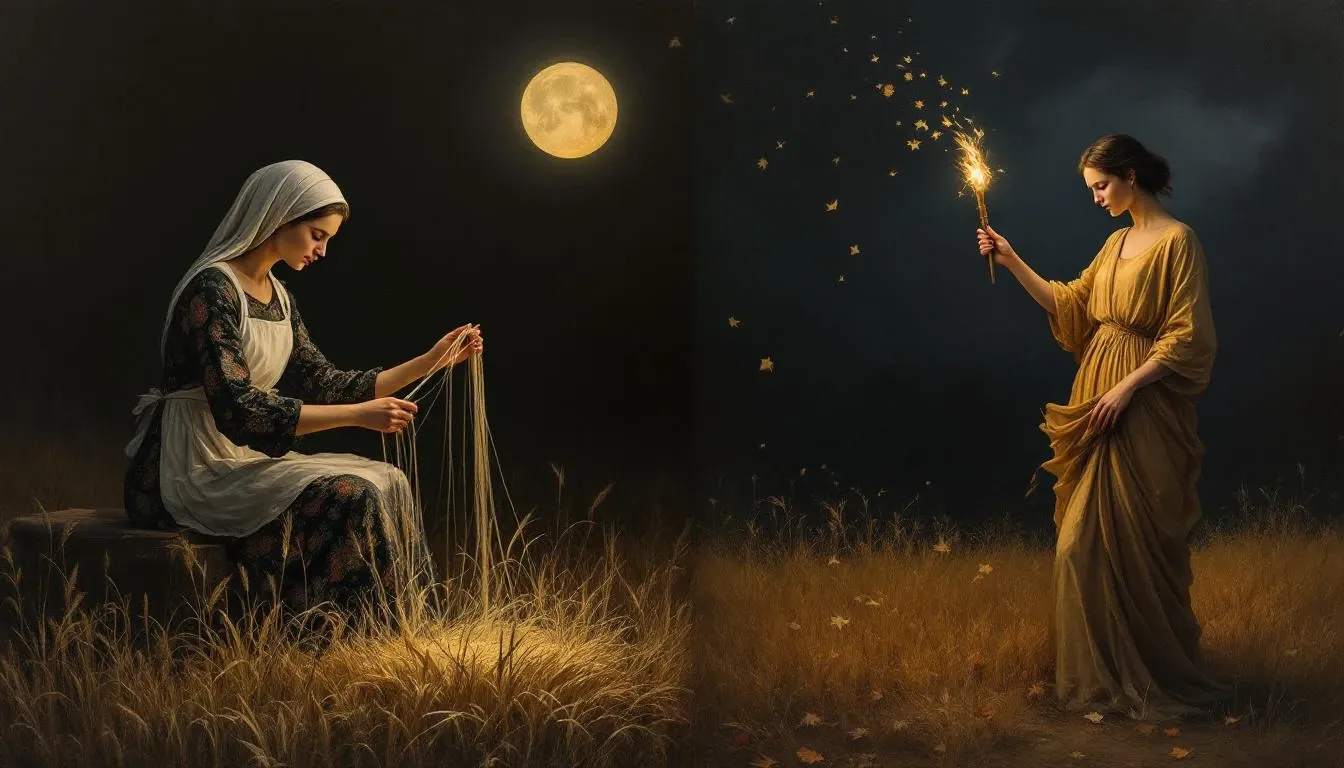
Written Gods and Whispered Gods
The most consequential difference between Slavic and Greek mythology is not theological. It is technological. The Greeks had writing. The Slavs, during the centuries when their mythology was a living practice, did not.
This single fact reshaped everything. Greek mythology crystallized into fixed texts — the Iliad, the Odyssey, Hesiod's Theogony, the Homeric Hymns, the tragedies of Aeschylus, Sophocles, and Euripides — and those texts created a canonical version of the myths that could be studied, debated, illustrated, translated, and transmitted across millennia without significant distortion. A Greek farmer in 400 BCE and a British schoolboy in 1900 CE could read the same story about Odysseus and the Cyclops, word for word. That continuity is not a natural property of mythology. It is a property of literacy.
Slavic mythology had no such anchor. It lived in the mouths of the people who practiced it, and when those mouths fell silent — when the conversion to Christianity broke the chain of transmission — the myths did not die cleanly. They fragmented. Perun became the prophet Elijah, who rides a chariot across the sky and commands storms. Veles became Saint Blaise, patron of cattle. Mokosh became Saint Paraskeva, protector of women and spinning. The old gods did not vanish; they put on Christian masks and continued to receive offerings under new names. But the narratives — the stories that connected these figures to each other and to a coherent cosmology — those were lost, or rather, scattered into a thousand folk customs whose original mythological context can only be reconstructed through comparative analysis.
The result is an asymmetry that shapes every modern encounter with these traditions. Greek mythology feels complete. It has beginnings, middles, and ends. Characters have arcs. The cosmos has a creation story (Hesiod's Theogony) and a detailed geography (Homer's descriptions of Olympus, the underworld, the wanderings of Odysseus). You can teach a semester-long university course on Greek mythology and never run out of primary texts to assign.
Slavic mythology feels like a ruin — vast, atmospheric, clearly the remains of something enormous, but missing walls, missing roofs, missing the connecting passages that would let you walk from one room to the next. The gods are there. The three-world cosmology is there. The central myths — Perun versus Veles, the World Tree, the seasonal cycle of death and renewal — can be reconstructed with reasonable confidence. But the texture, the detail, the narrative richness that makes Greek mythology so endlessly teachable and adaptable — that was written on water, and the water has flowed away.
This does not make Slavic mythology lesser. It makes it different in kind. Greek mythology is a library. Slavic mythology is an archaeological site. Both contain knowledge. But you read one and you excavate the other, and the skills required are not the same.
Why This Comparison Matters
The purpose of placing these two traditions side by side is not to declare a winner. It is to see each one more clearly by the light of the other.
Greek mythology shows us what happens when a mythological tradition gains access to literacy, artistic patronage, and imperial dissemination. It becomes literature. It becomes philosophy. It becomes the foundation of Western storytelling — the hero's journey, the tragic flaw, the divine comedy of gods behaving badly. It gains permanence, influence, and global recognition. But it also becomes fixed. The myths stop evolving. They become objects of study rather than living practices. No one in modern Athens leaves milk at a crossroads for Hecate. The gods became characters in books, and characters in books do not receive offerings.
Slavic mythology shows us what happens when a tradition of equal depth and complexity remains oral, embedded in practice, and then survives its own apparent destruction. It does not produce an Iliad. But it produces something the Iliad cannot replicate: a living relationship between human communities and the forces they share their landscape with. The domovoy behind the stove, the leshy in the deep forest, the rusalka in the river at midsummer — these are not characters in stories. They are presences in places. And in rural communities across Eastern Europe, some version of that relationship persisted well into the twentieth century, long after the libraries of Athens had become tourist destinations.
If you have come to this comparison already knowing the Greek gods — their names, their stories, their marble faces — then Slavic mythology offers you something genuinely unfamiliar: a tradition that valued practice over narrative, that embedded the divine in the landscape rather than on a mountaintop, and that understood the cosmos not as a stage for heroic drama but as a living system that required constant human participation to keep functioning. The Slavic comparison with Norse mythology reveals sibling traditions separated by geography. The comparison with Greek mythology reveals something deeper — two fundamentally different answers to the same question: what are the gods, and what do they want from us?
The Greeks said: the gods are like us, only more powerful, and they want to be remembered in song.
The Slavs said: the gods are like the weather, and they want to be fed.
Both answers have survived. One carved in stone. The other carried in the hands that sow the grain.