You are crossing a mountain pass in the Dinaric Alps. The trail has narrowed to a goat path. To your left, limestone cliffs rise into the fog. To your right, the ground drops away into a gorge so deep that you cannot hear the river at the bottom. The wind is wrong — it pushes from the wrong direction, as if something large is breathing down at you from the ridgeline.
Then you see the old man.
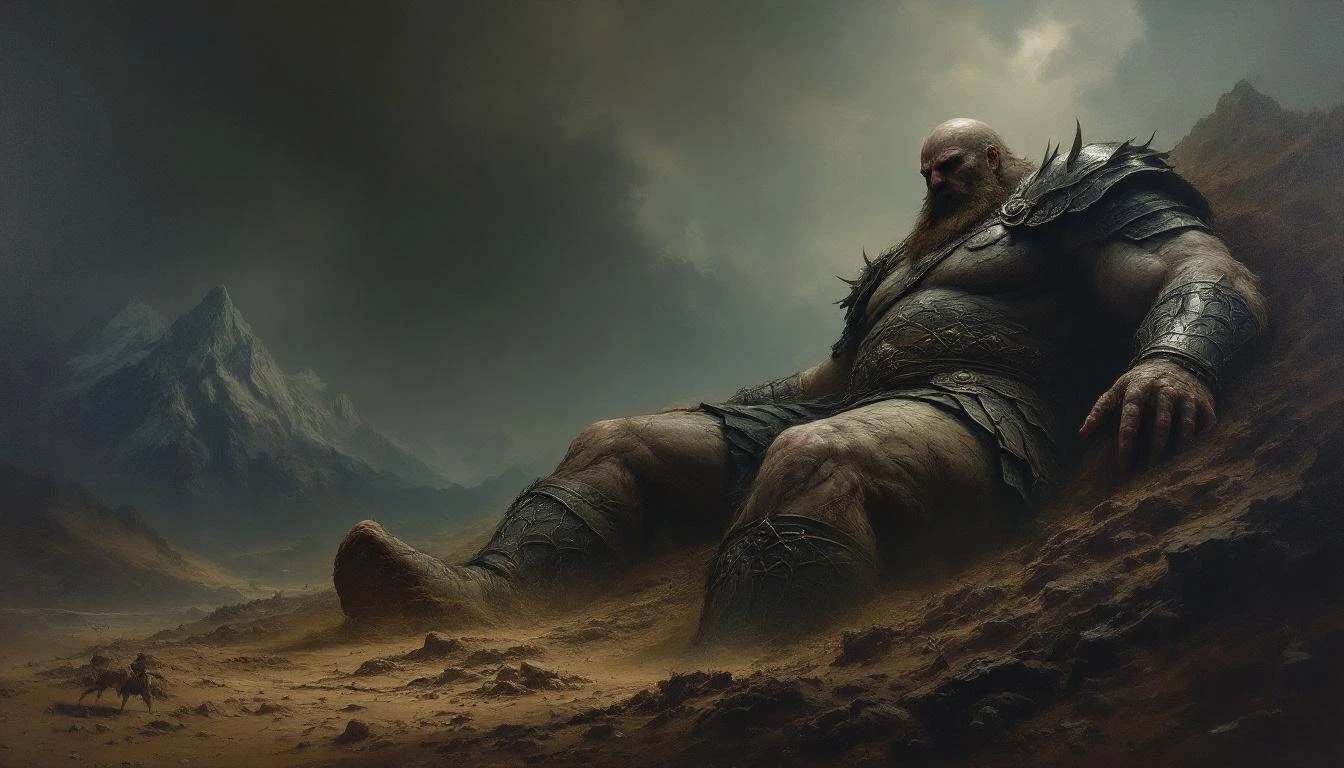
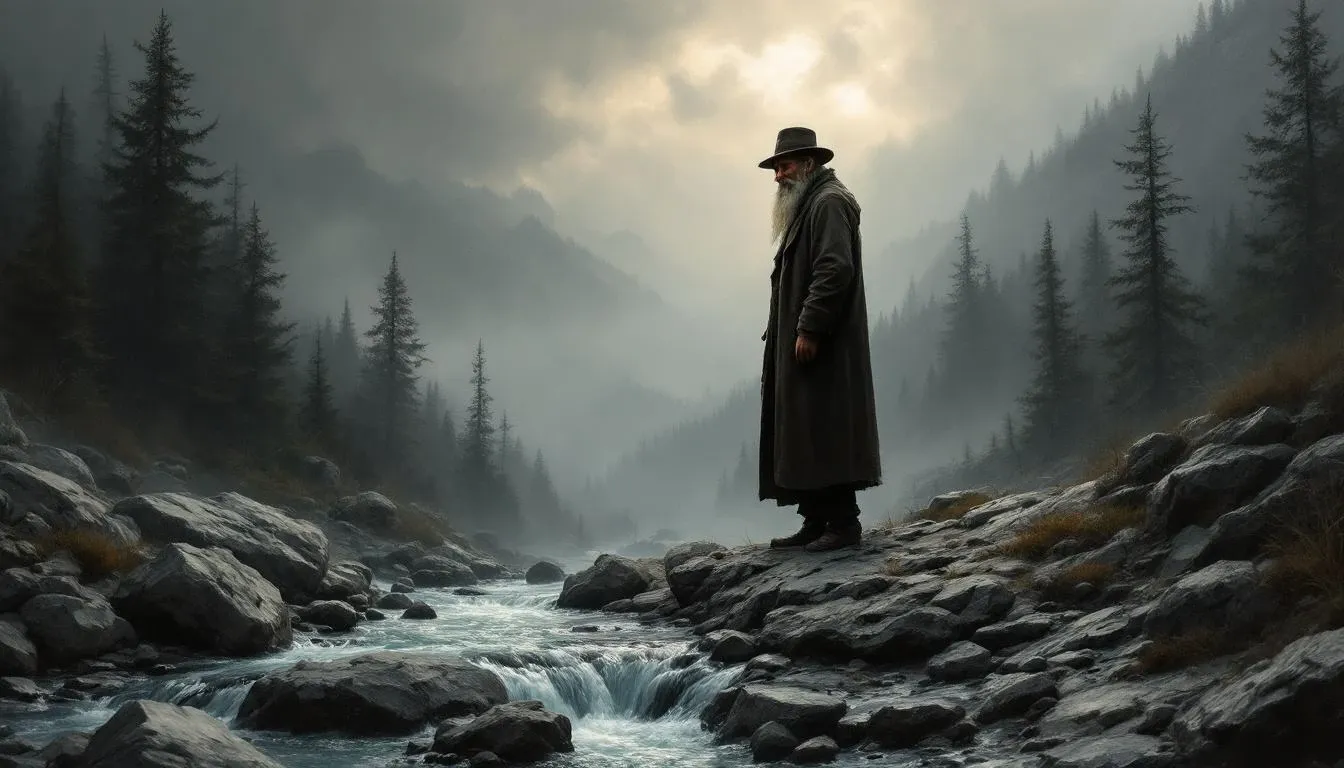
He is very tall. Taller than anyone you have met, taller than makes sense for a human body, but your mind explains this away because the rest of him is so thin, so emaciated, that the height reads as gauntness rather than enormity. He is dressed poorly — shepherd's clothes, maybe, or something older. His face is long. His arms are long. His smile is friendly.
He says he can help you. The stream ahead is swollen. The rocks are slippery. He is strong — stronger than he looks, he says — and he will carry you across. You are tired. The stream does look dangerous. The old man's offer is kind.
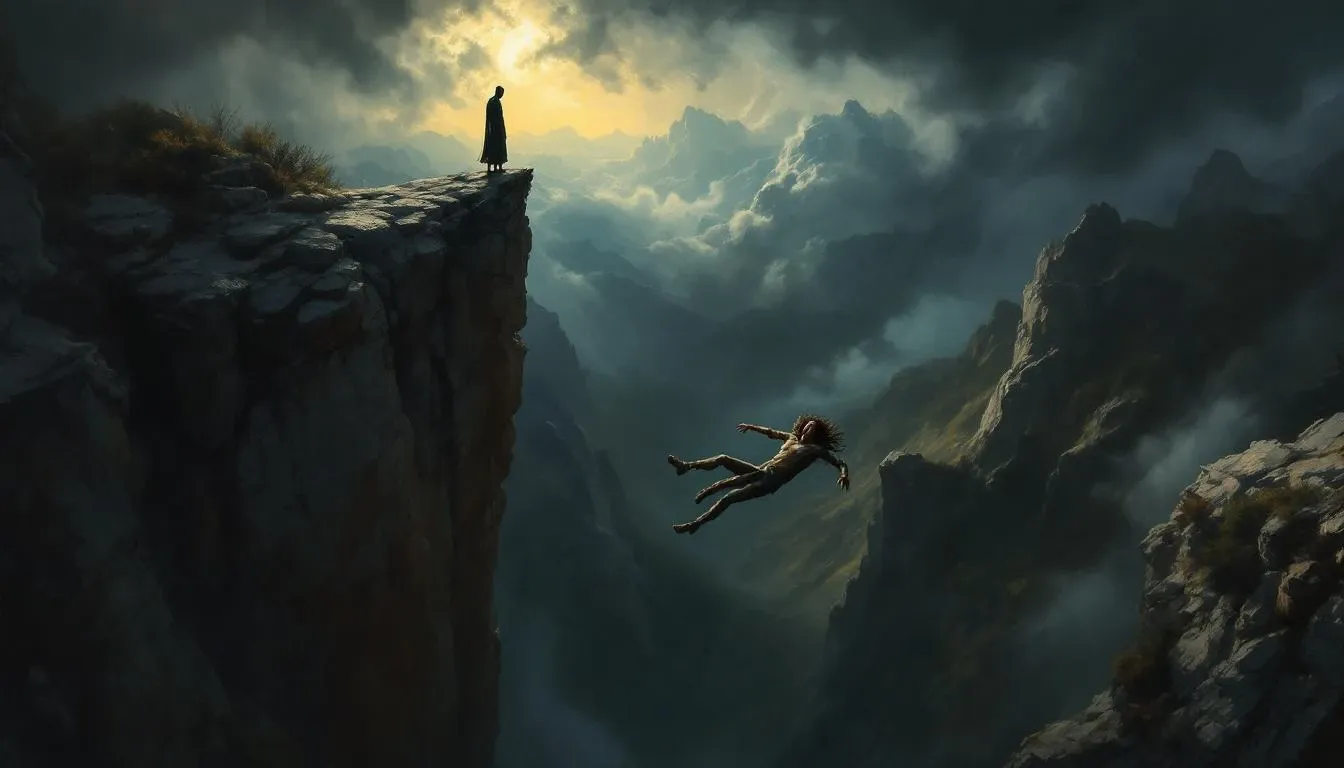
If you accept, he will carry you. Not across the stream. Straight to the edge of the nearest cliff. And then he will throw you off.
This is the Stuhac.
The Name and the Region
The Stuhac (sometimes spelled stuha, stuhać, or stuhač) is a figure from the mountain folklore of Slovenia, Croatia, Bosnia, and the borderlands where these traditions overlap. The name is linguistically related to the Serbian and Bosnian zduhać — the ecstatic storm-fighter who leaves his body during storms to battle the Ala — and the connection is not accidental. Both words derive from a root associated with breath, wind, and spirit. But where the Zduhac uses his power to protect, the Stuhac uses his to destroy.
The Stuhac is most strongly associated with the Julian Alps, the Kamnik-Savinja Alps, and the northern Dinaric ranges — the mountainous spine of Slovenia and the adjacent Croatian highlands. These are landscapes of vertical drama: narrow valleys, steep passes, exposed ridges, and drops that kill without ambiguity. The Stuhac is a creature of this geography. He does not exist in the plains. He does not haunt river valleys or forest floors. He exists where the ground can be removed from beneath you — where a single step in the wrong direction, or a single push from the wrong hands, means a fall that nothing survives.
The folklore scholarship on the Stuhac is thinner than for figures like the Vukodlak or the Rusalka, largely because the tradition was regional and oral, preserved in mountain communities that were small, isolated, and of limited interest to the urban ethnographers who collected the major Slavic folk material in the 19th century. What survives comes primarily from Slovenian folk collections and from the work of 20th-century scholars who documented the last generation of informants who remembered the stories.
The Method: Kindness as Weapon
The Stuhac's defining characteristic is not his size, not his strength, not his supernatural nature. It is his helpfulness. He approaches travelers. He speaks gently. He offers assistance with exactly the kind of obstacle that mountain travel produces: a swollen stream, a tricky scramble, a narrow ledge that requires a steadying hand.
This is what makes the Stuhac genuinely terrifying as a folklore figure, more so than creatures that simply attack. The Ala is a storm demon — you know what she is when you see the sky turn green. The Leshy is a forest lord — his domain is the deep woods, and you enter it knowing the risk. The Stuhac is a man who seems to want to help you. His weapon is your trust.
The pattern is consistent across accounts. The Stuhac appears on the trail, usually at a point where the traveler is already tired, already anxious, already in a position where the terrain makes assistance welcome. He engages in conversation — friendly, casual, the kind of talk a shepherd or woodcutter might make. He identifies a specific obstacle ahead and offers to help the traveler past it. The offer is physical: he will carry the traveler on his back across a stream, or lift them over a rock face, or guide them along a narrow path where a misstep means a fall.
The traveler who accepts is picked up — and discovers, too late, that the thin old man is enormously, impossibly strong. The Stuhac does not cross the stream. He turns toward the nearest precipice and moves with a speed and purpose that reveal his true nature. Before the traveler can struggle free, the Stuhac has reached the cliff edge. The throw follows. The Stuhac laughs. In some accounts, he watches the body fall the entire way down, waiting for the impact, savoring it.
What He Looks Like
The Stuhac's appearance was designed to deceive. He was tall — unnaturally tall, in most accounts — but thin, which softened the impression of his height. Old. Weathered. His skin was the color of rock or bark, blending with the mountain environment. In some accounts, his fingers were unusually long — the better to grip a victim, the better to carry, the better to throw. In others, his eyes were wrong: too bright, too steady, the kind of eyes that do not blink in wind or cold.
He wore the clothes of a local — a herdsman, a woodcutter, a mountain farmer. This was part of the deception. A traveler encountering a figure in shepherd's clothing on a mountain trail would assume he belonged there, that he knew the paths, that he was safe. The clothing was camouflage, not in the military sense but in the social sense: it said I am one of you, I am harmless, I am help.
Some accounts gave the Stuhac a specific physical tell. His feet were wrong — turned backward, like those of some South Slavic forest spirits, or too large for his body, or missing entirely, his legs ending in stumps that somehow did not prevent him from moving with terrible speed across rock and ice. But this tell was only visible if you knew to look for it, and by the time you were close enough to examine a stranger's feet on a mountain trail, you were already within reach.
The backward-feet motif connects the Stuhac to a wider Slavic and Balkan tradition of demons and spirits whose bodies contain one anatomical inversion — a mark of their otherness that is visible but easy to overlook. The Vila of South Slavic tradition sometimes had goat hooves hidden beneath her dress. The Chort had a tail. The Stuhac's reversed or deformed feet served the same function: a warning embedded in the body, available to the observant, fatal to the inattentive.
How to Survive
The folklore was not only a warning. It was a manual. The mountain communities that told Stuhac stories also transmitted methods for identifying and escaping him, because the point of the story was not to terrify people into staying off the mountains — the mountains were where the pastures were, where the trade routes crossed, where life required you to go — but to arm them with the knowledge needed to go safely.
Do not accept help from strangers in mountain passes. This was the primary lesson, and it was not delivered as a general moral principle. It was delivered as a specific survival instruction, as practical as "test the ice before you cross" or "do not camp in a dry riverbed." A stranger who offers to carry you on a mountain is not being kind. He is positioning himself between you and the ground.
Watch the feet. If the old man's feet are backward, or too large, or absent, do not engage further. Cross yourself — in the Christianized versions of the tale — and continue on your path without speaking. Speech is engagement, and engagement gives the Stuhac purchase on your trust.
Do not let him carry you. This seems obvious, but the folklore was explicit about it because the Stuhac's power was persuasion, not force. He did not attack travelers who refused his help. He was not a predator in the conventional sense — he did not chase, did not ambush, did not overpower. He offered. He waited. He relied on the traveler's fatigue, fear, and social conditioning (it is rude to refuse help from an old man) to do the work of delivering the victim into his arms. A firm refusal — even an impolite one — was sufficient defense.
Travel with others. The Stuhac targeted lone travelers. The stories consistently featured solitary figures — a single shepherd, a lone merchant, an isolated traveler who had become separated from a larger party. Groups were safe, either because the Stuhac could not carry multiple victims or because the presence of witnesses made the deception impossible. This practical advice — do not cross the mountains alone — predated and outlasted the supernatural framework in which it was embedded. The Stuhac may have been a spirit, but the advice protected against rockfalls, weather, and bandits just as effectively.
If carried, struggle immediately. In some versions of the story, a traveler who realized the deception in time could break free. The Stuhac was strong but not invincible. A sharp blow to the head, a stab with a knife, a prayer spoken loudly enough to invoke divine protection — these could cause the Stuhac to drop his victim before reaching the cliff edge. But the window was narrow. Once the Stuhac began to run, his speed was inhuman, and the cliff came fast.
The Mountain as Character
The Stuhac cannot be understood apart from the landscape that produced him. The Dinaric Alps and the Julian Alps are young mountains — geologically active, still pushing upward, their faces scarred with cliffs and gorges that are not the gentle slopes of eroded ranges but the raw, vertical exposures of stone that has not yet had time to soften. Walking in these mountains is a negotiation with gravity. The paths are narrow, the drops are real, and death by falling is not a metaphor. It is the primary cause of mortality in mountain travel, and it has been for as long as humans have crossed these passes.
The Stuhac is the mountain's hostility personified. Not as a storm, not as an avalanche, not as any specific natural event, but as the more insidious danger of the landscape itself: the cliff that is always there, the drop that is always waiting, the gravitational pull that turns a single misstep into a killing fall. The mountain does not chase you. It does not ambush you. It waits. It offers you a path, and if you trust the wrong path, it removes the ground from under you.
This is exactly what the Stuhac does. He does not chase. He does not ambush. He waits on the path and offers to help, and if you trust him, he removes the ground. He is the cliff given a face and a voice and the ability to smile.
Mountain travelers in the alpine regions knew the Stuhac as one knows the weather: a force to be respected and predicted but never fully controlled. He was spoken of in the same breath as rockfalls and sudden storms — not as a separate category of danger but as part of the continuum of threats that the mountain presented to anyone who dared to cross it.
Connections: The Giant Tradition
The Stuhac belongs to a broader family of South Slavic and pan-Slavic giant figures, though he is smaller and more cunning than most of his relatives.
The Osilki — the primordial giants of East Slavic tradition — were mountain-movers, landscape-shapers, beings of cosmic physical power who threw boulders for sport and dug rivers with their fingers. The Svyatogor of the Russian byliny was so heavy that the earth could not bear his weight. These figures operate on a mythological scale that the Stuhac does not approach. He is not a world-shaper. He is not a cosmic being. He is, in some sense, a diminished giant — the last remnant of a tradition that once populated the mountains with enormous, ancient beings, scaled down by centuries of retelling until only the essential function remained: a large figure on the mountain who means you harm.
The Babaroga of South Slavic tradition — the bogeywoman who carries children away — shares the Stuhac's domestic function as a warning figure. Parents told children about the Babaroga to keep them from wandering. Mountain communities told adults about the Stuhac to keep them from trusting strangers on dangerous trails. Both figures served the same social purpose: encoding survival knowledge in narrative form, making practical wisdom memorable by making it frightening.
The Stuhac also connects to the broader European tradition of the deceptive helper — the figure who offers assistance and delivers destruction. The Scandinavian nokk (water spirit) played music to lure travelers into drowning pools. The Irish pooka offered rides that ended in wild, terrifying gallops. The pattern is cross-cultural: the creature that exploits human need, human courtesy, human fatigue, turning the traveler's trust into the mechanism of their destruction.
The Fear That Stayed
The Stuhac is not famous. He does not appear in fantasy novels or video games. He has not been adopted by the global folklore entertainment industry the way the Leshy or the Rusalka have been. He remains what he always was: a regional figure, a mountain spirit, a story told by people who lived in places where falling was the most common way to die.
But the fear he represents is universal. The helpful stranger. The offer that is too good. The smile that conceals the cliff. Every culture that has mountains has a version of this fear, because mountains are places where the geometry of the landscape conspires with the physics of gravity to produce situations in which a single wrong decision — a single moment of misplaced trust — is lethal.
The Stuhac does not need to be famous to be effective. He does his work quietly, the way he always did: standing on the trail, smiling, offering to carry you across the stream. The mountain is behind him. The drop is waiting. And the only thing standing between you and the abyss is your ability to look at a kind old man and say no.