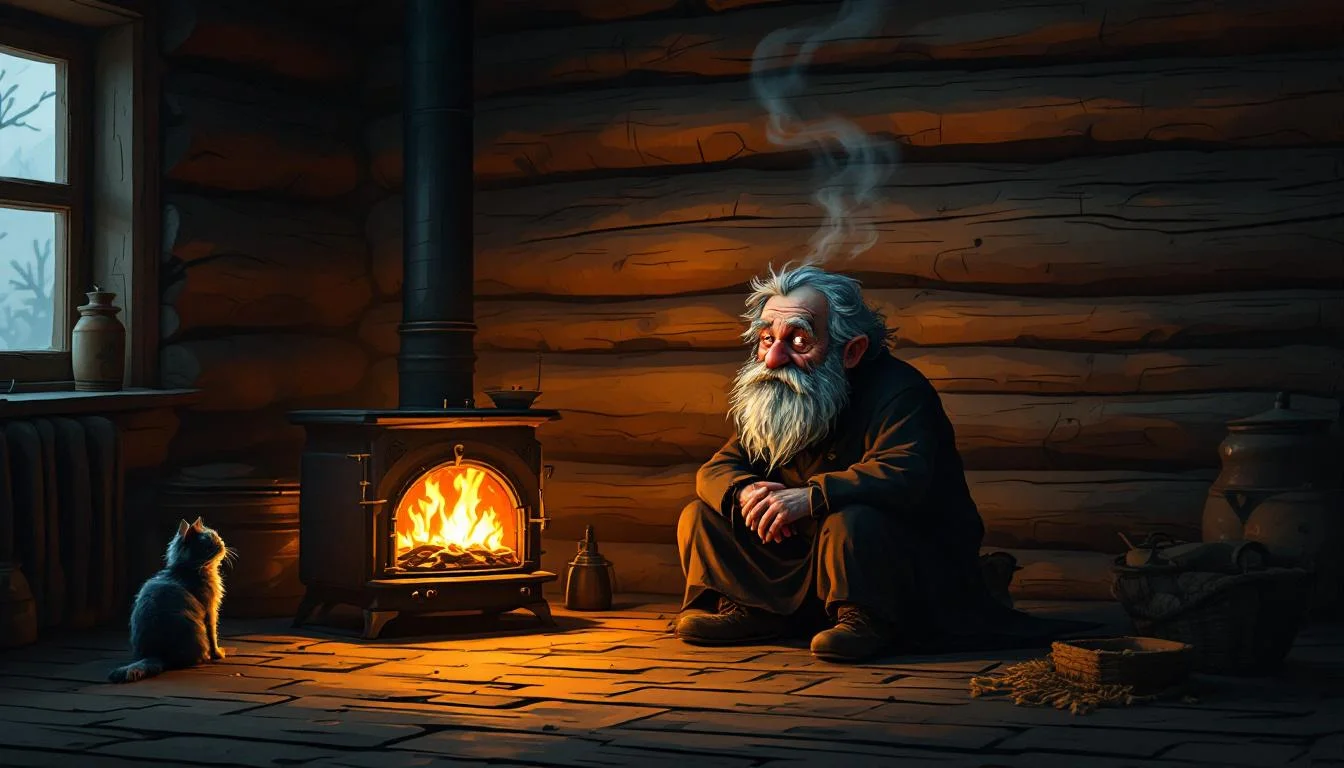
Take a black hen's egg — the first egg she ever lays. Wrap it in a cloth and place it on the stove. Not in the fire. On the stove, in the warmest spot, where the clay holds heat from the coals beneath. Leave it there for nine days and nine nights. Do not move it. Do not speak about it to anyone. On the ninth night, around midnight, the shell will crack from the inside, and what comes out will not be a chick.
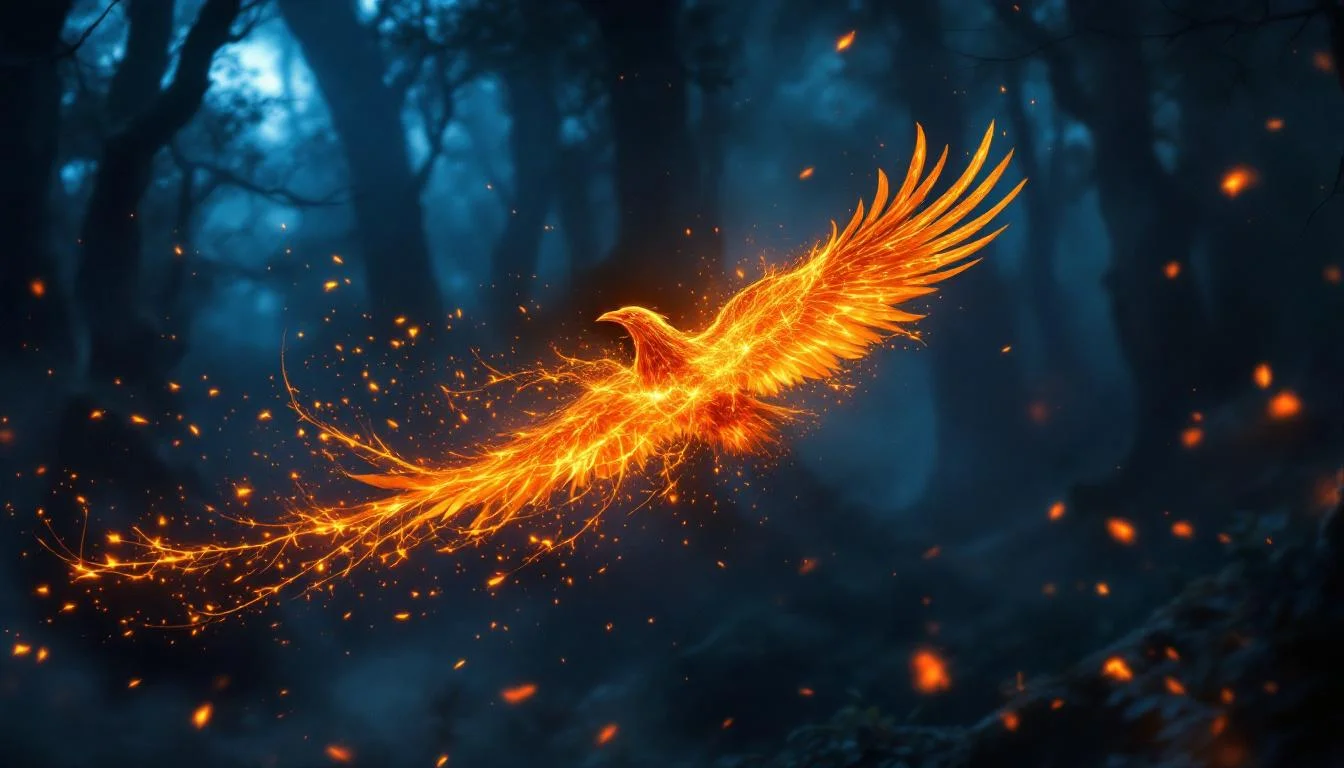
It will be a falcon made of fire. Its feathers will burn without being consumed. Its eyes will glow like forge-sparks. It will perch on your shoulder, and its talons will leave scorch marks on your shirt, and it will serve you — bringing wealth, grain, prosperity stolen from your neighbors' fields and carried back in its blazing claws.
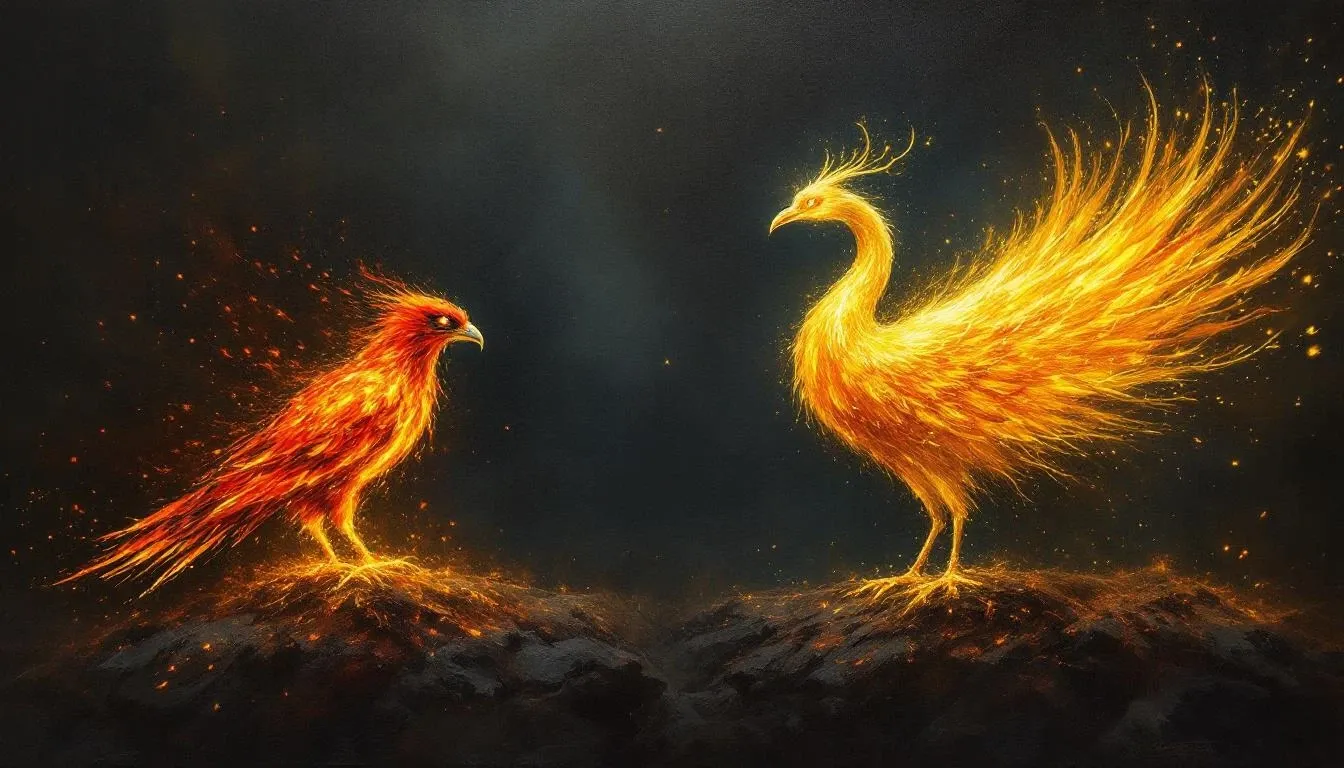
This is the Raróg. And if you think it sounds like the Firebird, you are not entirely wrong and not entirely right. The Raróg is older, smaller, meaner, and far more personal. The Zhar-Ptitsa is a wild thing that belongs to no one and destroys everyone who chases it. The Raróg belongs to whoever hatches it. It is a fire spirit with an owner, and that distinction changes everything.
The Name and the Hatching
The word Raróg (also spelled Raroh, Rarášek, Rarach) appears across the Western and Southern Slavic language family. In Czech, rarášek has become a common word meaning "imp" or "mischievous spirit" — the supernatural origin faded into colloquial usage the way English speakers use "gremlin" without thinking about RAF pilots in the 1940s. In Moravian dialect, rarach means a small demon, a troublemaker, something that knocks pots off shelves and curdles milk. Slovak tradition preserves rarášok with similar connotations — an impish household spirit that causes minor havoc.
But before the word softened into folklore shorthand for petty mischief, the Raróg was something specific and serious: a fire demon in the shape of a bird of prey, born from a ritual involving fire, patience, and a very particular kind of egg.
The hatching procedure varies by region, but the core elements remain stable. A black hen's egg — always black, always from a first clutch. The egg must rest in a place of sustained heat, usually the top of a traditional Slavic stove (pec), the massive clay or brick structure that served as the thermal heart of every peasant household. The incubation period is nine days and nine nights, a number that recurs throughout Slavic magical practice with the persistence of a drumbeat. Nine herbs. Nine knots. Nine days of fever before the Likhomanki claim you. Nine is the number of completion, of a cycle turned to its breaking point.
What emerges on the ninth night is described differently depending on who is telling the story. Czech sources most frequently give it the form of a small falcon or hawk — a raptor, not a songbird, with all the predatory implications that carries. Some accounts describe a fiery chick that grows into a falcon within hours. Others skip the growth entirely: the shell splits and a fully formed bird of living flame emerges, already capable of flight, already burning.
The Raróg as Hearth Spirit
To understand the Raróg, you have to understand the Slavic stove.
The pec was not a cooking appliance. It was the center of the house in every sense — architectural, thermal, spiritual. Families slept on top of it in winter. The sick were laid on it to recover. Bread was baked in its belly. The Domovoy, the household spirit that protected every Slavic home, was believed to live behind the stove or inside its chimney. The stove was where fire lived in its domesticated form — not the wild fire of the forest or the sacred fire of the sun, but the fire that humans had tamed, contained, and made useful.
The Raróg is born from this tame fire. It is not a creature of the wilderness. It does not nest on mountain peaks or in golden gardens at the edge of the world like the Firebird. It hatches on the family stove, in the place where the Domovoy keeps watch, from an egg placed there by a human hand. This makes the Raróg fundamentally domestic — a fire spirit of the household, tied to human intention from the moment of its creation.
This domesticity is what separates the Raróg from virtually every other fire creature in Slavic mythology. The Firebird is wild and uncatchable. Svarog's celestial forge-fire belongs to the gods. The kupala bonfires of midsummer night are communal and ritual. But the Raróg is private. It belongs to one family, one household, one person who sat beside a stove for nine days and waited for something impossible to happen.
The ethnographer Kazimierz Moszyński, whose Kultura ludowa Słowian (1929-1939) remains one of the most exhaustive surveys of Slavic folk culture ever compiled, documented that in parts of Moravia and eastern Bohemia, the Raróg was understood as a variant of the household spirit itself — a more aggressive, more overtly magical version of the protective presence that every home was supposed to have. Where the Domovoy guarded, the Raróg acquired. Where the Domovoy punished laziness with small misfortunes, the Raróg rewarded ambition with stolen goods.
The Whirlwind Form
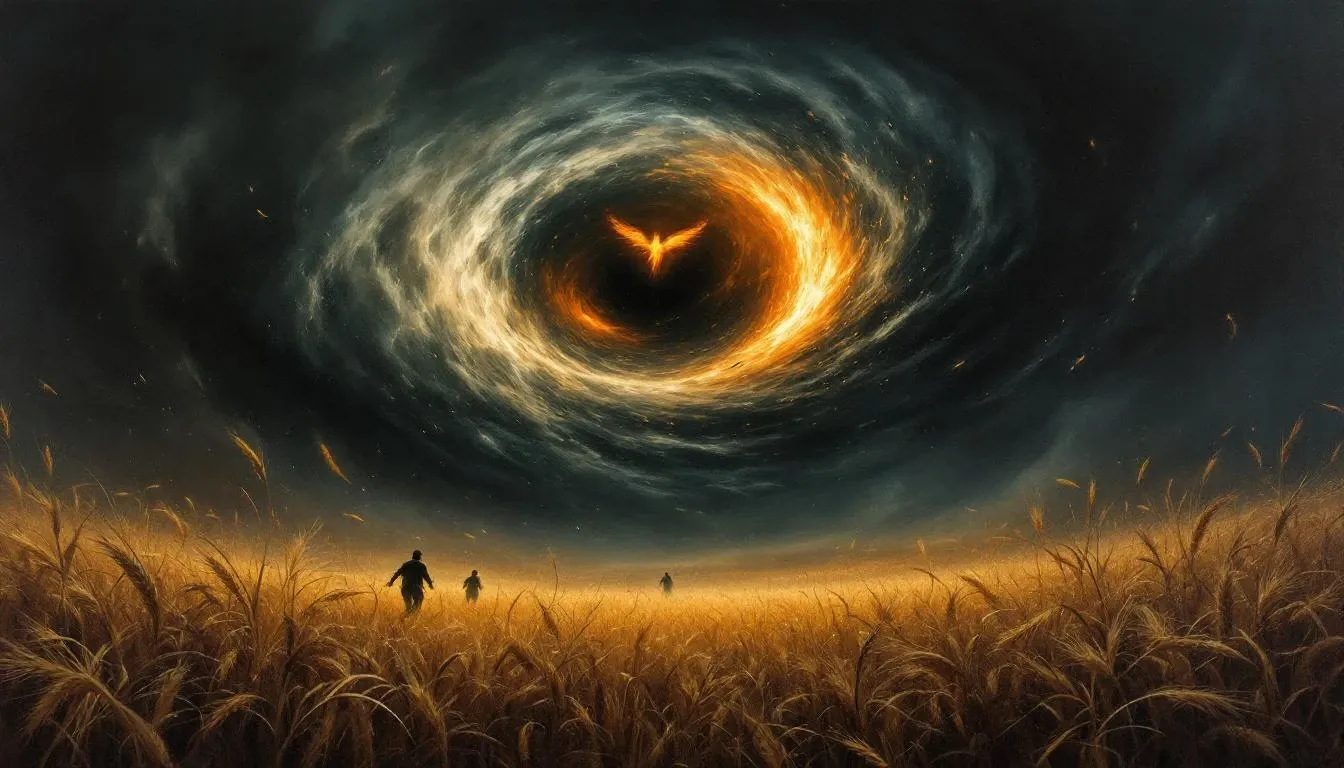
The Raróg does not always appear as a falcon. In one of the most distinctive features of the tradition, this fire spirit also manifests as a whirlwind — a sudden spiral of hot air and dust that tears across fields without warning, leaving a scorched path behind it.
This connection between fire, birds, and wind may seem arbitrary, but in the atmospheric conditions of Central European agriculture, it made intuitive sense. Dust devils form over heated ground. They appear suddenly, spiral violently, and vanish. To a peasant farmer watching a miniature cyclone rip through his grain field on a windless afternoon, the explanation that a fire spirit in bird form had just passed through was no more implausible than any other account of the inexplicable.
"The Raroh or Rarog was believed among the Moravian peasantry to be identical with the whirlwind. When a spinning column of air was observed crossing the fields, women would throw a knife into the center of the vortex, believing that it would wound the spirit and force it to reveal its true form."
The knife-throwing practice is documented across multiple Slavic regions and applied not only to Raróg but to other shape-shifting spirits as well. The logic was consistent: a spirit in its transformed state could be forced back into its true shape by the introduction of iron, which in Slavic folk belief was anathema to supernatural beings. If you threw a knife into a whirlwind and found blood on the blade afterward, you had injured the Raróg. If you threw a knife and found nothing, the whirlwind was just wind.
Serbian folklore preserves a similar connection between fire spirits and whirlwinds. The ala — a demonic being associated with storms and crop destruction — sometimes appeared as a swirling column of air, and the defensive response was nearly identical: throw iron into the funnel. The Raróg, the ala, and a dozen other beings occupied the same ecological niche in the Slavic supernatural worldview — they were the explanations for weather events that destroyed livelihoods, given agency and personality so that they could be bargained with, warded against, or, in the Raróg's case, controlled.
Raróg vs. the Firebird: Two Fires, Two Meanings
The comparison between the Raróg and the Firebird is inevitable, and the differences reveal as much about Slavic thought as the similarities.
The Firebird is a creature of fairy tales — the skazka, the narrative genre of wonder and adventure. It belongs to the world of Ivan Tsarevich and golden apples and quests that span three kingdoms. It is vast, brilliant, untamable. No one hatches a Firebird. No one owns one. The entire point of the Firebird is that it cannot be possessed. It is beauty and desire and the catastrophic consequences of pursuing something that was never meant to be held.
The Raróg, by contrast, is a creature of folk belief — the bylichka, the genre of personal testimony and village superstition. It belongs to the world of the stove and the henhouse and the neighbor whose harvest is suspiciously better than yours. It is small, practical, and completely tamable. Someone hatches it. Someone feeds it. Someone directs its thieving flights. The Raróg is a tool — a supernatural instrument of household economics, as domestic as a bread oven and as mercenary as a hired hand.
This distinction maps onto a broader split in Slavic fire mythology. Afanasyev, in his Poetic Views of the Slavs on Nature (1865-1869), argued that the Slavs recognized multiple categories of fire, each with its own spiritual personality. There was the celestial fire of the sun and lightning, associated with Perun and Svarog. There was the wild fire of the forest — destructive, uncontrollable, feared. And there was the domestic fire of the hearth — the fire that humanity had claimed, enclosed in clay and stone, made to serve.
The Firebird is celestial fire that fell to earth. The Raróg is hearth fire that learned to fly.
The Czech and Moravian Heartland
The Raróg tradition is most deeply rooted in Czech and Moravian folklore, where it persisted well into the nineteenth century as a genuine folk belief rather than a literary curiosity. Josef Virgil Grohmann, whose Aberglauben und Gebräuche aus Böhmen und Mähren (Superstitions and Customs from Bohemia and Moravia, 1864) cataloged hundreds of folk beliefs from interviews with rural populations, recorded multiple variants of the hatching ritual and the Raróg's behavior after birth.
In Grohmann's accounts, the Raróg functioned primarily as a wealth-bringing spirit. Once hatched and bound to its owner, it would fly out at night — invisible to everyone except the person who had created it — and steal grain, milk, eggs, and other agricultural products from neighboring farms. The stolen goods would appear in the owner's stores overnight, and the neighbors would find their yields inexplicably diminished. The Raróg was, in practical terms, a supernatural explanation for the uneven distribution of agricultural fortune.
This raised an obvious social problem. If your neighbor's barn was always full and yours was always empty, the Raróg provided both an explanation and an accusation. Suspicion that someone had hatched a Raróg was functionally equivalent to an accusation of witchcraft — and the social consequences could be equally severe. Grohmann documented cases where families were ostracized or threatened because their prosperity was attributed to a fire spirit's thieving.
The protective measures against a neighbor's Raróg were characteristically practical. Iron objects placed at thresholds and on windowsills would ward it off. A horseshoe above the door — a custom shared across European folk magic — served double duty against both the Raróg and ordinary malevolent spirits. In some villages, the counter-ritual was to hatch your own Raróg and set it to guard your stores, creating a supernatural arms race of fire falcons raiding back and forth across the village boundary lines.
The Serbian Variant: Rarog and the Storm
South Slavic traditions preserve the Raróg with significant modifications. In Serbian folklore, the Rarog (sometimes Рарог) is less a household spirit and more a wind demon — closer to the whirlwind aspect of the Czech tradition but with stronger connections to storm mythology.
Serbian sources sometimes link the Rarog to the Zduhać, the dream-warriors who fought aerial battles in their sleep to protect village crops from rival Zduhać in other communities. The whirlwind form of the Rarog fits naturally into this framework of atmospheric combat — the spinning column of air was not just a spirit passing through but a fighter in an invisible war being waged over the heads of oblivious peasants.
The broader South Slavic context also connects the Rarog to the ala and to the dragon (zmaj), both of which shared territory in the sky and the wind. Zmey Gorynych, the multi-headed dragon of East Slavic tradition, breathes fire and flies. The Rarog is a fire that flies in bird shape. The symbolic overlap is significant: both are fire-creatures of the air, and both can be either protectors or destroyers depending on whose side they are on.
Svarog's Fire: The Divine Connection
The etymological link between Raróg and Svarog, the celestial smith god of the Slavic pantheon, has been debated by scholars for over a century and remains unresolved.
The argument runs as follows. Svarog derives from the Proto-Slavic root *svar-, meaning "to burn" or "to scorch" (cognate with Sanskrit svar, meaning "sky" or "sun"). Raróg, in some etymological analyses, derives from a related root through a series of sound shifts that are phonologically plausible but not universally accepted. If the connection holds, the Raróg is not merely a fire spirit — it is a fragment of the divine smith's fire, a piece of the celestial forge that descended to earth and took avian form.
Afanasyev endorsed this connection enthusiastically, arguing that the Raróg was the earthly representative of Svarog's fire — the spark that the god of the forge sent down to dwell among humans, to be their companion and servant in the way that the sun and the forge-fire were companions and servants on a larger scale. This interpretation places the Raróg firmly within the fire-worship tradition that underlied much of pre-Christian Slavic religion, where fire was not merely useful but sacred, not merely hot but alive.
Whether or not the etymology holds, the symbolic connection is sound. The Raróg is fire with personality. It is the flame that watches you from the stove, the heat that has preferences and loyalties, the ember that chooses to warm your house and burn your enemy's. In a belief system where every natural force had a face, the Raróg was the face that fire wore when it sat on your shoulder and obeyed your voice.
The Rarášek: What the Raróg Became
As Christianity consolidated its hold over the Slavic lands and the old belief systems crumbled into superstition, the Raróg underwent a transformation that is typical of demoted Slavic spirits. The fire falcon shrank — not physically, but conceptually. The powerful hatching ritual faded. The connection to divine fire frayed. What remained was the rarášek — the Czech diminutive, the little imp, the mischievous household pest.
The rarášek of later folklore is a small, red, impish creature that lives in chimneys, knocks things over, hides tools, spoils food, and generally makes itself a nuisance. It has lost the falcon's wings and the whirlwind's power. It is, at most, annoying. The transformation from fire falcon to household gremlin follows the same trajectory as the Chort's journey from pre-Christian earth spirit to bumbling devil — a supernatural being stripped of its dignity by a religion that could not tolerate its power and so diminished it into comedy.
But the ember of the original survives in the language. When a Czech speaker calls a disobedient child a rarášek, they are reaching, unknowingly, back through centuries of accumulated meaning to a time when that word meant a falcon made of living fire, born on a stove in the darkest hour of the ninth night, loyal to the hand that fed it and lethal to everyone else.
Why the Raróg Matters
The Raróg sits at the intersection of several fundamental themes in Slavic folklore: the domestication of fire, the ethics of magic, the tension between the individual household and the community, and the belief that the supernatural was not separate from daily life but woven into it at every level.
It also offers a corrective to the Western assumption that Slavic fire mythology begins and ends with the Firebird. The Zhar-Ptitsa is magnificent, but it is also exotic — a creature of fairy tales, distant and glittering and irrelevant to the concerns of anyone who was not a prince on a quest. The Raróg is the fire spirit for everyone else. The farmer whose crops failed. The widow whose stores ran low. The ordinary person who looked at the stove on a cold night and thought: what if the fire could bring me what I need?
That thought — the hope that fire could be not just warmth but agency, not just survival but advantage — is as old as the first human who stared into a hearth and saw something staring back. The Raróg is what they saw.