Somewhere in the West, a fairy tale ends with a wedding and a ball. The prince finds the princess. The dragon is slain. A moral is delivered in the final paragraph — be kind, be patient, be good — and the audience claps and goes home satisfied that the world is a just place.
Russian fairy tales do not work this way.
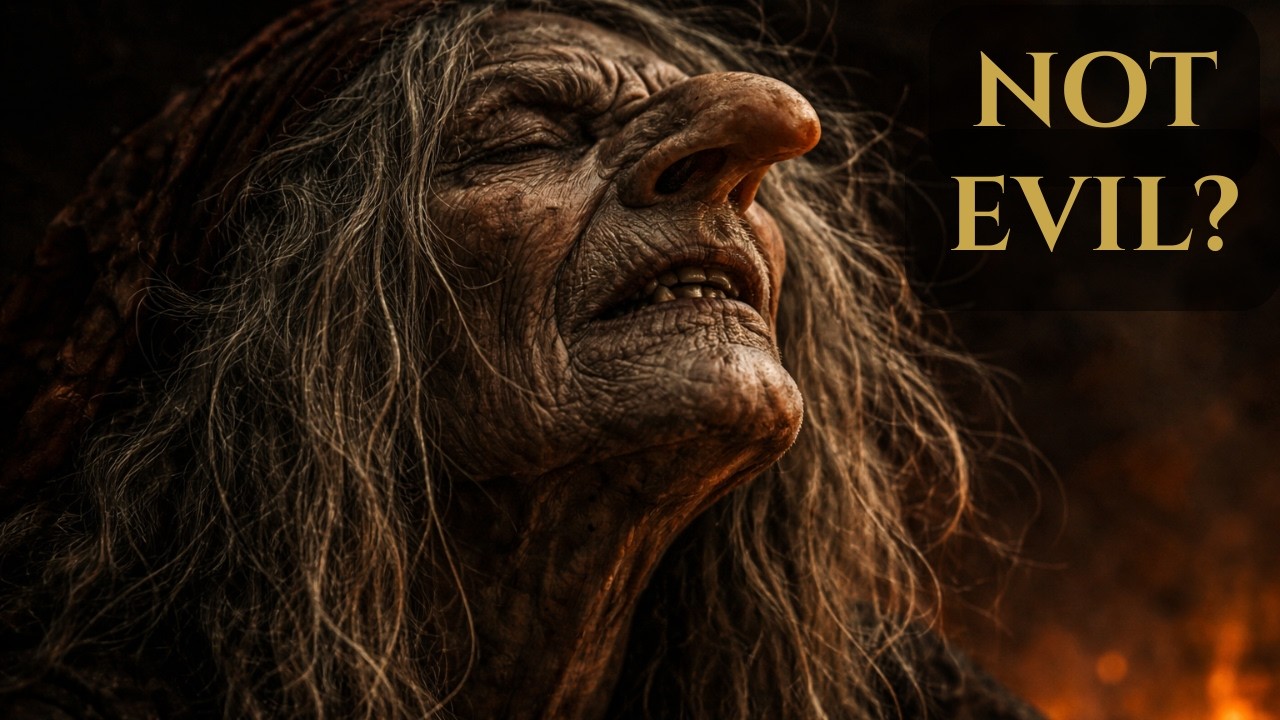
In the Russian tradition, the stepsisters are burned to cinders by a skull that watches them through the dark. The immortal villain hides his death inside a needle, inside an egg, inside a duck, inside a hare, inside an iron chest buried under an oak tree on an island that may not exist. The hero's wife is cursed to live as a frog, and when he tries to free her too early by burning her skin, she vanishes — and he must walk to the edge of the world to find her again. The witch who lives in a hut on chicken legs is not simply evil. She is a gatekeeper between the world of the living and the world of the dead, and the price she charges for passage is your willingness to face what you find there.
These are not bedtime stories softened for children. These are the original Russian fairy tales — and they are darker, stranger, and more psychologically complex than anything the Brothers Grimm or Charles Perrault ever committed to paper.
The Man Who Collected the Darkness
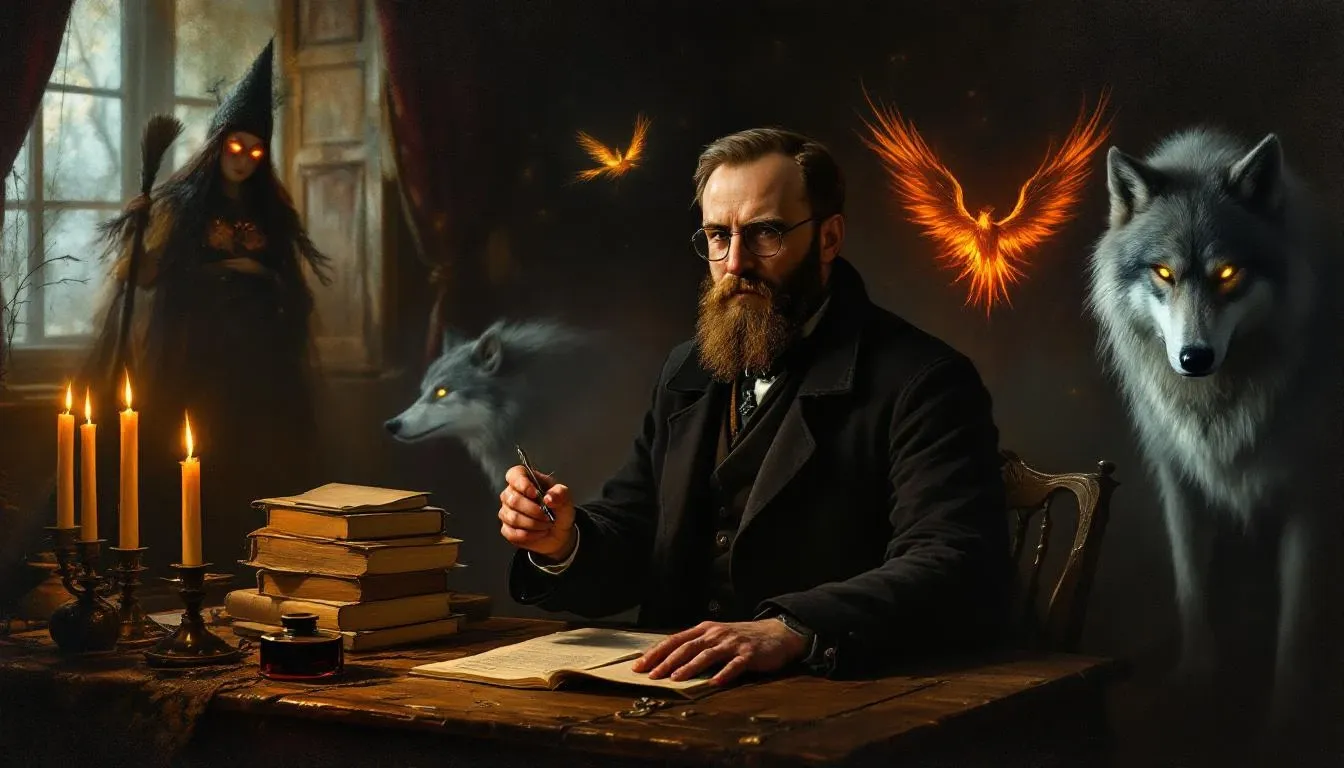
No conversation about Russian fairy tales can begin without Alexander Nikolayevich Afanasyev. Born in 1826 in Voronezh, Afanasyev was a folklorist, historian, and ethnographer who did for Russian oral tradition what the Brothers Grimm did for German folklore — except he did it on a vastly larger scale.
Between 1855 and 1867, Afanasyev published Narodnye russkie skazki (Russian Folk Tales), a collection of nearly 600 fairy tales, folk stories, legends, and fables gathered from across the Russian Empire. It remains the largest collection of folktales ever assembled by a single person. Where the Grimms collected roughly 200 tales, Afanasyev tripled the count — and unlike the Grimms, who heavily edited their stories across successive editions to make them more palatable for bourgeois German families, Afanasyev kept the raw versions. The cruelty stayed in. The sexuality stayed in. The moral ambiguity stayed in.
What Afanasyev captured was not entertainment. It was the spiritual architecture of the Russian peasant mind — a worldview in which death was not an ending but a transformation, nature was not a backdrop but a sentient force, and the line between the human and the supernatural was as thin as birch bark.
Five Tales the West Got Wrong
The stories most Westerners know as "Russian fairy tales" — if they know any at all — have been filtered through ballet librettos, Disney films, and sanitized retellings. Here are the originals.
Vasilisa the Beautiful: Cinderella With a Body Count
The Western world has Cinderella. Russia has Vasilisa — and the two stories share a skeleton, but the Russian version is covered in entirely different flesh.
A merchant's wife dies, leaving her eight-year-old daughter a single inheritance: a small wooden doll. Feed it, the dying mother says. It will help you. The merchant remarries. The stepmother and her two daughters despise Vasilisa and work her to exhaustion, hoping she will wither. But each night Vasilisa feeds the doll a scrap of her supper, and the doll does her chores in the dark.
This is already different from Cinderella. There is no fairy godmother who arrives from outside. The help comes from the dead — from the mother's last act of love, compressed into a crude wooden figure. The doll is an ancestor speaking from the grave.
The stepmother engineers a crisis: she lets every fire in the house go out and sends Vasilisa to Baba Yaga to fetch a new flame. The forest witch lives in a hut surrounded by a fence made of human bones, topped with human skulls whose eye sockets glow in the dark. The gate latch is a dead man's hand.
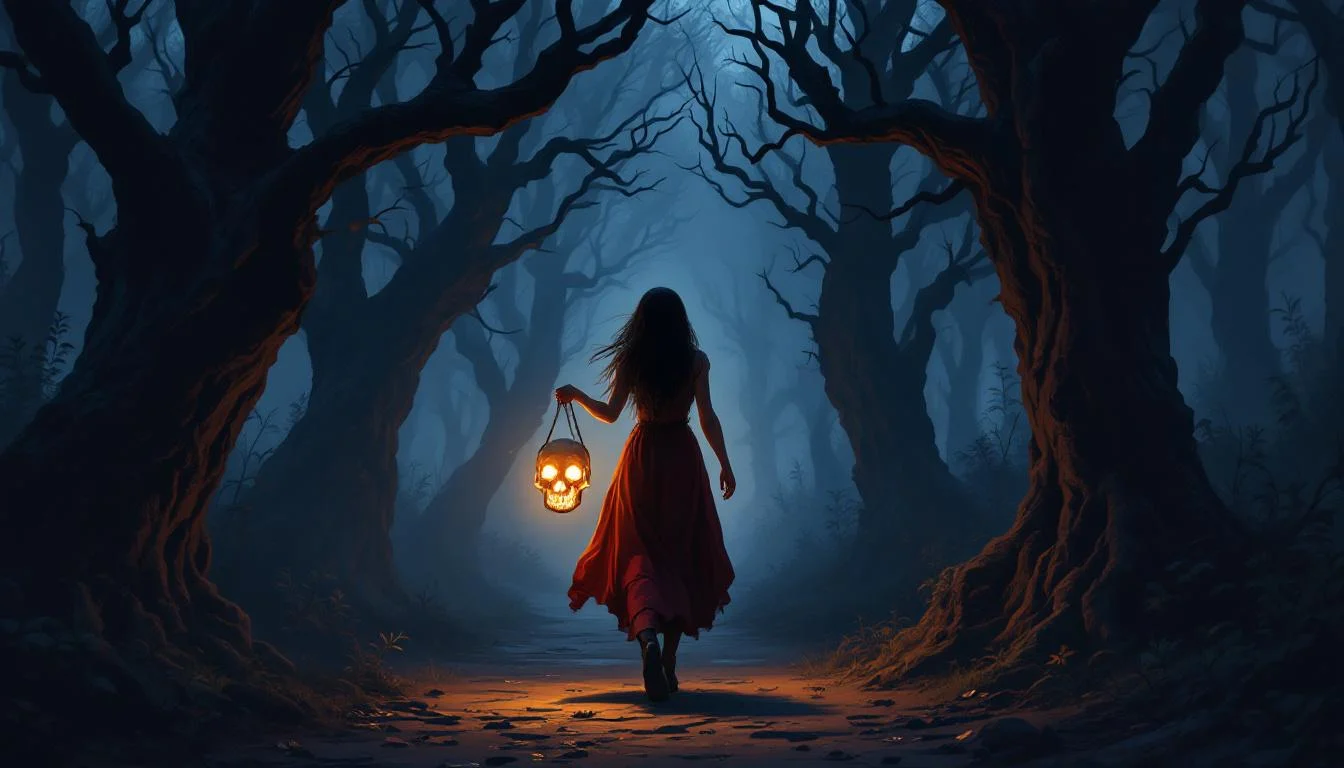
Baba Yaga gives Vasilisa impossible tasks. The doll completes them. The witch, furious and impressed, gives the girl her fire — not a candle or a coal but a skull on a stick, its eyes blazing with pale flame. Vasilisa carries it home. The skull's eyes fix on the stepmother and stepsisters and burn them to ash. Not metaphorically. Literally. By morning, three piles of cinders are all that remain.
No glass slipper. No prince. No ball. The dead mother's gift destroys the wicked through ancestral fire, and Vasilisa walks away alone.
Koschei the Deathless: The Original Horcrux
Long before J.K. Rowling hid Voldemort's soul in seven objects, Russian folklore had Koschei the Deathless — an emaciated immortal sorcerer who removed his own death from his body and hid it in a nested sequence of containers so elaborate it reads like a puzzle designed by a paranoid god.
Koschei's death is inside a needle. The needle is inside an egg. The egg is inside a duck. The duck is inside a hare. The hare is inside an iron chest. The chest is buried under a green oak tree on the island of Buyan, which rises from the sea only when it chooses to.
To kill Koschei, the hero — usually Ivan Tsarevich — must find the island, dig up the chest, catch the hare that leaps out, catch the duck that flies from the hare, catch the egg that drops from the duck, and snap the needle. Only then does the skeleton king finally die. Every level is a test. Every creature that escapes represents another failure to contain death. The tale is a meditation on the futility of trying to outrun mortality — and the monstrous things a man becomes when he succeeds.
In the tale of Marya Morevna, the warrior queen who imprisoned Koschei in her cellar with twelve chains, the sorcerer is freed when Ivan Tsarevich — Marya's own husband — gives the chained prisoner three drinks of water out of pity. The moment Koschei's strength returns, he shatters the chains, abducts Marya, and rides away on a horse that outruns the wind. A woman's strategic brilliance, undone by a man's naive compassion. Russian fairy tales do not reward good intentions. They reward wisdom.
The Frog Princess: Trust, Betrayal, and the Cost of Impatience
A tsar tells his three sons to shoot arrows into the sky and marry whichever woman finds them. The eldest son's arrow lands in a noble's courtyard. The middle son's lands in a merchant's yard. Ivan Tsarevich's arrow lands in a swamp and is retrieved by a frog.
He marries the frog. His brothers laugh. But when the tsar demands that each bride bake bread, weave a carpet, and dance at a feast, the frog — who sheds her skin each night and becomes Vasilisa the Wise, a woman of staggering beauty and supernatural talent — produces miracles. Her bread is sculpted into fortresses. Her carpet shows the entire kingdom in thread. When she dances, she waves her left sleeve and a lake appears; she waves her right and white swans glide across it.
Ivan, intoxicated and terrified that this will end, sneaks home during the feast and burns the frog skin. He believes he is freeing her. Instead, he destroys her.
"Oh, Ivan Tsarevich, what have you done! Had you waited but three more days, I would have been yours forever. Now seek me beyond the thrice-nine lands, in the thrice-tenth kingdom, at the palace of Koschei the Deathless."
Vasilisa vanishes. Ivan must walk through three realms, wear out three pairs of iron boots, gnaw through three iron loaves, and beg help from Baba Yaga before he can find her again. The lesson is brutal and precise: love without trust is not love at all. And the attempt to possess what you do not understand will cost you everything.
The Firebird: Beauty as a Trap
The Firebird — Zhar-Ptitsa, the Heat Bird — is Slavic folklore's most seductive disaster. It blazes with golden light so intense that a single shed feather can illuminate a room. It steals golden apples from the tsar's garden. Everyone who sees it wants to possess it. And everyone who tries is destroyed.
In Afanasyev's version, the huntsman Archer finds a Firebird feather. His horse warns him: "Do not pick it up. It will bring nothing but misfortune." The Archer picks it up anyway. The tsar demands the bird itself. Then the tsar demands Princess Vasilisa. Then the tsar demands the impossible — and each demand pushes the Archer closer to his own death.
The Firebird is not a villain. It is a catalyst. Its beauty creates greed, and greed creates the cascade of impossible tasks that either kills the hero or transforms him. In this sense, the Firebird operates exactly like the One Ring in Tolkien's work — a beautiful object that reveals the worst in whoever reaches for it.
Father Frost: No Rescue for the Cruel
Morozko — Father Frost — is a winter spirit who tests young women left in the freezing forest by their families. A kind stepdaughter is abandoned in the snow by her wicked stepmother. Father Frost comes to her, breathing ice, and asks: "Are you warm, maiden?" She answers politely, through chattering teeth, that she is. He wraps her in furs and gives her a chest of silver and gold.
The stepmother, seeing the treasure, sends her own biological daughter out to the same spot, expecting the same reward. Father Frost comes. The girl curses him, demands he leave her alone, and complains about the cold. He freezes her to death.
There is no second chance. No redemption arc. No lesson learned in the nick of time. Russian fairy tales do not believe that everyone deserves mercy. Some people meet Morana — the goddess of winter and death — and she takes them exactly as they are.
What Makes Russian Fairy Tales Different
Western fairy tales, particularly after the Grimms' later editions and Perrault's courtly retellings, tend to operate on a clear moral axis: good is rewarded, evil is punished, and the distinction between the two is obvious. Russian fairy tales muddy these waters in specific, deliberate ways.
Death Is Not the Enemy
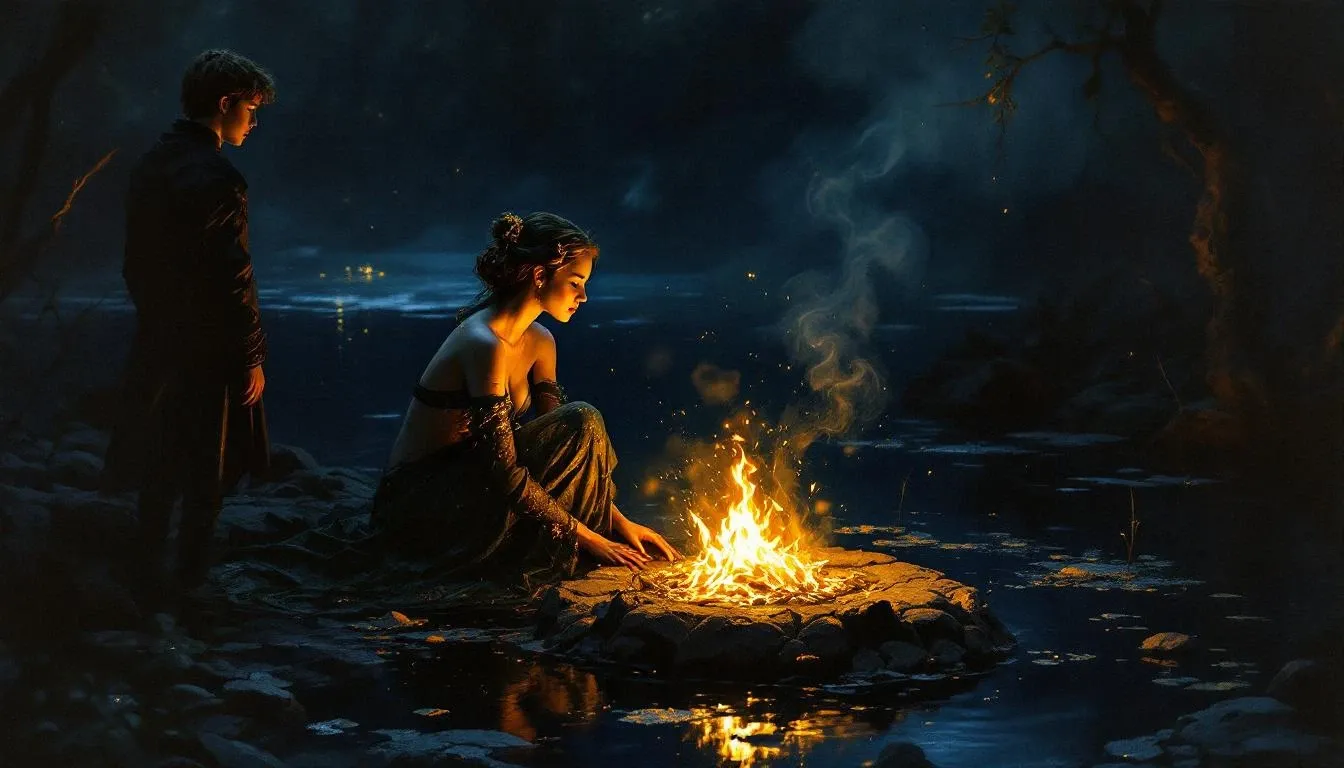
In the Grimms' tales, death is a threat — the wolf at the door, the poison in the apple. In Russian fairy tales, death is a threshold. Baba Yaga's hut sits on the boundary between the living and the dead. The hero must cross into Nav — the underworld — and return changed. Koschei is terrifying not because he kills people but because he refuses to die himself, breaking the natural order. The real horror is not death. It is the refusal of death.
This connects to deep currents in Slavic cosmology. The three-world structure — Prav (the realm of cosmic law), Yav (the visible world), and Nav (the world of the dead) — is not a hierarchy. It is a cycle. The dead nourish the living. The living honor the dead. The funeral rites ensured safe passage. When the cycle breaks — when someone like Koschei locks death away — the entire cosmos suffers.
Heroes Are Flawed
Ivan Tsarevich, the most common hero in Russian fairy tales, is not a knight in shining armor. He is often lazy, impulsive, disobedient, and foolish. He opens the door Marya Morevna told him never to open. He burns the frog skin. He picks up the Firebird feather after his horse explicitly tells him not to. His heroism is not innate virtue — it is the willingness to endure the consequences of his mistakes and walk through suffering to reach the other side.
This is radically different from the Western model, where the hero is usually right from the beginning. In Russian fairy tales, the hero earns his triumph by being wrong first and learning.
Nature Is Alive and Watching
In Russian fairy tales, the forest is not scenery. The Leshy rules the woods and can lead travelers astray or guide them home. The Vodyanoy drowns the unwary in rivers. The trees creak, the wind speaks, the animals form alliances. When Ivan Tsarevich spares a bear, a hawk, and a pike during his quest to find Koschei's death, each animal returns later to help him catch the hare, the duck, and the egg. Nature rewards those who respect it and destroys those who exploit it.
This is not a plot convenience. It is animism — the ancient Slavic belief that every natural feature possessed a spirit, a will, and a memory.
The Dead Help the Living
Perhaps the most distinctive feature of Russian fairy tales is the active role of the dead. Vasilisa's mother gives her a doll that works miracles. The skulls on Baba Yaga's fence glow with fire that sees truth. Heroes receive help from the spirits of Nav when they honor their ancestors properly. In Slavic magical tradition, the boundary between the living and the dead is permeable — not a wall but a membrane, and those who know how to listen can hear the dead speaking.
This is why Baba Yaga respects Vasilisa's mother's blessing. The witch guards the border between worlds. A girl who carries the dead willingly — who feeds her mother's doll, who tends the grave of her inheritance — has already crossed that border in spirit. She cannot be destroyed by what she has already accepted.
The Darkness We Lost
When Russian fairy tales reached the West, they were sanitized. Stravinsky's The Firebird ballet (1910) kept the spectacle but stripped the dread. Disney never touched the material directly — the darkness was simply too dense. Modern retellings tend to soften Baba Yaga into a quirky grandmother rather than a primordial force who controls dawn and dusk.
What was lost is significant. The original Russian fairy tales, as Afanasyev collected them from peasant storytellers across the empire, were tools for navigating a world that offered no guarantees. They taught that death comes for everyone and the only defense is to face it with open eyes. They taught that beauty is dangerous, trust must be earned, and the help of the dead is worth more than the strength of the living. They taught that the forest is not empty.
These are not comfortable lessons. But they are honest ones — carved out of birch bark and bone, carried through centuries in whispered voices around winter fires, and preserved by a man who gave up everything to write them down before they vanished forever.
The Russian fairy tale does not promise you a happy ending. It promises you the truth. What you do with it is your problem.