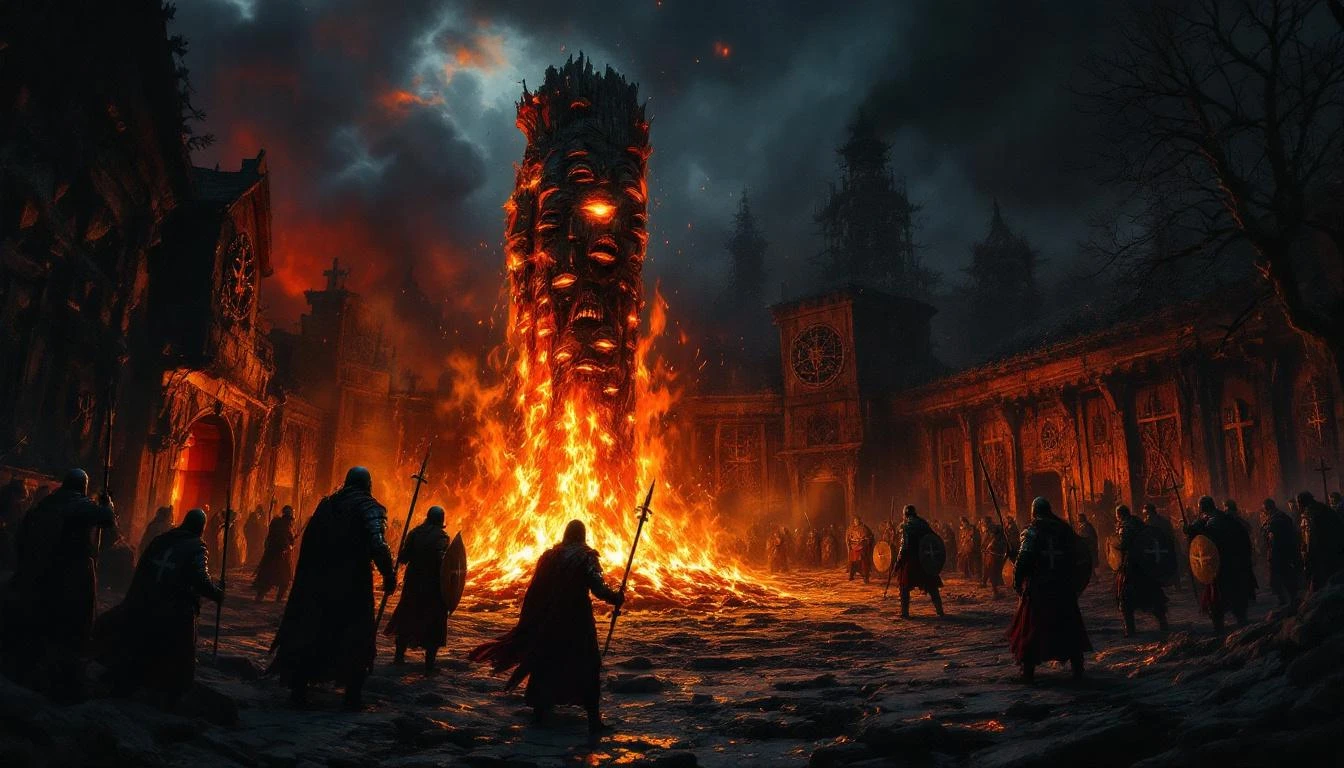
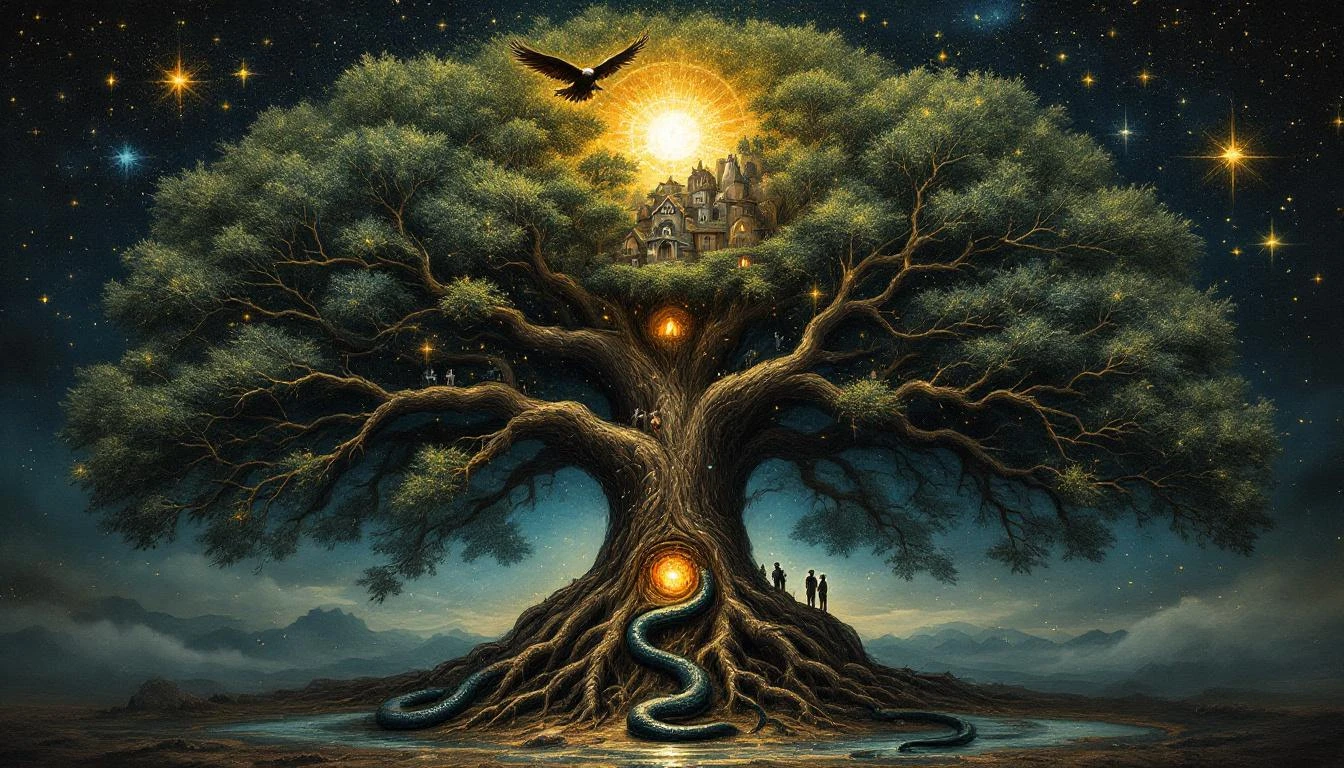
There is no Slavic Edda. No single sacred text you can pull from a shelf and say: here, this is what they believed. The mythology of the Slavic peoples — three hundred million speakers across a dozen modern nations, the largest ethno-linguistic group in Europe — was never compiled into a canonical volume because it was never written down in the first place. It survived in songs no one recorded, in rituals no one explained, in bedtime stories told by grandmothers who had forgotten they were reciting theology. And when Christianity arrived with fire and baptismal water and the political ambitions of princes, even those fragments were driven underground, scattered into folk customs and peasant superstitions that the literate classes dismissed for centuries.
So if you want to understand Slavic mythology — really understand it, not just skim a Wikipedia summary of Perun and Veles — you need books. Not one book. Many books. Because the tradition was fractured, its reconstruction requires multiple approaches: the folklorists who collected the tales before they vanished, the archaeologists who dug up the idols, the linguists who traced divine names through cognate languages, the comparative mythologists who mapped Slavic patterns onto Indo-European frameworks, and — yes — the novelists who took all that raw material and built something that breathes.
What follows is not a casual recommendation list. It is a map of the territory. Each book opens a different door into the same dark forest, and depending on what you are looking for — primary sources, academic analysis, atmospheric fiction, or a well-illustrated overview — you will need different doors.
Part I: The Primary Sources
These are the foundation. The raw material from which everything else is built. Some are direct observations from people who witnessed Slavic paganism; others are the folk traditions that preserved its remnants long after the temples burned.
1. Alexander Afanasyev — Russian Fairy Tales (Narodnye russkie skazki, 1855-1863)
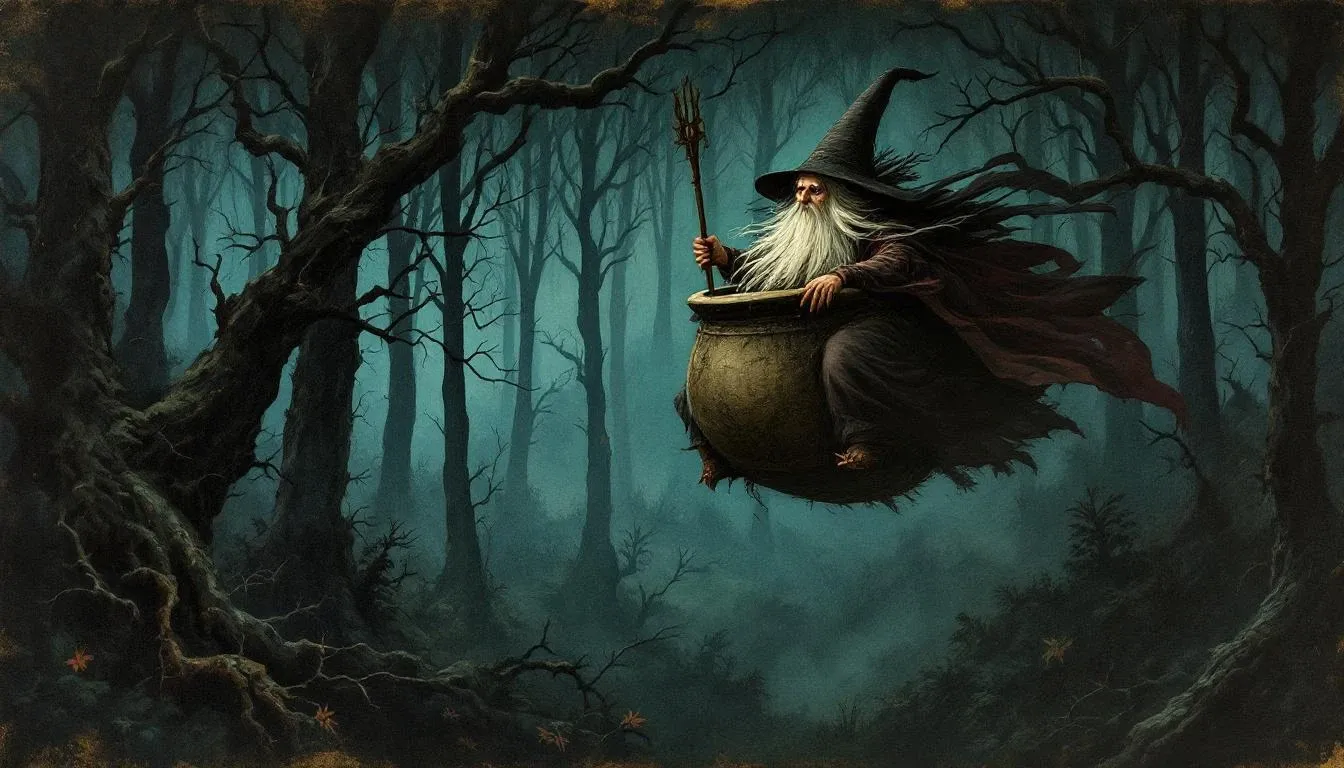
Afanasyev was the Russian Brothers Grimm, except that his collection was larger, wilder, and considerably more dangerous. Between 1855 and 1863, he published nearly six hundred tales drawn from oral tradition across Russia, Ukraine, and Belarus — the single most important folklore collection in the Slavic world. Here you will find Baba Yaga in her chicken-legged hut, Koschei the Deathless with his soul hidden in a needle inside an egg inside a duck, the Firebird whose single feather sets kingdoms on fire with desire, and dozens of spirits, sorcerers, and shape-shifting animals that carry the fingerprints of pre-Christian belief. The Pantheon Books edition translated by Norbert Guterman with an introduction by Roman Jakobson remains the standard English version, though Stephen Pimenoff's newer translation from Alma Books captures more of the original roughness. Do not expect sanitized children's stories. These tales have teeth and claws, and several of them will unsettle you.
2. Afanasyev — Poetic Views of the Slavs on Nature (Poeticheskie vozzreniya slavyan na prirodu, 1865-1869)
Afanasyev's scholarly masterwork — three dense volumes arguing that Slavic folklore preserves fragments of an ancient solar mythology. His methodology has been largely superseded (the solar-mythological school fell out of fashion by the early twentieth century), but the sheer volume of material he assembled remains invaluable. No one before or since has gathered so many ritual songs, seasonal customs, weather incantations, and folk beliefs under one roof. A partial English translation by Sviatoslav Gromov, titled Slavic Myth and Its Nature, makes a selection of this material available for the first time to non-Russian readers. Essential for anyone who wants to understand what the nineteenth-century scholars were working with before the academic debates began.
3. The Russian Primary Chronicle (Povest' vremennykh let, c. 1113)
The chronicle compiled by the monk Nestor at the Kyiv Caves Monastery is not a mythology text, but it contains some of the only direct descriptions of Slavic pagan worship ever committed to parchment. The famous passage describing Prince Vladimir's pantheon on the hill outside Kyiv — Perun with his silver head and golden mustache, flanked by Khors, Dazhbog, Stribog, Simargl, and Mokosh — is one of the most cited paragraphs in all of Slavic religious studies. The chronicle also records the destruction of those same idols in 988 and the forced baptism of Kyiv. Samuel Hazzard Cross and Olgerd P. Sherbowitz-Wetzor's English translation, published by the Medieval Academy of America, is the standard scholarly edition. Read it knowing that you are seeing paganism through the eyes of the men who destroyed it — but read it, because there is almost nothing else this close to the source.
4. Helmold of Bosau — Chronicle of the Slavs (Chronica Slavorum, c. 1170)
Helmold was a German priest who lived on the frontier between Christian Saxony and the pagan Slavic territories along the Baltic coast. His chronicle is a first-hand account of the Western Slavic tribes — the Obotrites, Wagrians, and Lutici — and their gods, temples, and resistance to forced conversion. He describes the worship of Chernobog, the "Black God," to whom the Slavs poured libations at feasts, passing the bowl and murmuring that the good god and the bad god were both at work in the world. He records the great temple complexes, the sacred groves, the armed resistance of peoples who would rather burn their own settlements than submit to baptism. Francis Joseph Tschan's English translation preserves the mix of horrified fascination and grudging respect that makes Helmold's testimony so valuable — the observations of an enemy who could not help noticing that what he was destroying had meaning.
Part II: The Academic Reconstructions
The primary sources give you fragments. These scholars assembled the fragments into systems — sometimes brilliantly, sometimes controversially, always with the understanding that Slavic mythology would never be fully reconstructed and that the gaps were as important as the evidence.
5. Marija Gimbutas — The Slavs (1971)
Gimbutas was a Lithuanian-born archaeologist whose work at UCLA reshaped our understanding of prehistoric European cultures. The Slavs remains one of the few comprehensive English-language overviews of early Slavic civilization — covering language, migration, social structure, art, and religion in a single, densely illustrated volume. Her treatment of Slavic paganism draws on archaeological evidence (temple sites, burial customs, votive figurines) alongside textual sources, and her argument that Slavic religion preserves deep strata of pre-Indo-European goddess worship connects to her larger (and hotly debated) theory about Old European civilization. Whether you accept that larger framework or not, this book is indispensable for its archaeological grounding. Where other scholars work from texts, Gimbutas works from the ground up — literally.
6. Boris Rybakov — Paganism of the Ancient Slavs (Yazychestvo drevnikh slavyan, 1981)
Rybakov's two-volume study — the second volume, Paganism of Ancient Rus', followed in 1987 — is the most ambitious attempt to reconstruct Slavic paganism as a coherent religious system. A Soviet-era archaeologist and historian, Rybakov traced the development of Slavic belief from Neolithic agricultural cults through Bronze Age solar worship to the historical paganism recorded in medieval chronicles. His conclusions are sweeping, sometimes speculative, and have drawn sharp criticism from Western scholars who find his evidence overstretched. But no one has attempted anything on this scale since, and his integration of archaeological, ethnographic, and textual evidence into a single narrative remains unmatched. The catch: neither volume has been fully translated into English. If you read Russian, this is essential. If you do not, summaries and critiques by scholars like Andrzej Szyjewski and Patrice Lajoye will give you the arguments in abbreviated form.
7. Vyacheslav Ivanov and Vladimir Toporov — Slavic Linguistic Modeling Semiotic Systems (1965) and subsequent works
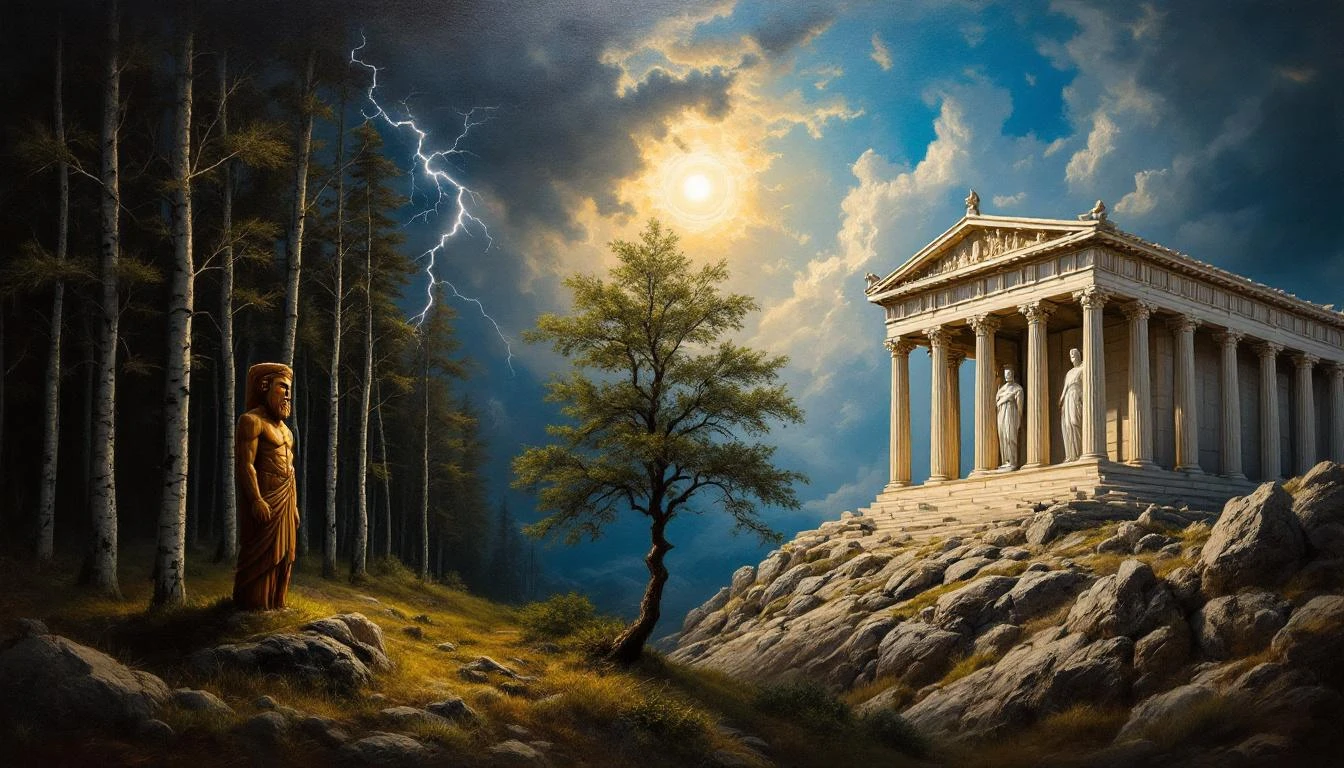
Ivanov and Toporov's reconstruction of the "Basic Myth" — the eternal cosmic battle between the Thunder God (Perun) and the Serpent (Veles) — is the most influential theoretical framework in modern Slavic mythology studies. Using comparative linguistic analysis, they argued that traces of this foundational narrative could be found embedded in place names, folk songs, ritual formulas, and even the structure of Slavic grammar itself. The Thunder God strikes from the heights; the Serpent hides below in water, roots, and cattle. Lightning splits the sky. Rain falls. The world renews. This pattern, they argued, was not just a story but the organizing principle of the entire Slavic cosmos. Their work is primarily in Russian and heavily technical, but its conclusions have been absorbed into nearly every English-language discussion of Slavic mythology published since the 1970s. If you have read anything about the Perun-Veles conflict, you have already read Ivanov and Toporov at second hand.
8. Linda Ivanits — Russian Folk Belief (1989)
If you want one readable, well-organized English-language book that explains the spirit world of the Eastern Slavs — the domovoy behind the stove, the leshy in the forest, the rusalka in the river, the bannik in the bathhouse — this is the one. Ivanits is a Slavist, not a folklorist, and her approach is literary and cultural rather than anthropological. She traces the concept of dvoeverie (double faith) through centuries of Russian religious life, showing how pagan beliefs were never truly replaced by Christianity but instead merged with it into a hybrid system that persisted well into the twentieth century. Each chapter covers a different category of supernatural being, with extensive citations from nineteenth-century ethnographic sources. The prose is clear, the scholarship is solid, and the book remains in print — a rare thing for academic work on this subject. Start here if you are coming to the field for the first time and want rigorous context without needing to learn Russian.
9. Aleksander Gieysztor — Mitologia Slowian (Mythology of the Slavs, 1982)
Gieysztor's comprehensive survey of Slavic mythology draws on Polish, Czech, and South Slavic sources that are often neglected in English-language scholarship, which tends to focus on the East Slavic (Russian/Ukrainian) material. His treatment of Western Slavic temple cults — Svetovit at Arkona, Triglav at Szczecin, Svarozhich at Rethra — is particularly detailed, and he reconstructs the political function of pagan priesthoods with a precision that other scholars rarely attempt. Originally in Polish, an English translation is not widely available, but the book is frequently cited in English-language works and summaries of its arguments can be found in comparative mythology journals. Worth tracking down for anyone interested in the Baltic Slavic traditions that were destroyed by the Northern Crusades.
Part III: Modern Fiction That Carries the Old Fire
Scholarship gives you the bones. Fiction gives you the breathing creature. These novels do not merely reference Slavic mythology — they inhabit it, and several of them will teach you more about the feel of these traditions than any academic text can.
10. Katherine Arden — The Bear and the Nightingale (2017) and the Winternight Trilogy
Arden's trilogy is set in fourteenth-century Muscovy, and its protagonist, Vasilisa Petrovna, can see the spirits that most people have forgotten — the domovoy keeping the house warm, the dvorovoy guarding the yard, the vazila watching the horses. The central conflict is not between good and evil but between the old faith and the new, between the protective spirits that have kept the village alive for centuries and the Orthodox priest who insists they are demons and must be starved of offerings. Morozko, the Frost King, is a terrifying and seductive presence drawn straight from East Slavic folk tradition. Baba Yaga appears. The Firebird blazes. The historical detail is meticulous — Arden studied Russian literature at Middlebury and lived in Moscow — and the atmosphere is so cold you will reach for a blanket. This is the finest fictional treatment of Slavic folk belief published in English, and it deserves to be read alongside the scholarship, not beneath it.
The domovoy crept closer to the oven and huddled against the warm brick. "We are forgotten," he said. "The offerings have stopped. The prayers have stopped. The people do not see us anymore. And so we fade."
The trilogy’s cultural impact extended beyond the literary world. The Bear and the Nightingale became a gateway text for English-speaking readers discovering Slavic mythology for the first time, and its commercial success — a New York Times bestseller, translated into more than twenty languages — demonstrated that there was a massive audience for Slavic folklore that the publishing industry had never thought to serve. Arden’s work proved that the Slavic mythological tradition could carry a major fantasy series without being filtered through the more familiar Norse or Arthurian frameworks, and it opened the door for a wave of Slavic-inspired fiction that followed. If you read one novel from this list, make it this one — not because it is the most literary (Valente holds that title), but because it is the most faithful to the source material and the most likely to send you reaching for the ethnographic texts that inspired it.
11. Naomi Novik — Spinning Silver (2018)
Novik's novel reworks the Rumpelstiltskin tale through the lens of Eastern European Jewish and Slavic folklore, set in a frozen Lithuanian-inspired landscape where a moneylender's daughter attracts the attention of the Staryk — a winter king whose realm lies behind the snow. The Staryk themselves draw on the figure of Morozko and the broader Slavic tradition of frost as a sentient, bargaining force. The novel weaves three women's stories together with the structural complexity of a folk tale that keeps nesting inside itself, and the winter it describes is not metaphorical — it is the winter that kills, the winter the Slavic peoples sang incantations against, the winter that Morana ruled before the spring god Yarilo could wrestle her down. A brilliant, cold, intricate book that understands the transactional logic at the heart of Slavic folk belief: nothing is given freely, and every gift is also a trap.
12. Neil Gaiman — American Gods (2001)
Gaiman's novel is not primarily about Slavic mythology, but its Slavic characters are among its most memorable. Czernobog — Chernobog, the Black God — appears as a retired slaughterhouse worker in Chicago, an old man with a sledgehammer and a talent for checkers, who gloats about smashing skulls and wonders whether he and his lost twin Bielebog were ever truly separate beings. The Zorya sisters guard the stars from an apartment above a used-car lot. These are gods in exile, brought to America by immigrants and then abandoned, starving on the fumes of a faith no one practices anymore. Gaiman captures something essential about what happens to old gods when the offerings stop — a theme that resonates deeply with the actual history of Slavic paganism and its long, slow submergence beneath Christianity. Read it for the Czernobog chapters alone, and then read the mythology that made them possible.
13. Catherynne M. Valente — Deathless (2011)
Valente retells the tale of Koschei the Deathless set against the backdrop of the Russian Revolution, the Siege of Leningrad, and the brutal transformations of the twentieth century. Marya Morevna is claimed by Koschei as his bride, and what follows is a love story entangled with death, immortality, and the question of what survives when everything else is destroyed. The novel is dense with Slavic mythological imagery — the Firebird, Baba Yaga, the three riders of dawn, noon, and night — and Valente writes with an ornamental ferocity that matches the darkness of the material. This is not a comfortable book. It is a book about how myths persist through catastrophe, which is, after all, exactly what Slavic mythology did.

Part IV: The Modern Reference Shelf
These books are designed for the reader who wants structured access — clear organization, illustrations, and a guided path through material that can otherwise feel overwhelming.
14. Noah Charney and Svetlana Slapsak — The Slavic Myths (Thames & Hudson, 2023)
This is the book that many readers have been waiting for — a beautifully produced, English-language overview of Slavic mythology written by a scholar of Slavic studies (Slapsak) and a cultural historian (Charney), illustrated with striking woodcuts by Joe McLaren. The structure is thematic rather than encyclopedic: each chapter retells a representative myth (vampires, werewolves, the thunder god, water spirits, Baba Yaga) and then provides an analytical essay explaining the historical, archaeological, and anthropological context. It is not exhaustive — at 240 pages it cannot be — but it is the best single-volume introduction currently available in English, and the production quality makes it a genuine pleasure to hold. If someone asks you where to start, give them this book and Ivanits, and they will have the foundation they need.
15. Yuri Sokolov — Russian Folklore (1950, English translation)
Sokolov's survey remains the most comprehensive treatment of Russian folk tradition available in English — covering folk songs, epic poetry (the byliny), fairy tales, ritual calendar customs, laments, proverbs, and the history of folklore collection in Russia from the eighteenth century to the Soviet era. It is not specifically about mythology, but mythology runs through it like a river under ice. The chapter on the byliny — the heroic epics of Ilya Muromets, Dobrynya Nikitich, and Alyosha Popovich — is the best English-language introduction to these figures, and the sections on calendar customs preserve ritual details that are explicitly pagan in origin. The translation is occasionally stiff, and the Soviet-era ideological framing can feel dated, but no one has replaced this book in the seventy years since it appeared. For the serious reader, it is required.
How to Read This List
If you are a complete beginner, start with The Slavic Myths by Charney and Slapsak for an overview, then read our own beginner's guide to Slavic mythology for the cosmological framework. Move to Ivanits for the spirit world and Arden's Winternight Trilogy for the atmosphere.
If you are academically inclined, go to the primary sources first — the Primary Chronicle, Helmold, Afanasyev — and then to Gimbutas and the Ivanov-Toporov framework. Read Rybakov if you have Russian, or read the critiques of Rybakov if you do not.
If you are a fiction reader drawn to the mythology by novels, read the novels first and let them pull you backward into the sources. Arden will send you to Ivanits. Gaiman will send you to the chronicles. Valente will send you to Afanasyev. Every good retelling points back toward what it was retelling.
And if you want to understand how all of this was nearly lost — how a thousand-year-old faith was systematically dismantled by political conversion and survived only in the cracks — read our article on the Christianization of the Slavs. It is the context that makes every book on this list necessary.
The forest is dark. The path is not marked. But the books are lanterns, and there are enough of them now to see by.