No one wrote down the names of the Slavic gods while those gods were still being worshipped. There were no scriptures, no hymns preserved on parchment, no canon maintained by a trained priesthood. The Slavs carved their deities into oak and lime wood, dressed them in silver and gold, and placed them on hilltops and riverbanks where the wind could reach them. When Christianity arrived — by persuasion in some places, by axe in others — the idols were burned, toppled into rivers, or chopped into pieces for firewood. The names survived only in the hostile accounts of foreign chroniclers, in the furious sermons of priests who could not understand why their new converts kept leaving bread at crossroads, and in the stubborn bedrock of folk memory that no amount of baptismal water could wash clean.
What follows is the most complete accounting possible of every deity the Slavic peoples are known to have worshipped, feared, or whispered about across a thousand years and a million square miles of forest, steppe, and coastline. Some of these gods thundered from mountaintops. Others have barely survived as a single word scratched into a medieval manuscript. All of them deserve to be remembered.
The Shape of the Slavic Cosmos
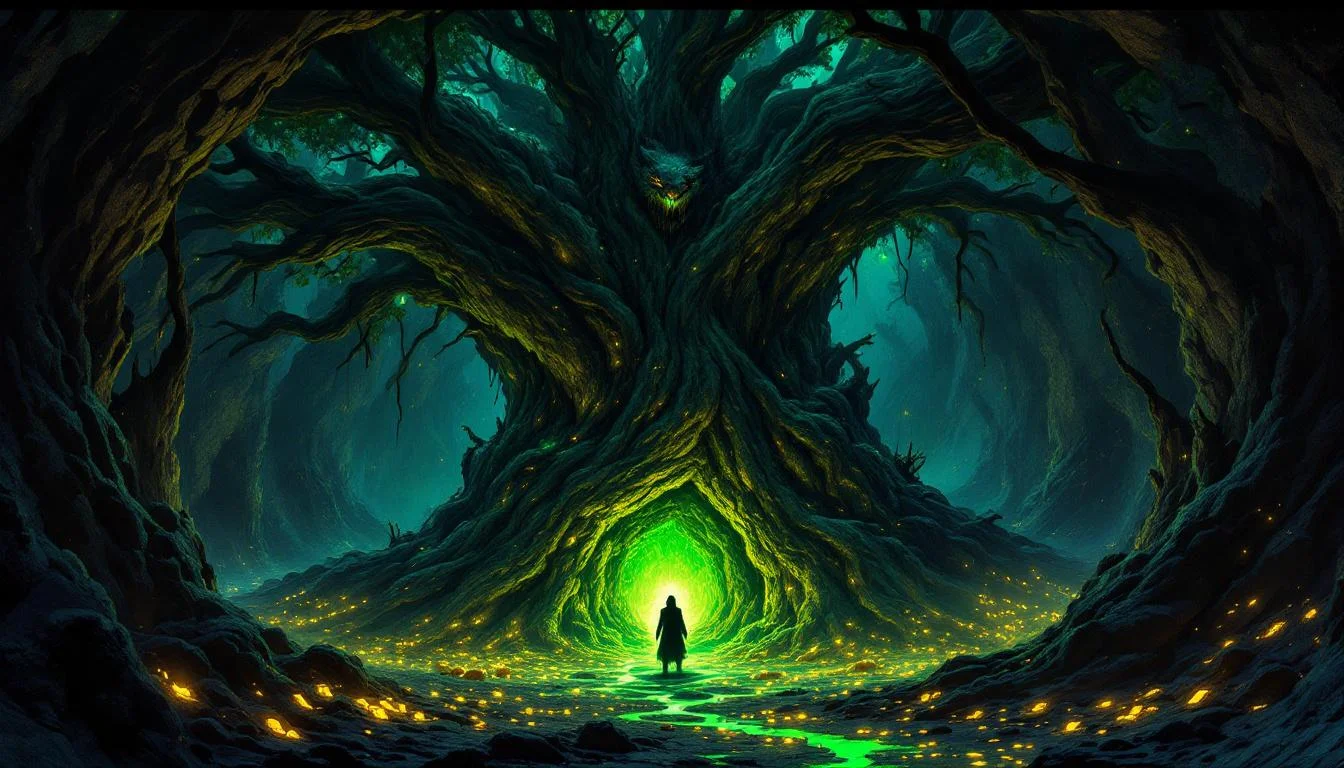
Before the gods can be understood, the world they inhabited must be drawn. The Slavs conceived of the universe as a great World Tree — a cosmic axis connecting three realms. Prav, the upper world of divine law and celestial order, occupied the crown. Yav, the visible world of the living, stretched across the trunk. Nav, the cold wet kingdom of the dead and all dormant forces, coiled through the roots and extended downward into subterranean waters and eternal darkness.
The gods were not merely residents of these realms. They were the forces that kept the tree standing. The thunder god struck from the crown to prevent chaos from swallowing the trunk. The earth goddess held the roots together so the living would have ground beneath their feet. The underworld god tended the dead so their energy could return as spring. Remove any one of them and the tree falls. This is the logic behind the entire pantheon — not a family of squabbling immortals, but a system of interlocking forces that keeps reality from tearing itself apart.
The Supreme Gods: Thunder, Earth, and the Deep
Perun — God of Thunder, Lightning, and War
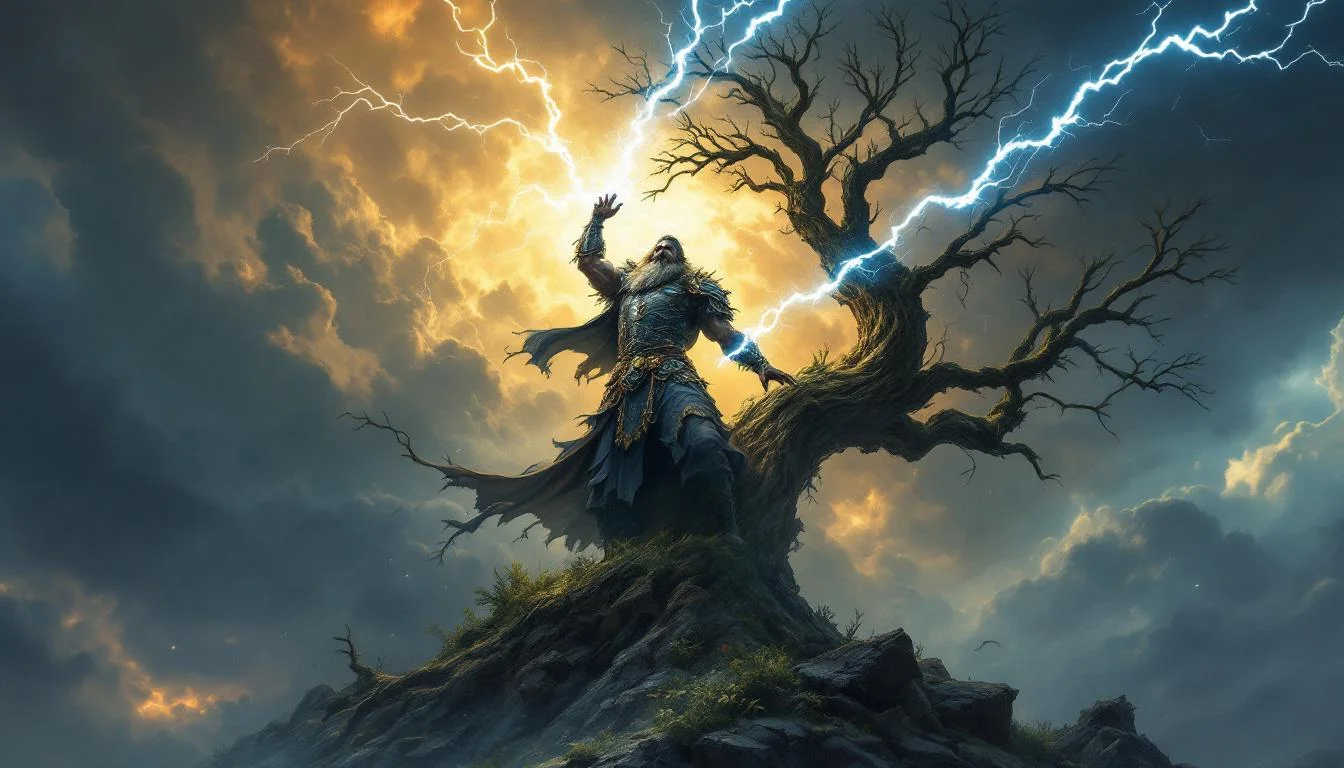
Perun stood at the summit. He was the lord of storms, the wielder of the thunderbolt, the patron of warriors and the enforcer of oaths. His idol stood first in Prince Vladimir's pantheon of 980 AD — carved from wood with a silver head and a golden mustache. His sacred tree was the oak. His sacred weapon was the axe. Every thunderstorm was his voice, and every lightning strike was his spear hurled at the serpent coiling beneath the earth. He is the closest Slavic equivalent to Zeus, Thor, and the Vedic Indra — all descendants of the same Proto-Indo-European thunder god, Perkwunos, "the Striker." When Vladimir converted to Christianity in 988, Perun's idol was tied to a horse's tail, beaten with sticks, and thrown into the Dnieper. But the people wept on the banks, and his memory never drowned.
Veles — God of the Underworld, Cattle, Magic, and Poetry
Veles was everything Perun was not. Where Perun ruled the dry sky, Veles ruled the wet earth. Where Perun stood on mountaintops, Veles lurked in roots and swamps. He was the god of the dead, the keeper of cattle and wealth — because in the Proto-Slavic world, skot meant both "cattle" and "treasure" — and the patron of poets, musicians, and sorcerers. His form shifted between serpent, bear, and wolf. His eternal conflict with Perun — the serpent stealing rain from the sky, the thunder god striking him back into the depths — was the central myth of Slavic religion, the engine that drove the seasons and kept the cosmos in motion. He was not evil. He was necessary. Without Veles, there is no rain. Without his underworld, the dead have nowhere to go.
Mokosh — Mother Goddess of Earth and Fate
Mokosh was the only goddess named in Vladimir's official pantheon, and she was named last — not because she was least important, but because a warlord building a state religion had little use for a goddess of women's work. She governed fertility, moisture, spinning, weaving, and the fate of women. Her name likely derives from mokr-, "wet" — she was the moist earth itself, the dark soil that receives seed and returns grain. After Christianization, her worship transferred almost seamlessly to the Virgin Mary and to Saint Paraskeva-Pyatnitsa, the patron of spinning and women's health. But the transfer was never complete. Centuries after the baptism of Rus', Russian women were still leaving offerings at springs and wells dedicated to Mokosh, and priests were still writing angry sermons about it.
The Solar Gods: Fire and Light Across the Sky
Svarog — The Celestial Smith
Svarog was the divine blacksmith who forged the sun. His name connects to the Sanskrit svar, meaning "bright" or "radiant," and to the Proto-Slavic svarъ, meaning "quarrel" or "heat." He was the father of Dazhbog, the sun god, and of Svarozhits, the fire god — a celestial artisan whose hammer shaped the heavens. The Hypatian Chronicle explicitly identifies him with the Greek Hephaestus. In some traditions he is the supreme creator who stepped back after fashioning the world, leaving its governance to his sons. In others he sleeps, and his dreams shape the course of events on earth. His worship was strongest among the South Slavs, and his name survives in the word svarga, an archaic term for the sky.
Dazhbog — The Giving God of the Sun
Dazhbog carried the sun across the sky each day. His name is transparent: dazh- from the verb "to give," and bog, "god" — the Giving God. He was a deity of warmth, abundance, and royal lineage. The Tale of Igor's Campaign, written in the twelfth century, calls the Russian people Dazhbog's grandchildren, implying a mythological genealogy in which the sun god was the ancestor of the Slavic princes. He was named second in Vladimir's pantheon, immediately after Perun, and his connection to both solar warmth and earthly prosperity made him one of the most beloved gods in the East Slavic tradition. Some scholars see him as identical to Khors; others maintain they governed different aspects of the solar cycle — Dazhbog the light and warmth, Khors the disk itself.
Khors — The Sun Disk
Khors is one of the most debated figures in the pantheon. Named in Vladimir's idol shrine alongside Perun and Dazhbog, his exact function remains unclear. His name is almost certainly borrowed from Iranian — the Sarmatian or Scythian word for "sun" — which has led scholars to argue that he represents either the physical solar disk (as opposed to Dazhbog's solar light), or a deity imported through contact with the Iranian-speaking steppe peoples who neighbored the early Slavs. The Tale of Igor's Campaign mentions a prince "crossing the path of great Khors" — a poetic way of saying he rode through the night, crossing the sun's resting path. Khors had no separate mythology that survived, but his presence in the official pantheon confirms he was considered important enough to stand beside the thunder god.
Yarilo — God of Spring, Fertility, and the Green Force
Yarilo was the young god of spring — beautiful, violent, and doomed. He arrived each year on a white horse covered in wildflowers, bringing the green force that cracked frozen ground and drove sap into trees. His festivals were ecstatic and sexual, involving dances, mock battles, and ritual coupling in the fields to ensure fertile harvests. In some traditions he was the son of Veles, kidnapped and raised in the underworld, who returned each spring to the world of the living. In others he was a dying-and-rising god whose annual death — sometimes ritually enacted by burying a straw effigy — signified the end of summer's growth and the beginning of the harvest. His name derives from yar-, meaning "fierce" or "passionate," and his West Slavic counterpart Yarovit was a god of war, carrying a golden shield that guaranteed victory.
The Gods of Wind, Darkness, and Cosmic Balance
Stribog — God of Winds and Storms
Stribog commanded the winds. The Tale of Igor's Campaign calls the winds "Stribog's grandchildren," spreading across the land like descendants of a patriarch. His name likely derives from stri-, "to spread" or "to blow," making him the "Spreading God" — the force that distributes air and weather across the world. He was named in Vladimir's pantheon and appears in several medieval East Slavic texts, but no independent mythology about him survives. Some scholars connect him to the Indo-European concept of a wind-distributor god, while others have tentatively linked him to Vayu, the Vedic wind deity. In folk tradition he was sometimes imagined as a bearded old man blowing through a great horn on a distant mountaintop.
Belobog — The White God
Belobog was the principle of light, goodness, and fortunate outcomes. His existence as a distinct deity is debated — some scholars argue he was a genuine god of the West Slavic Polabian tribes, while others suggest he was a later folk invention created as a counterpart to Chernobog. Place names containing bel- or biel- ("white") scattered across former Slavic territories in Germany suggest an authentic tradition. Whether he was a personified deity with shrines and priests or a more abstract principle of benevolent cosmic force, his name carried real weight in Slavic folk religion. When things went well, when harvests came in full, when a child was born healthy — that was Belobog's doing.
Chernobog — The Black God
Chernobog was darkness made divine. The twelfth-century chronicler Helmold of Bosau, writing about the Slavic peoples of the Baltic coast, described how at feasts a bowl of mead was passed around the table and each man who drank from it invoked the gods — all the gods of good fortune, and then Chernobog, the Black God, the source of all evil fortune. His name appears in curses and imprecations across the Slavic world. Like Belobog, his status as a fully developed deity is uncertain, but the principle he represents — that darkness and misfortune are not random but directed, that there is an intelligence behind suffering — was central to the Slavic understanding of cosmic balance. You cannot have light without darkness. You cannot have Perun without Veles. You cannot have Belobog without Chernobog.
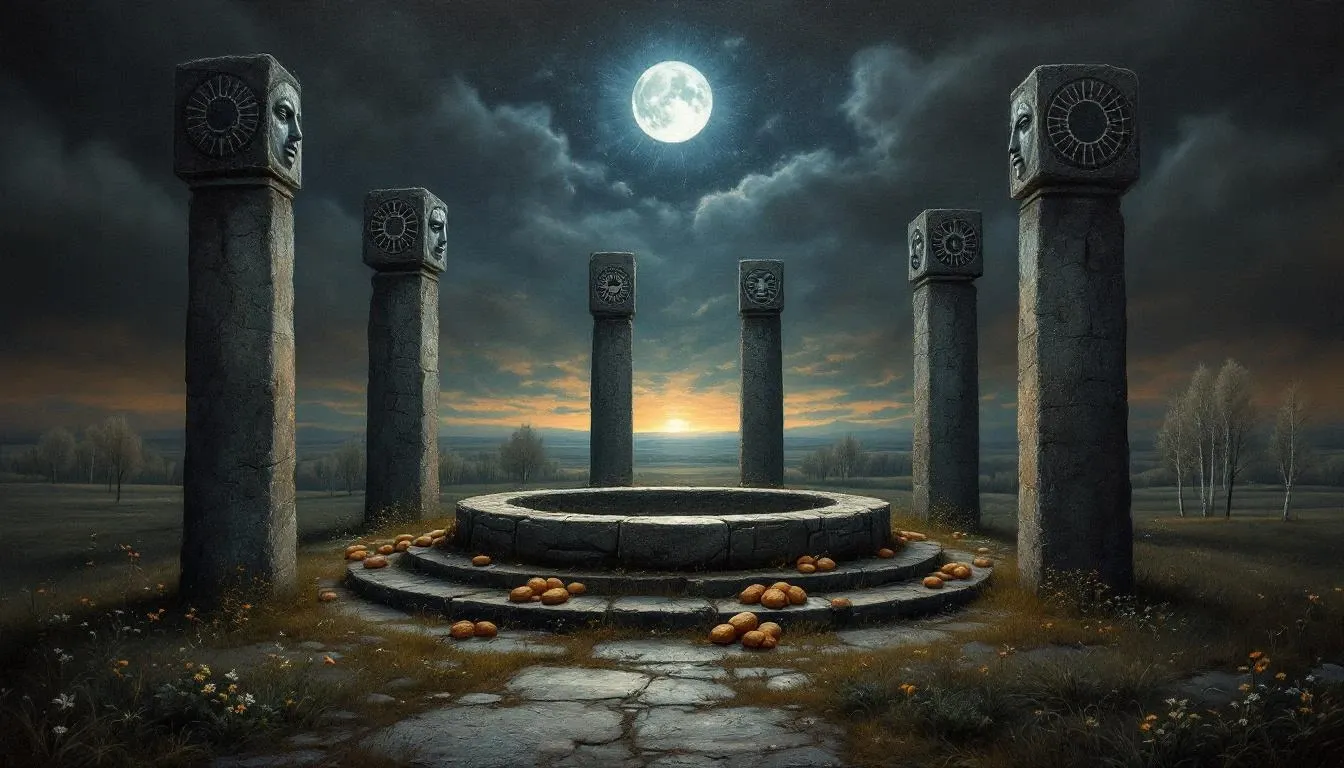
The Goddesses: Life, Death, and the Hunt
Lada — Goddess of Love, Harmony, and Spring
Lada governed love, beauty, marriage, and the joy of spring. Her name appears in wedding songs and springtime rituals across the Slavic world — lado, lada, ladо — invoked as a refrain whose meaning blurred over the centuries into something between a deity's name and a term of endearment. Polish and Czech sources mention her alongside her twin Lado (or Lel and Polel, a divine pair sometimes compared to the Greek Dioscuri). She was the goddess invoked at betrothals, the force that drew young people together at Kupala Night festivals, and the warmth that returned to the world each spring after Morana's long winter grip. Whether she was an ancient deity or a medieval personification of spring joy, her presence in Slavic folk culture is overwhelming and undeniable.
Morana — Goddess of Winter and Death
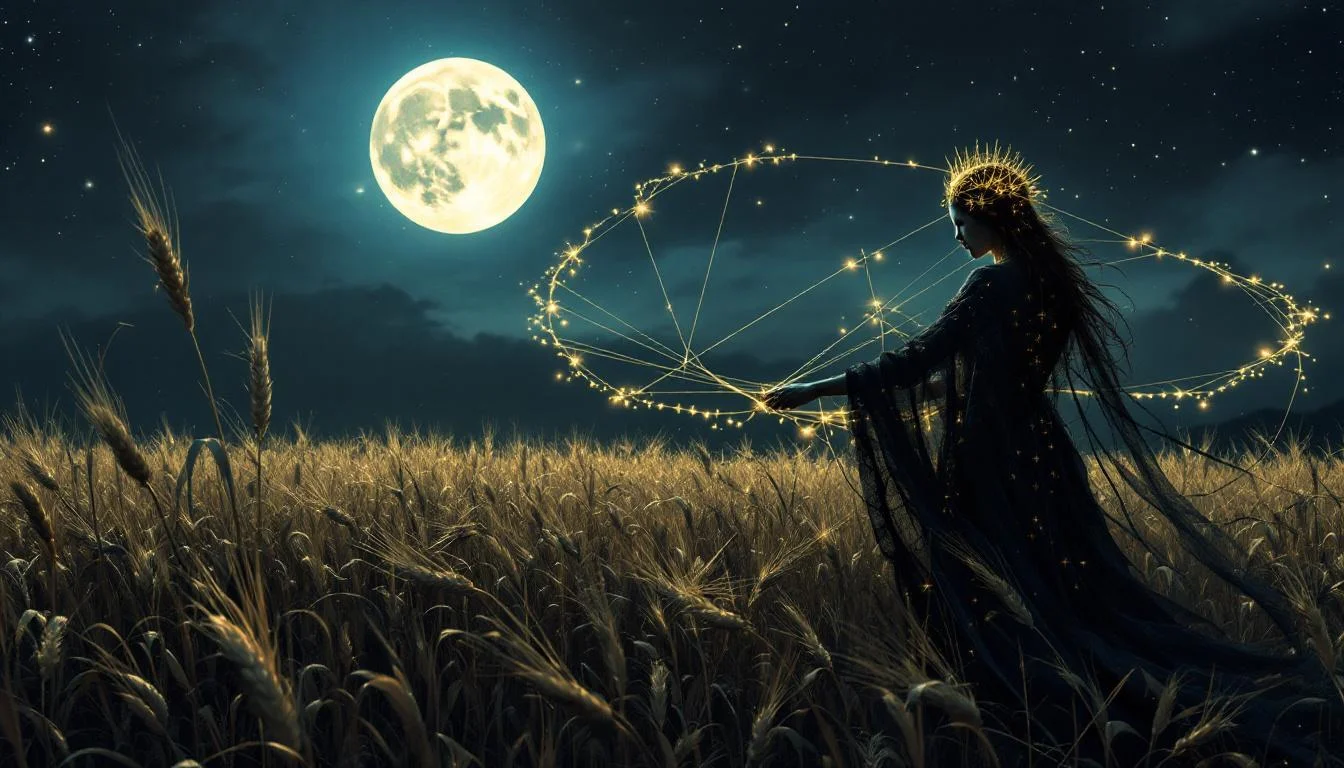
Morana brought the cold. She arrived when the leaves fell and the rivers froze, and she did not leave until her straw effigy was burned or drowned at the end of winter — a ritual still practiced in Poland, the Czech Republic, and Slovakia under the name Marzanna. She was the goddess of death, disease, and the long darkness of winter, and her domain overlapped with that of Nav, the underworld realm of the dead. In some South Slavic traditions she was married to Yarilo, and their seasonal cycle — marriage in spring, his death in summer, her solitary reign in winter — mirrored the agricultural year. She was feared, but she was not hated. The Slavs understood that winter was necessary. Without Morana's killing frost, the soil would not rest. Without death, there could be no spring.
Devana — Goddess of the Wild Hunt
Devana was the Slavic Diana — a virgin goddess of the forest, the hunt, and the untamed wilderness. Her name derives from the same Indo-European root as the Latin Diana and the Sanskrit Devi. Polish chronicles mention her explicitly, and Lusatian Sorb tradition preserves her as Dživica, a wild forest spirit. She protected game animals and punished hunters who killed without need. In some stories she was the daughter of Perun and a goddess of the moon as well, riding through the night forests with hounds that bayed without sound and arrows that never missed their mark.
Zhiva — Goddess of Life and Vitality
Zhiva was life itself — the force that drives seeds upward through soil and blood through veins. Worshipped primarily among the West Slavic Polabian tribes, her name is transparent: zhiva, from zhit', "to live." She was the counterpart of Morana: where death took, Zhiva gave. Where winter killed, Zhiva healed. Her temples were recorded by medieval German chroniclers documenting the pagan Slavs of the Elbe region, though the details of her cult have been mostly lost. What survives is her name and the stubborn idea behind it — that life is not merely a condition but a goddess, a force with intention and will.
The Cosmic Gods: Creation, Structure, and Mystery
Rod — The Creator, the Ancestor, the Source
Rod may be the oldest deity in the Slavic pantheon. His name means "birth," "kin," "clan" — the root from which the Russian words rod (family), rodina (homeland), priroda (nature), and narod (people) all grow. Medieval sermons rail against his worship with particular fury, suggesting it was widespread and resistant to suppression. Some scholars consider him a creator god — the force that separated light from darkness, sky from water, and set the world into motion before the other gods took their seats. Others see him as a spirit of ancestry, a divine principle of kinship and continuity rather than a personified deity. The Rozhanitsy, female spirits of fate who determined a child's destiny at birth, were his companions or daughters. His worship was intimately connected to the domestic sphere — household shrines, birth rituals, and the sacred meals shared among kin.
Triglav — The Three-Headed God
Triglav wore three faces. His statue, recorded in the Pomeranian city of Szczecin by the twelfth-century biographer Herbord, had three heads covered by a golden veil, because — the priests explained — the three heads represented the three realms of the cosmos: sky, earth, and underworld. His eyes were covered because he chose not to see the sins of men. He was served by a black horse used for divination: if the horse stepped over a set of spears laid on the ground without stumbling, the omens were favorable. Some scholars interpret Triglav not as a single deity but as a theological concept — a trinity of Svarog, Perun, and Veles united in a single image, a way of saying that the three great forces of the cosmos are ultimately one.
Svetovit — The Four-Faced War God of Arkona
Svetovit was the chief deity of the West Slavic Rani tribe on the island of Rugen in the Baltic Sea. His great temple at Arkona — the last major Slavic pagan stronghold, destroyed by the Danes in 1168 — housed a four-headed wooden idol taller than a man, holding an ornate drinking horn that the priests filled with wine each year. If the wine level had dropped by spring, famine was expected; if it remained full, abundance was assured. A sacred white horse lived in the temple, and its movements were read as prophecy. Svetovit's four faces looked in the four cardinal directions — north, south, east, west — seeing everything, missing nothing. His name means either "Strong Lord" or "Holy Light," and his destruction at Arkona marked the effective end of organized Slavic paganism in Europe.
The Forgotten and the Debated
Simargl — The Winged Guardian of Seeds
Simargl is one of the strangest entries in Vladimir's pantheon. Named alongside Perun and Mokosh, he appears to be derived from the Iranian Simurgh — a winged creature, part dog and part bird, that guarded the Tree of Life. In the Slavic context, he was a protector of seeds and plants, the guardian of vegetation who ensured that the life force stored in seeds survived the winter underground. His inclusion in Vladimir's official pantheon suggests Iranian cultural influence on the early Rus', likely through contact with the Scythian and Sarmatian peoples of the steppe.
Radegast — God of Hospitality and the Sacred Fire
Radegast was the chief god of the Polabian Slavic Redarian tribe, worshipped at the famous temple at Rethra (or Riedegost). Adam of Bremen and Thietmar of Merseburg both describe his cult — a deity depicted in armor with a helmet bearing a bird, served by priests who tended a sacred fire. His name can be read as "dear guest" or "joyful counsel," and he may have been a god of hospitality, trade, and the bonds between strangers. When the Germans destroyed Rethra in the eleventh century, Radegast's worship vanished with his temple. Some scholars identify him with Svarozhits, the fire god, suggesting Radegast was a local title rather than a separate deity.
Dola and the Rozhanitsy — Spirits of Fate
Dola was the personification of fate assigned to each person at birth — a companion spirit, sometimes benevolent and sometimes cruel, who followed you through life and determined whether your efforts succeeded or failed. The Rozhanitsy were related beings: female spirits, usually appearing in pairs or triads, who gathered at the bedside of a newborn to spin out the thread of its destiny. These are not gods in the conventional sense but divine forces woven into the fabric of daily Slavic life — closer to the Greek Moirai or the Norse Norns than to the Olympian gods. Medieval sermons condemn the practice of setting a table for the Rozhanitsy after childbirth, complete with bread, porridge, and cheese — offerings to beings who were supposed to no longer exist.
Kupala — The Solstice Spirit
Kupala is less a god than a festival made flesh. The midsummer celebration of Kupala Night — fire-leaping, wreath-floating, the search for the mythical fern flower — was one of the most enduring pagan traditions in the Slavic world, surviving well into the modern era despite centuries of ecclesiastical prohibition. Whether "Kupala" was ever worshipped as a deity or was always a personification of the summer solstice itself remains debated. The name may derive from kupat', "to bathe," reflecting the ritual water purification central to the festival. What is certain is that on Kupala Night, the barrier between the human world and the supernatural thinned to nothing, and forces older than any named god moved through the darkness between the bonfires.
Korab — God of the Sea
Korab was a deity associated with the sea, navigation, and fishing, found in old Croatian mythology. His name is connected to the word korabl' (ship), and the island of Rab in the Adriatic may preserve his name. He represents a maritime aspect of Slavic religion that is often overlooked — the Slavs were not only forest people. Those who settled the Adriatic and Baltic coasts developed their own divine patrons of the waves.
Zorya — The Dawn Guardians
The Zorya were two or three sister goddesses who guarded the gates of dawn and dusk. Zorya Utrennyaya, the Morning Star, opened the celestial gates each day so that the sun could ride forth. Zorya Vechernyaya, the Evening Star, closed them at nightfall. In some traditions a third sister, Zorya Polunochnaya, the Midnight Star, guarded the sky's darkest hour. Together they watched over a chained cosmic hound (or in some versions, the god Simargl) that strained to devour the constellation Ursa Minor — and if the chain ever broke, the world would end.
Mat Zemlya — Mother Earth
Mat Zemlya — literally "Mother Earth" — was not a goddess with a face and a name in the way Perun had a face and a name. She was the earth itself, worshipped directly. Slavic farmers swore oaths by eating a clod of dirt. They whispered secrets into the ground, believing she could hear. They would not strike the earth with a sharp tool before the spring equinox, because she was sleeping and it would be wrong to wake her with pain. In some regions, Mat Zemlya was identified with Mokosh; in others, she was something older and broader — the ground beneath all gods, the body upon which the entire World Tree stands.
Vladimir's Pantheon: The Six Official Gods
In 980 AD, Prince Vladimir of Kyiv attempted to unify the fractious East Slavic tribes under a single state religion. He erected six idols on a hill outside his palace: Perun, Khors, Dazhbog, Stribog, Simargl, and Mokosh. This was not a theological statement but a political one — an attempt to build a hierarchy of gods that mirrored the hierarchy of princes. Perun stood first, with his silver head and golden mustache. Mokosh stood last. Veles, conspicuously, was absent from the hilltop — his shrine stood below, in the merchants' quarter by the river, among the cattle and the trade goods. Whether this reflected genuine theological separation or Vladimir's deliberate exclusion of a god too popular to control remains one of the great unanswered questions of Slavic religious history.
And Vladimir began to rule alone in Kyiv, and he set up idols on the hill outside the castle courtyard: one for Perun, carved of wood, with a silver head and a golden mustache, and others for Khors, Dazhbog, Stribog, Simargl, and Mokosh. And they offered sacrifices to them, calling them gods.
The pantheon lasted exactly eight years. In 988, Vladimir accepted Byzantine Christianity, and every idol on that hill was destroyed. But the gods did not disappear. They sank into the folk traditions, the agricultural calendar, the wedding rites and funeral customs and seasonal festivals that the Church could regulate but never fully replace. Perun became the prophet Elijah, who rides a chariot across the sky and throws thunderbolts at demons. Veles became Saint Blaise, patron of cattle. Mokosh became Saint Paraskeva. The names changed. The functions did not.
Why the Slavic Gods Were Forgotten
The Slavic pantheon suffered a catastrophe that the Greek, Roman, and Norse traditions largely escaped: it was destroyed before it could be written down by its own believers. Homer preserved Zeus. The Eddas preserved Odin. But no Slavic Homer existed — or if one did, their songs were sung into a wind that carried them nowhere permanent. The sources that survive are all hostile: Byzantine chroniclers describing barbarian customs, German missionaries cataloguing heresies they intended to destroy, and Christian priests writing sermons against the stubborn pagans in their own congregations.
The result is a pantheon seen through a broken mirror. We know the names but often not the myths. We know the shrines but not the prayers. We know that Perun and Veles fought, but the full story of their war — the Slavic Iliad, if such a thing ever existed — is gone, reconstructed only through careful comparative analysis by scholars like Vyacheslav Ivanov and Vladimir Toporov, who traced its fragments across dozens of folk tales, songs, and rituals scattered from the Balkans to the Baltic.
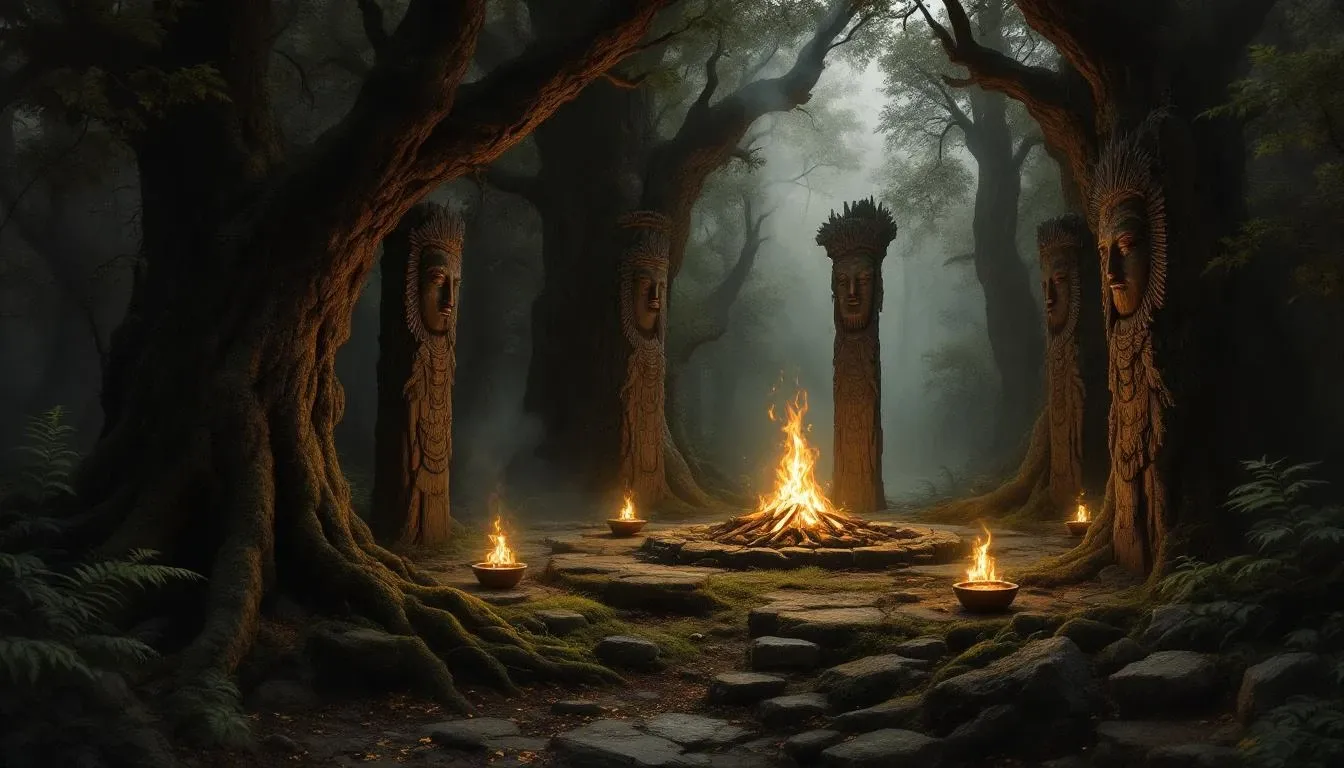
What you have read here is not the complete truth. It is the best approximation that the surviving evidence allows — a candle held up in a room where the original light was extinguished a thousand years ago. But the walls of that room are still standing. The sacred groves still grow, even if no one tends them. The symbols still appear on embroidered shirts and painted eggs. And the names — Perun, Veles, Mokosh, Svarog, Dazhbog, Morana, Yarilo, Lada — still carry a charge that ten centuries of Christianity could not ground.
The gods are not dead. They are waiting in the roots.