Something shifted on the internet around 2023. Between the cottagecore girls and the dark academia readers and the people who wanted to dress like Vikings, a new aesthetic started flooding TikTok feeds — and it was not borrowing from Scandinavia or the Mediterranean or the British countryside. It was borrowing from the deep interior of Eastern Europe: birch forests, red-thread embroidery, ancient symbols carved into oak, fur-collared coats, eyes lined dark as charcoal, and an atmosphere that felt less like a fashion trend and more like a summoning. The hashtag #slaviccore accumulated hundreds of thousands of posts. The broader #slavic tag crossed 318,000 videos. Over a million TikToks used the audio of "Moy Marmeladny" by Katya Lel as their soundtrack. And suddenly, a mythology that had spent a thousand years being the most overlooked tradition in Europe was everywhere.
They called it Slavic Core. And while the surface looked like fashion — fur hats, red lips, heavy eyeliner, linen dresses — what was happening underneath was more complicated. It was a collision between genuine cultural revival and internet aesthetics, between ancient protective symbols and Instagram mood boards, between real mythology and the flattened, curated version of identity that social media demands. Some of it was serious. Some of it was cosplay. Most of it was both at once, and the tension between those two things is what makes the Slavic Core phenomenon worth understanding.
What Slavic Core Actually Is
At its simplest, Slavic Core is a cultural and aesthetic movement that combines interest in Slavic culture, history, music, and landscapes into a visual identity expressed through fashion, interior design, tattoos, art, and social media content. The term follows the internet's naming convention for aesthetic subcultures — the same grammar that gave us cottagecore, goblincore, dark academia, and normcore. Attach "-core" to a noun and you have defined a lifestyle, a wardrobe, and a color palette in a single word.
But Slavic Core is doing something the other cores largely do not. Cottagecore romanticizes a generic pastoral past. Dark academia fetishizes European university culture without geographic specificity. Slavic Core, by contrast, is tied to real places, real peoples, and a real mythology that still carries religious and ethnic weight. When someone puts on a Viking costume for TikTok, they are playing with an aesthetic that has been commercially processed for over a century — through Wagner, through Marvel, through the History Channel. When someone puts on a vyshyvanka (traditional embroidered shirt) and films themselves walking through a birch forest with Slavic symbols drawn on their skin, they are engaging with material that is still actively contested, still politically charged, and still a living part of cultural identity for hundreds of millions of people across Poland, Ukraine, Russia, Serbia, Czech Republic, and a dozen other nations.
The core visual vocabulary of the trend includes:
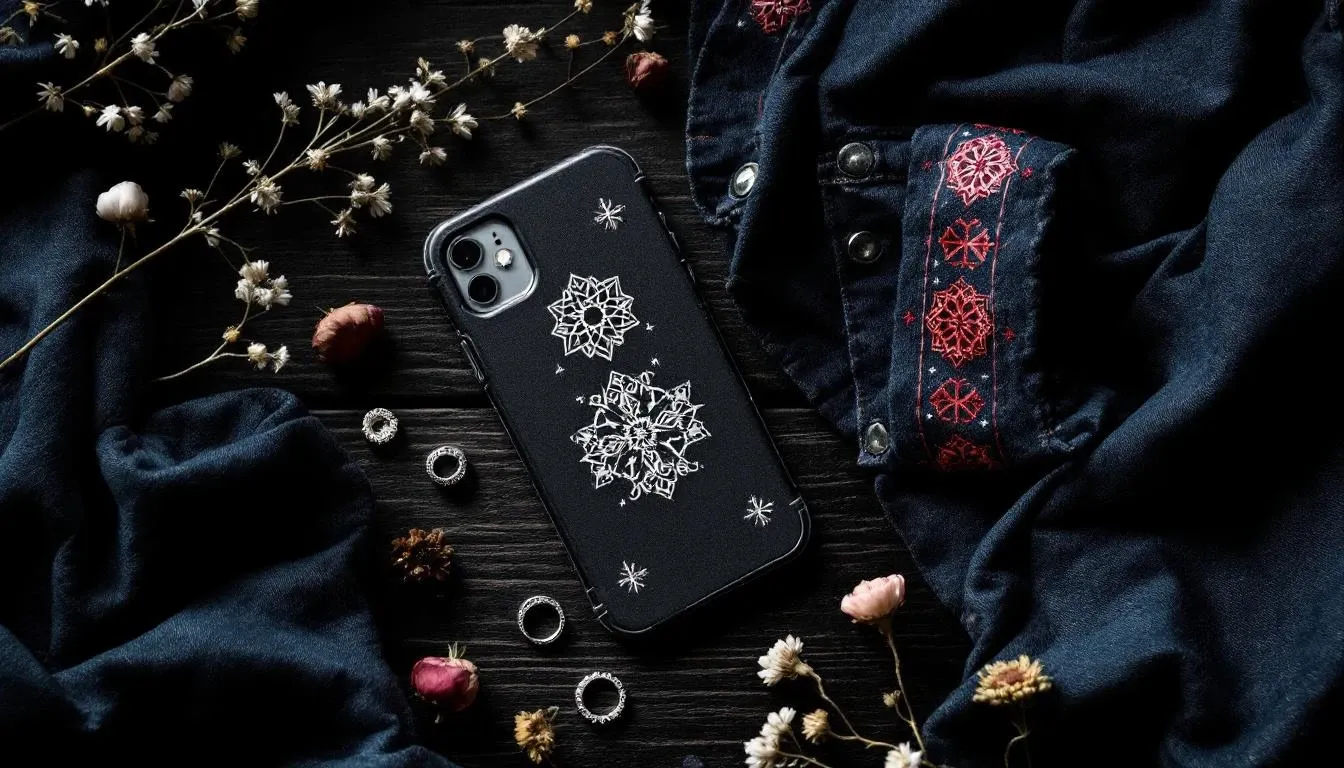
Embroidery and textile patterns. Traditional Slavic embroidery — particularly the red-on-white geometric patterns found across Ukrainian, Russian, Belarusian, and Serbian folk textiles — functions as the visual anchor of the aesthetic. These are not abstract decorations. Each motif is a "letter" in a symbolic alphabet: Mokosh's diamond represents fertility; solar wheels invoke Svarog and Perun; tree-of-life patterns map the three cosmic realms. Young designers from Poland, Ukraine, and across Eastern Europe are reclaiming these traditions, transforming lacework, crochet, and embroidered shirts from rural ceremonial garments into globally relevant fashion statements.
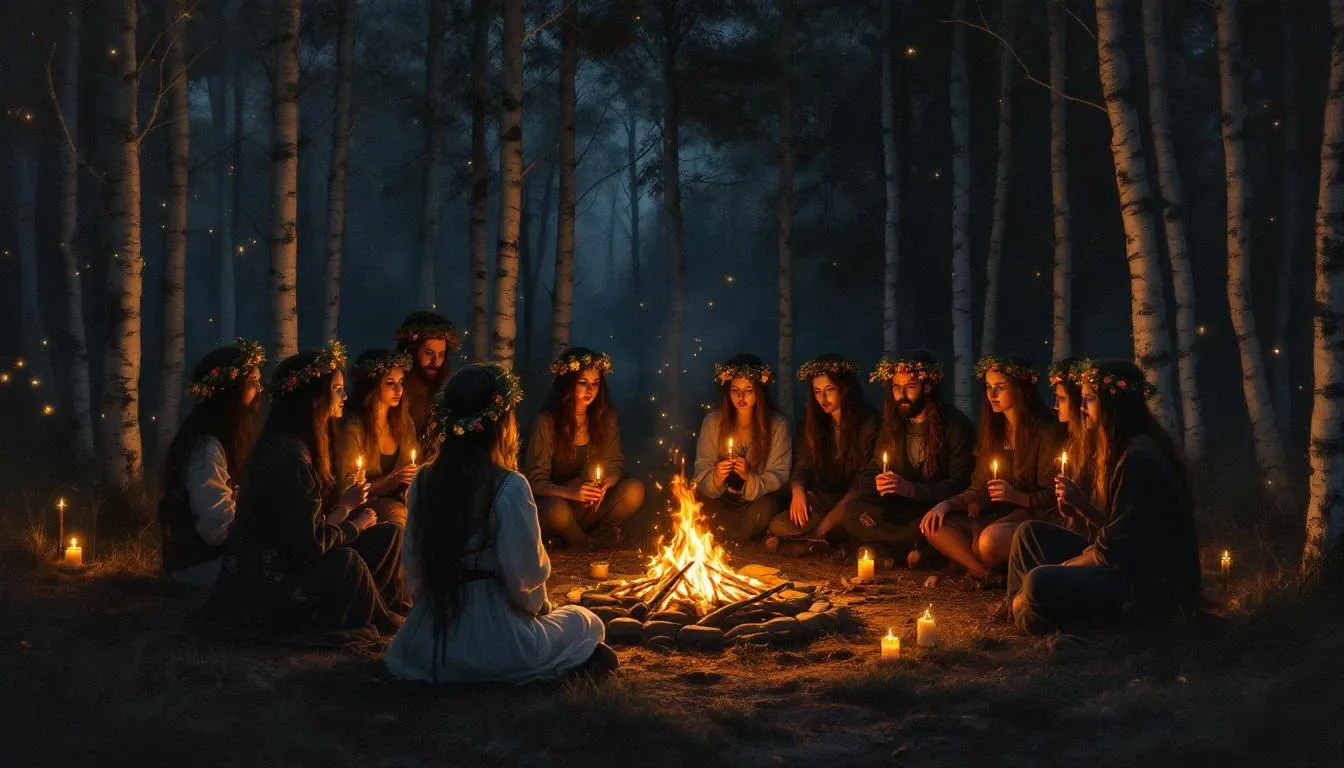
Dark forests, mist, and natural landscapes. If Nordic Core gravitates toward fjords and frozen coastlines, Slavic Core gravitates toward the interior — dense birch and pine forests, fog rolling over meadows, rivers cutting through marshland. This is the landscape of Leshy, the shape-shifting forest lord who could grow tall as the treetops or shrink to the height of grass. It is the territory of Baba Yaga, whose chicken-legged hut stands in the deepest part of the woods where no path leads.
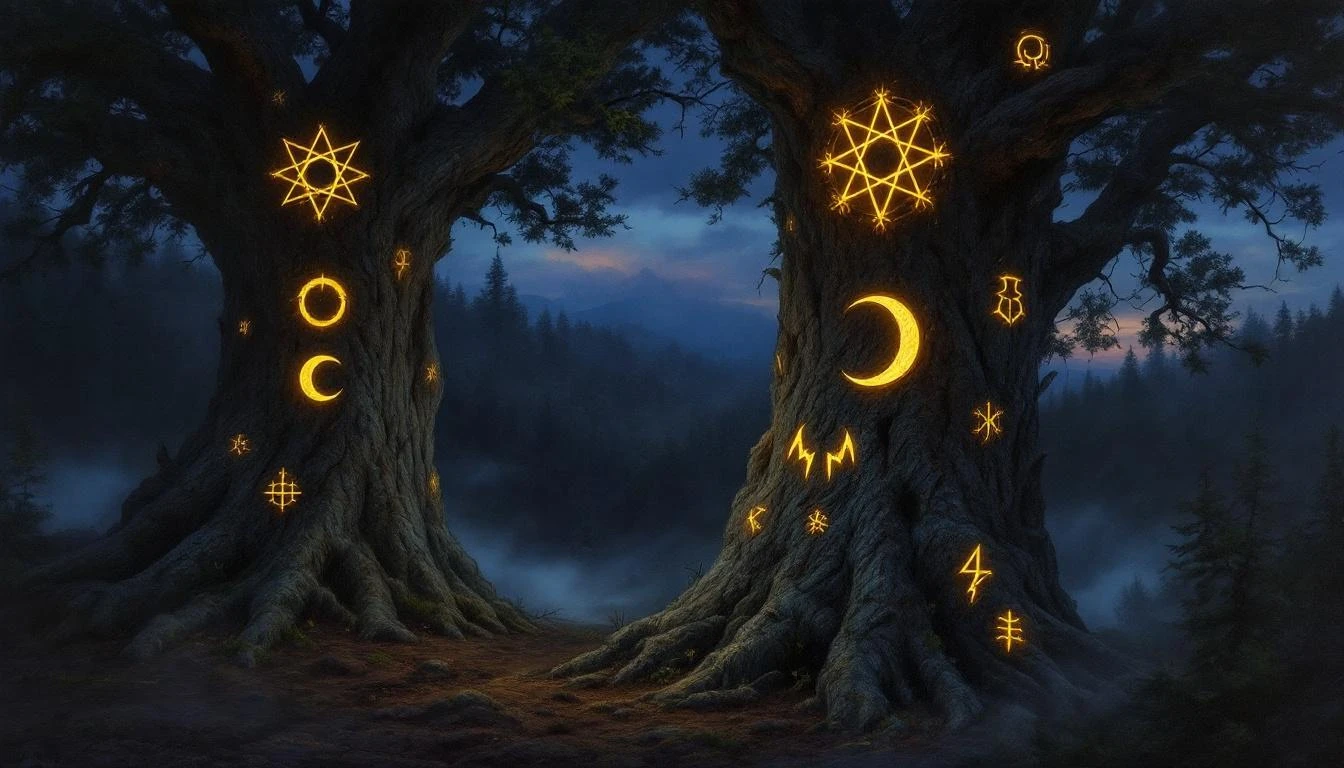
Protective symbols and tattoo culture. The Kolovrat solar wheel, Perun's thunder mark (Gromovnik), the Lunnitsa crescent, the star of Alatyr — these symbols have moved from archaeological artifacts and ethnographic textbooks onto skin. Slavic tattoo culture has exploded, with bold black outlines and a limited palette of red, yellow, and green depicting gods, runes, and protective signs drawn from genuine folk tradition. Polish tattoo artists in particular have been at the forefront, reinterpreting Slavic motifs in contemporary styles that draw directly from archaeological sources.
Fashion as identity statement. Fur coats, headscarves, leather, red lips, heavy makeup — the fashion side of Slavic Core oscillates between genuine folk revival and a stylized, cinematic version of Eastern European femininity. The look is deliberately maximalist: bold, warm, unapologetically non-Western. It is a conscious departure from the minimalist Scandinavian aesthetic that dominated internet fashion for the previous decade.
Where It Came From: Roots Before TikTok
The Slavic Core trend did not appear from nothing. It grew from at least three converging currents that had been building for years before TikTok gave them a shared visual language.
The Witcher effect. Andrzej Sapkowski's novels — and above all, CD Projekt Red's video game adaptations — introduced millions of non-Slavic people to a fantasy world built on Polish and broader Slavic folklore rather than Tolkien's Anglo-Saxon framework. The creatures in The Witcher are not generic dragons and elves. They are striga, rusalka, leshy, vodyanoy — beings drawn directly from Slavic demonology. When Netflix's adaptation premiered in 2019, it accelerated the process further: suddenly, the aesthetic universe of Slavic mythology had a visual reference that millions of people shared.
The Winternight Trilogy. Katherine Arden's three novels — The Bear and the Nightingale (2017), The Girl in the Tower (2017), and The Winter of the Witch (2019) — brought Slavic mythology into English-language literary fiction with a depth that no previous work had matched. Arden, who holds a degree in Russian and lived in Moscow, wove domovoy, dvorovoy, rusalka, Morozko, and Baba Yaga into a narrative set in medieval Rus' that explored the collision between Orthodox Christianity and pagan folk belief — the same collision that shaped the real history of Slavic religion. Publishers Weekly called the first book "an earthy, beautifully written love letter to Russian folklore." Arden herself put it simply: "Slavic paganism never really disappeared from the Russian countryside after the arrival of Christianity; rather they coexisted, with some friction, for centuries."
That coexistence — pagan symbols worn alongside baptismal crosses, old feast days hidden under saints' names, Perun becoming Saint Elijah and Veles becoming Saint Blaise — is one of the defining features of Slavic cultural history, and it maps directly onto what Slavic Core is doing now: layering ancient symbols onto modern identity without demanding that the wearer fully commit to either world.
The broader folk revival. Across Eastern Europe, the 2010s saw a growing movement of young people reconnecting with pre-Christian folk traditions. In Poland, events celebrating the summer solstice (Noc Kupały, drawing on the ancient Kupala Night rituals) grew in popularity. In Ukraine, the vyshyvanka became a symbol of national identity, with Vyshyvanka Day celebrated annually. In Serbia and Croatia, folk music fusion projects blended traditional instruments with electronic production. This was not internet-driven — it was cultural, political, and generational, driven by young people who wanted an identity rooted in something older than the Soviet era and more specific than generic European cosmopolitanism.
TikTok did not create this movement. It gave it a distribution channel and a name.
The Academic Response: Identity, Not Just Aesthetics
The Slavic Core phenomenon has attracted serious academic attention. In 2024, researchers Michał Pejasz and Zuzanna Staszewska from the University of Gdańsk published a peer-reviewed paper in Slavia Meridionalis — an interdisciplinary journal of the Polish Academy of Sciences — titled "Slavic Core — an Internet Aesthetic or Generation Z's Struggle for Identity?" The paper analyzes the trend through the lenses of cultural studies, visual arts, and sociolinguistics, and its conclusion pushes back against dismissing Slavic Core as mere fashion.
The phenomenon reveals a rising interest in Slavic cultures, their visible over-representation in popular culture, and genuine fascination with everything "Slavic" in social media — or, more broadly, increased interest in folklore generally. For Generation Z, Slavic Core functions not merely as an aesthetic category but as a mechanism for cultural self-identification in a globalized digital landscape.
This reading matters. It suggests that what looks like a fashion trend on the surface is, for at least some participants, a genuine search for cultural roots — an attempt to answer the question "where do I come from?" using the tools available to a generation that lives online. The paper draws parallels with similar folk-revival movements across Europe, noting that the internet has created conditions where regional identities that were suppressed or ignored during the twentieth century can be reconstructed and circulated globally within months.
The critical response has not been uniformly positive. An analysis published through Leiden University's Digital Media, Society, and Culture platform examined the "Slavic girl" variant of the trend and raised pointed concerns about the fetishization and stereotyping of Eastern European women, the reinforcement of submissive gender roles, and the flattening of complex cultural realities into consumable aesthetic categories. The tension between cultural revival and cultural commodification runs through the entire Slavic Core phenomenon, and anyone engaging with it honestly has to sit with both sides.
How Slavic Core Differs From Viking Aesthetic
The comparison with the Viking or Norse aesthetic trend is inevitable — and illuminating. Both movements draw on pre-Christian European traditions. Both romanticize a pagan past. Both have thriving tattoo subcultures. But the differences reveal what makes Slavic Core distinct.
Written vs. oral tradition. Norse mythology was preserved in the Eddas and the sagas — written sources that have been continuously available to scholars and the public for centuries. Slavic mythology was never systematically recorded. It survived in fragments: a paragraph in Procopius, a list of gods in the Primary Chronicle, and a vast body of folk customs whose pagan origins were often forgotten even by the people practicing them. This means that Slavic Core operates with a mythology that feels more mysterious, more fragmentary, more haunted by absence — and that appeal to the unknown is part of the aesthetic's power.
Commercial saturation. The Viking aesthetic has been commercially processed for well over a century — through Wagner's operas, Marvel's Thor, the History Channel's Vikings, Assassin's Creed Valhalla, and thousands of products sold in airport gift shops from Reykjavik to Oslo. Slavic Core, by contrast, still feels raw. It has not yet been smoothed into mass-market consumability. The symbols are less familiar. The gods are harder to pronounce. The stories have not been Disneyfied (though Disney has started drawing from Slavic sources). For a generation exhausted by the over-commercialization of Norse mythology, this rawness is precisely the appeal.
Landscape and mood. Viking aesthetics gravitate toward the coast — fjords, longships, sea spray, cold blue light. Slavic Core pulls inward, toward the forest interior — birch groves, dark pines, mist, sacred groves where wooden idols once stood. The Norse mood is expansive and outward-facing. The Slavic mood is enclosed, watchful, interior. One invites conquest. The other invites getting lost.
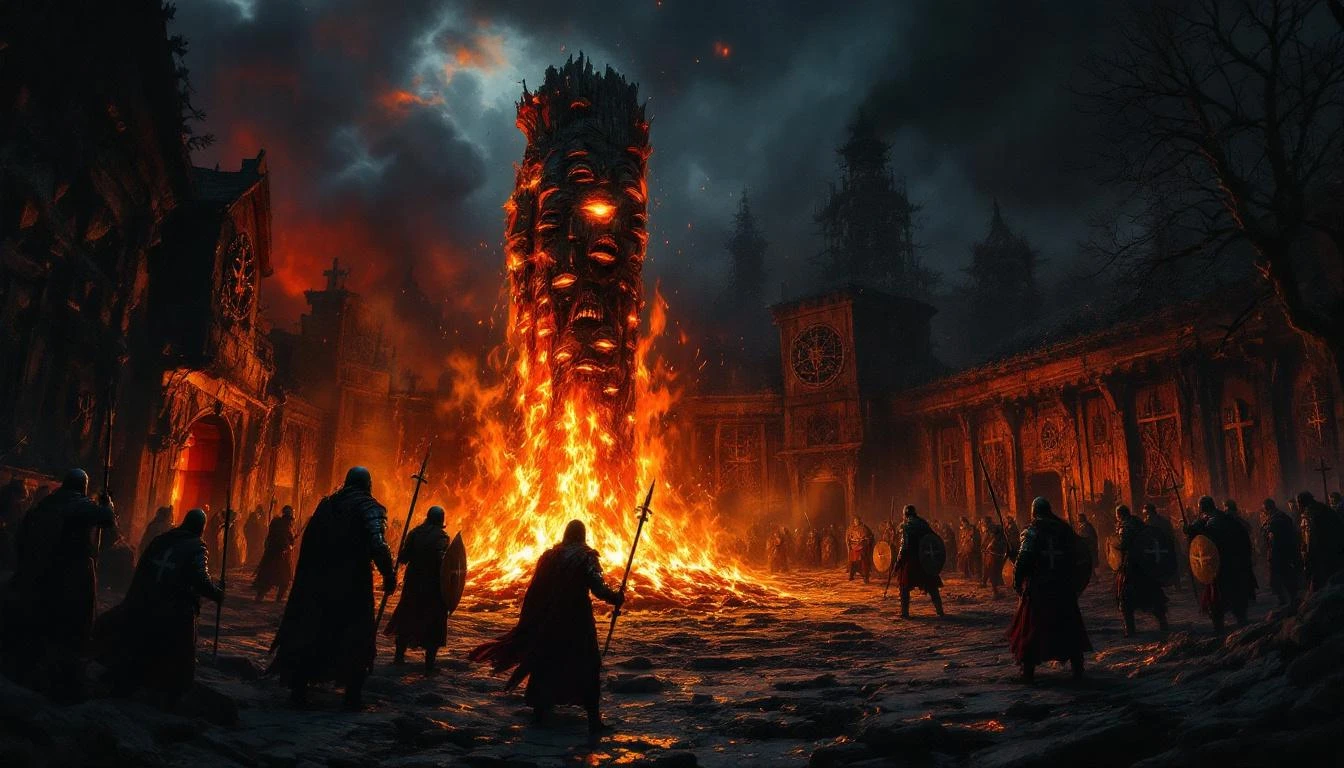
Dual nature of the supernatural. Norse mythology has clear heroes and clear villains, a linear narrative leading to Ragnarök. Slavic mythology is built on duality and ambivalence. Belobog and Chernobog — the white god and the black god — are not good and evil but necessary opposites. Baba Yaga devours children in one story and saves the hero in the next. The rusalka kills men who approach her — and her moisture makes the crops grow. Slavic Core inherits this ambiguity: it is beautiful and unsettling at the same time, and the refusal to choose between those qualities is the aesthetic's signature.
The Real Mythology Behind the Mood Boards
The danger with any "-core" trend is that it reduces a living tradition to a color palette. What gets lost when Slavic mythology becomes an Instagram filter is the actual content — the cosmology, the theology, the stories that people told not for entertainment but because they believed the world worked that way.
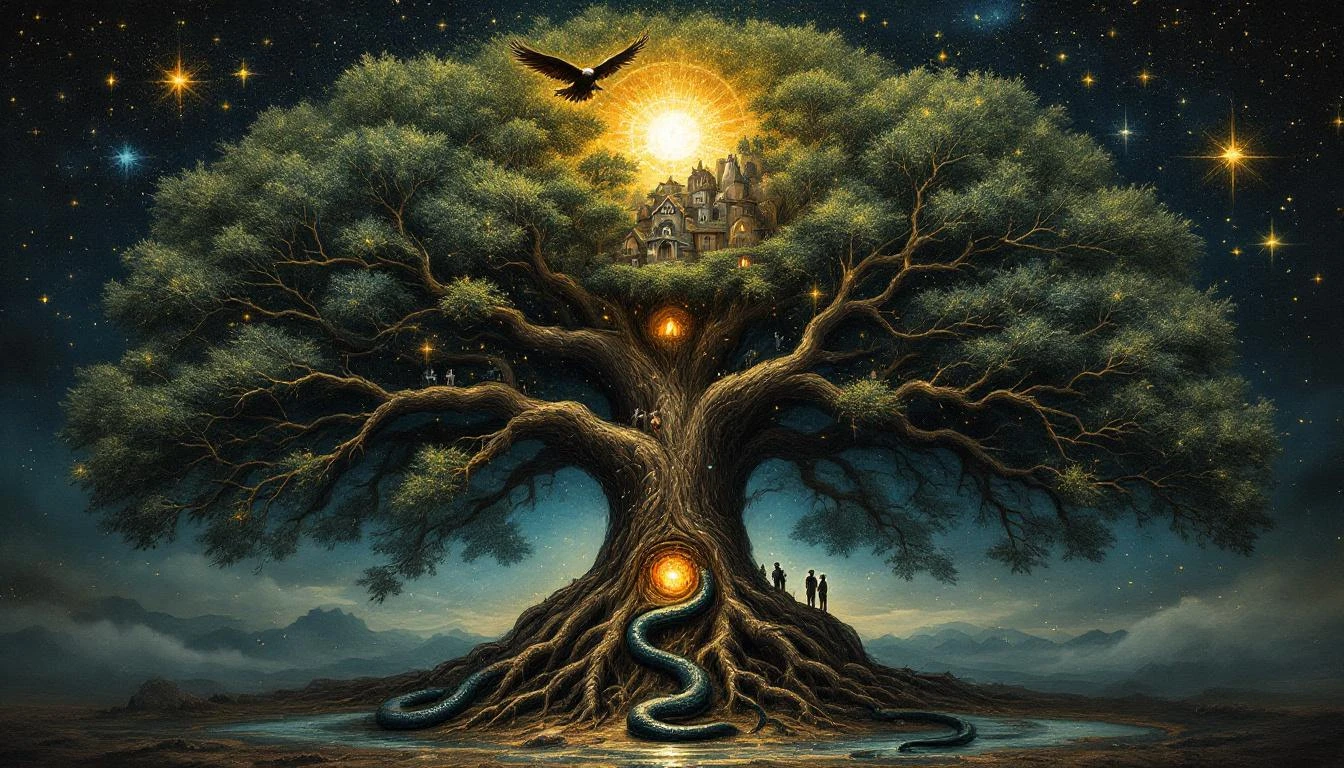
Behind every Slavic Core mood board, there is a World Tree connecting three realms of existence. There is a war between Perun and Veles that is not a story about good fighting evil but about the mechanism that makes rain fall and seasons change. There is a Mokosh — the only goddess in the official Kyivan pantheon — whose spinning determined the fate of every household. There are funeral rites involving fire, water, and the careful appeasement of the dead. There is a magical tradition rooted in herbal knowledge, spoken charms, and the understanding that language itself had power to alter physical reality.
The people creating Slavic Core content are not, for the most part, practicing Slavic pagans. They are young people — many of them from Slavic countries, many of them not — who have found in this mythology an aesthetic and emotional vocabulary that feels more honest, more textured, and more personally meaningful than the alternatives the internet offers. Whether that constitutes genuine cultural engagement or superficial appropriation depends entirely on whether the person wearing the Kolovrat tattoo bothers to learn that it represents Svarog's solar forge — or whether they just liked the shape.
What Happens Next
The Slavic Core trend is not slowing down. Google search interest for "slavic girl fashion" spiked to its all-time peak in February 2026, indicating that the movement is entering a second wave — one driven less by TikTok novelty and more by sustained cultural interest. Fashion houses are incorporating Slavic embroidery motifs into runway collections. Tattoo studios from Warsaw to Brooklyn report growing demand for Slavic symbols. Academic journals are publishing peer-reviewed analyses. The infrastructure of a genuine cultural revival is being built, plank by plank, alongside the infrastructure of a social media trend.
The question is whether the depth survives the scale. Every mythology that enters popular culture faces this test. Norse mythology passed through it and emerged as Marvel's Thor — powerful in reach, diminished in meaning. Greek mythology passed through it and became a Disney Hercules who bears almost no resemblance to the Heracles of Euripides. Slavic mythology is passing through it now, and the outcome is not yet decided.
What is decided is that the mythology itself — the gods, the spirits, the symbols, the three worlds, the stories that survived a thousand years of suppression by existing in embroidery patterns and wedding songs and the names of the days of the week — is no longer invisible. For the first time in modern history, a generation is actively seeking out Slavic mythology not because they were assigned it in school, but because they stumbled across it on their phones and recognized something in it that felt true.
That recognition — however filtered through TikTok aesthetics and Instagram color grading — is where the revival begins. What matters is what happens after the scroll stops.