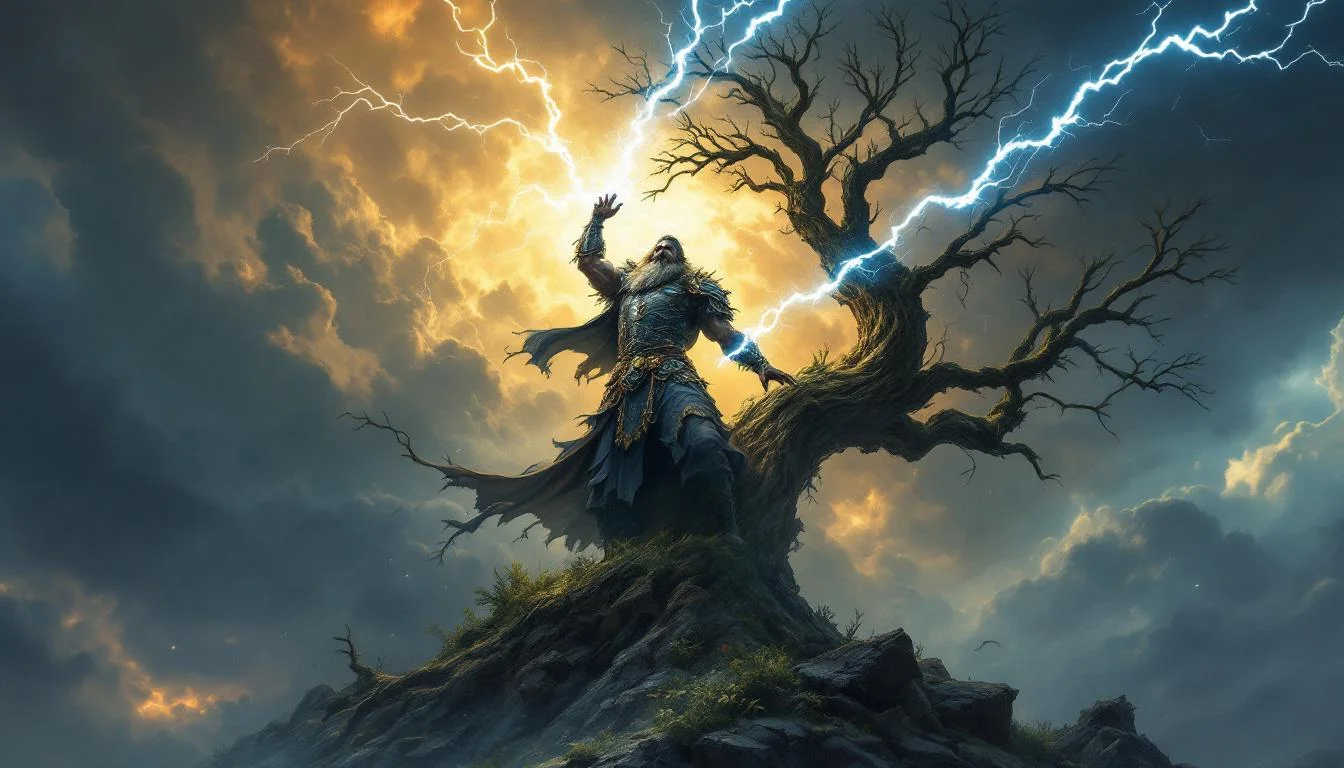
The names come at you sideways. Consonant clusters that look like someone dropped a handful of Scrabble tiles. Letters that seem decorative until you realize every single one is pronounced. Vowels that shift depending on which century and which river valley the story was first told beside.
If you have ever tried to discuss Slavic mythology out loud and found yourself mumbling through names like Stribog or Koschei or Zmey Gorynych, wondering whether you were summoning a god or ordering at a restaurant — this guide is for you.
Slavic languages are more phonetic than English. Once you understand a handful of rules, the entire pantheon opens up. Every letter is pronounced. Stress matters. And the sounds, once you hear them in your head, carry a weight that translations never capture. The name Chernobog does not just mean "Black God." It sounds like what it means — heavy, dark, final. Perun cracks like the thunder he commands. Mokosh rolls slow and low, the way water moves underground.
Here is every name you need, broken down so you can say them with confidence.
The Rules Before the Names
Before diving into individual names, five principles will carry you through almost any Slavic word:
1. Every letter is pronounced. There are no silent letters. If you see it, you say it.
2. Vowels follow continental European pronunciation, not English. A = "ah" (as in father), E = "eh" (as in bed), I = "ee" (as in machine), O = "oh" (as in note), U = "oo" (as in flute).
3. Stress changes meaning. Russian and most Slavic languages use unpredictable stress. The stressed syllable is louder, longer, and clearer. Unstressed vowels get reduced — Russian unstressed O often sounds closer to "ah."
4. "Zh" sounds like the S in "pleasure." This is the voiced counterpart of "sh" and appears constantly: Zhiva, Dazhbog, Zhar-Ptitsa.
5. "Ch" is always "ch" as in "church." Never the hard K sound of "chemistry." Chernobog, Chort, Anchutka — all soft "ch."
Now let us meet the gods.
Gods and Goddesses
These are the major deities of the Slavic pantheon. Stress is marked in CAPITALS.
Perun — Перун peh-ROON The supreme thunder god. Stress falls on the second syllable. The "e" is short, almost swallowed. Think of it rhyming with "platoon." His name likely derives from Proto-Slavic *perъ — "to strike."
Veles — Велес VEH-les God of the underworld, cattle, and magic. Stress on the first syllable. Two crisp syllables — do not add a third. The "e" in the second syllable is reduced, almost like "lis."
Svarog — Сварог svah-ROG The celestial smith, father of Dazhbog. Stress on the second syllable. The first syllable is quick — "svah" — then a firm "ROG" that rhymes with "log." The cluster "sv" at the start is common in Slavic and simply blends "s" directly into "v."
Mokosh — Мокошь MOH-kosh The only confirmed goddess in Vladimir's pantheon. Stress on the first syllable. The final "sh" is soft, palatalized. Goddess of weaving, moisture, and women's fate.
Dazhbog — Даждьбог DAHZH-bog The sun god, the "giving god." The first syllable contains "zh" — the buzzing sound from "pleasure." So it is not "dash" but "DAHZH." The second syllable is simply "bog," rhyming with "log."
Stribog — Стрибог STREE-bog God of winds and air. The consonant cluster "str" at the start is rapid, like "street" without the "eet." Then "ee" and "bog."
Yarilo — Ярило yah-REE-loh God of spring, fertility, and the young sun. Three syllables, stress on the second. The opening "ya" is like "yard" without the "rd."
Morana — Морана moh-RAH-nah Goddess of winter and death. Stress on the second syllable. Three even syllables. Also known as Marzanna in Polish, where the pronunciation shifts to "mah-ZHAH-nah."
Lada — Лада LAH-dah Goddess of love and harmony. Two simple syllables. The "a" sounds are open, as in "father." Perhaps the easiest name in the entire pantheon.
Rod — Род ROHD The progenitor deity, creator of all existence. One syllable. Rhymes with "mode" but shorter. The "o" is rounded and clear.
Zhiva — Жива ZHEE-vah Goddess of life and spring. The opening "zh" buzzes, then "ee" as in "bee," then "vah." Two syllables.
Belobog — Белобог BEH-loh-bog The "White God," counterpart to Chernobog. Three syllables. First syllable stressed. "BEH" like "bell" without the second L, then "loh" and "bog."
Chernobog — Чернобог CHEHR-noh-bog The "Black God." Three syllables, stress on the first. "CHEHR" like "chair" but shorter and harder, then "noh" and "bog." The Proto-Slavic root *čĭrnŭ means "black," and *bogŭ means "god" or "fortune."
Svetovit — Световит SVEH-toh-veet The four-faced god of war and divination, worshipped at Arkona. Three syllables. "SVEH" then "toh" then "veet" (not "vit" — the final vowel is long).
Triglav — Триглав TREE-glahv "Three-headed." The first syllable is simply "tree." The second combines "gl" and a broad "ahv" that rhymes with "Slav."
Devana — Девана deh-VAH-nah Slavic goddess of the hunt, sometimes compared to Diana. Stress on the second syllable.
Creatures and Monsters
Zmey Gorynych — Змей Горыныч ZMEY goh-RIH-nich The three-headed dragon of Russian byliny. "Zmey" rhymes with "may." "Gorynych" has stress on the second syllable — "goh-RIH-nich" — where the "nich" is a soft "nitch." His name means roughly "the serpent, son of the mountain."
Koschei — Кощей koh-SHCHEY Koschei the Deathless, the skeletal sorcerer. Two syllables, stress on the second. The "shch" in the middle is the most difficult sound for English speakers in all of Slavic — it is a long, drawn-out "sh" blending into "ch," like saying "fresh cheese" very quickly. His name may derive from kost' (bone).
Firebird — Жар-Птица ZHAHR-PTEE-tsah The blazing bird of Russian fairy tales. "Zhar" rhymes with "car" but starts with the buzzing "zh." "Ptitsa" begins with "pt" — do not skip the P, pronounce it. "PTEE-tsah."
Striga — Стрига STREE-gah A vampiric creature from West Slavic folklore. Two syllables. The consonant cluster "str" flows quickly, then "ee" and "gah."
Psoglav — Псоглав PSOH-glahv The dog-headed monster of Serbian mythology. The opening "ps" is challenging — pronounce the P. "PSOH" then "glahv." The name literally means "dog-head."
Indrik — Индрик een-DREEK The king of all beasts in Russian folklore, a colossal underground creature. Stress on the second syllable. "een" then "DREEK."
Bukavac — Букавац BOO-kah-vahts A six-legged lake monster from Serbian folklore. Three syllables. The final "c" is "ts."

Spirits and Household Beings
The Slavic world was alive with spirits — not just in forests and rivers, but inside every home. Each had a name, and each name told you where it lived.
Domovoy — Домовой duh-mah-VOY The house spirit. Stress on the last syllable. The unstressed "o" sounds reduce to "uh" and "ah" in Russian. "VOY" rhymes with "boy."
Leshy — Леший LEH-shiy The forest spirit. Stress on the first syllable. "LEH" then a soft "shiy" — the "iy" is a single sound, like "ee" gliding into a faint "y." He is the master of the woods and of the wolves.
Rusalka — Русалка roo-SAHL-kah The drowned maiden spirit. Stress on the second syllable. "roo" then "SAHL" then "kah." The word may derive from the Latin rosalia, a spring festival of flowers.
Vodyanoy — Водяной vuh-dyah-NOY The water spirit, master of rivers and lakes. Stress on the last syllable. The middle "dy" is softened — "dyah" is a single flow, not "dee-ah." "NOY" rhymes with "boy."
Kikimora — Кикимора kee-kee-MOH-rah A female house spirit, often malicious. Stress on the third syllable. Four syllables that bounce along: "kee-kee-MOH-rah."
Bannik — Банник BAHN-neek The bathhouse spirit. Stress on the first syllable. "BAHN" then "neek." Derived from banya (bathhouse). He had to be treated with respect — every fourth bath session belonged to him.
Dvorovoy — Дворовой dvuh-rah-VOY The yard spirit. Stress on the last syllable. The initial "dv" cluster is quick. "dvuh-rah-VOY."
Ovinnik — Овинник oh-VEEN-neek The spirit of the threshing barn. Stress on the second syllable. "oh-VEEN-neek." Derived from ovin (barn for drying grain).
Poludnitsa — Полудница poh-lood-NEE-tsah The Midday Spirit, a female entity who appears in fields at noon. Stress on the third syllable. "poh-lood-NEE-tsah." From poluden' (midday).
Vila — Вила VEE-lah Mountain and forest nymphs of South Slavic tradition. Stress on the first syllable. Two clean syllables. They are fierce, beautiful, and unforgiving.
Chort — Чёрт CHYORT A devil figure in Slavic folklore. One syllable. The "yo" sound (written ё in Russian) is stressed: "CHYORT," rhyming roughly with "court" but with a "ch" start and a "y" glide before the vowel.
Vowels in Slavic names are pronounced generally as in Italian; consonants as in English, with the exception that c is always ts, č is ch, š is sh, ž is zh (as in French j), and g is always hard, as in 'give.'
Heroes and Legendary Figures
Baba Yaga — Баба Яга BAH-bah yah-GAH The witch of the forest, keeper of the boundary between the living and the dead. Four syllables, evenly spaced. The stress pattern is simple — "BAH-bah" then "yah-GAH." Her name resists neat etymology. Baba means old woman or grandmother. Yaga may come from Proto-Slavic *ęgа (horror, shudder) or from a Turkic word for "snake."
Vasilisa — Василиса vah-see-LEE-sah The heroine of many Russian fairy tales — Vasilisa the Beautiful, Vasilisa the Wise. Stress on the third syllable. "vah-see-LEE-sah." The name derives from the Greek basilissa (queen).
Ilya Muromets — Илья Муромец eel-YAH MOO-roh-myets The greatest of the bogatyri (epic heroes). "eel-YAH" then "MOO-roh-myets" — the final syllable is "myets," not "mets." His byname means "of Murom," a town on the Oka River.
Dobrynya Nikitich — Добрыня Никитич doh-BRIH-nyah nee-KEE-teech The second of the great bogatyri. "doh-BRIH-nyah" with stress on the second syllable. Then "nee-KEE-teech." The name Dobrynya comes from dobry (good, kind).
Marya Morevna — Марья Моревна MAHR-yah moh-REHV-nah The warrior queen of Russian fairy tales. "MAHR-yah" then "moh-REHV-nah." Her byname Morevna suggests a connection to more (sea) — "daughter of the sea."
Mythological Places
Nav — Навь NAHV The realm of the dead. One syllable, rhyming with "halve" but with an N. The soft sign at the end (ь) slightly palatalizes the V, but English speakers can safely ignore this.
Yav — Явь YAHV The world of the living. Rhymes with "carve" but starts with "Y." One syllable.
Prav — Правь PRAHV The realm of cosmic law and the gods. Rhymes with "Slav." One syllable. Together, Nav, Yav, and Prav form the three-tiered Slavic cosmos.
Buyan — Буян boo-YAHN The mythical island where the forces of nature originate. Two syllables. "boo" then "YAHN." A place of concentrated magical power in Russian folk spells.
Kalinov Bridge — Калинов мост KAH-lee-nov MOST The bridge over the river of fire separating the living world from the dead. "KAH-lee-nov" then "MOST" (which is simply the Russian word for bridge, pronounced as one syllable rhyming with "host").
Iriy — Ирий EE-ree The Slavic paradise, a warm land beyond the edge of the world where birds migrate in winter. Two syllables, both light.
Quick Reference Table
For fast lookup, here are all names with their phonetic approximations:
| Name | Cyrillic | Pronunciation |
|---|---|---|
| Perun | Перун | peh-ROON |
| Veles | Велес | VEH-les |
| Svarog | Сварог | svah-ROG |
| Mokosh | Мокошь | MOH-kosh |
| Dazhbog | Даждьбог | DAHZH-bog |
| Stribog | Стрибог | STREE-bog |
| Yarilo | Ярило | yah-REE-loh |
| Morana | Морана | moh-RAH-nah |
| Lada | Лада | LAH-dah |
| Rod | Род | ROHD |
| Zhiva | Жива | ZHEE-vah |
| Belobog | Белобог | BEH-loh-bog |
| Chernobog | Чернобог | CHEHR-noh-bog |
| Svetovit | Световит | SVEH-toh-veet |
| Triglav | Триглав | TREE-glahv |
| Devana | Девана | deh-VAH-nah |
| Zmey Gorynych | Змей Горыныч | ZMEY goh-RIH-nich |
| Koschei | Кощей | koh-SHCHEY |
| Zhar-Ptitsa | Жар-Птица | ZHAHR-PTEE-tsah |
| Striga | Стрига | STREE-gah |
| Psoglav | Псоглав | PSOH-glahv |
| Baba Yaga | Баба Яга | BAH-bah yah-GAH |
| Domovoy | Домовой | duh-mah-VOY |
| Leshy | Леший | LEH-shiy |
| Rusalka | Русалка | roo-SAHL-kah |
| Vodyanoy | Водяной | vuh-dyah-NOY |
| Kikimora | Кикимора | kee-kee-MOH-rah |
| Bannik | Банник | BAHN-neek |
| Dvorovoy | Дворовой | dvuh-rah-VOY |
| Ovinnik | Овинник | oh-VEEN-neek |
| Poludnitsa | Полудница | poh-lood-NEE-tsah |
| Vila | Вила | VEE-lah |
| Chort | Чёрт | CHYORT |
| Vasilisa | Василиса | vah-see-LEE-sah |
| Ilya Muromets | Илья Муромец | eel-YAH MOO-roh-myets |
| Dobrynya | Добрыня | doh-BRIH-nyah |
| Marya Morevna | Марья Моревна | MAHR-yah moh-REHV-nah |
| Nav | Навь | NAHV |
| Yav | Явь | YAHV |
| Prav | Правь | PRAHV |
| Buyan | Буян | boo-YAHN |
Carrying the Names Forward
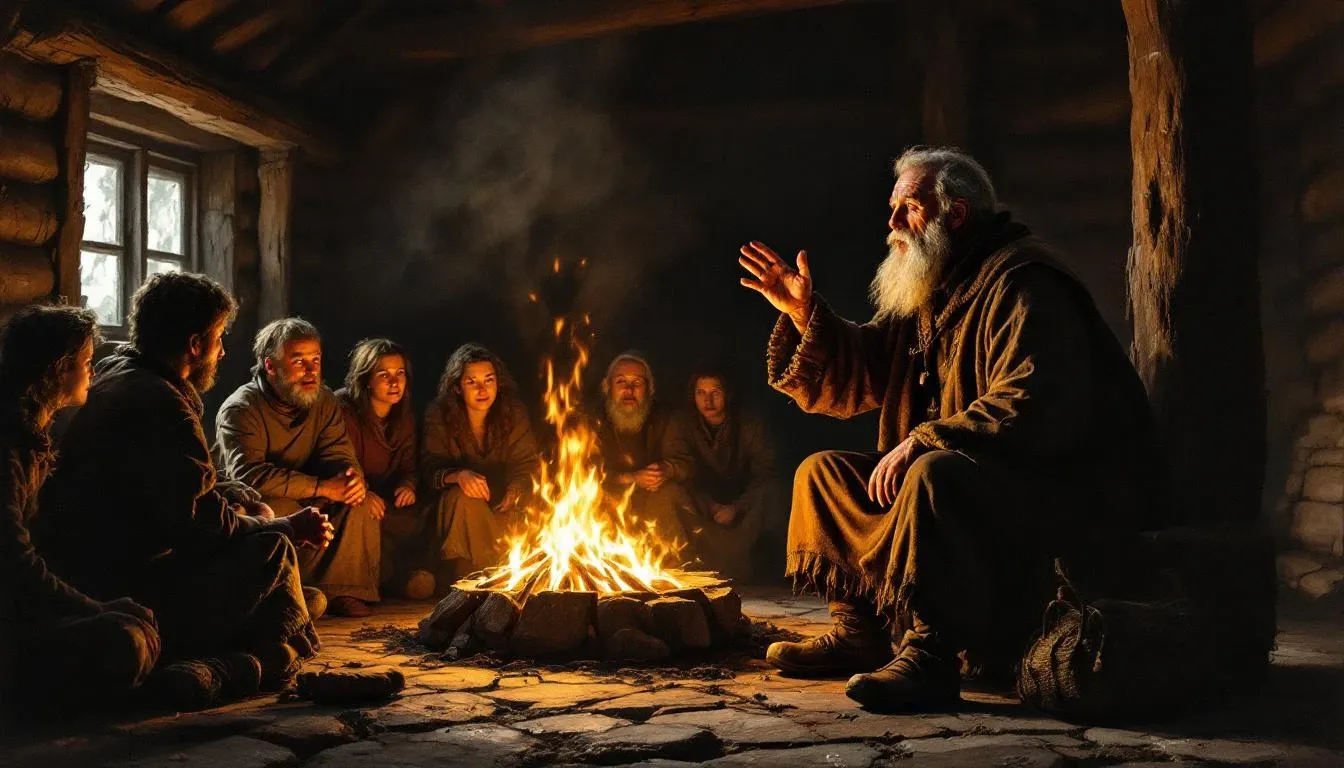
These names were not written down for most of their history. They were spoken beside hearth fires, whispered in sacred groves, shouted during spring festivals when effigies of Morana were burned and thrown into rivers. They were carried across mountains and steppe and taiga in the mouths of people who never imagined their gods might someday be forgotten.
Now you can say them too. Not perfectly — perfection would require years inside a Slavic language. But well enough to honor what the names carry. Well enough to read the stories aloud and hear them the way they were meant to sound: alive, heavy with meaning, older than the borders that divide the Slavic world today.
The next time someone mentions Slavic mythology and stumbles over the names, you will not need to stumble with them. You will know that Perun cracks like thunder because it was built to. That Chernobog lands heavy because darkness should. That Baba Yaga rattles and hisses because she was never meant to comfort you.
Say the names. They have been waiting.